Johan Budi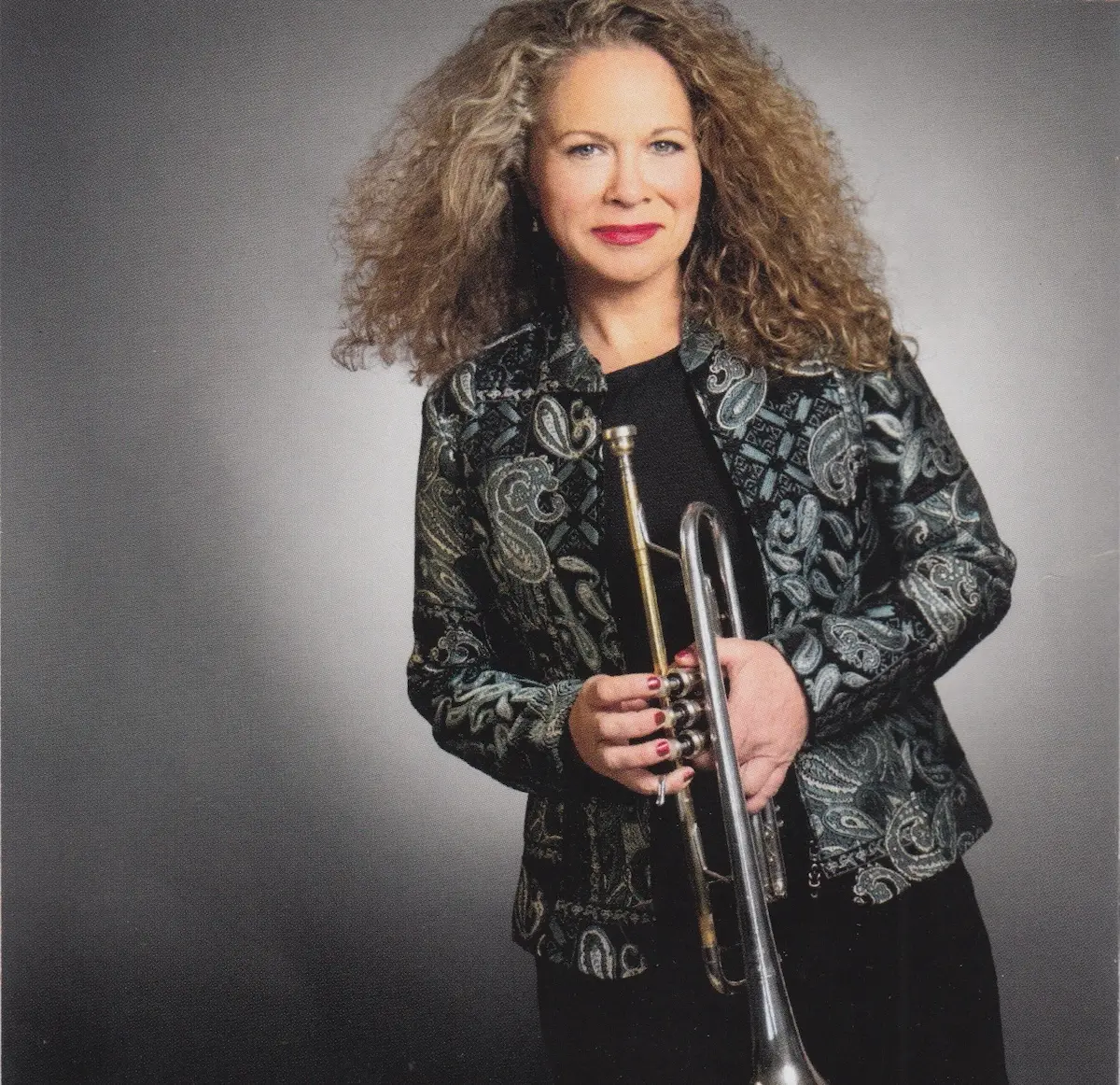
The global jazz scene in the mid-2020s continues to demonstrate a remarkable synthesis of pedagogical mastery, compositional rigor, and the preservation of cultural heritage. Three recent projects—Christine Fawson’s It Could Happen To You, Ron Rieder’s Compositions In Blue And Other Hues, and the Buena Vista All Stars’ Una Noche En La Habana—collectively illustrate the breadth of the genre. From the academic halls of the Berklee College of Music to the historic streets of Havana, these releases represent a bridge between the mid-century foundations of hard bop and the evolving textures of contemporary vocal and Latin jazz. As the recording industry shifts toward independent distribution, these artists leverage their technical proficiency and deep-rooted influences to maintain the vitality of the Great American Songbook and Afro-Cuban traditions.
Christine Fawson: A Synthesis of Pedagogy and Performance
Christine Fawson, a California-born musician, has emerged as a significant figure in the contemporary jazz landscape, uniquely balancing her roles as a vocalist, trumpeter, and educator. Her latest release, It Could Happen To You, serves as a testament to her multifaceted artistry. Fawson’s background is deeply rooted in the academic excellence of the Berklee College of Music, an institution that has shaped the careers of countless jazz luminaries since its founding in 1945. At Berklee, Fawson transitioned from student to professor, overseeing curricula in brass, ear training, harmony, and voice. This pedagogical foundation is evident in the technical precision found throughout her new album.
The influence of Phil Wilson, a legendary trombonist who gained fame with the Woody Herman band in the 1960s, remains a cornerstone of Fawson’s musical identity. Wilson, known for his work on tracks like "It’s A Lonesome Old Town" and "Bijou," mentored Fawson, instilling a sense of swing and structural integrity that characterizes her work. As a trumpeter, Fawson draws from the lineage of Lee Morgan, Clifford Brown, and Miles Davis—musicians who defined the hard bop and cool jazz eras. Vocally, she cites the "captivating" sound of Frank Sinatra and the modern phrasing of Harry Connick Jr. as primary influences.
Technical Analysis of It Could Happen To You
Recorded in Westwood, Massachusetts, in November 2025, It Could Happen To You features a quartet comprised of Fawson on vocals and trumpet, Tim Ray on piano, Dave Zinno on bass, and Casey Scheuerell on drums. The album is distinguished by its sophisticated arrangements, many of which provide fresh perspectives on well-worn standards.
One of the album’s highlights is the title track, which features a contrafact—a musical composition consisting of a new melody overlaid on a familiar harmonic structure—arranged by Brad Hatfield. Hatfield, a pianist for the Boston Pops, creates a framework that allows Fawson to showcase her skills with a cup mute, while bassist Dave Zinno doubles her lines with precision. This interplay demonstrates a level of telepathic communication often found in high-level jazz ensembles.
On the Latin-infused "It’s All Right With Me," Fawson’s trumpet work mirrors the distinctive "harmon" sound associated with Lee Morgan, characterized by its sharp, focused tone. Her arrangement of "My Heart Stood Still" evokes the sophisticated vocal writing of Roy Kral, particularly the work he produced for Jackie Cain. Throughout the album, Fawson’s "infallible ear" is on display, particularly during scat-singing passages where her intonation remains flawless.
Tracklist and Production Details
The discography for this independent release includes:
- It Could Happen To You
- It’s All Right With Me
- Lazybones
- What’ll I Do
- My Heart Stood Still
- Like Someone In Love
- You Don’t Know What Love Is
- You’ve Changed
- I Was Doing All Right
- Oh, Lady Be Good
- Every Time We Say Goodbye
The album clocks in at 50 minutes and 45 seconds, providing a comprehensive look at Fawson’s ability to navigate various moods, from the tango-inflected "Like Someone In Love" to the intimate, late-night atmosphere of "You’ve Changed."
Ron Rieder: The Prolific Composer-Producer
While Christine Fawson represents the performer-educator model, Ron Rieder exemplifies the modern jazz composer and producer. His latest project, Compositions In Blue And Other Hues, marks his third outing as a leader, following the critical success of his 2023 Latin Jazz Sessions and the early 2025 release Día Precioso!. Despite his prolific output—all 11 tracks on the new album are Rieder originals—his work has occasionally flown under the radar of traditional discographies, highlighting the challenges faced by independent artists in a crowded digital marketplace.
Rieder’s approach to Compositions In Blue And Other Hues is unique in that he serves as the composer and producer but does not perform on the record. Instead, he assembled a premier Boston-based quintet to execute his vision. The ensemble features Mike Tucker on tenor saxophone, Yaure Muniz on trumpet, Maxim Lubarsky on piano, John Lockwood on bass, and Mark Walker on drums.
Hard Bop Excellence and Stylistic Nuance
The quintet excels in the "straight-ahead hard bop" style, a subgenre of jazz that incorporated influences from rhythm and blues, gospel music, and blues, particularly in saxophone and piano playing. Mike Tucker, an associate professor at Berklee who has performed with Arturo Sandoval, provides the album’s emotional core. On "I Sing For You," the album’s longest track, Tucker’s lyricism and warm tenor sound draw comparisons to Hank Mobley, a foundational figure of the Blue Note Records era.
The album also benefits from the diverse backgrounds of its personnel. Maxim Lubarsky, a Ukrainian-born and classically trained pianist, provides a standout performance on "Interlude: Amingus Amonkus." The track, a 12-bar sequence with a four-bar tag, pays homage to the rhythmic and structural idiosyncrasies of Thelonious Monk. Lubarsky’s ability to integrate stride piano techniques without relying on dissonance adds a layer of historical depth to Rieder’s modern compositions.
Chronology of Production
The sessions for Compositions In Blue And Other Hues took place in Acton, Massachusetts, on December 29 and 30, 2024. The resulting 51-minute-and-39-second album was released under the Meson Records label (NO1 CD). The tracklist includes "Dizzy Spell," "Broadway Boogie," "The Butterfly Waltz," and "Java Mania," showcasing a range of tempos and rhythmic feels.
Buena Vista All Stars: Preserving the Golden Age of Cuban Music
The third pillar of this contemporary jazz overview is the Buena Vista All Stars and their release Una Noche En La Habana. This project carries the torch of the Buena Vista Social Club, the ensemble that took the world by storm in the late 1990s. The original group, facilitated by Ry Cooder and Juan de Marcos González in 1996, resurrected the careers of Cuban "Super Grandfathers" like Ibrahim Ferrer, Compay Segundo, and Rubén González.
The Buena Vista All Stars include several veterans of the original Social Club, such as laud player Barbarito Torres and trumpeter Manuel Machado. Under the musical direction of Demetrio Muñiz, who served in a similar capacity for the original ensemble, the All Stars continue to promote the vibrant traditions of the bolero, rumba, montuno, cha-cha-cha, and mambo.
A Global Recording Effort
Una Noche En La Habana is the product of a truly international effort. Following a successful world tour, the group recorded four core titles in Madrid, Spain. To complete the album, material was culled from live performances in Berlin and Mumbai, reflecting the universal appeal of Afro-Cuban music.
The album features a mix of traditional classics and original compositions. "La Musica Cubana," released as a lead single, highlights the piano work of Sergio Fernández Pedroza. A dramatic rendition of "Bésame Mucho," a song with over 500 recorded versions according to jazz discographers, features a standout performance by Barbarito Torres. Additionally, the atmospheric "Chan Chan," perhaps the most recognizable song in the Buena Vista repertoire, maintains its haunting, chant-like quality.
Personnel and Tracklist
The recording features a robust lineup of talent:
- Manuel Machado and Juan Luis De La Torre (Trumpets)
- Julián Garvayo Pérez-Requeijo (Trombone)
- Sergio Fernández Pedroza (Piano)
- Salvador López (Bass)
- Ramón González Orta (Percussion)
- Barbarito Torres and Ángel Aguiar Muñoz (Vocals)
The 45-minute-and-50-second discography includes "Bemba Colorá," "Guantanamera," "Lágrimas Negras," and "Machado’s Blues," the latter of which allows Manuel Machado to showcase his virtuosic trumpet style.
Broader Impact and Implications for the Jazz Industry
The release of these three projects within a similar timeframe (late 2024 to late 2025) underscores several key trends in the modern jazz industry. First, the influence of educational institutions like Berklee College of Music cannot be overstated. By providing a stable environment for artists to hone their craft and teach the next generation, these institutions ensure the continuity of jazz theory and performance standards.
Second, the rise of independent labels—such as those used by Fawson and Rieder—suggests a democratization of the recording process. While major labels once held the keys to distribution, modern digital platforms and independent production houses allow artists to maintain creative control over their work. However, as noted in the case of Ron Rieder, this independence requires a proactive approach to marketing and archival documentation to ensure that these works are recognized by historians and discographers.
Finally, the continued success of groups like the Buena Vista All Stars demonstrates the enduring power of cultural heritage. By blending the nostalgia of the 1940s Cuban "Golden Age" with contemporary production values and global touring schedules, the All Stars prove that traditional forms of jazz and Latin music remain relevant to 21st-century audiences.
Collectively, Christine Fawson, Ron Rieder, and the Buena Vista All Stars represent the three vital prongs of the jazz world: the performer-educator, the composer-producer, and the cultural ambassador. Their recent contributions ensure that the genre remains a living, breathing art form, capable of honoring its past while looking toward an innovative future.