Johan Budi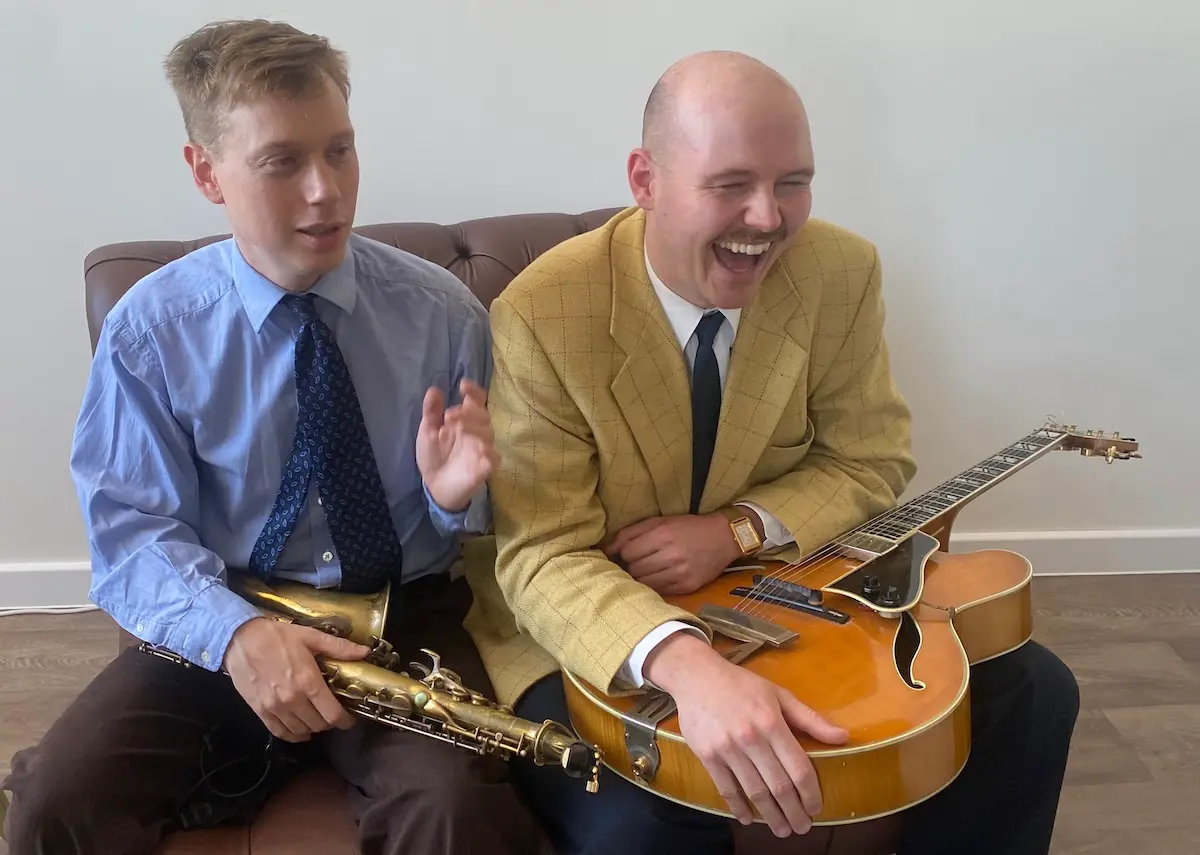
The international jazz landscape is currently experiencing a wave of notable releases that highlight both spontaneous cross-border cooperation and monumental, large-scale compositional projects. Among the standout additions to the contemporary jazz discography are a newly minted international quartet album led by London-based alto saxophonist Sam Braysher and guitarist Linus Eppinger, alongside two expansive orchestral recordings from the relentlessly prolific Japanese pianist and composer Satoko Fujii. These releases underscore the ongoing evolution of modern jazz, capturing both the intimate chemistry of small-ensemble improvisation and the sweeping architectural ambition of contemporary big bands navigating the post-pandemic cultural landscape.
Spontaneous Synergy: Sam Braysher and Linus Eppinger’s International Quartet
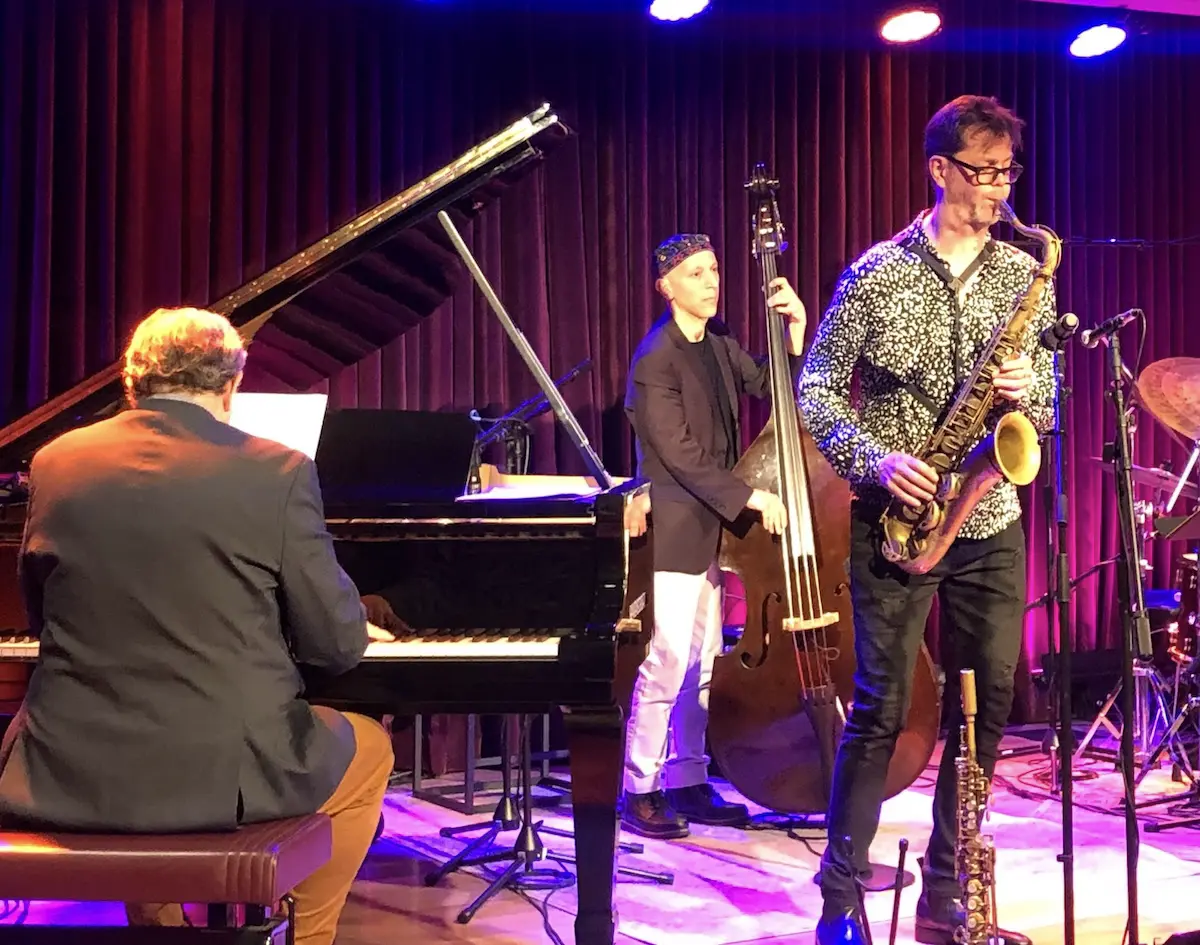
London-based alto saxophonist Sam Braysher has officially expanded his recorded catalog with his fourth full-length album, A Sinner Kissed An Angel, released via Fresh Sounds Records (FSR-CD 514). For this project, Braysher stepped into a Utrecht recording studio on merely their third day of collaboration, heading an international lineup featuring German-born, Amsterdam-based guitarist Linus Eppinger, American-born bassist Darryl Hall (who resides in France), and veteran Dutch drummer Eric Ineke.
The formation of the quartet developed through existing professional networks and rapid live testing. While both Braysher and Eppinger had previously worked with Ineke—noting his distinctive and dynamic cymbal work—Hall was a less familiar figure to the primary leaders, though known to Eppinger. Following initial live performances in The Hague and Amsterdam, the quartet achieved immediate musical cohesion. Given the constraints of limited rehearsal time, the ensemble intentionally bypassed overly complex arrangements in favor of capturing an organic, in-the-moment aesthetic that mirrored their live stage interactions.
The 52-minute album opens with an easygoing rendition of Benny Goodman and Charlie Christian’s A Smooth One. Throughout the tracklist—which spans classic standards and unexpected stylistic nods—Braysher’s oblique and leisurely phrasing pairs seamlessly with Eppinger’s lilting guitar lines. Notable selections include a groove-heavy tribute to pop icon Dusty Springfield via the song Spooky, Vernon Duke’s melancholic Roundabout performed at a deliberate, emotional tempo, and Horace Silver’s hard-bop staple Route 608. The centerpiece of the recording is the title track, A Sinner Kissed An Angel, originally popularized by a young Frank Sinatra with Tommy Dorsey’s Orchestra in 1941, which features nuanced interplay and subtle brushwork from Ineke. The session concludes with a mid-tempo, guitar-led exploration of Relaxing At Camarillo.
Music critics have observed that the 10-track release possesses a timeless quality, avoiding modern affectations and sounding as though it could have been recorded at any point over the past half-century. The album’s tracklist in full comprises: A Smooth One; I Told You So; Put On A Happy Face; Spooky; Roundabout; Never Let Me Go; Room 608; That Saturday That Summer; A Sinner Kissed An Angel; and Relaxing At Camarillo.
Resurrecting the Past: Satoko Fujii’s Bunker Ulmenwall Orchestra
Simultaneously, the global avant-garde jazz community is turning its attention to the prolific output of Japanese pianist Satoko Fujii, who has launched a massive rollout of orchestral recordings. Marking her 24th orchestral album overall, Satoko Fujii’s Bunker Ulmenwall Orchestra (Libra Records 218-083) represents the first of five orchestral records she has scheduled for release throughout 2026. This wave of releases largely serves to address the creative backlog and delayed projects resulting from the COVID-19 pandemic.
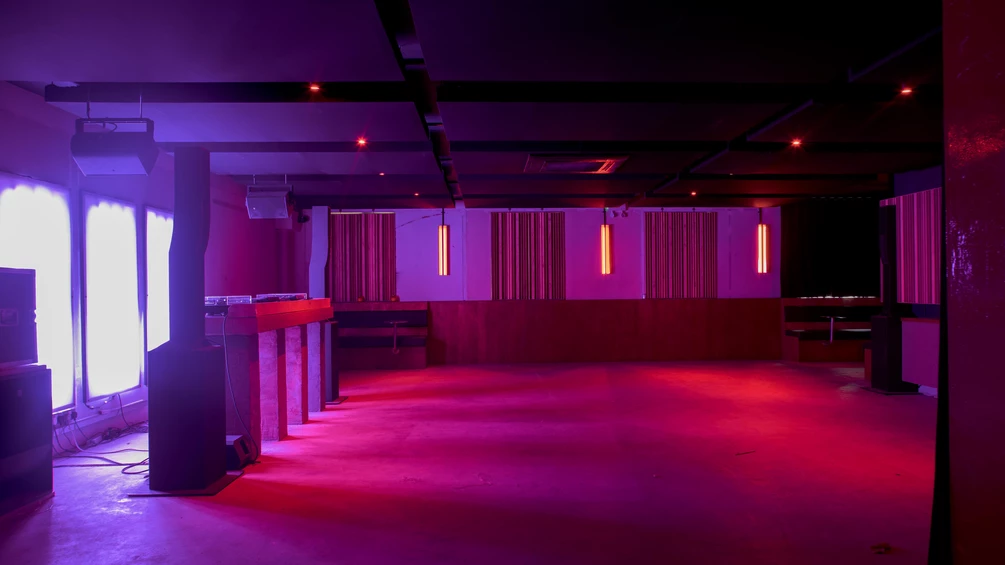
The genesis of this release dates back nearly twelve years. Recorded live on November 22, 2014, at Bunker Ulmenwall—a unique jazz venue housed within a converted World War II air raid shelter in Bielefeld, northwest Germany—the master tapes lay forgotten in the personal archives of concert promoter Wolfgang Gross. Gross had a long history of producing concerts for Fujii, but for this specific performance, he envisioned a collaborative community model. Rather than relying exclusively on professional touring musicians, Gross integrated local music students into the orchestra, actively encouraging the young participants to contribute original compositions and take on leadership roles within the ensemble.
When Gross eventually rediscovered the tapes and forwarded them to Fujii, the composer expressed profound astonishment at the vitality of the performance. The resulting two-disc set captures a vibrant dialogue between seasoned improvisers and emerging student musicians.
CD1 is dedicated entirely to Shiki, a sweeping, 46-minute composition that stands as one of the most structurally ambitious pieces in Fujii’s career. Beginning with a subtle, sustained drone, the piece gradually gains urgency, incorporating dynamic drum duets, pointed trumpet and saxophone solos, and a striking piano solo by Matthias Klause. Fujii acts as a conductor and facilitator, cuing soloists and shifting thematic motifs while allowing the ensemble to operate as active co-creators.
CD2 shifts focus to the orchestra’s internal composers and conductors. Bass saxophonist Andreas Kaling leads his riff-driven composition Yamantaka, characterized by angular interlocking themes, deep low-end drones, and an explosive rock-guitar solo by Lucy Liebe. Trumpeter Natsuki Tamura introduces a period of reflective calm with the textured piece Jasper, followed by alto saxophonist Luise Volkmann’s multifaceted Antischwarm. Fujii brings the collection to a close with her serene, celestial composition Gen Himmel.
The comprehensive lineup for the Bunker Ulmenwall performance featured Natsuki Tamura, Benny Meinert, and Robin Stüwe on trumpets; Luise Volkmann and Paul Jumaa-Dohna on alto saxophones; Volker Winck on soprano and tenor saxophones; Sebastian Büscher on tenor saxophone; Andreas Kaling on baritone saxophone; Matthias Muche on trombone; Stephan Schulze on trombone and tuba; Lucy Liebe on electric guitar; Willem Schulz on cello; Matthias Klauze on piano; Kevin Hemkemeier on bass; Joel Köhn on electronics; and Juri Beier and Karl Godejohann on drums.
Looking Forward: Satoko Fujii Orchestra Kobe and Post-Pandemic Reflections
Immediately following the unearthing of the Bielefeld recordings, Fujii released a brand-new contemporary set, Satoko Fujii Orchestra Kobe: After The Storm (Libra Records 215-084), recorded live in Kobe, Japan, on February 5, 2026. This release is part of a broader sequence of regional orchestral albums that will include upcoming sets from Berlin, Nagoya, and Tokyo through November 2026. Notably, unlike archival live concert recordings, the Kobe session was engineered specifically from the ground up as a dedicated studio-grade live performance designed explicitly for album production.
The thematic core of the four-part suite After The Storm is directly tied to the global disruption of the COVID-19 pandemic. Fujii has noted that the composition emerged from a period of profound reflection and cautious optimism regarding the future of international society. "I was dreaming that the world would finally find complete peace after the pandemic… I was dreaming we would have no war, no weapons, no violence," Fujii stated regarding her mindset during the writing process. Although subsequent geopolitical realities failed to match this idealistic vision, the composer felt compelled to preserve and share her message of hope through sound.
Musically, the suite moves through stark emotional contrasts. Part 1 opens with a stately, contemplative solo-bass theme performed by Keishiro Saito, before expanding into a glowing statement by trombonist Yuichiro Tamagaki and eventually giving way to a fierce, unvarnished tenor saxophone solo by Tsutomu Takei, backed by guitarist Takumi Seino. Part 2 explores collective improvisation, where individual soloists detach from the larger ensemble before weaving back in, creating an abrasive yet cohesive narrative arc. Part 3 builds into an intense wall of sound anchored by Natsuki Tamura’s searing trumpet lines. In contrast, the concluding fourth part adopts a jaunty, upbeat tempo, culminating in a high-voltage guitar solo and a dramatic ensemble finish.
The Kobe orchestra featured a formidable roster of Japanese jazz instrumentalists: Eiichiro Arasaki and Tsutomu Takei on tenor saxophones; Keizo Nobori on baritone saxophone; Yasuhisa Mizutani and Motoki Sugino on alto saxophones; James Barrett, Rabito Arimoto, and Natsuki Tamura on trumpets; Yasuko Kaneko and Yuichiro Tamagaki on trombones; Takumi Seino on guitar; Keishiro Saito on bass; and Yoshikazu Isaki and Hiromasa Sadaoka on drums.
Industry Implications and the Resurgence of Large-Form Jazz
The concurrent release of these distinct projects—spanning the intimate, traditional mainstream jazz approach of Braysher and Eppinger to the avant-garde, large-scale orchestrations of Fujii—demonstrates the robust health and global interconnectedness of the modern jazz ecosystem.
For independent labels such as Fresh Sounds Records and Libra Records, these releases illustrate the ongoing viability of physical-format jazz distribution alongside digital streaming. Furthermore, Fujii’s aggressive release schedule highlights how many artists are utilizing contemporary distribution channels to clear archival backlogs while simultaneously producing new, conceptually driven works that respond directly to the psychological aftermath of the pandemic. As these albums reach audiences worldwide, they reinforce the capacity of improvised music to bridge geographical divides, preserve historical performance art, and articulate complex collective experiences through sound.