 Mia Khoirunisa
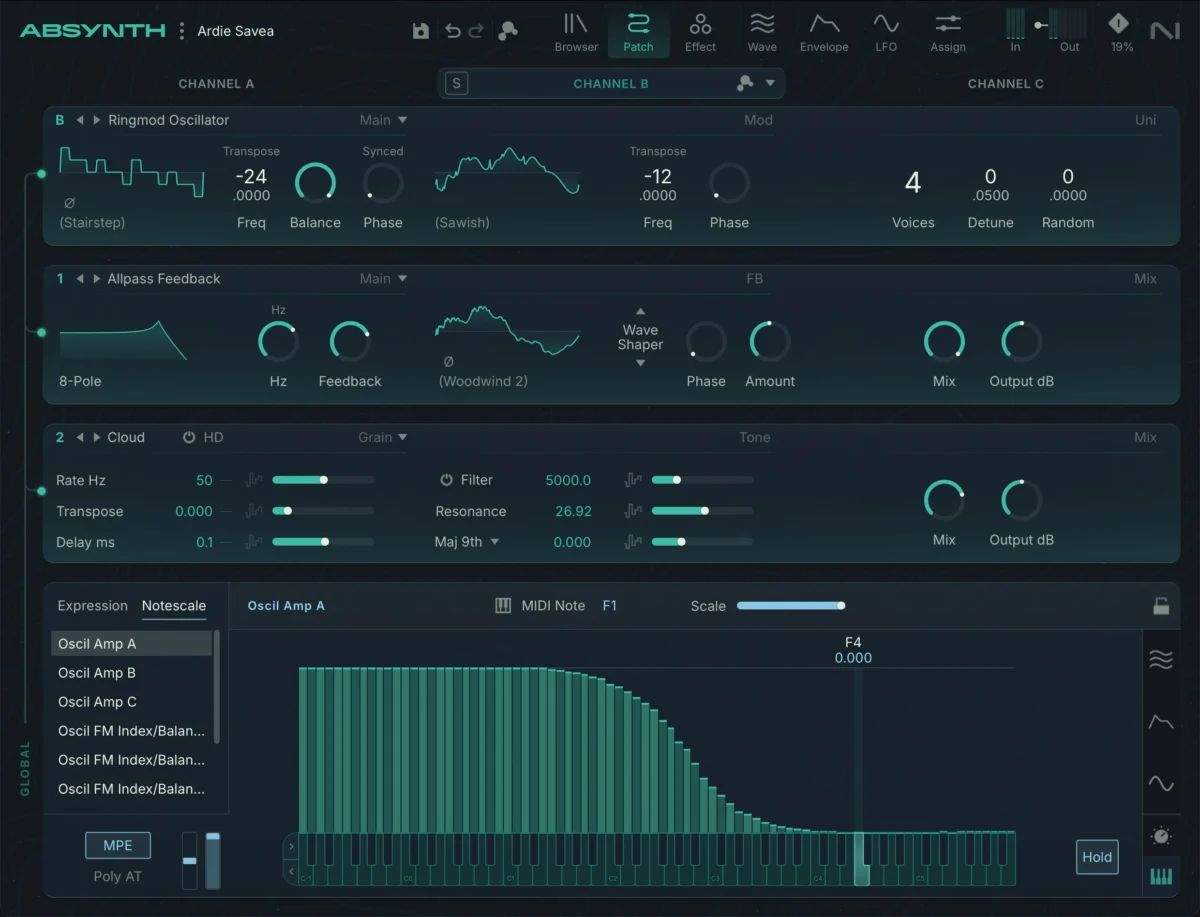
The landscape of software-based sound design has taken another evolutionary step with the deployment of Absynth versions 6.2 and 6.2.1. Released consecutively over a brief period this month, these updates arrive as a direct response to longstanding user interface (UI) and user experience (UX) friction points within the acclaimed soft synth. Rather than altering the foundational digital signal processing (DSP) engine, the development team—led by original Absynth creator Brian Clevinger and product designer Hannah Lockwood—focused heavily on refining navigation, visual feedback, and architectural organization. By reducing the logistical hurdles associated with deep patch editing, the latest software iteration aims to empower electronic music producers and sound designers to explore more complex, avant-garde sonic territories without getting bogged down by interface complexities.
Chronology and Release Timeline
The rollout of Absynth 6.2 and 6.2.1 represents the latest in a series of strategic improvements for the instrument. This trajectory began in earnest with the release of version 6.1, which introduced notable sonic enhancements such as LFO Retrigger and an advanced Audio Modulator. Building upon that functional foundation, the development team previewed the concepts behind version 6.2 to live audiences at Superbooth in Berlin, gathering real-time feedback from professional electronic musicians and sound designers.
Version 6.2 officially launched earlier this month, bringing the heavily anticipated Focus Mode and subpreset management tools to the public. Swiftly following this initial deployment, version 6.2.1 arrived late last week as a stability and maintenance patch. This subsequent update addressed critical performance nuances, notably ensuring that expressive controller parameters—such as aftertouch settings—remain successfully preserved between distinct patches, thereby eliminating repetitive programming steps during live performance and studio sessions.
Core Architectural Enhancements and UI Redesign
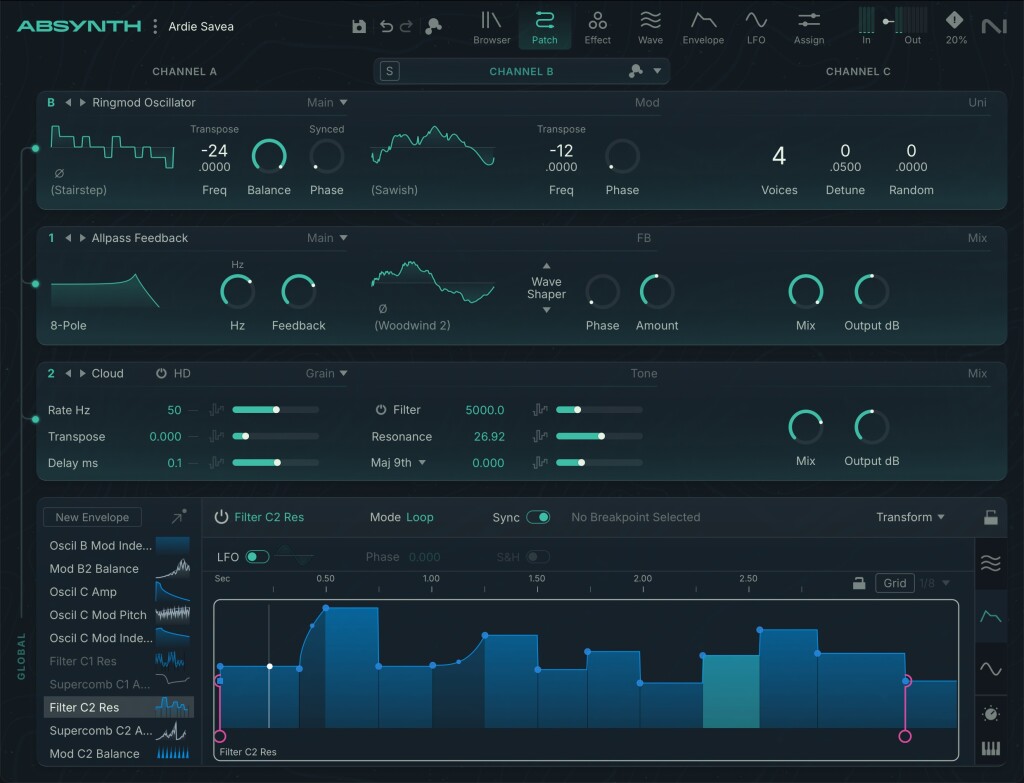
At the heart of the Absynth 6.2 update is Focus Mode, a structural redesign intended to declutter the expansive instrument’s workflow. Historically, programming complex patches required navigating back and forth across multiple global editor pages, a process that could disrupt creative momentum. Focus Mode rectifies this by introducing an expanded, context-aware editor that triggers directly upon clicking an individual channel. This grants immediate access to dedicated Wave, Envelope, LFO, Macro, and Keyboard Editors within a localized workspace.
Complementing Focus Mode is Patch Focus, a functional link that dynamically connects items inside an editor directly to their respective modulation destinations within a patch. Furthermore, the newly introduced channel headers incorporate comprehensive Solo, Mutate, and Edit menus. A dedicated Channel Edit menu grants users rapid access to copy, paste, mutate, retry, and subpreset parameters.
Subpresets represent another major paradigm shift for the software. Long utilized as a standard design pattern across the broader virtual instrument market, subpresets allow producers to isolate, save, and recall specific modular areas of a patch—such as custom envelopes, insert effects, and distinct waveforms. This standardization enables sound designers to curate personal libraries of modular components and deploy them across entirely different patches, a workflow previously restricted by monolithic patch-saving structures.
To bridge historical compatibility with modern design, the development team ensured seamless integration for legacy files. According to development records, implementing legacy subpreset imports required Clevinger to source a vintage PowerPC G4 Macintosh computer—the original hardware environment used during the development of Absynth 2 and 3—to serve as a reliable reference point for parsing obsolete file formats.
Integration of Expressive Hardware and MPE Standards
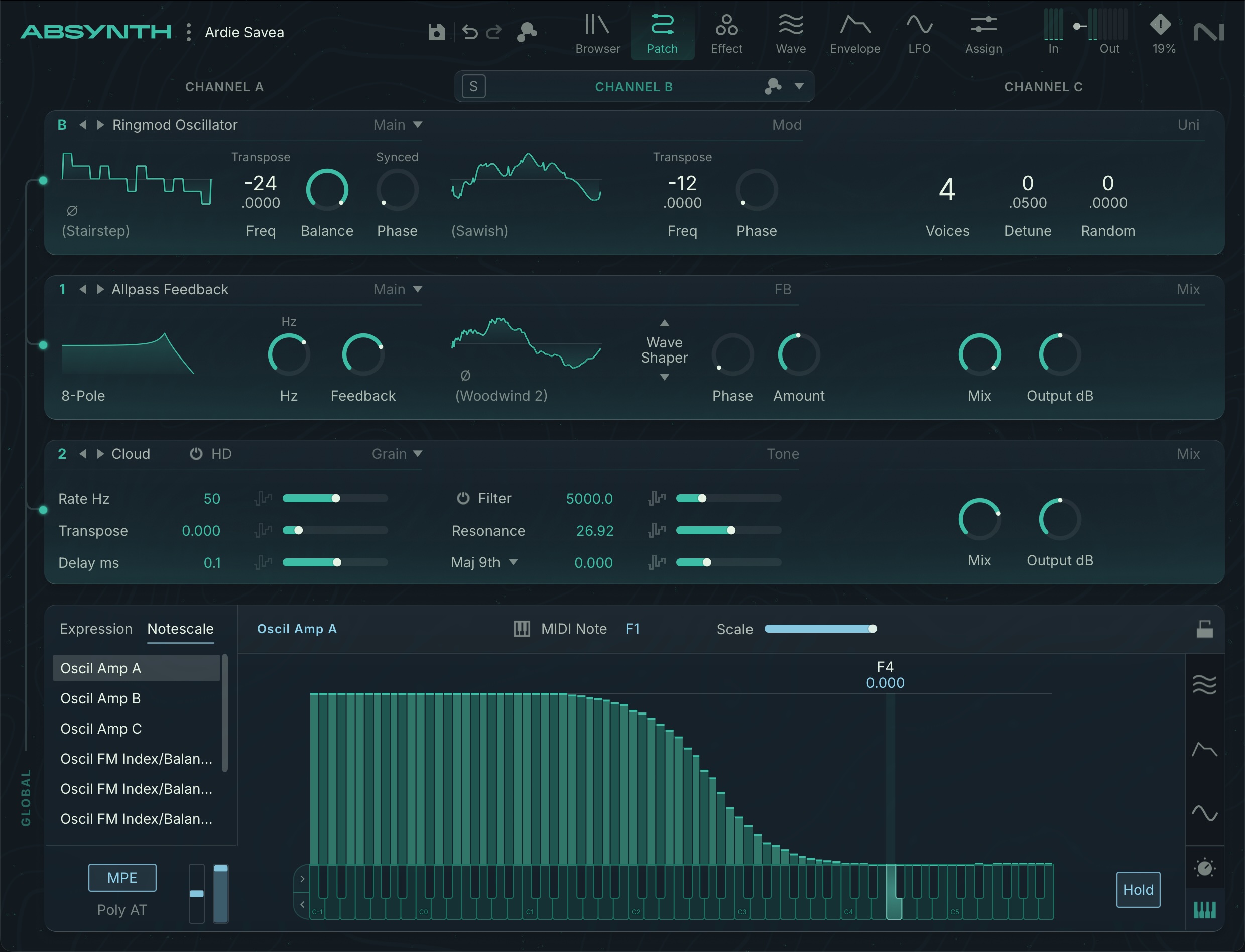
Modern electronic music production relies increasingly on hardware controllers that support multidimensional polyphonic expression. Absynth 6.2 addresses this shift by expanding its hardware integration capabilities. The software’s footer has been updated to display real-time readouts for both mono and polyphonic aftertouch, sitting alongside standard performance controls like pitch bend, mod wheel, and hold.
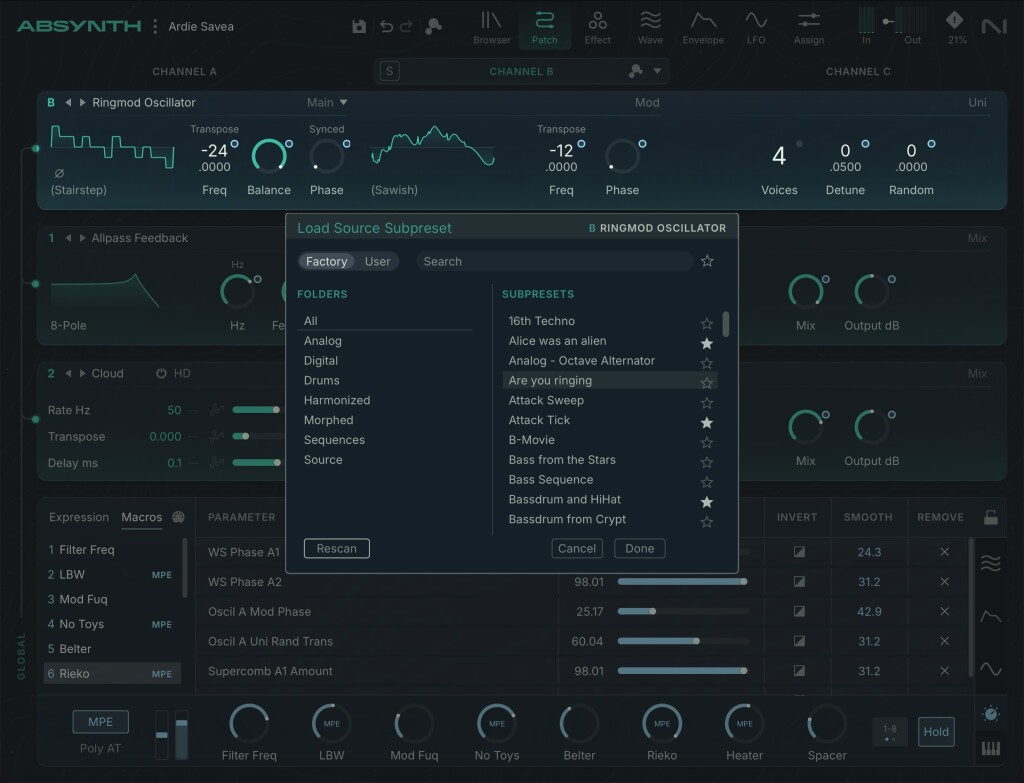
Additionally, Macro knobs now feature dedicated MIDI Polyphonic Expression (MPE) indicators. These additions provide direct visual confirmation of expressive modulation mapping, making the software significantly more intuitive to program when paired with modern expressive keyboards, ribbon controllers, and pad-based production surfaces.
Perspectives from the Development Team
The philosophy behind these updates extends beyond mere convenience; the creators view interface design as an intrinsic component of acoustic output. Brian Clevinger noted that Focus Mode has been a conceptual goal for years, refined significantly through collaboration with Lockwood.
"Focus mode is an idea I’ve had for years, and Hannah greatly improved it," Clevinger stated. "It’s a big step towards clearer visualization and access to what’s going on in the patch. The GUI has a direct influence on sound design, because if some feature is confusing or hard to access, you’ll be less likely to use it. So even though it’s not DSP, we still consider this update to be a sound enhancement."
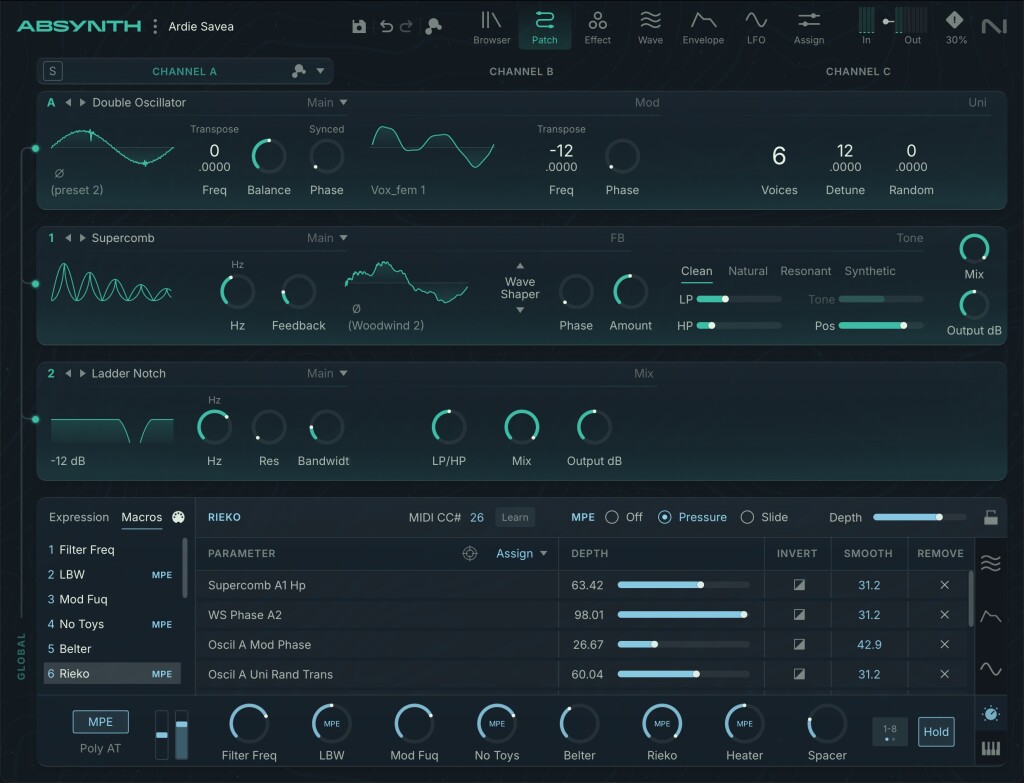
Despite the introduction of Focus Mode, the development team deliberately retained traditional multi-page views to accommodate established user workflows. Clevinger emphasized the utility of switching between perspectives: "I switch back and forth quite a bit between the full patch and Focus; it’s like moving between different perspectives. I also still use the Envelope page a lot, where you can see all the envelopes aligned like tracks in a DAW. So hopefully we’ve got the best of both worlds now."
Product designer Hannah Lockwood framed the updates around the psychology of the creative process, focusing specifically on how software friction subconsciously limits artistic experimentation.
"Although the audio engine itself hasn’t changed, I think Focus mode significantly shifts the way we experience Absynth," Lockwood explained. "Visualisation of module states, parameter sets and modulation relationships has been reworked to make the inner logic of a patch more accessible. Improved assignment workflows and the ability to move in context between modules and their deeper editors should invite you to act on those insights with greater immediacy and intention."

Lockwood further elaborated on the cognitive barriers inherent in complex software instruments: "Throughout the development, I’ve been particularly interested in an implicit question that often arises during the creative process—at what point is an idea so wild or obscure that a subconscious calculation decides it’s no longer worth the effort of pursuit? I’m quite curious to see how meaningfully we can push this threshold by addressing points of friction in the interface."
Market Implications and Future Outlook
The release of Absynth 6.2 and 6.2.1 highlights a broader industry trend wherein legacy software developers prioritize user experience and workflow optimization over entirely new synthesis architectures. By streamlining the interaction between complex modulation routing and visual feedback, Native Instruments and its development partners have reduced the learning curve traditionally associated with deep sound design environments.
As virtual instruments grow increasingly complex to meet the demands of cinematic scoring, ambient composition, and electronic music production, UI/UX optimization serves as a vital differentiator. The integration of modern expressive standards like MPE, coupled with modular subpreset management, ensures that foundational instruments can maintain relevance within contemporary, fast-paced studio environments. With version 6.2 establishing a modernized structural baseline, the development team has signaled an ongoing commitment to lowering technical barriers, thereby encouraging producers to push the boundaries of experimental sound design without operational friction.