Jia Lissa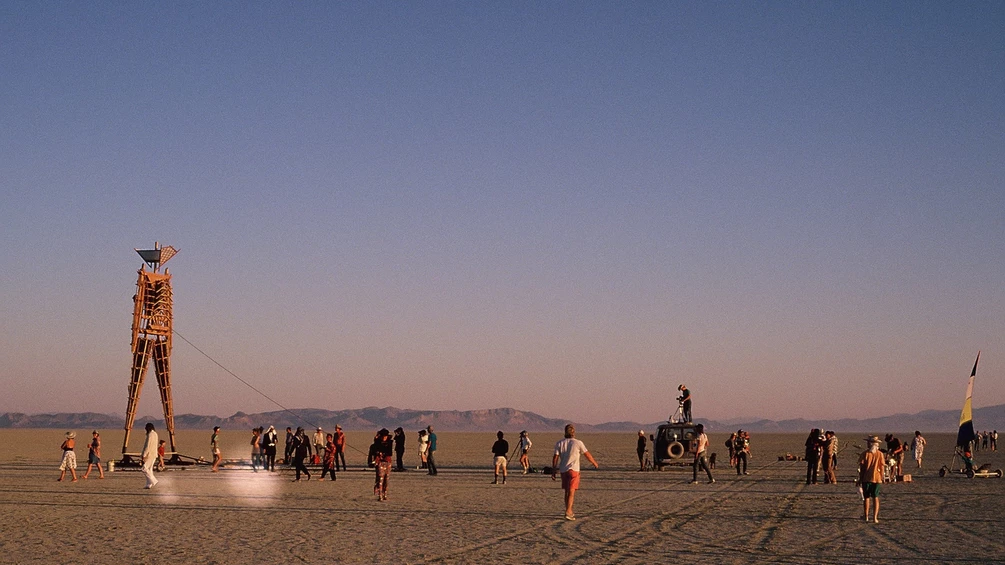
HBO has announced the premiere of its highly anticipated four-part documentary series, The Man Will Burn, offering an unprecedented look into the inner workings and enduring spirit of the iconic Burning Man festival. The series, which promises to delve deep into the cultural phenomenon, is set to debut its first episode on Thursday, July 9th, with subsequent installments airing weekly on Thursdays. All episodes will also be readily available for streaming on HBO Max, ensuring broad access to this comprehensive exploration of Black Rock City.
Directed by the acclaimed duo Jehane Noujaim and Vikram Gandhi, The Man Will Burn is positioned as a definitive chronicle of the week-long desert festival. Its narrative framework weaves together a rich tapestry of archival footage, meticulously gathered from across Burning Man’s extensive history, with candid interviews featuring a diverse array of stakeholders. These include the festival’s CEO, key board members, and original founders, providing an authoritative perspective on its foundational philosophy and operational complexities. Complementing these institutional voices are the perspectives of numerous artists whose monumental works define the playa, alongside regular attendees, known as ‘Burners,’ who share their deeply personal and often transformative experiences. This multi-faceted approach aims to capture the essence of Burning Man from both its strategic leadership and its vibrant, participatory community.
A Chronicle of Resilience: Navigating Unprecedented Turmoil
A significant focus of the documentary series is its exploration of the "unprecedented turmoil" that has challenged the Burning Man Project (BMP) in recent years. Filmed during the tumultuous period of the COVID-19 pandemic, the series directly addresses the profound impact of the festival’s cancellation in 2020 and 2021. These cancellations not only disrupted the annual gathering but also presented immense operational and financial challenges for the non-profit organization responsible for orchestrating Black Rock City. The documentary tracks the ongoing ripple effects of these challenges, detailing how the BMP strove to remain operational and, crucially, to stay true to its core values amidst a landscape of uncertainty and adaptation. The synopsis highlights the series’ exclusive access to BMP leadership and an extensive archive of video, offering a unique behind-the-scenes vantage point into the meticulous preparation undertaken by staff and thousands of volunteers, as well as the personal narratives of artists and Burners who find profound spiritual connection within the event.
Understanding Black Rock City: The Genesis and Ethos of Burning Man
To fully appreciate the scope of the challenges and the resilience depicted in The Man Will Burn, it is essential to understand the unique genesis and underlying ethos of Burning Man. What began as a modest gathering on Baker Beach in San Francisco in 1986, when Larry Harvey and Jerry James burned an 8-foot wooden effigy, rapidly evolved into a global cultural phenomenon. The event relocated to Nevada’s vast Black Rock Desert in 1990, transforming a barren alkali flat into Black Rock City, a temporary metropolis that, for one week each year, becomes one of Nevada’s largest population centers. This annual migration of tens of thousands to a remote, inhospitable environment is predicated on a set of foundational principles that distinguish Burning Man from conventional festivals.
The Ten Principles: Guiding a Radical Experiment
The Burning Man Project formally codified its guiding philosophy into Ten Principles in 2004, serving as a blueprint for the community’s culture and interaction. These principles are:
- Radical Inclusion: Anyone may be a part of Burning Man. No prerequisites exist for participation in our community.
- Gifting: Burning Man is devoted to acts of gift giving. The value of a gift is unconditional.
- Decommodification: To preserve the spirit of gifting, Burning Man seeks to create social environments that are unmediated by commercial sponsorship, transactions, or advertising.
- Radical Self-reliance: Burning Man encourages the individual to discover, exercise and rely on his or her inner resources.
- Radical Self-expression: Radical self-expression arises from the unique gifts of the individual. No one but the individual or a collaborating group can determine its content.
- Communal Effort: Our community values creative cooperation and collaboration. We strive to produce, promote and protect social networks, public spaces, works of art, and methods of communication that support this ethos.
- Civic Responsibility: We value civil society. Community members who organize events should assume responsibility for public welfare and endeavor to communicate civic responsibilities to participants.
- Leaving No Trace: Our community respects the environment. We are committed to leaving no physical trace of our activities wherever we gather. We clean up after ourselves and endeavor to leave no trace in our wake.
- Participation: Our community is committed to a radically participatory ethic. We believe that transformative change, whether in the individual or in society, can occur only through the medium of personal participation.
- Immediacy: Immediate experience is, in many ways, the most important touchstone of value in our culture. We seek to overcome barriers that stand between us and a recognition of our inner selves, the reality of those around us, participation in society, and contact with a natural world.
These principles are not merely guidelines but form the very fabric of Black Rock City, dictating everything from its gift economy to its commitment to environmental stewardship. The documentary, by exploring the organization’s struggles, implicitly highlights the tension between maintaining these ideals and navigating the pragmatic realities of scaling such a unique event.
From Dust to Digital: The Pandemic’s Profound Impact
The COVID-19 pandemic represented an unprecedented existential threat to Burning Man. For two consecutive years, 2020 and 2021, the physical gathering in Black Rock City was canceled. This decision, while necessary for public health, had far-reaching consequences. For an event that thrives on physical presence, communal effort, and immediate experience, the cancellations forced a radical re-evaluation of its mission and operations. The documentary is expected to detail how the BMP navigated the sudden loss of its primary revenue stream—ticket sales—which directly funds the organization’s year-round operations, infrastructure development, and art grants. Leadership statements, likely inferred from the documentary’s interviews, would emphasize the profound financial strain and the difficult decisions made to retain essential staff and maintain the organization’s integrity. In lieu of the physical event, the BMP experimented with a "Virtual Burn," an online adaptation that, while not replicating the playa experience, aimed to keep the community connected and the spirit alive. This period underscored the fragility of large-scale, participatory events and tested the resilience of a community built on shared physical space.
Operational Hurdles and Evolving Challenges
Even as the world emerged from the pandemic, Burning Man continued to face a complex array of operational hurdles. The return to the playa in 2022 and 2023 brought new challenges, including supply chain disruptions, increased costs for materials and logistics, and evolving regulatory demands. The documentary will likely showcase the immense logistical undertaking involved in building and dismantling a temporary city for over 70,000 people in a remote desert environment. This includes managing water, sanitation, power, emergency services, and transportation for thousands of vehicles.
Recent events, some highlighted in the original article, further illustrate these ongoing difficulties. The 2023 event, for instance, was famously impacted by severe weather, including heavy rains that turned the playa into an impassable mud pit, trapping tens of thousands of attendees and disrupting egress for days. This not only tested the limits of the event’s infrastructure but also sparked widespread media attention, often focusing on the extreme conditions rather than the cultural aspects. Similarly, the run-up to the 2025 festival was reportedly disrupted by a dust storm and high winds, causing significant traffic delays. These environmental factors underscore the inherent challenges of hosting an event in such an extreme natural setting and the constant need for adaptation and preparedness, a narrative thread The Man Will Burn is expected to explore in depth.
The Financial Imperative: Ticket Pricing and Sustainability
The financial sustainability of Burning Man has been a persistent theme, especially in the wake of the pandemic. The organization, which operates as a non-profit, relies heavily on ticket sales to cover its extensive operational costs, fund art grants, and maintain its year-round infrastructure. The documentary is anticipated to shed light on the economic realities faced by the BMP, particularly in the context of recent controversies surrounding ticket pricing.
Last year, Burning Man introduced a controversial tiered ticket pricing system for the 2025 event. This model, which aims to make the event more accessible to lower-income participants while generating necessary revenue from those who can afford more, sparked considerable debate within the community. While the BMP leadership likely argued that such a system is crucial for subsidizing lower-priced tickets and ensuring the long-term viability of the event, some long-time Burners expressed concerns that it could undermine the principle of radical inclusion and lead to further commercialization or perceived exclusivity. The Man Will Burn will likely feature interviews with BMP officials explaining the rationale behind such difficult decisions, emphasizing their commitment to balancing financial solvency with the core values of the community. It may also capture the reactions and sentiments of attendees and founders who grapple with the evolving economic model of what began as a radically decommodified experiment.
Voices from the Playa: Leadership, Artists, and Burners
A key strength of The Man Will Burn lies in its promise of "exclusive access" to the diverse voices that shape the Burning Man experience. The series will undoubtedly feature insights from BMP leadership, who, through their interviews, will articulate the intricate balance between managing a large-scale operation and safeguarding the event’s unique culture. Their statements would likely convey the immense responsibility they feel towards the community and the mission, especially during periods of crisis and evolution. They might discuss how they strive to uphold the Ten Principles while navigating the practical demands of growth, safety, and financial stability.
Artists, whose visionary installations are the visual hallmark of Black Rock City, will offer perspectives on the creative process, the challenges of realizing large-scale art in the desert, and the unparalleled platform Burning Man provides for radical self-expression. Their narratives would underscore the event’s role as a vital incubator for art and innovation, often funded through grants from the BMP and countless hours of volunteer labor.
Finally, the voices of regular ‘Burners’ will provide a ground-level perspective, sharing their personal journeys, the transformative power of the playa, and their evolving relationship with the festival as it grows and adapts. These interviews are crucial for illustrating the "spiritual experience" mentioned in the synopsis, delving into the sense of community, liberation, and immediacy that draws people back to the dust year after year. The documentary is poised to capture the emotional depth and personal significance that the event holds for its participants, offering a human-centered view of its evolution.
Beyond the Burn: Cultural Legacy and Future Trajectories
Beyond its immediate impact as an annual event, Burning Man has cultivated a significant cultural legacy, influencing art, technology, and community-building worldwide. The documentary is expected to touch upon this broader impact, exploring how the principles and aesthetic of Burning Man have permeated mainstream culture, from Silicon Valley’s emphasis on radical innovation to the proliferation of other participatory festivals globally. This segment could offer a fact-based analysis of how an event rooted in counter-culture has, paradoxically, become a touchstone for mainstream discourse on creativity, community, and alternative living.
The series will likely conclude by contemplating the future trajectory of Burning Man. As it grapples with issues of scale, environmental impact, financial sustainability, and the delicate balance between growth and authenticity, the documentary will provide a timely reflection on whether the Burning Man Project can continue to "stay true to its core values" in an increasingly complex world. It will invite viewers to consider the ongoing experiment that is Burning Man—a dynamic, evolving entity constantly negotiating its past, present, and future, as captured through the discerning lens of The Man Will Burn. The documentary itself serves as a critical piece in this ongoing narrative, shaping public understanding and inviting further engagement with one of the most unique cultural phenomena of our time.