 Mia Khoirunisa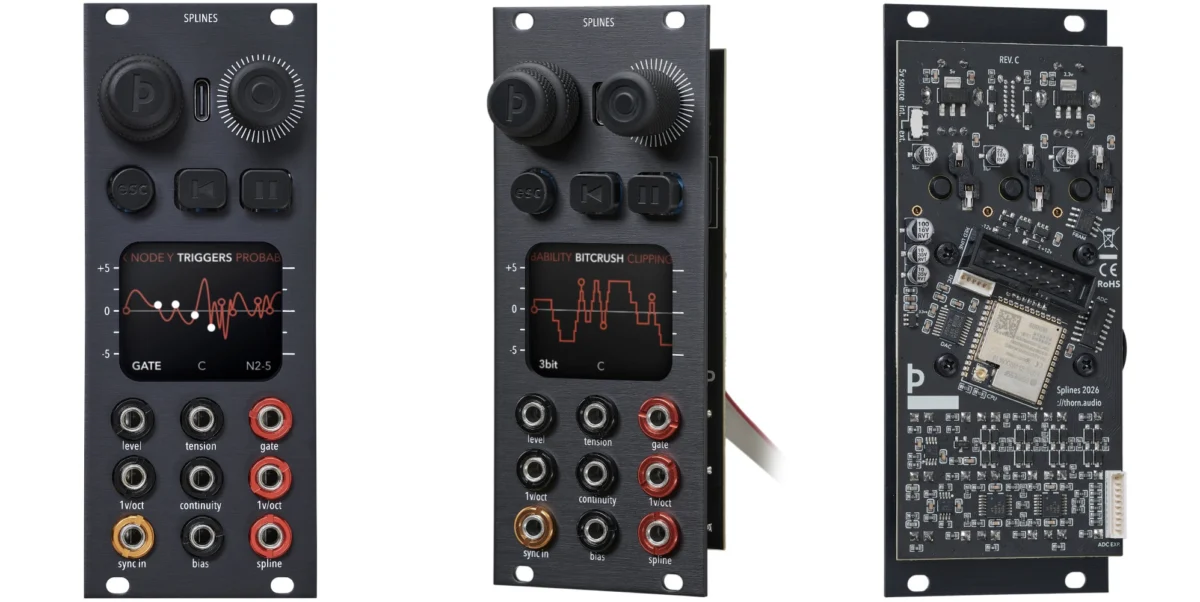
Thorn Audio has launched its groundbreaking Eurorack module, "Splines," a device poised to revolutionize the way musicians and sound designers interact with modular synthesizers. Far beyond a conventional utility module, Splines integrates an oscillator, step sequencer, modulation and envelope generator, and a sophisticated quantizer capable of custom tunings, all unified by an interactive, animated visual interface. This innovative module allows for the creation of intricate, precise curves and dynamic sonic textures, positioning itself as an indispensable tool for both technical precision and expressive musicality.
The development of Splines is the culmination of extensive beta testing, where it quickly became apparent that the module offered a unique synthesis of scientific precision, artistic fluidity, and deep musical control. Its design philosophy appears to draw inspiration from high-precision laboratory equipment and the tactile, intuitive nature of art class tools. The module’s display, described as feeling "tactile," allows users to directly manipulate parameters and nodes, fostering a sense of physical engagement that is often absent in digital interfaces, even within the tactile world of modular synthesis. The inclusion of customizable tuning scales for its quantizer has been particularly lauded, addressing a long-standing desire within the modular community for greater melodic and harmonic flexibility.
A Visionary Endeavor: From Schneidersladen to Splines
The genesis of Splines can be traced to the expertise of engineer and developer Hallvard Kristiansen, whose background includes significant experience as a repair technician at the renowned Schneidersladen, a hub for electronic music innovation. Thorn Audio, already recognized for its popular VCLFO modulator, has taken a significant leap forward with Splines. While the VCLFO focused on traditional analog controls and fixed waveforms, Splines embraces a visual, digital interface. This allows for the precise manipulation of waveforms and patterns, leveraging the mathematical elegance of splines to generate an unprecedented range of sonic shapes and temporal evolutions. The module’s name itself directly references the core mathematical concept that underpins its functionality.
Understanding the Spline: The Mathematical Foundation of Sonic Expression
At its core, a spline is a mathematical construct consisting of piecewise polynomial functions that are smoothly joined together. This fundamental principle allows for the creation of smooth interpolations between defined points, a technique that forms the backbone of various digital art and design disciplines, including vector graphics, animation, and the creation of motion curves. In the context of Eurorack synthesis, the application of splines offers musicians an intuitive method for crafting complex patterns and shapes, and for modulating and evolving these sonic elements with remarkable fluidity.
The ubiquity of splines in modern digital tools means that many individuals have encountered them without necessarily recognizing the underlying mathematics. When users add "easing" to points in a Digital Audio Workstation (DAW) or video editor, or when they construct curved shapes using vector drawing software like Adobe Illustrator, they are typically interacting with splines. For instance, the familiar "pen tool" in Adobe Illustrator utilizes Bézier curves, which are a specific type of spline. The concept of splines is further illustrated by the Catmull-Rom spline, named after computer scientists Raphael Rom and Ed Catmull. In the nascent days of computer graphics and animation, Catmull, a co-founder of Pixar, collaborated with Rom in 1974 to publish a seminal paper, "A class of local interpolating splines," laying crucial groundwork for the field.
The Catmull-Rom spline is celebrated for its conceptual simplicity: given a set of points, it generates an interpolated curve where each point also serves as a control point. This makes it a common starting point for those exploring creative coding, as exemplified by the curve() function in the Processing programming environment. However, for those seeking a more nuanced control over curve characteristics, the capabilities extend further.
Beyond Simplicity: The Nuance of Kochanek-Bartels Splines
For enthusiasts of precise curve manipulation, the true power lies in the ability to control the finer details of shape and transition. Splines builds upon the foundation of the 1984 Kochanek-Bartels spline. This particular type of spline incorporates three key parameters – tension, bias, and continuity – making it exceptionally well-suited for integration into a CV-controlled modular environment where precise tweaking and modulation are paramount. The Kochanek-Bartels spline was developed by Doris Kochanek of the National Film Board of Canada and Richard Bartels of the University of Waterloo, and has since been adopted by industry-standard software such as 3D Studio Max and Newtek Lightwave. Technically, Splines employs a cubic Hermite spline with Kochanek-Bartels tangents, offering a sophisticated yet controllable approach to curve generation.
The conceptual underpinnings of splines and their application in creating smooth paths and transitions are further illuminated by the work of independent game designer and educator Freya Holmér. Holmér’s insightful discussions on topics like "why can’t you multiply vectors" and "lerp smoothing is broken" highlight the fundamental importance of understanding mathematical concepts like interpolation and smoothing, not only in computer graphics and gaming but equally in the realm of sound and music.
The Hardware: Precision Engineering in a Compact Form Factor
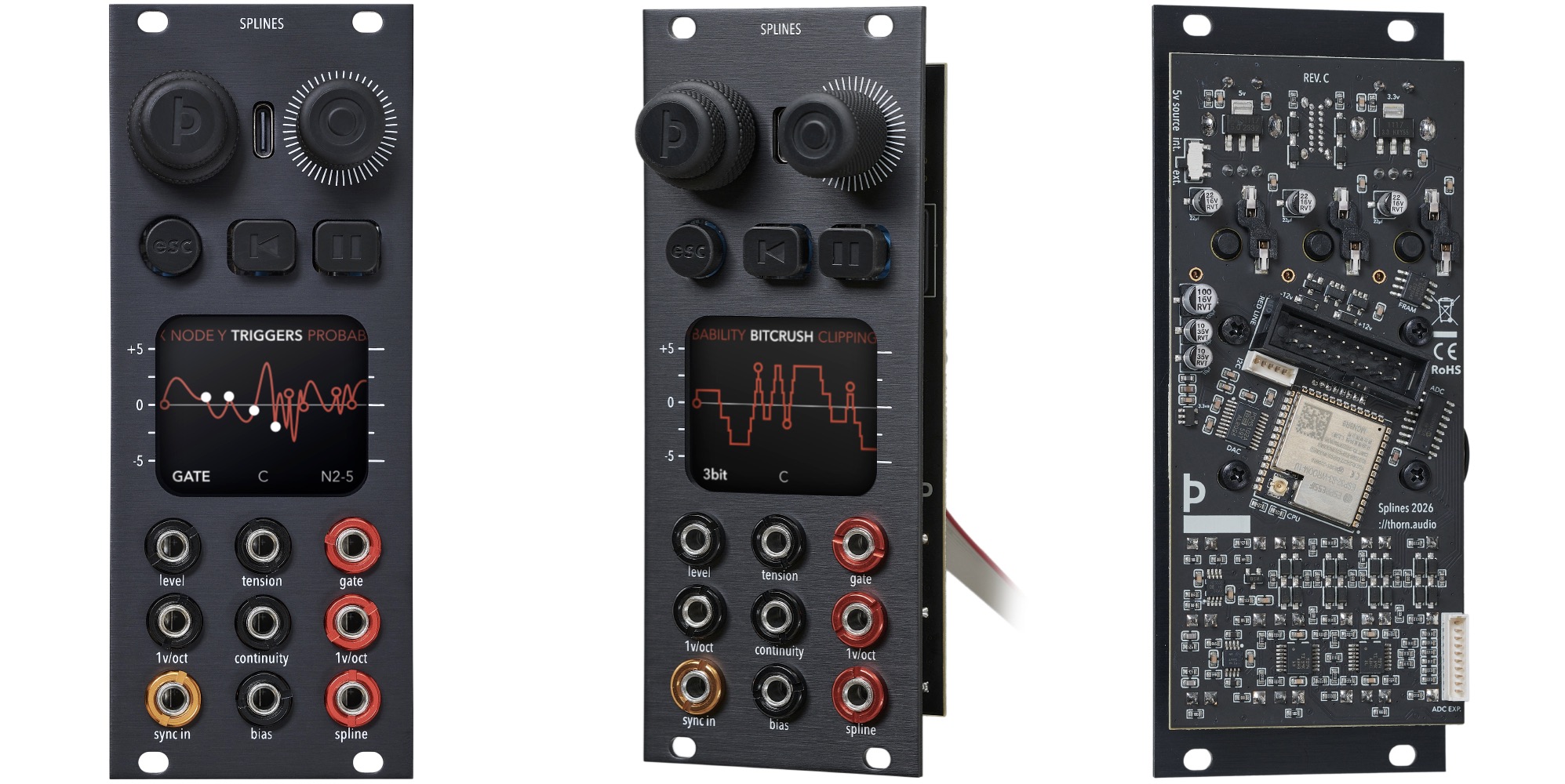
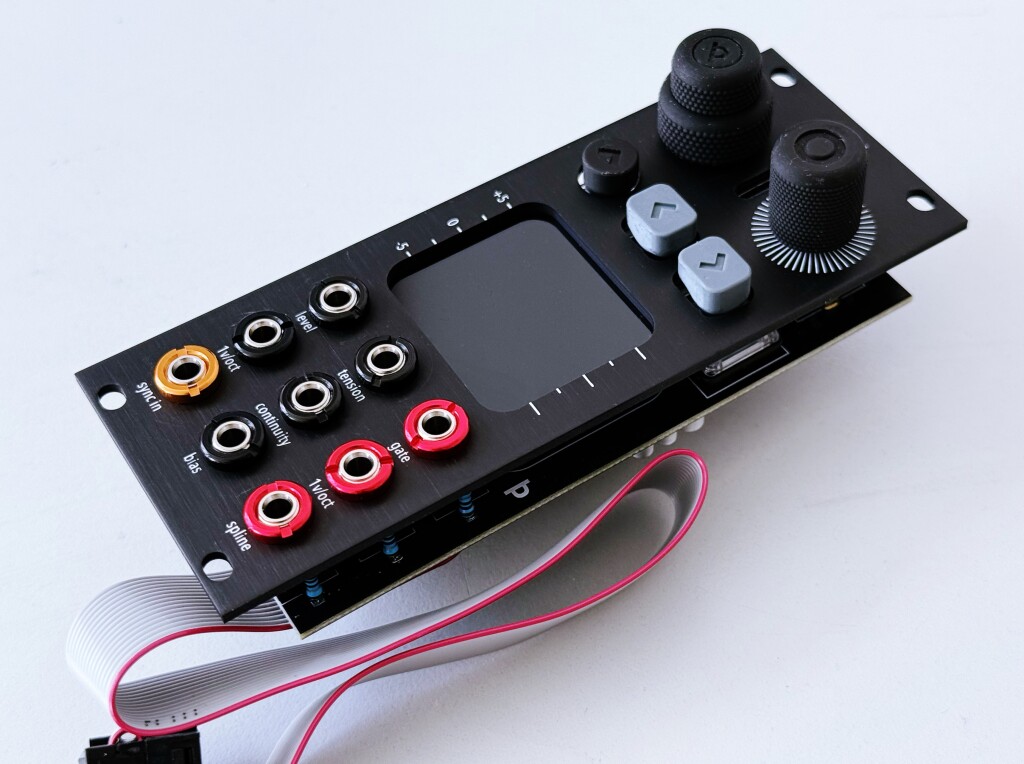
To facilitate the complex calculations and intuitive manipulation of splines, Thorn Audio has engineered a robust and user-friendly hardware module. The Splines module is housed within a compact 10HP Eurorack format, belaying its extensive capabilities. The design emphasizes immediate accessibility, ensuring that users can engage with its advanced features without resorting to convoluted menu diving.
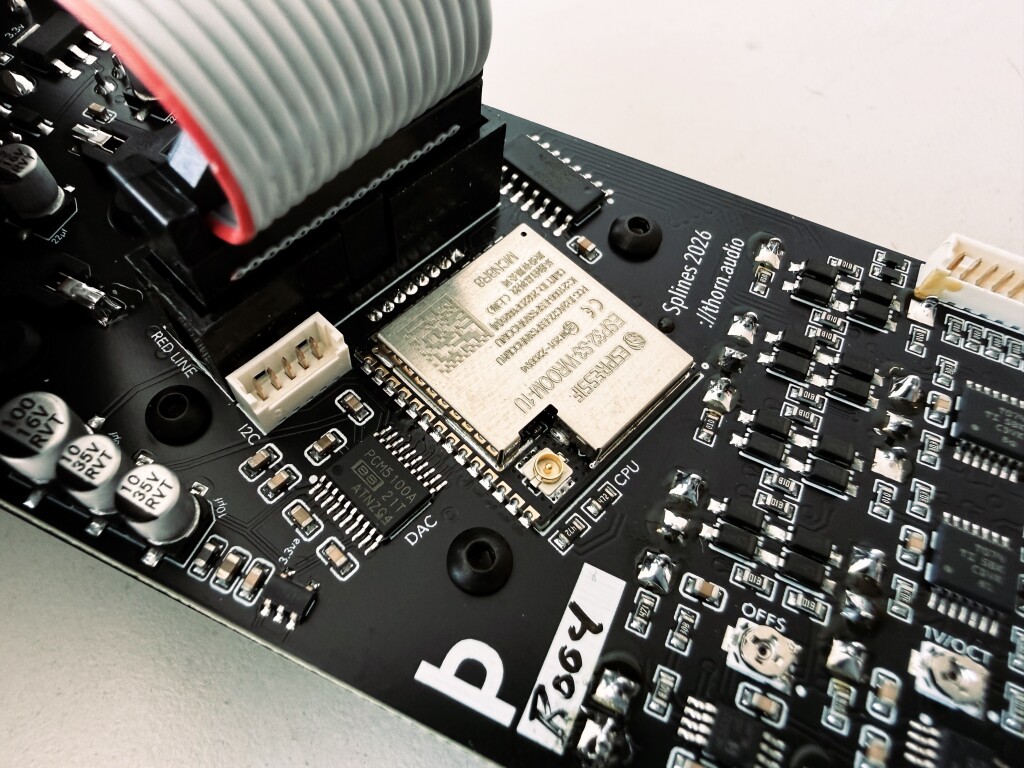
The module is powered by an ESP32 microcontroller, a powerful and versatile chip known for its dual-core Tensilica LX6 microprocessor and integrated Wi-Fi and Bluetooth capabilities. This choice of processor allows for the real-time processing of complex mathematical algorithms required for spline generation and manipulation, as well as powering the high-resolution display and interactive interface. The onboard memory, comprising 4MB of PSRAM and 16MB of Flash memory, provides ample space for waveform data, custom tuning tables, and user presets.
The interface features a high-resolution 320×240 pixel TFT display, providing clear visual feedback of the spline curves, control points, and parameter values. This visual clarity is crucial for understanding the complex shapes being generated and for making precise adjustments. Complementing the display are four rotary encoders, each with an integrated push-button function. These encoders offer tactile control over various parameters, allowing users to intuitively "twirl" their way through curve shaping, node editing, and other functions. The push-button functionality provides quick access to sub-menus and parameter adjustments, further enhancing the directness of the interaction.
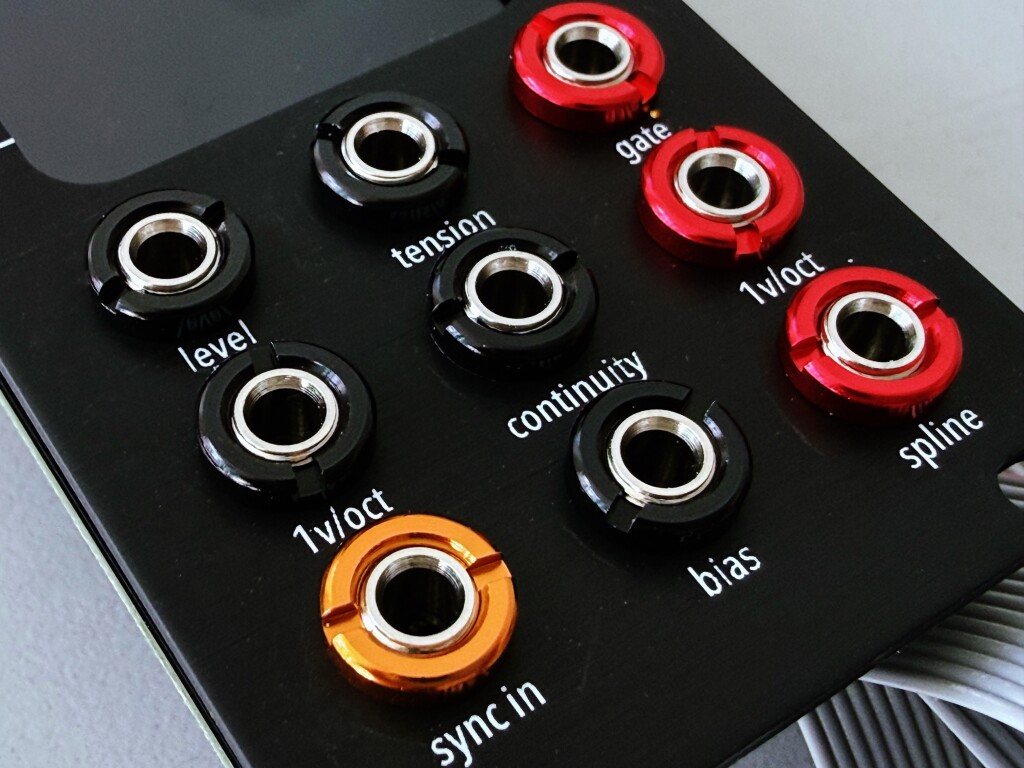
Connectivity is handled via standard 3.5mm Eurorack jacks. The module offers multiple inputs and outputs, including:
- CV Inputs (x2): For modulating parameters like tension, bias, continuity, and node positions using external control voltages.
- Gate/Trigger Inputs (x2): For sequencing, clocking, and triggering events.
- Audio/CV Outputs (x2): Capable of outputting generated waveforms, envelopes, or control signals.
The module’s power consumption is modest, requiring 250mA at +12V and 50mA at -12V, making it a relatively power-efficient addition to any Eurorack system.
The Power of Splines: Versatility and Intuitive Control
The visual interface of Splines was a collaborative effort, with designer Joni Caparas working alongside Hallvard Kristiansen to create a fluid and intuitive user experience. The underlying mathematics are ultimately channeled into a single, overarching goal: to empower users to sculpt curves and shapes with unparalleled ease and immediacy. Beyond the fundamental spline parameters of frequency, tension, continuity, and bias, users can manipulate a range of behaviors that dynamically reshape their sonic curves. These include:
- Node Manipulation: Directly adjusting the position and influence of individual points along the spline.
- Curve Shaping: Fine-tuning the curvature and flow between nodes.
- Folding and Squeezing: Applying non-linear transformations to distort and compress the spline’s shape.
- Offsetting: Shifting the entire spline along an axis.
- Quantization with Scala Support: Precisely aligning generated notes to custom tuning scales, offering deep harmonic control.
- Wavetable Generation: Creating unique, dynamic waveforms for oscillator applications.
The versatility of Splines extends across numerous synthesis and sequencing tasks. When its frequency parameter is increased, it effectively functions as a sophisticated spline-based wavetable oscillator, capable of generating unique and evolving timbres. By patching an envelope signal into one of its inputs (either from an external source or even another instance of Splines), the module can serve as a dynamic voltage-controlled amplifier (VCA). Furthermore, its integrated sequencing capabilities allow it to function as a step sequencer or a Voltage Controlled Low-Frequency Oscillator (LFO), with the option to synchronize to an external clock or trigger signals. Its quantizer, supporting the Scala scale file format, opens up vast possibilities for microtonal and non-standard tunings, a feature highly sought after by experimental musicians. The ability to generate complex envelopes with precise curve control further solidifies its role as a central utility in a modular setup.
In an ecosystem often characterized by specialized, single-purpose modules, Splines stands out as a true multifunctional powerhouse. It manages to integrate a vast array of capabilities into a compact form factor without succumbing to the pitfalls of complex menu systems or mode-switching obfuscation. Instead, its flat menu structure, coupled with abundant visual feedback and readily accessible parameters, ensures a streamlined workflow. It can function as an essential oscilloscope or VCA when such modules are otherwise occupied, offering immediate utility in tight situations.
The inherent addictiveness of Splines stems from the accessibility of its front panel. Every setting is a mere twist or press of an encoder away, with no hidden functionalities. Whether adjusting a node, modifying the overall shape, or applying transformations like folding or squeezing, the control is direct and immediate. Users can either dial in parameters manually or utilize the patching capabilities to modulate them with external signals from other modules, fostering a dynamic and responsive creative process.
A New Paradigm in Modular Interaction
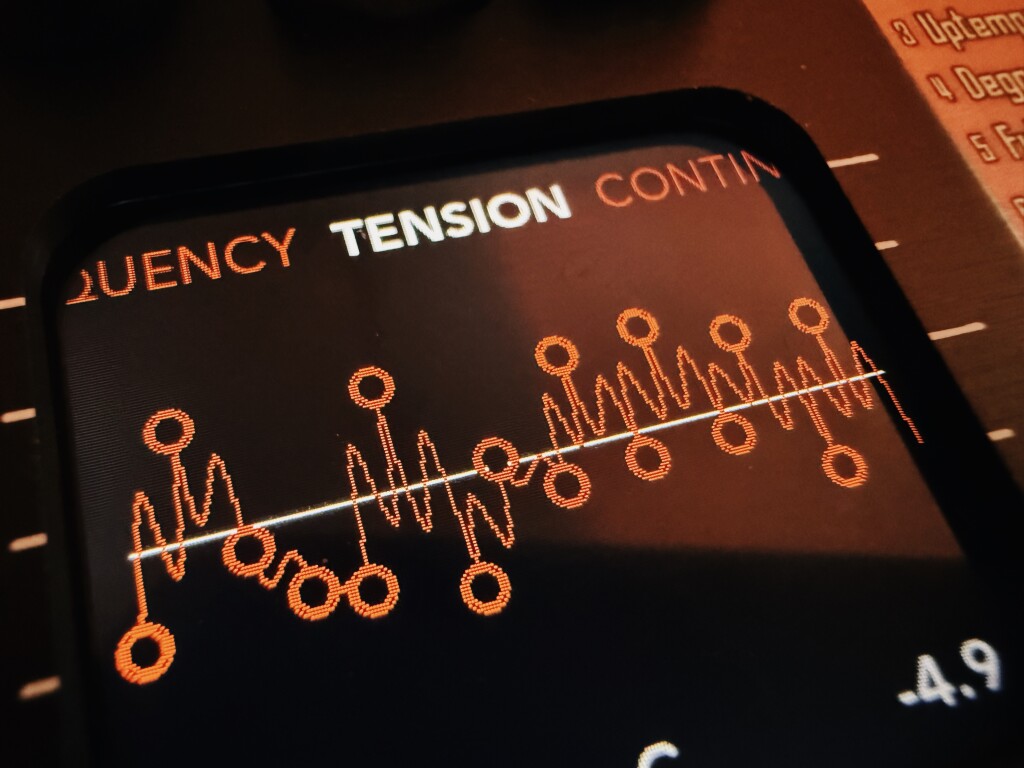
The overall user experience of Splines evokes a feeling of how modular synthesis was perhaps always intended to be: intuitive, immediate, and deeply engaging. While other ambitious multifunctional modules have emerged, often bridging digital complexity with analog signal flow—with Ornament & Crime serving as a notable predecessor in this lineage—Splines distinguishes itself through its clear visual display and user-friendly interface. This makes it feel less like a complex digital tool and more like a dedicated musical instrument, offering a more immediate and discernible connection between user input and sonic output.
The implications of Splines are significant for the modular synthesis community. It democratizes access to advanced signal shaping and melodic control, traditionally requiring extensive knowledge of mathematics or complex programming. By abstracting these complexities into an intuitive graphical interface and tactile controls, Splines empowers a broader range of users to explore sonic territories previously only accessible to those with specialized skills. The ability to generate and modulate complex curves opens up new avenues for sound design, from intricate rhythmic patterns to evolving textural soundscapes and precisely shaped envelopes.
Furthermore, the integration of custom tunings through Scala support addresses a critical need for greater harmonic flexibility in electronic music production. This feature alone could inspire new compositional approaches and foster a deeper exploration of non-Western and microtonal musical systems within the modular context. The module’s success is likely to encourage further development of similar instruments that prioritize intuitive interaction and mathematical sophistication, pushing the boundaries of what is possible in digital music creation.
Thorn Audio’s "Splines" is more than just another Eurorack module; it is a testament to the power of integrating advanced mathematical concepts with intuitive design. It represents a significant step forward in making complex sound manipulation accessible and enjoyable, promising to be a cornerstone for many modular synthesists.
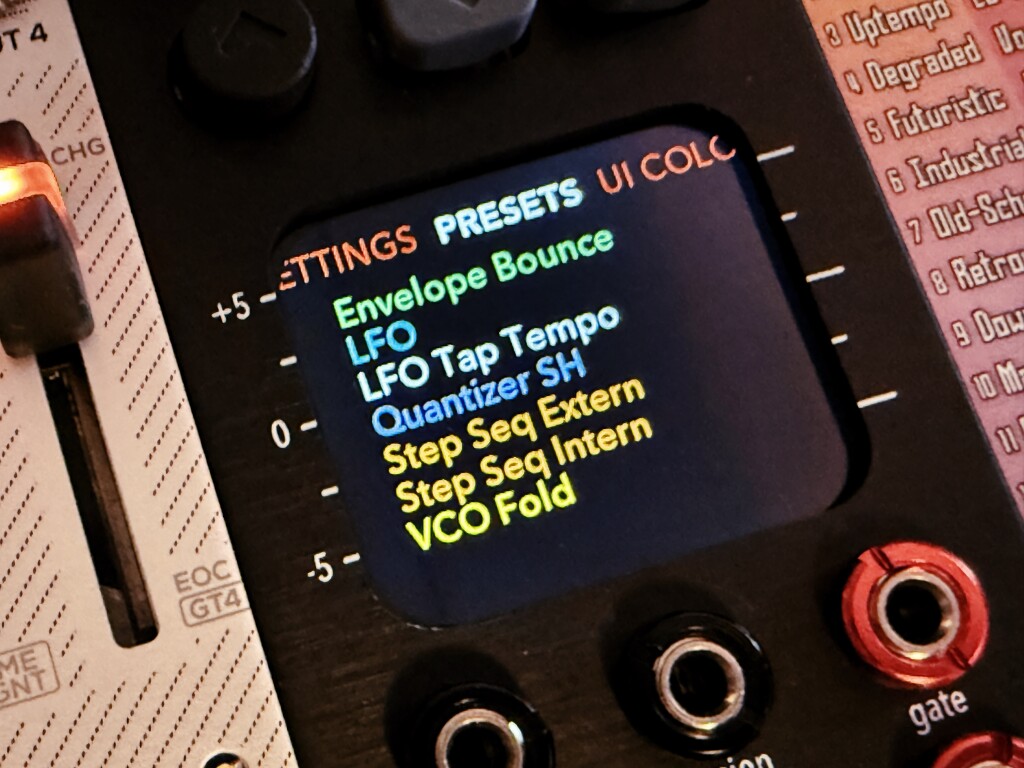
For those eager to explore its capabilities further, detailed information is available at: https://thorn.audio/splines.
Given the sheer breadth of functionality and creative potential offered by Splines, further in-depth coverage and practical demonstrations are anticipated. The development process behind such an innovative module, helmed by Hallvard Kristiansen, also presents a compelling narrative for future exploration.
Disclosure: The author has a long-standing professional relationship with Hallvard Kristiansen, who provides crucial server administration for CDM. This relationship does not influence the objective reporting of this product.
Addendum: For those with a deep dive into the historical context of interpolation, a 1996 ASCII text narrative on the subject, written by Steve Noskowicz for the tool POVray, can be found at: https://news.povray.org/povray.binaries.tutorials/attachment/%[email protected]%3E/Splines.bas.txt