 Aveline Kirana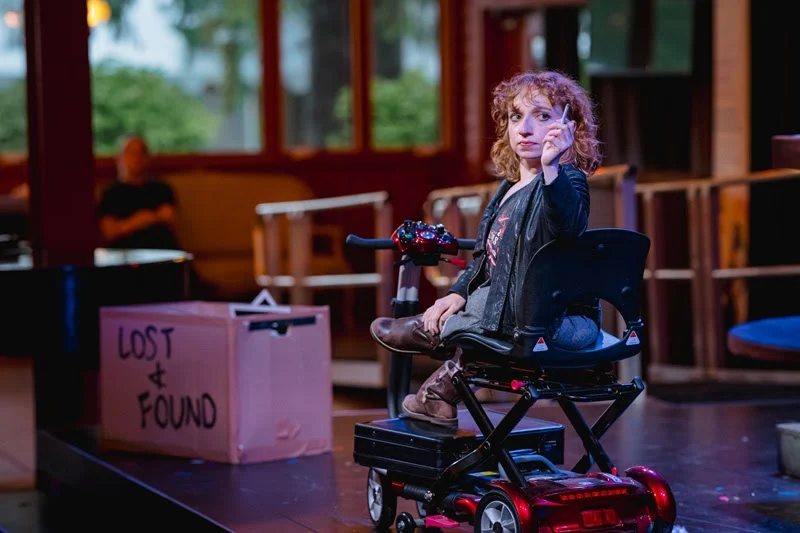
A landmark collaboration between four of New York State’s most prominent performing arts institutions—The Glimmerglass Festival, Opera Saratoga, Finger Lakes Opera, and the Seagle Festival—will culminate in the New York City premiere of a newly adapted English concert version of Kurt Weill, Bertolt Brecht, and Elisabeth Hauptmann’s theatrical work, Happy End. The performance is scheduled for Thursday, November 12, 2026, at the Kaufman Music Center’s Merkin Hall, beginning at 7:30 p.m. This high-profile showcase serves as the grand finale of an extensive regional tour that spans eight distinct venues across New York State and Western Massachusetts, marking a significant milestone in regional operatic cooperation.
The Genesis of a Collaborative Vision
The production represents a unique shift in the traditional operating models of regional arts organizations. By pooling resources, artistic personnel, and administrative bandwidth, the four participating companies have bypassed the logistical and financial constraints that often prevent smaller or mid-sized organizations from mounting ambitious, multi-city touring productions.
Rob Ainsley, the Artistic and General Director of The Glimmerglass Festival, noted that the initiative is intended to demonstrate the power of institutional synergy. "This production of Happy End shows what can happen when the Upstate New York opera community comes together to make something that no one organization could have made on its own," Ainsley stated in a press release. Ainsley will serve a dual role in the performance, conducting the ensemble and providing piano accompaniment.
The artistic vision for the piece is spearheaded by Mary Birnbaum, the General and Artistic Director of Opera Saratoga, who takes on the role of director. The production aims to preserve the raw, cabaret-inflected energy of the original Weill-Brecht-Hauptmann collaboration while introducing modern accessibility through refined translation and adaptation.
Historical Context and Artistic Evolution
Happy End, which premiered in Berlin in 1929, is often overshadowed by the team’s more famous collaboration, The Threepenny Opera. However, its score remains a definitive example of the Weimar-era "Zeitoper" (opera of the times) movement. The work is best known for its integration of jazz-influenced instrumentation and its biting, satirical narrative, which explores the intersections of organized crime and the Salvation Army.
The 2026 production features an English adaptation by Michael Feingold, known for his masterful translations of the Brechtian canon, and a new English book by Glimmerglass dramaturg Kelley Rourke. This specific iteration is designed as a seamless, intermission-less concert performance, prioritizing the musical integrity of iconic tracks such as "Bilbao Song," "Mandalay Song," and the haunting "Surabaya Johnny."
By focusing on a concert version, the production leans into the intimate acoustic environment of Merkin Hall, utilizing instrumentalists from the Manhattan School of Music’s jazz program. This collaboration with the conservatory underscores the production’s commitment to bridging the gap between classical vocal training and the improvisational, rhythmic requirements of Weill’s music.
Production Timeline and Tour Chronology
The road to Merkin Hall has been a deliberate, months-long endeavor. The production was conceived as a regional tour, designed to bring high-quality musical theater and opera to communities that might otherwise lack access to such works.
The tour schedule was meticulously planned to build momentum leading up to the New York City premiere:
- Early Fall 2026: Initial rehearsals and technical residencies hosted across the partner organizations’ home bases.
- October 2026: A series of eight performances across various venues in Western Massachusetts and Upstate New York, testing the production’s adaptability in diverse acoustic settings.
- November 2026: Final adjustments and the culminating performance in New York City.
This touring model allows for the refinement of character dynamics and musical pacing before the high-stakes debut at the Kaufman Music Center. For the cast—which includes Ana Karneža, Christine Taylor Price, Gregory Feldmann, Lisa Marie Rogali, Jonathan Pierce Rhodes, Bradley Bickhardt, Jason Zacher, William Raskin, and Lauren Torey—the tour has functioned as a laboratory for character development.
Analytical Perspective: The "Coalition Model"
Industry analysts have noted that the "coalition model" employed by these four festivals may serve as a blueprint for the future of regional opera. In an era where arts funding is increasingly competitive and donor bases are shifting, the ability to share production costs and audience development initiatives is becoming an existential necessity.
"The collaborative effort behind this Happy End production is not merely a creative choice; it is a strategic response to the economic realities of the post-pandemic performing arts landscape," observed one industry consultant familiar with the project. By sharing the fixed costs of scenery, costumes, and rehearsal time, the organizations have effectively increased their production value while minimizing individual risk. Furthermore, the cross-pollination of audiences between Glimmerglass, Opera Saratoga, Finger Lakes Opera, and the Seagle Festival creates a broader footprint, ensuring that the work reaches a diverse demographic ranging from seasoned opera-goers to younger jazz and theater enthusiasts.
The Role of Artistic Leadership
The inclusion of instrumentalists from the Manhattan School of Music’s jazz program is a critical component of the production’s artistic identity. Weill’s orchestration for Happy End demands a specific timbre—a mix of brassy, percussive energy and fluid, lyrical lines—that is often difficult to achieve with standard orchestral pits. By integrating jazz students, the production captures the authentic, gritty atmosphere of 1920s Berlin.
Mary Birnbaum’s direction, coupled with Rob Ainsley’s dual role as conductor and pianist, suggests an intimate, chamber-music approach to the work. By removing the traditional intermission, the production maintains a singular, propulsive narrative flow, mirroring the relentless pace of the Salvation Army’s mission in the story and the criminal underworld that opposes it.
Impact on the New York City Cultural Scene
The selection of Merkin Hall as the venue for the premiere is significant. Known for its exceptional acoustics and its role as a premier chamber music venue, Merkin Hall provides the ideal backdrop for a concert-style presentation of a work that relies heavily on its lyrical and musical subtext.
The premiere is expected to draw interest from both the academic and professional theater communities, as it represents a rare opportunity to see an authoritative, modern English-language staging of this specific Weill work. The production effectively bridges the gap between the scholarly study of Brechtian theater and the commercial reality of staging a show in the world’s most competitive arts market.
Looking Ahead
As the November 12 date approaches, the coalition is focused on the final leg of the tour. The logistical success of this endeavor will likely be scrutinized by other regional organizations looking for ways to expand their influence. Should this production of Happy End prove successful, it may trigger a trend of "shared-resource" productions that move away from the traditional, solitary production model.
The performance at Merkin Hall stands as a testament to the resilience and innovation of the Upstate New York opera scene. By prioritizing a collaborative framework, these four organizations have managed to elevate a complex, multi-layered work into a cohesive, touring spectacle that respects the original artistic vision of its creators while speaking to a contemporary audience. Whether this model can be replicated for grander, more resource-intensive operas remains to be seen, but for now, the collaboration serves as a compelling proof-of-concept for the future of regional performance art.