Nayara Elvina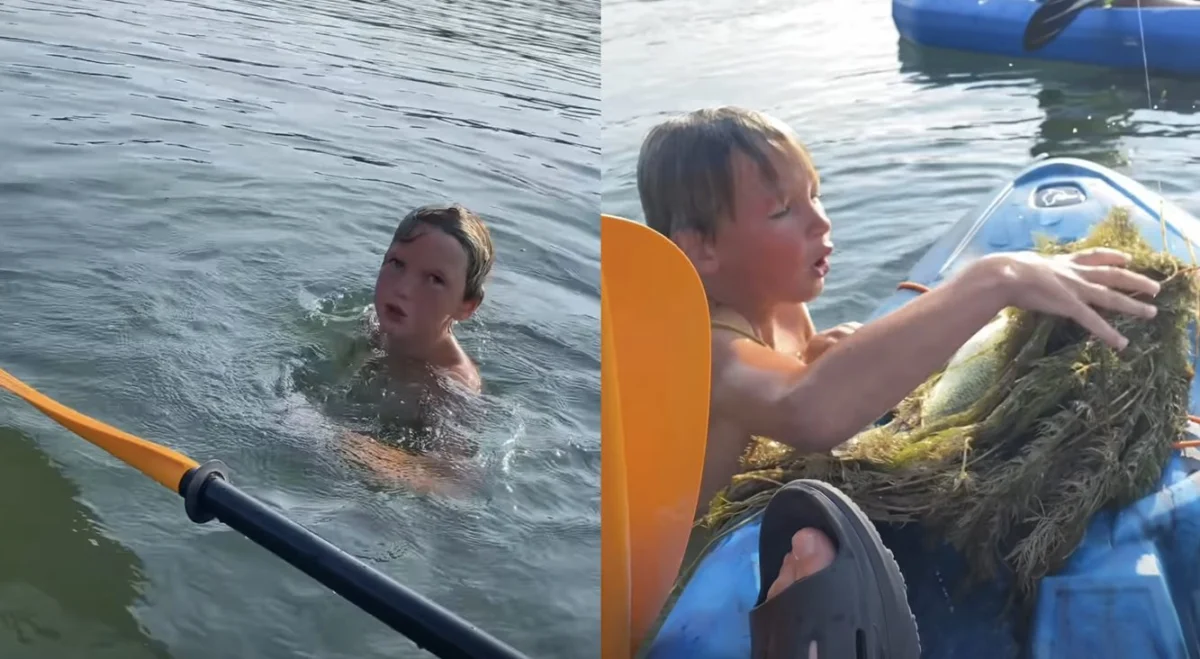
The intersection of traditional outdoor recreation and modern social media has produced a viral moment that highlights both the technical challenges of freshwater angling and the adventurous spirit of a new generation of outdoorsmen. In a video recently shared to the popular Instagram account "The Wild Westons," a young boy named Rocky Weston demonstrated remarkable grit by diving into the weed-choked depths of a Utah lake to retrieve a largemouth bass that had become hopelessly entangled in submerged vegetation. The footage, which has garnered significant attention across various digital platforms, offers a glimpse into the lifestyle of the Weston family—comprising brothers River, Rocky, and Rone—who have built a dedicated following by documenting their excursions into the American West.
The incident occurred during a routine kayak fishing expedition involving the three brothers and their father. While navigating a shallow, vegetation-rich area of the lake, the patriarch of the family successfully hooked a largemouth bass. However, as is common with the species, the fish immediately sought refuge in the dense "slop" of the lakebed. In the world of competitive and recreational angling, a "weed-bound" fish often results in a snapped line or a lost catch, as the friction and weight of the aquatic plants provide the fish with the leverage needed to throw the hook. Facing the prospect of losing the prize, the family turned to an unconventional retrieval method: direct physical intervention.
Chronology of the Retrieval Effort
The sequence of events, as documented in the viral footage, began with the father maintaining tension on the fishing rod from his kayak. Despite the mechanical advantage of the reel, the bass had buried itself so deeply in the weeds that it could not be winched to the surface. It was at this juncture that Rocky Weston transitioned from an observer to a primary participant in the recovery effort.
The young boy entered the water and performed a series of surface-style dives to locate the exact position of the snag. Initial attempts were focused on reconnaissance, as the murky water and dense foliage made visibility a challenge. After several descents, Rocky was able to identify the location where the fishing line intersected with the root systems and stems of the lake’s vegetation.
In a display of physical coordination and determination, Rocky performed a final dive, reaching into the thickest part of the weeds. Rather than attempting to delicately untangle the line, he grasped the entire mass of vegetation surrounding the fish and hauled it toward the surface. The video concludes with Rocky emerging from the water, triumphantly clutching a healthy largemouth bass along with a substantial amount of lake weed. While the father had initially described the fish as an "absolute giant," the eventual reveal showed a respectable, mid-sized specimen—a discrepancy that did not escape the notice of the family’s online audience.
Technical Context: The Challenges of Heavy Cover Fishing
The situation faced by the Westons is a common technical hurdle in freshwater biology and sportfishing. Largemouth bass (Micropterus salmoides) are known as "ambush predators" that thrive in environments with heavy structural cover. In many Utah reservoirs and lakes, this cover consists of invasive and native aquatic plants such as Eurasian watermilfoil, coontail, and various pondweeds.
When a bass is hooked in such an environment, its instinctual "flight" response is to dive deeper into the structure. The serrated edges of some aquatic plants and the sheer density of the stalks can create enough resistance to impede even the highest-quality braided fishing lines. Standard recovery techniques usually involve the angler moving the boat directly over the snag to pull vertically, but in shallow, high-density "mats," even this method can fail. Rocky’s decision to manually retrieve the fish represents the most extreme—and effective—form of "heavy cover" angling.
The Rise of "The Wild Westons" and Outdoor Content Creation
The Weston family has become a notable fixture in the outdoor social media landscape. Based in Utah, a state known for its diverse geography and robust public lands, the "Wild Westons" brand focuses on youth engagement with nature. Their content often features activities such as ice fishing, hiking, and wildlife encounters, positioning the brothers as capable and fearless participants in the natural world.
Prior to this bass retrieval video, the family’s most significant digital milestone involved footage of the brothers landing a massive northern pike during an ice fishing trip. That video established their reputation for handling high-stakes fishing scenarios that would challenge many adult anglers. The success of their channel reflects a broader cultural trend toward "adventure parenting," where parents prioritize hands-on, high-engagement outdoor activities to foster resilience and environmental stewardship in their children.
Public Reaction and Social Media Discourse
The video of Rocky’s dive triggered a wave of reactions from the angling community and the general public. On Instagram and other resharing platforms, the comments section became a mix of admiration for the boy’s "sticktuitiveness" and humorous critiques directed at the father.
Many users praised Rocky’s bravery, noting that diving blindly into thick lake vegetation requires a level of comfort with the water that many adults lack. Comments such as "Now that’s what you call a great fisherman" and "Rocky is the man of the house now" highlighted the boy’s pivotal role in the success of the catch. Others focused on the reward system of such a feat, with one user suggesting, "Get that kid ice cream, and whatever he wants!"
Conversely, the father’s role in the video became a point of lighthearted contention. Some viewers pointed out the irony of the father remaining in the dry comfort of the kayak while his son navigated the muddy lakebed. "Dad, raising the man he never was," one commenter joked, while another noted the humor in the father risking his son’s effort for a "3-pound ‘absolute giant.’" This dynamic—the capable child assisting the "scared" or "lazy" parent—is a classic trope in family-oriented viral content and contributed significantly to the video’s shareability.
Safety and Environmental Considerations
From a journalistic and safety perspective, the incident also raises points regarding best practices in outdoor recreation. While the water in the video appeared relatively shallow, diving into submerged vegetation carries inherent risks, including entanglement or contact with submerged debris such as discarded fishing tackle or sharp rocks.
Experts in youth outdoor safety emphasize that while such activities build character and skill, they should always be conducted under the close supervision of an adult capable of performing a water rescue. In this instance, the patriarch’s presence in the kayak and the shallow nature of the lake provided a controlled environment for Rocky to test his limits.
Furthermore, the "catch and release" ethics often promoted by the Weston family are a critical component of modern conservation. Largemouth bass are a vital part of Utah’s managed aquatic ecosystems. By successfully retrieving the fish rather than simply cutting the line, Rocky prevented the bass from being "tethered" to the weeds, a condition that usually leads to the death of the animal due to exhaustion or predation.
Broader Implications for Youth in the Outdoors
The story of Rocky Weston and the "Wild Westons" serves as a case study in the evolving way that the public consumes outdoor media. In an era where digital screens often compete with physical activity, the Westons’ content provides a counter-narrative of active, rugged childhood.
According to data from the American Sportfishing Association, youth participation in fishing is a key indicator of future support for conservation funding, as excise taxes on fishing equipment (through the Dingell-Johnson Act) directly fund state wildlife agencies. Families like the Westons, who normalize and celebrate the "messy" parts of fishing—like diving into weeds to save a catch—play a role in maintaining the cultural relevance of the sport.
As the video continues to circulate, it stands as a testament to a specific brand of American grit. Whether the fish was the "absolute giant" the father claimed or merely a standard largemouth, the value of the experience lay in the teamwork and the willingness of a young boy to go the extra mile—or in this case, the extra few feet underwater—to finish the job. The Weston brothers continue to document their adventures, with Rocky’s dive now serving as a hallmark moment in their growing digital legacy.