Aveline Kirana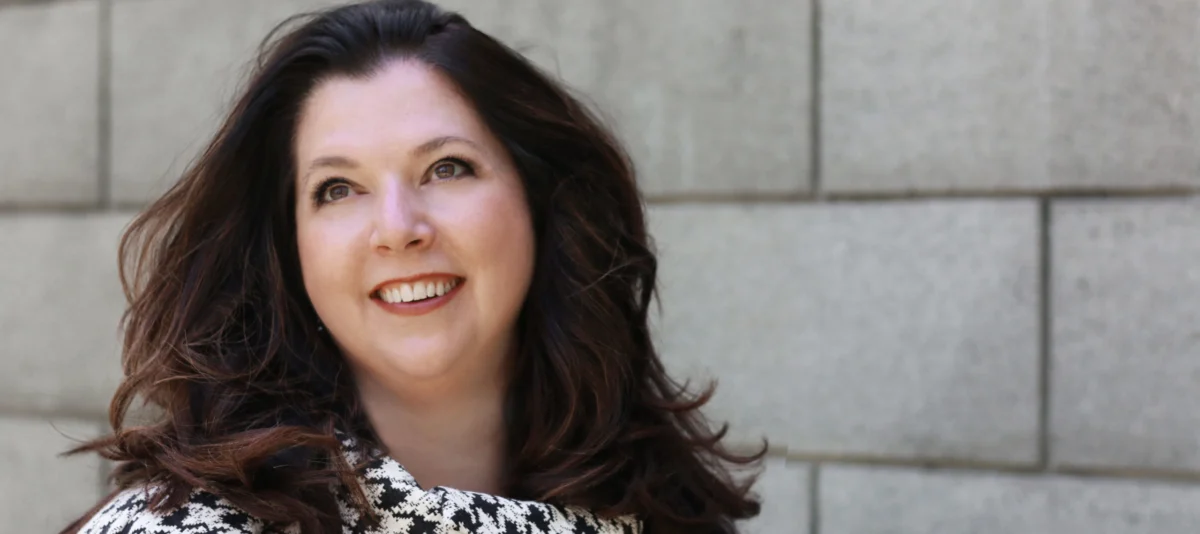
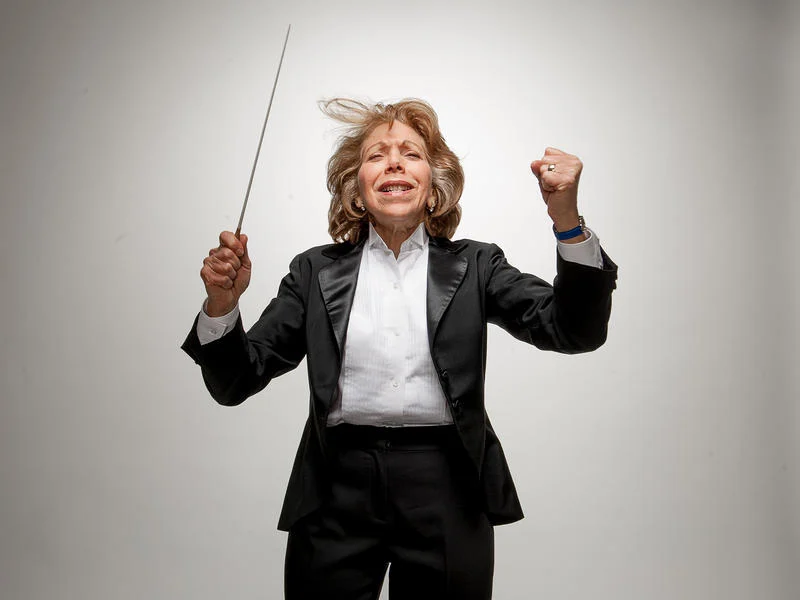
The path from a gifted young musician to a fully realized opera singer capable of sustaining a demanding career is a complex journey, one that requires more than just innate talent. It demands rigorous training, profound self-awareness, and the resilience to navigate an often unpredictable industry. Carrie-Ann Matheson, Artistic Director of the San Francisco Opera Center, a distinguished pianist, leadership coach, and educator, who helms the prestigious Merola Opera Program and the Adler Fellowship alongside General Manager Markus Beam, offers a compelling perspective on this transformative process. Her insights reveal a deep understanding of the multifaceted development required for today’s aspiring opera artists, emphasizing a holistic approach that nurtures both craft and character.
The Evolving Demands on Emerging Opera Professionals
Matheson articulates a foundational principle: "At the most basic level, an emerging musician needs to develop the natural talent she or he already has, ideally with the right mentorship." This development, she stresses, must encompass a broad spectrum of technical and performance skills, but critically, it must also extend to cultivating the practical life skills necessary for a sustainable career as a working performer. The contemporary opera landscape, characterized by its inherent volatility, necessitates this comprehensive preparation. "The modern opera world is full of challenges, and artists have to be deliberate about developing both their craft and the real-world skills that performance and life on the road demand," Matheson explains.
This practical application translates into building robust resilience, both artistically and personally, within a field that is intensely competitive and high-pressure. The economic realities facing opera companies worldwide – including company closures and shrinking budgets – have amplified the competition for roles and staff positions. Matheson underscores the sheer volume of rejection artists face, a psychological hurdle that requires significant fortitude. Even for those who secure positions, the demands are relentless: extensive travel, prolonged periods away from home, the inherent isolation of a touring artist, persistent fatigue, significant stress, and persistent financial instability. The cumulative impact on an artist’s mental and physical well-being can be profound. Matheson draws a striking parallel, stating, "The level of skill required of a top performing artist is comparable to that of an Olympic athlete. It’s nonstop development and refinement, for the rest of the career." The competitiveness is starkly illustrated by the Merola Opera Program’s admissions process, which receives over 1,500 applications annually for a mere 28 coveted spots, highlighting the fierce competition for elite training opportunities.
A Legacy of Artistic Development: The Merola and Adler Programs
The San Francisco Opera Center’s commitment to nurturing emerging talent is rooted in a rich history that dates back to the mid-20th century. The origins of its artist training initiatives can be traced to programs established by Kurt Herbert Adler, the company’s second General Director, in 1954. The Merola Opera Program, named in 1957 in honor of Gaetano Merola, the San Francisco Opera’s founding General Director, became a cornerstone of this legacy. In 1982, Terence A. McEwen, Adler’s successor, consolidated these vital training endeavors under the umbrella of the San Francisco Opera Center. This strategic move aimed to foster artist development within the company, rather than relying on external programs, a philosophy that also informed the creation of the Adler Fellowship.
The Adler Fellowship, designed as a resident artist program, has served as a crucial incubator for talent, with its alumni list reading like a who’s who of operatic luminaries. Notable graduates include sopranos Deborah Voigt and Nadine Sierra, mezzo-soprano Ruth Ann Swenson, tenors Pene Pati and Brian Jagde, sopranos Amina Edris and Elza van den Heever, soprano Patricia Racette, and countertenor Aryeh Nussbaum Cohen, among many others who have achieved international acclaim. Matheson and General Manager Markus Beam assumed their current leadership roles at the San Francisco Opera Center in January 2021, inheriting and continuing this distinguished tradition of artist development.
Distinct Pathways, Unified Philosophy: Merola and Adler Explained
The Merola Opera Program and the Adler Fellowship, while both integral to the San Francisco Opera Center’s mission, offer distinct yet complementary training experiences. Merola is an intensive, 10-week summer program designed to provide a concentrated burst of professional development for singers, coach-pianists, and stage directors. It offers an immersive environment where artists can hone their skills, receive targeted feedback, and gain exposure to the professional opera world.
In contrast, the Adler Fellowship is a more extended, generally two-year resident artist program. This longer duration allows for a deeper exploration of artistic and personal growth, providing a sustained period of mentorship and practical experience within the San Francisco Opera ecosystem. Both programs, however, are united by a comprehensive training philosophy that extends beyond traditional operatic disciplines.
"They’re distinct," Matheson clarifies. "Merola is an intensive 10-week summer program, open to singers, coach-pianists, and stage directors. The Adler Fellowship is a resident artist program, generally two years long." She elaborates on the breadth of their curricula: "Each takes a wide ranging approach to training: vocal and instrumental technique, style, language study, diction, and movement balanced by training that people haven’t always associated with an opera program: personal leadership, life coaching, performance strategy, financial wellness, and mental and physical wellness." This commitment to a holistic curriculum is a source of immense pride for the Center. "We take real pride in the fact that both programs put equal emphasis on artistic and personal training."
The "Whole Artist" Approach: Empowering Beyond the Stage
Matheson champions what she terms a "whole artist" approach, a philosophy that recognizes the inextricable link between an artist’s personal well-being and their creative freedom. "An artist can’t be artistically free if their life, finances, or health is in chaos," she asserts. The Opera Center operates on a "humans first" principle, equipping artists with tangible, practical skills that empower them to thrive in their lives, whatever that may entail for each individual.
This contrasts with a historical tendency in opera training that often encouraged a singular focus on artistic pursuits, sometimes at the expense of personal well-being. "In the past, artists were often encouraged to be single-minded and only think about music. Portfolio careers were discouraged. You went for the big dream, no matter the personal cost," Matheson observes. "We think that’s backwards. Let’s develop the artist and the person in tandem, so there are more creative, grounded, healthy people in the world. This will ultimately make for better art."
The Merola program serves as the initial planting of these seeds, offering foundational support. The Adler Fellowship, with its extended timeframe, allows for a deeper cultivation of these essential life skills. Matheson acknowledges the real-world concerns of emerging and established artists: the perpetual challenge of financial stability, the ongoing need for training, and the delicate balancing act of managing health, relationships, and family life amidst the demanding realities of an unstable industry. "Helping our artists build the skills for a healthier life is a priority, and we weave that support directly into the training, at a pivotal moment in a career," she states. The San Francisco Opera Center’s programs are widely recognized as leading institutions for aspiring singers, coach-pianists, and stage directors, a responsibility that Matheson and Beam approach with utmost seriousness.
Cultivating Patience, Resilience, and Self-Awareness
Beyond technical proficiency, Matheson identifies several critical attributes young singers must cultivate during their training years. Foremost among these is patience. "It’s a slow, meticulous test of endurance. Everything takes time. You don’t become an opera singer, pianist, or director overnight," she emphasizes. This requires a profound willingness to learn and an unwavering honesty with oneself regarding aspirations and commitment to development.
The multifaceted nature of an artistic personality also demands attention. A significant challenge for many is learning to receive judgment and rejection in a healthy manner, to internalize critique without letting it define their self-worth. This is particularly acute for singers, whose bodies are their instruments. "They have to be vulnerable in front of a room full of strangers, and in front of their closest friends, and it can be a real challenge to learn how to receive judgment and rejection in a healthy way, to absorb a critique without taking it as a verdict on who they are," Matheson explains. A perceived remark about their vocal performance can easily feel like a personal indictment of their physical and emotional being, rather than a critique of their work.
A Pianist’s Journey: From Collaboration to Artistic Leadership
Matheson’s own trajectory into artistic leadership at the San Francisco Opera Center is a testament to her deep understanding of the collaborative spirit inherent in music-making and her passion for nurturing emerging talent. Originally hailing from Prince Edward Island, Canada, her musical journey began at the piano. Her academic credentials include a Bachelor of Music Education from the University of Prince Edward Island, a Master of Music in Collaborative Piano from the Cleveland Institute of Music, and a Professional Studies Diploma in Vocal Accompanying from the Manhattan School of Music. A graduate of the Metropolitan Opera’s Lindemann Young Artist Development Program, Matheson discovered her calling not in a solo piano career, but in the profound fulfillment of musical collaboration.
"Somewhere in the middle of my studies, I realized that what drew me wasn’t a solo piano career but collaboration. Making music with another person brings me so much fulfillment," she shares. This instinct led to an active performing career that continues today, marked by cherished musical partnerships, including a notable collaboration with French tenor Benjamin Bernheim, with whom she recently recorded the album "Douce France." Her fascination with the development of opera singers and the shaping of their careers fueled a desire to create environments where young musicians could take ownership of their artistry and their lives.
A Global Perspective on Artist Development
Matheson’s expertise in artist training has been shaped by her extensive experience with numerous prestigious young artist programs around the world. Prior to her tenure at the San Francisco Opera Center, she contributed her insights and guidance to:
- The International Opera Studio at Opernhaus Zürich
- The Opera Studio at the Wiener Staatsoper
- The Atkins Young Artists Program at the Mariinsky Theatre
- The Lindemann Young Artist Development Program at the Metropolitan Opera
- The Ryan Opera Center at Lyric Opera of Chicago
- The Music Academy of the West
- The Aspen Music Festival
- The International Vocal Arts Institute
This diverse international experience has provided her with a comprehensive understanding of various pedagogical approaches and the unique challenges faced by artists across different cultural and institutional contexts.
The Right Opportunity at the Right Time: Arriving in San Francisco
Matheson’s arrival at the San Francisco Opera Center in 2021 was the culmination of a series of serendipitous encounters and professional growth. Her journey began in 2006 when she stepped in as a replacement pianist for two productions at the Los Angeles Opera. During this time, she developed a valuable working relationship with Greg Henkel, who was then involved in casting for LA Opera and is now the San Francisco Opera’s Managing Director, Artistic. Their professional paths remained loosely connected over the years, including a brief meeting in Zurich where Matheson expressed her interest in pursuing a career in artist training.
The opportunity in San Francisco arose when the esteemed Sherri Greenawald was retiring from her position. "It’s a wonderful story about how the right opportunities, with the right people, come along when the time is right," Matheson reflects. After fourteen rewarding years at the Metropolitan Opera and six fulfilling years at the Zurich Opera, Matheson felt an undeniable pull towards California. "I feel like I’ve always been waiting for California. I love it here, and I love both San Francisco Opera and the Merola Opera Program. San Francisco is a special place to work in opera, and to live." Her deep affection for the city and its vibrant operatic community underscores her commitment to continuing the legacy of excellence in artist development at the San Francisco Opera Center.