Aveline Kirana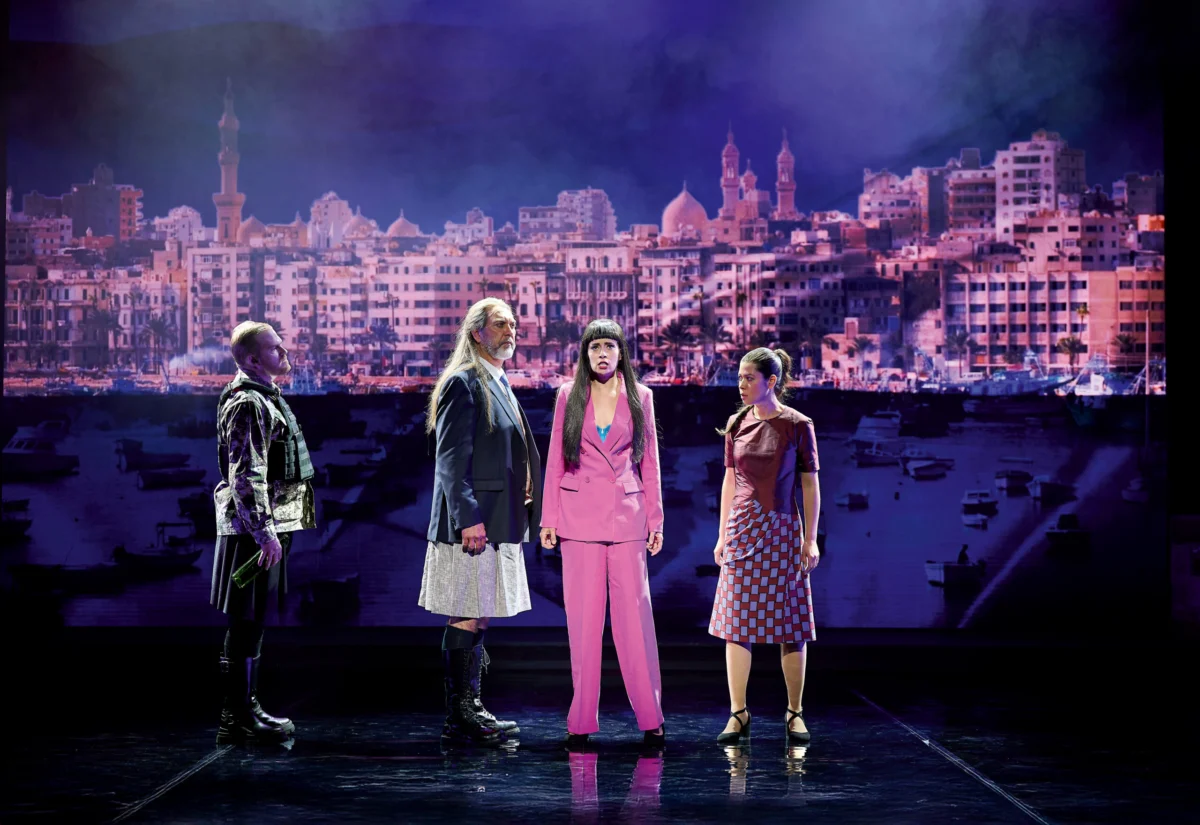
The Theater Koblenz has staged the German premiere of John Adams’ opera "Antony and Cleopatra," a production that challenges initial perceptions of the composer’s thematic focus and delivers a compelling, contemporary interpretation of Shakespeare’s timeless tragedy. While Adams is renowned for his operatic explorations of religious philosophy and pivotal moments in American history, this adaptation of the iconic love story, a cornerstone of Western literary consciousness, proves to be a surprisingly potent vehicle for his dramatic and musical genius. Director Markus Dietze’s bold decision to transpose the narrative from antiquity to a vaguely defined present day, drawing parallels to modern geopolitical conflicts, imbues the work with an urgent relevance that transcends its historical setting.
Adams’ operatic catalog, which includes seminal works like "Nixon in China," "The Death of Klinghoffer," and "Doctor Atomic," often grapples with grand narratives of power, ideology, and societal transformation. "Antony and Cleopatra," at first glance, might seem an outlier, a tale of intensely personal passion and its destructive consequences. However, Dietze’s production masterfully reveals how Adams, through his meticulously crafted libretto and signature musical language, not only illuminates the complex emotional landscape of the titular lovers but also dissects the intricate power dynamics at play between Antony, Cleopatra, and Caesar. This dynamic is amplified by Dietze’s directorial vision, which situates the action within a modern sociopolitical context.
The operatic world of "Antony and Cleopatra" as envisioned by Theater Koblenz presents Egypt as a land of decadent Eastern allure, echoing the opulence of its pharaonic past, while Rome is reimagined as a militarized, quasi-American society, poised for Caesar’s dictatorial ambitions and imperial expansion. This modern recontextualization serves as a potent commentary, subtly alluding to the United States’ interventions in the Middle East throughout the 20th and 21st centuries, and by extension, the enduring complexities of conflicts such as the current situation in Iran. This strategic reinterpretation transforms a seemingly distant historical romance into a stark reflection of contemporary global anxieties.
A Streamlined Narrative for the Operatic Stage
John Adams, who also penned the libretto, significantly condensed Shakespeare’s sprawling play. The original five acts and 40 named characters are reduced to a more focused two acts and 12 characters, with Antony, Cleopatra, and Caesar occupying the central dramatic space. This structural streamlining allows for a heightened intensity and clarity of dramatic progression.
The first act meticulously establishes the foundational relationships between the three protagonists. Cleopatra’s burgeoning jealousy is ignited by Antony’s unavoidable return to Rome, a decision that leads to his marriage to Caesar’s sister, Octavia, plunging the Egyptian queen into a furious rage. Simultaneously, the volatile and increasingly strained relationship between Antony and Caesar is carefully constructed, culminating in the climactic and spectacular naval Battle of Actium. Antony’s subsequent defeat forces him into a desperate flight, setting the stage for the tragic unraveling of their destinies.
Act two navigates the immediate repercussions of Antony’s downfall. Caesar arrives in Egypt, determined to apprehend Antony. However, his pursuit is momentarily thwarted by Cleopatra’s manipulative stratagems. She dispatches a messenger to Antony with the false news of her death, a ruse that precipitates Antony’s tragic suicide. Overwhelmed by grief and the finality of her actions, Cleopatra then takes her own life, leaving Caesar as the undisputed victor. This narrative arc, while condensed, retains the essential dramatic thrust and emotional weight of Shakespeare’s original, amplified by Adams’ potent musical score.
Dietze’s Vision: A Masterclass in Theatrical Interpretation
Markus Dietze’s direction of "Antony and Cleopatra" at Theater Koblenz is a remarkable achievement, characterized by its insightful handling of fundamental theatrical elements. The production navigates dramatic tensions with expert precision, maintaining a cohesive flow, a well-paced rhythm, and a sharp focus that consistently engages the audience. The characterizations of the principal protagonists are developed with a sensitivity that allows for a profound exploration of their psychological complexities.
Beyond mere technical proficiency, Dietze’s directorial prowess shines in his ability to imbue the opera with intellectual depth and thematic resonance. His imaginative development of the work’s underlying themes elevates the production beyond a simple retelling of a historical narrative. The contrast between the Eastern and Western societies is subtly yet effectively conveyed, drawing upon deeply ingrained cultural stereotypes.
The opulent decadence and sensuous luxury of the East are vividly captured in the opening scene. A lavish party hosted by Cleopatra and Antony features a dazzling array of celebrity guests, including figures as disparate as Elvis Presley, the Muppets, the Pope, and Hollywood icons like Charlie Chaplin. While the reviewer muses on whether this was a costume party, its significance lies in its evocation of uninhibited indulgence, a stark departure from the portrayal of Rome’s imperial court.
Rome, in contrast, is depicted as a bastion of efficiency, characterized by military uniforms, technological superiority, and a rigid hierarchy dedicated to the enforcement of imperial power. This visual dichotomy is powerfully reinforced through the strategic use of projected videos, designed by Georg Lendorff. The Battle of Actium, for instance, is rendered with terrifying efficacy through projected images of missiles launched from warships, overseen and applauded by a detached military elite. Lendorff’s visual tapestry seamlessly blends these modern military scenes with imagery of Ancient Rome and other historical societies, extending the critique to encompass the nature of totalitarian regimes in general. This visual strategy masterfully amplifies the dramatic tension, perfectly synchronized with Adams’ evocative musical interludes.
Dietze further underscores a critical thematic duality: the eternal tension between the private and public spheres. This is most acutely realized in his nuanced portrayal of the central characters. Antony and Cleopatra, despite their individual strengths – Cleopatra’s manipulative prowess and Antony’s military acumen – are perpetually distracted from their duties by their all-consuming private passions and love games. Caesar, conversely, remains relentlessly focused on the acquisition and consolidation of power. His personal actions are inextricably linked to his political ambitions, most notably demonstrated through his strategic orchestration of Antony’s marriage to his sister, Octavia.
The enduring archetype of Cleopatra as the femme fatale is explored and subverted throughout the performance. Dietze plays with her character, emphasizing her seductive allure, her dangerous nature, and a certain almost childlike capriciousness. This is further enhanced by her array of visually striking costumes, designed by Bernhard Hülfenhaus, which contribute significantly to her theatrical presence.
The staging, designed by Bodo Demelius, is commendably minimalist, employing sparse props and elaborate scenery. This deliberate simplicity allows the costumes, lighting, and video projections to carry the weight of atmosphere and context, effectively opening up the stage and directing the audience’s focus squarely onto the performers. The actors, in turn, seize this opportunity to develop rich and compelling characterizations. However, the inclusion of two dancers is noted as a superfluous element; while their individual skills are acknowledged, their dramatic purpose is deemed, at best, pleasant but irrelevant, and at worst, distracting.
In summation, Dietze’s staging of "Antony and Cleopatra" is a resounding success. His clear and coherent presentation effectively links the underlying thematic drivers of the protagonists’ behavior to the inevitable tragic conclusion of their ill-fated love affair, creating a production of significant artistic merit.
Musical Excellence: A Shadow Cast by Technical Choices
Despite the directorial triumph, the production is marred by controversial musical choices. The persistent insistence on microphoning singers in John Adams’ operas, while perhaps intended to achieve a balanced sound and reveal intricate textural details, is fundamentally anti-theatrical. This practice, according to the critique, erodes the crucial illusion that is essential for genuine dramatic engagement.
The Staatsorchester Rheinische Philharmonie, under the adept direction of conductor Enrico Delamboye, was positioned out of sight behind a black screen, effectively separating the musicians from the audience and the stage. This arrangement necessitated that the singers interact with the conductor solely through monitors, raising questions about the necessity of their physical presence in the same venue. While the sonic quality was undoubtedly excellent, the output through speakers created a homogeneous sound, devoid of the spatial variations that naturally enrich a live performance and are contingent on audience seating position.
Furthermore, the amplification of the singers introduced significant technical drawbacks. The lack of spatial dimension was particularly jarring; regardless of a singer’s position on stage – front, back, or sides – the perceived location of their voice remained constant. Even when facing away from the audience, the sound projection did not alter, creating an experience akin to listening to a recording. This crucial element of live theatricality was thus entirely negated. The addition of live, close-up video projections of singers’ faces onto a large screen, intended to accentuate their facial expressions, compounded the issue. A slight time lag between the live action and the projected images resulted in vocal performances that were not synchronized with the visuals, creating a disconcerting disconnect that further fractured the immersive theatrical experience.
While acknowledging Adams’ legitimate concerns regarding sound balance, musical detail, and textural clarity, the reviewer posits that these objectives can be achieved through alternative means. The existence of studio recordings and, to a lesser extent, concert performances, offers viable solutions that do not compromise the integrity of the live theatrical event.
Notwithstanding these reservations, Enrico Delamboye’s conducting of the Staatsorchester Rheinische Philharmonie was highly commendable. He delivered a dramatically intense and musically compelling interpretation, expertly shaping the opera’s musical arc to underscore its dramatic pacing and inherent tensions. The orchestral performance brought out the work’s intricate details, vibrant colors, and rich textures with beautiful clarity. The musical interludes, particularly the palpable sense of violence and anxiety evoked during the climactic battle scene at the conclusion of Act One, were especially impactful.
Vocal Virtuosity: A Stellar Cast Illuminates the Drama
The undisputed star of the production is soprano Danielle Rohr, whose portrayal of Cleopatra is a masterclass in layered characterization. Rohr depicts the queen as a woman trapped in a prolonged adolescence, exhibiting demanding, egocentric, and entitled behavior, punctuated by volatile outbursts of aggression, most notably her ferocious assault on the messenger delivering news of Antony’s marriage to Octavia. Her every action, including her purported love for Antony, is framed as a calculated power play, suggesting a profound lack of understanding of genuine affection beyond the dynamics of a struggle for dominance. It is only in the face of utter devastation and the loss of Antony that a more mature realization dawns, ironically leading to her final, narcissistic act of suicide, which Rohr enacts with superb dramatic impact, ensuring her presence continues to dominate the stage even in death.
Vocally, Rohr’s performance is a tour de force. She delivers a versatile and expressive rendition, imbuing her voice with a rich spectrum of emotions. Her vocal agility allows her to navigate the operatic range with apparent ease, sensitively adorning melodic lines with nuanced inflections, dynamic contrasts, and varying degrees of intensity, all of which serve to bolster her exceptional characterization.
In stark contrast, baritone Andrew Finden’s portrayal of Antony casts him as a man easily swayed and utterly captivated by Cleopatra’s beauty. Finden imbues Antony with a passionate jealousy, yet simultaneously highlights his emotional fragility and susceptibility to provocation, traits that Cleopatra skillfully exploits to emotionally abuse him. Finden’s depiction of Antony’s volatility is delivered through a well-sung and expressively captivating performance.
The partnership between Finden and Rohr is undeniably strong, effectively bringing to the forefront the tempestuous nature of Antony and Cleopatra’s relationship. They skillfully navigate the shifting emotional currents that define their union, a bond characterized by its inherent instability.
While the lovers command much of the stage, Caesar’s pervasive influence is a constant, palpable presence. Even when not physically on stage, his power and menacing authority loom large. Tenor Tobias Haaks delivers a remarkable performance as the power-hungry dictator. Haaks embodies Caesar with a vicious aggression, a penchant for violence that extends even to his own retinue, and an uncompromising, imperious demeanor. He strides across the stage with an air of unshakeable confidence, at times appearing unhinged, showing little discernible reaction to the deaths of Antony and Cleopatra. His singing is resonant, authoritative, and forceful, employed with expressive precision to deliver his lines. In one of the opera’s most dramatically charged scenes, Haaks delivers a compelling monologue in which he manipulates the populace, urging them towards war for the glory of Rome. His performance is marked by a genuine sense of power and confidence, coupled with an innate lyricism that captivates the audience.
Nico Wouterse, utilizing his considerable acting talents, crafts a strongly defined portrait of Agrippa, Caesar’s trusted advisor and general. While aggressively and resolutely executing Caesar’s commands, often employing threatening tactics, Wouterse’s Agrippa is quick to bend the knee to his superior, even to the point of enduring humiliation. Wouterse’s singing is purposeful, characterized by a secure, well-grounded, and expressive voice with a commanding tone that effectively projects his forceful persona.
Mezzo-soprano Tábita Iwamoto showcases a beautiful tonal quality and attractive phrasing in her emotionally balanced interpretation of Charmian, Cleopatra’s lady-in-waiting. Iwamoto’s portrayal centers on Charmian’s unwavering loyalty to the queen, a defining characteristic of her performance.
Tenor Nando Zickgraf, in the relatively minor role of Eros, nonetheless makes a significant impression, displaying fine acting and singing qualities. His vocal flexibility is particularly noteworthy.
Bass Marco Kilian delivers a vigorous portrayal of Scarus, Antony’s loyal general.
Baritone Christoph Plessers, as Antony’s lieutenant Enobarbus, injects a calm, reflective dimension into the drama. His observations on the self-destructive nature of the lovers’ relationship are delivered through two substantial monologues, which Plessers renders in an articulate, clear, and expressively thoughtful manner.
Lepidus, the third member of the ruling triumvirate, is presented as a passive figure with minimal impact on the unfolding events. Bass Jongmin Lim provides a solid interpretation of this role, also doubling as Caesar’s trusted messenger and officer, Maecenas. This dual casting allows Lim ample opportunity to showcase the beauty of his darkly colored vocal palette and his attractive phrasing.
Mezzo-soprano Haruna Yamazaki takes on two distinct roles: Caesar’s sister Octavia, whom she characterizes as cold, indifferent, and manipulative, and Iras, Cleopatra’s devoted servant, for which she delivers a suitably loyal and servile portrayal.
Broader Impact and Enduring Legacy
John Adams’ operatic reimagining of Antony and Cleopatra’s tumultuous and ultimately doomed love affair is, in its essence, both a musical and dramatic triumph. The production’s astute focus on the intricate interplay between the personal and political realms is compellingly conveyed. However, the work, while potent, does not possess the profound intellectual and politico-philosophical dimensions that have come to define Adams’ most celebrated operatic contributions.
Despite this perceived limitation, Markus Dietze’s imaginative staging significantly enhances the opera’s impact. By drawing connections to contemporary conflicts, particularly the ongoing geopolitical tensions involving Iran and the United States, Dietze successfully injects a layer of relevance and depth that may not be immediately apparent in the libretto itself. This directorial intervention transforms a historical narrative into a potent commentary on the enduring complexities of power, love, and war in the modern world, offering audiences a thought-provoking and deeply resonant theatrical experience. The Theater Koblenz production stands as a testament to the enduring power of opera to adapt and speak to the present moment, even when drawing upon the distant echoes of antiquity.