Aveline Kirana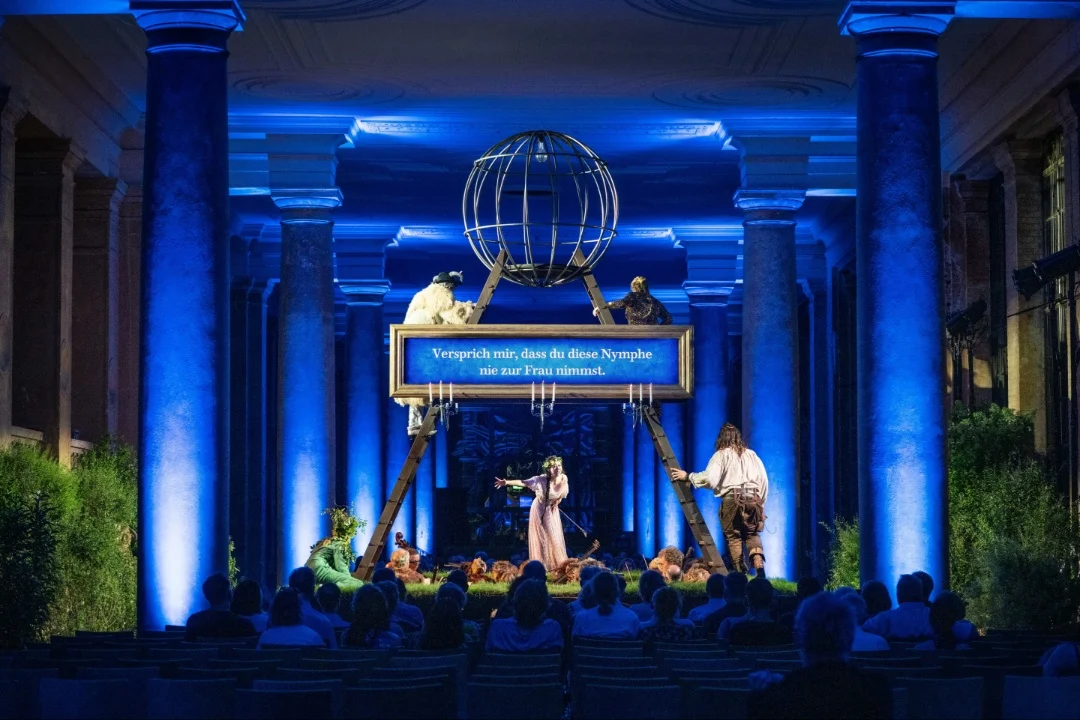
Musikfestspiele Potsdam Sanssouci, renowned for its commitment to reviving and presenting rarely heard operatic gems within the majestic setting of the Orangerieschloss, has once again captivated audiences with its latest new opera production. This year’s offering, Giovanni Battista Bononcini’s "Cefalo e Procride," a single-act work composed in 1704 for the court of Queen Sophie Charlotte in Berlin, presented a unique challenge and opportunity. While the compact scale of the opera might have initially evoked a sense of nostalgia for the festival’s past, when multiple full-scale productions were the norm, the sheer artistic excellence and innovative staging of this particular performance offered a profound and satisfying experience, particularly in an era marked by significant cultural budget constraints.
The choice of "Cefalo e Procride" by Bononcini, a composer who played a pivotal role in the early development of opera in Berlin, underscores the festival’s dedication to illuminating overlooked chapters of musical history. Composed at the dawn of the 18th century, a period of burgeoning artistic exchange between Italy and Germany, this work draws inspiration from Ovid’s Metamorphoses. It retells the tragic myth of Cefalo and Procride through the lens of a pastoral drama, exploring themes of divine intervention, mortal frailty, and the devastating consequences of suspicion. The narrative unfolds with the dawn goddess Aurora, spurned by the mortal hunter Cefalo, orchestrating a cruel test of his wife Procride’s fidelity. Disguised as a shepherd, Cefalo is manipulated into unknowingly striking Procride with a magical arrow, leading to a tragic misunderstanding. The intervention of the sun god Titone ultimately resolves the conflict, healing Procride and elevating the lovers to divine status.
A Bold Spatial Reimagining of the Orangerieschloss
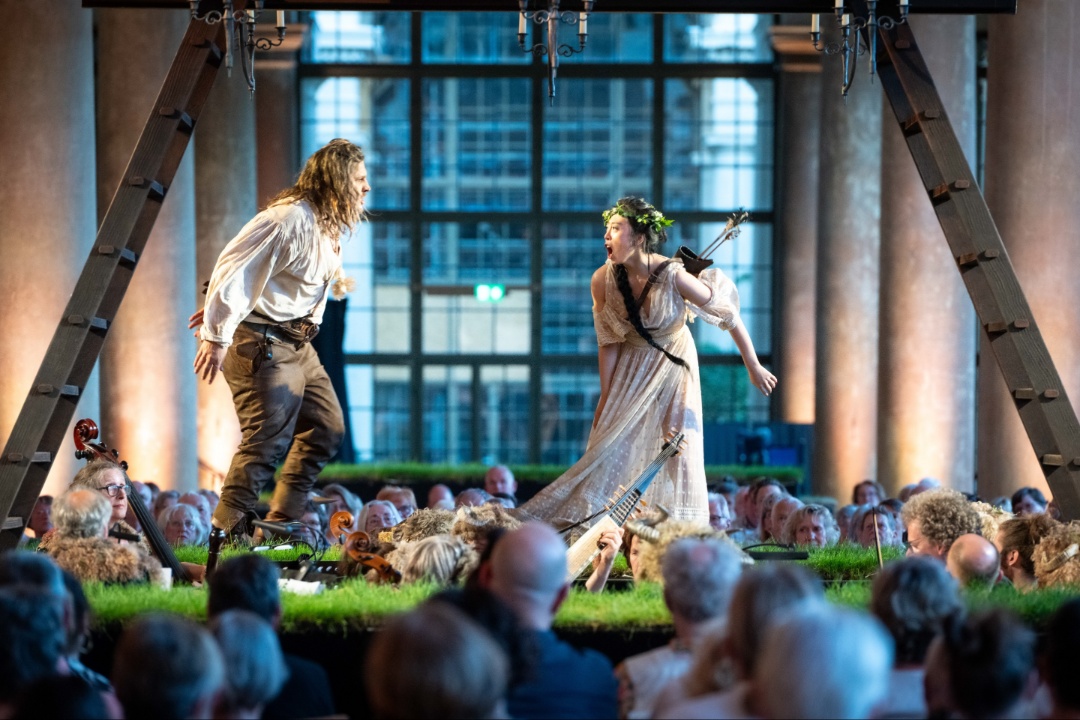
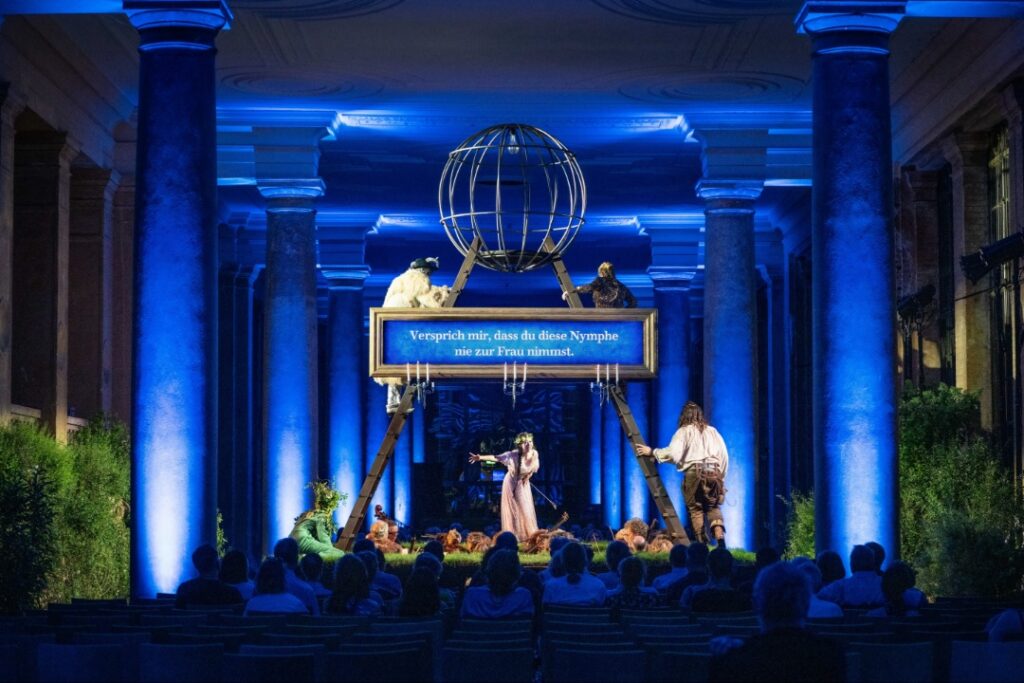
Director Michiel Dijkema has transcended the limitations of a single-act work by radically reimagining the Orangerieschloss as a dynamic performance space. In stark contrast to the previous year’s production, which utilized only a portion of the venue’s expansive linear layout, Dijkema has transformed the entire Orangerie into a theatrical arena. The stage is positioned at the precise center, allowing for a 360-degree audience experience. Seating blocks are arranged on both the east and west sides, creating an immersive environment reminiscent of a contemporary fashion show, where every angle offers a unique perspective.
At the heart of this innovative design lies a raised, square platform, approximately one meter in height, covered with real green turf. This verdant expanse serves as the orchestra pit, ingeniously housing the Akademie für Alte Musik Berlin, a dozen or so period-instrument specialists. Towering above this rustic pit is a climbable scaffolding framework, culminating in a spherical cage. Suspended from the apex of this cage is a single, prominent lightbulb, a direct and poignant reference to the festival’s overarching theme for the season: "Licht" (Light). This symbolic element casts a glow that not only illuminates the performance but also resonates with the thematic explorations of clarity, revelation, and divine presence within the opera.
The architectural ingenuity extends to the use of massive, vintage-style LED screens that flank the performance area. These screens serve a dual purpose: projecting libretto surtitles for audiences on both sides, ensuring accessibility and comprehension, and displaying vivid CGI sheep motifs. These whimsical visual interludes, particularly the animated sheep, offer a charming and contextually appropriate counterpoint to Bononcini’s instrumental ritornellos, bridging scenes with a delightful pastoral charm.
Performances Under Unprecedented Conditions
The success of Dijkema’s ambitious spatial concept hinges on the performers’ ability to engage with the entire audience. The singers and musicians are challenged to project their presence omnidirectionally, much like preachers in a centrally planned Renaissance church, demanding meticulous blocking and vocal projection. Dijkema masterfully exploits the Orangerie’s elongated east-west axis. Crucial dramatic moments are amplified by singers delivering their lines from the extreme ends of the gallery, expertly leveraging the venue’s unique acoustics to evoke the rustling of deep woods and the ethereal whispers of the wind, elements central to the opera’s narrative.
The apex of this spatial choreography, and arguably one of the most breathtaking moments of the production, occurs near the opera’s conclusion. A sublime echo duet performed by the two wind spirits (Zeffiro) transforms the Orangerie itself into a living musical instrument. The vast architecture resonates with the singers’ voices, creating an auditory experience that is both intimate and monumental.
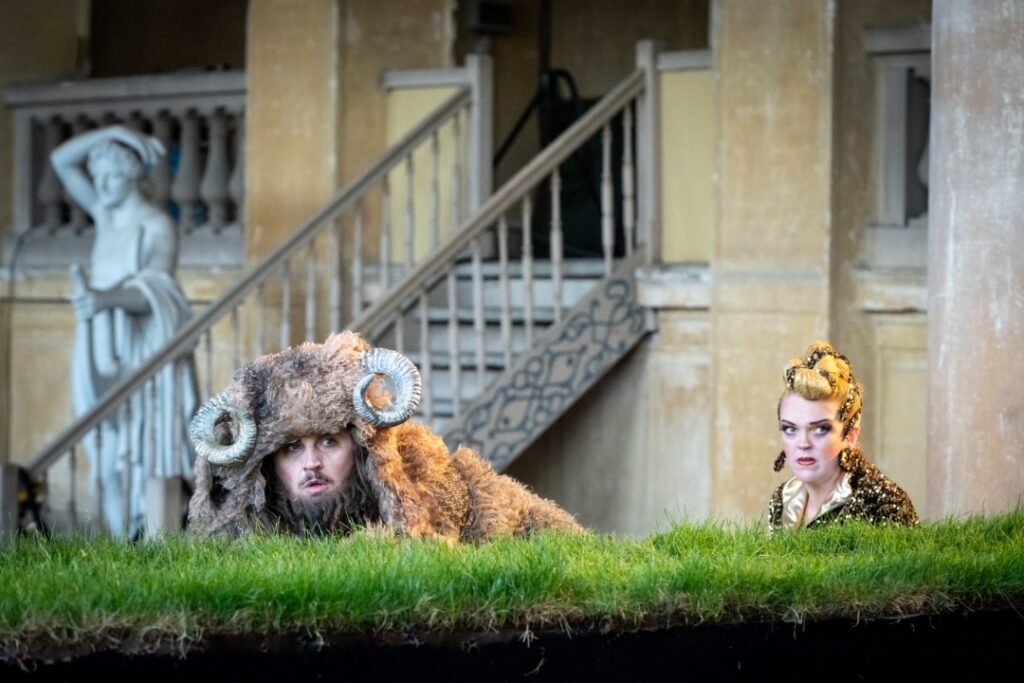
The pervasive sheep motif, while intended to cultivate an idyllic pastoral atmosphere, takes on an added layer of heroic endurance given the extreme weather conditions during the performances. With outside temperatures soaring to nearly 40°C, the performers’ commitment to evoking rustic innocence is nothing short of remarkable. The orchestra members, despite the oppressive heat, play heroically, adorned with heavy sheep hats and scarves. Most notably, the oboists and several singers brave the performance in full, thick sheep costumes, raising genuine concerns for their physical well-being amongst the audience. This dedication to artistic vision, even in the face of extreme discomfort, highlights the profound commitment of all involved.
An Illuminating Cast Delivers Stellar Performances
The cast of "Cefalo e Procride" proved to be an exceptional ensemble, each member contributing significantly to the production’s success. Countertenor Yuriy Mynenko, in the demanding role of Cefalo, emerged as the production’s hardest-working performer. Battling the heat and the physical demands of his costume, Mynenko delivered a performance of remarkable depth and nuance. His voice, consistently exquisite in its softness and sensitivity, was complemented by a profound psychological insight into the character’s journey.
In the early scenes, Mynenko subtly conveyed Cefalo’s vulnerability to Aurora’s manipulative influence. This nuance was further developed in his duets with Procride, which crackled with energy, sincerity, and a delightful simplicity of melody. However, Mynenko masterfully conveyed the fragility of Cefalo’s conviction, his lingering distrust of Procride leading to reflective soliloquies that lent considerable weight to an otherwise youthful drama. Demonstrating a keen understanding of the serenata’s lighter elements, Mynenko also provided brilliant comic relief. His desperate pleas to the wind spirit Zeffiro for a cooling breeze became a perfectly timed and highly relatable nod to the real-world heatwave, eliciting knowing laughter from the audience.
Soprano Jiayu Jin, as Procride, proved to be the ideal foil for Mynenko’s Cefalo. Jin’s voice possessed an exceptional clarity and pristine projection, marred only by fleeting moments of slight over-singing. Her control in the upper register was particularly noteworthy. Visually, adorned with a delicate crown of green leaves and a long, classic braid, Jin exuded an aura of pure innocence, beautifully complemented by a gracefully flowing cream bohemian gown. This visual charm translated into a vividly realized psychological portrait. Jin convincingly navigated Procride’s emotional arc, from tender expressions of love, supported by a softly swinging cello accompaniment, to the profound inner anguish stemming from her misunderstanding with Cefalo, culminating in a heartbreaking farewell. Her poignant stage movement and vocal delivery spoke volumes.
Chloë Morgan delivered an equally captivating performance as Aurora, vividly portraying the goddess’s sharp persuasion and her calculating approach to love when confronted with Cefalo’s unattainability. Anita Rosati brought a beautifully radiant tone to the role of the forest nymph Atenice. Her captivating echo duet with Morgan, as they both stepped into the roles of the wind spirits (Zeffiro), stood out as one of the evening’s most magical highlights, poetically underscored by the orchestra’s rustling instrumental depiction of the breeze.
Jonathan Eyers successfully navigated the dual role of Titone. For much of the opera, his shepherd disguise imbued the character with a delightfully comic, almost farcical jealousy. However, with the tragic turn of events for Procride, Eyers shed the comedic veneer. In revealing his true divine identity, he executed a classic Baroque deus ex machina with an authoritative vocal presence, bringing a powerful resolution to the narrative.
The Akademie für Alte Musik Berlin and the Festival’s Legacy
The Akademie für Alte Musik Berlin delivered a performance of exceptionally high standard, a testament to their continued artistic excellence. Crucially, their playing avoided the overly sharp, aggressive articulation that has occasionally surfaced in some recent productions. Under the astute leadership of Bernhard Forck on the violin, the ensemble imbued Bononcini’s Prussian courtly serenata with the precise measure of aristocratic elegance and precision. The carefully chosen instrumental movements by Bononcini served as fitting interludes, seamlessly bridging the dramatic scenes. The two oboists, fully immersed in their demanding sheep costumes, became active participants in the physical drama, their presence adding a unique dimension to the performance.
This tightly constructed, ninety-minute production held the audience spellbound from beginning to end. The musical and dramatic integrity of the performance, combined with the innovative staging, created a truly memorable operatic experience. The only discernible disappointment of the evening lay not within the Pflanzenhalle itself, but in the external realm of broadcast. It is a profound shame that Deutschlandfunk failed to broadcast this rare, complete staging of "Cefalo e Procride." Such an omission represents a deeply regrettable missed opportunity to document a significant milestone in the history of early Berlin opera, a moment that deserved a wider audience and a lasting archival record.
The Musikfestspiele Potsdam Sanssouci continues to prove its vital role in the operatic landscape, offering not only exquisite performances of familiar masterpieces but also championing the rediscovery of significant, yet often overlooked, works. "Cefalo e Procride," in its current incarnation, stands as a powerful testament to the festival’s artistic vision and its unwavering commitment to enriching our understanding and appreciation of operatic history.