Aveline Kirana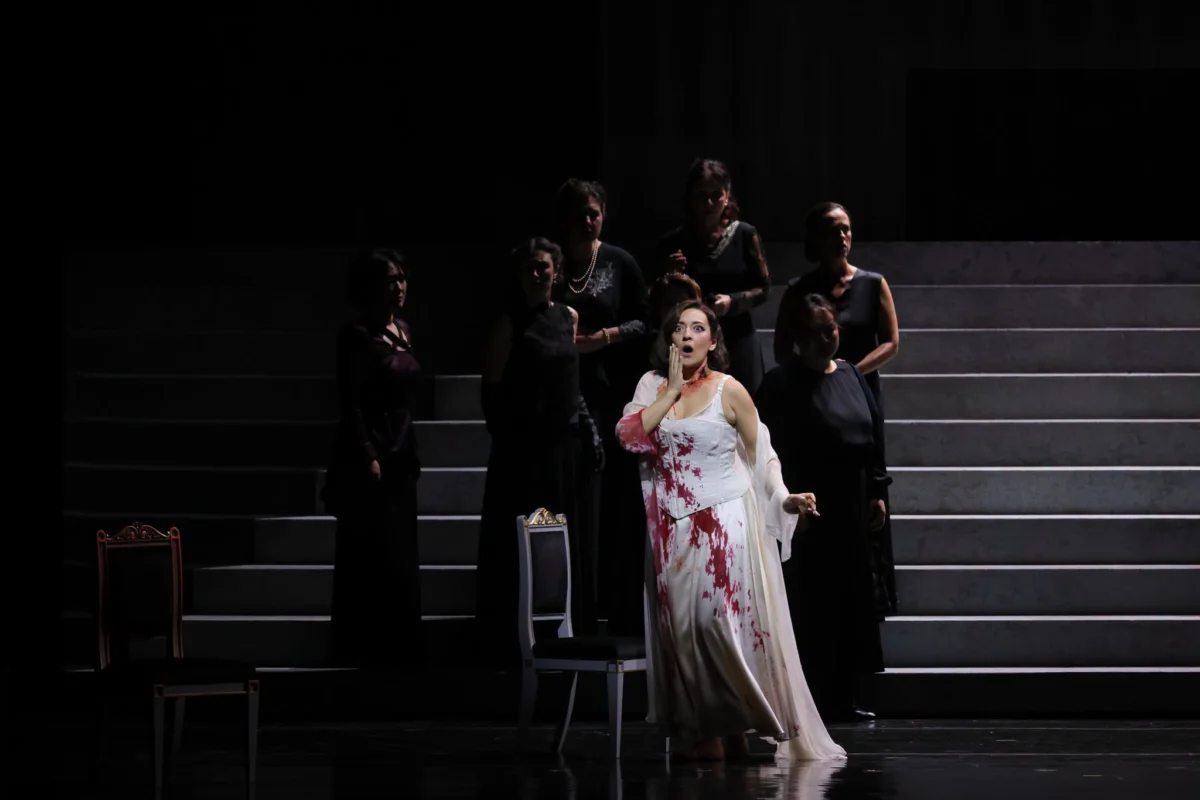
Teatro alla Scala’s recent revival of Gaetano Donizetti’s Lucia di Lammermoor offers a potent re-examination of this operatic titan, pushing beyond traditional Romantic tropes to excavate the profound psychological turmoil at its core. Premiered in 1835 at the Teatro di San Carlo in Naples, Lucia di Lammermoor has long been recognized as a pinnacle of Romantic opera, a work that transforms internal conflict into unparalleled musical expression. Based on Sir Walter Scott’s 1819 novel, The Bride of Lammermoor, Donizetti’s opera transcends mere sentimental tragedy, presenting one of the 19th century’s most intricate female psychological portraits. Its enduring power has cemented its status as a cornerstone of the international repertoire and a fixture at Milan’s illustrious Teatro alla Scala. Since its Milanese premiere in 1839, the Piermarini stage has hosted over three hundred performances, showcasing a constellation of legendary interpreters in the titular role, from Giuseppina Strepponi in the 19th century to modern-day luminaries like Maria Callas, Joan Sutherland, Renata Scotto, Anna Moffo, Luciana Serra, Edita Gruberová, Mariella Devia, Diana Damrau, Jessica Pratt, and Lisette Oropesa, underscoring the opera’s consistent artistic relevance.
A Radical Reimagining of a Gothic Tale
For the 2026 season, Teatro alla Scala presented Yannis Kokkos’s innovative production of Lucia di Lammermoor, a staging first unveiled to critical acclaim in 2023. This production boldly eschews the picturesque conventions of Romantic Scotland, deliberately sidestepping the familiar imagery of Gothic castles, pervasive mist, and melancholic landscapes. Instead, Kokkos, who also masterfully designed the sets and costumes, directs his focus towards the operatic drama’s deep psychological undercurrents. He transforms the narrative into a dislocated, suspended universe, subtly relocating the action to the stifling, bourgeois milieu of the 1920s. Within this environment, the Ashton family is depicted as a claustrophobic social organism, suffocated by unresolved tensions and the crushing weight of expectation.
The production’s central thematic thesis is established from the very first scene, set in a forest that radiates a highly symbolic and ominous atmosphere. Here, Lucia is immediately positioned as a vulnerable prey, destined to become ensnared in a psychological hunt. The stage is populated with potent visual metaphors for this inevitable fate: statues of hunting dogs, taxidermied trophies, and weaponry all serve to underscore the protagonists’ inescapable destiny. The visual landscape is further amplified by the sophisticated interplay of light and shadow orchestrated by Vinicio Cheli’s masterful lighting design, and the evocative video projections crafted by Éric Duranteau. Together, these elements transform the often-spacious stage into psychological arenas rather than literal settings, with each environment meticulously calibrated to mirror the characters’ internal emotional states. The costumes further reinforce this timeless, de-historicized reading of the opera. Lucia is adorned in elegant attire clearly inspired by the fashion of the Roaring Twenties, a stark contrast to the rest of the characters, who are enveloped in a more somber, almost funereal palette, deliberately distancing the production from any overt adherence to traditional Romantic aesthetics. This deliberate choice invites audiences to engage with the universal themes of entrapment, societal pressure, and psychological disintegration that lie at the heart of Donizetti’s masterpiece, irrespective of historical context.
Speranza Scappucci and the Orchestra: A Theatrical Imperative
Returning to conduct the Orchestra of Teatro alla Scala was Speranza Scappucci, a conductor who has already made history at the theatre. In 2022, she became the first woman to lead an opera at La Scala when she conducted Bellini’s I Capuleti e i Montecchi. In her interpretation of Lucia di Lammermoor, Scappucci emphasized the opera’s inherent theatricality and the suffocating psychological tension that envelops Lucia. While this approach yielded powerful dramatic moments, it arguably came at the cost of some of the bel canto purity and lyrical elegance that are hallmarks of Donizetti’s score. Certain passages were marked by excessively slow tempi and prolonged, seemingly unnecessary pauses, which at times disrupted the musical flow. This was particularly noticeable in iconic ensemble pieces, such as the renowned sextet, "Chi mi frena in tal momento?".
However, Scappucci’s strengths shone through most brightly in the opera’s most dramatically charged sections. Her rendition of the overture, for instance, offered a reading more attuned to contemporary sensibilities, building considerable tension and anticipation. The orchestra responded with remarkable precision and professionalism under her baton. The brass and woodwind sections, in particular, distinguished themselves during the darker, more intense passages, while the strings demonstrated the requisite flexibility to navigate Donizetti’s sweeping melodic lines with grace and fluidity. Scappucci’s conducting was informed by the critical edition of the score meticulously prepared by Gabriele Dotto and Roger Parker, ensuring a scholarly and authentic presentation of the work. Equally commendable was the performance of the Chorus of Teatro alla Scala, under the astute preparation of Alberto Malazzi. Their precision, unwavering cohesion, and their exceptional ability to seamlessly integrate into the fabric of Kokkos’s dramatically charged production were nothing short of exemplary, providing a robust vocal and dramatic foundation for the soloists.
Rosa Feola: A Masterclass in Psychological Portrayal
The undeniable focal point of the performance was soprano Rosa Feola, whose portrayal of Lucia was deeply personal and refreshingly distinct from traditional interpretations. Possessing a voice of remarkable evenness, beauty, and technical command, Feola delivered a Lucia of profound psychological fragility. Her artistic choices prioritized dramatic truth over mere vocal exhibitionism. The opera’s formidable coloratura passages and crystalline embellishments emerged organically, woven into the very fabric of Lucia’s unfolding emotional disintegration. Her interpretation reached its zenith in the celebrated Mad Scene, where Feola masterfully transformed this iconic sequence into a devastatingly intimate portrait of a mind fracturing under immense pressure.
The restoration of the glass harmonica for this production proved to be an invaluable addition, its ethereal, otherworldly sonority significantly enhancing the hallucinatory atmosphere of this pivotal moment. Feola’s performance was further distinguished by her impeccable breath control, the purity of her vocal production, and her unfailing technical security. These attributes collectively underscored her considerable artistic maturity and earned her one of the evening’s most fervent and sustained ovations from the Milanese audience. Her ability to convey the nuances of Lucia’s descent into madness, from initial bewilderment to complete mental collapse, was a testament to her deep understanding of the character and her commitment to dramatic authenticity.
A Strong Ensemble Cast
Piero Pretti delivered a compelling performance as Edgardo, imbuing the role with solid vocal authority and a convincing stage presence. His bright, virile timbre lent itself to dramatic intensity rather than introspective lyricism. Pretti’s voice projects effortlessly into the upper register, maintaining both stability and power. His Edgardo emerged as a man consumed by passion, despair, and anger, a character driven by potent emotions rather than quiet melancholy. The soprano’s extensive experience with the role was palpable throughout the performance, evident in the assurance and commanding presence he exuded on stage. Following an excellent rendition of the duet "Verranno a te sull’aure," Pretti reached his artistic apex in the opera’s concluding act. His renditions of "Fra poco a me ricovero" and "Tu che a Dio spiegasti l’ali" were delivered with a depth of expressive power that resonated deeply with the audience.
Boris Pinkhasovich, as Enrico Ashton, commanded the stage with an attractively dark vocal color. The Russian-Austrian baritone eschewed the conventional portrayal of a one-dimensional villain. Instead, he embraced Kokkos’s psychologically nuanced reading of the character, presenting Enrico as a man ensnared by the burden of his family name and the desperate need to maintain control. Pinkhasovich’s burnished timbre perfectly suited the character’s inherent authority, and his principal scenes revealed considerable dramatic power. In "Cruda, funesta smania," he displayed both vocal strength and unwavering determination. Throughout the opera’s ensembles, he maintained a consistently solid and impactful theatrical presence, effectively contributing to the production’s overarching dramatic tension.
Michele Pertusi, a seasoned artist in the Italian repertoire, once again confirmed his mastery with a portrayal of Raimondo that was marked by remarkable authority, refinement, and a profound understanding of Donizetti’s musical idiom. His interpretation, consistently rich in expressive nuance, remained vocally secure in the middle and lower registers, though he encountered slight challenges in the upper range. One of the evening’s most moving moments occurred in "Dalle stanze ove Lucia," where Pertusi endowed Raimondo with an intriguing moral ambiguity, hinting at a character more complex than a simple religious mediator. His instrument retains its noble, dark timbre and remarkable flexibility, allowing him to present Raimondo as a figure of significant gravitas and internal conflict.
Leonardo Cortellazzi approached the role of Arturo Bucklaw, though brief, with considerable professionalism. His voice is pleasant, bright, and well-projected, and each of his interventions was carefully phrased. Despite the character’s limited stage time, Cortellazzi successfully conveyed the innocence of a man inadvertently caught in the crossfire of the feud between the Ashton and Ravenswood families. His contribution to the Act Two concertato was particularly effective in underscoring the tragic circumstances. Commendation is also due to Paolo Antognetti as Normanno, a crucial character in instigating the dramatic events, and Hyeonsol Park as Alisa, Lucia’s loyal confidante. Both artists integrated seamlessly into the performance, contributing to an exceptionally balanced and cohesive ensemble cast.
Audience Reception and Contextual Observations
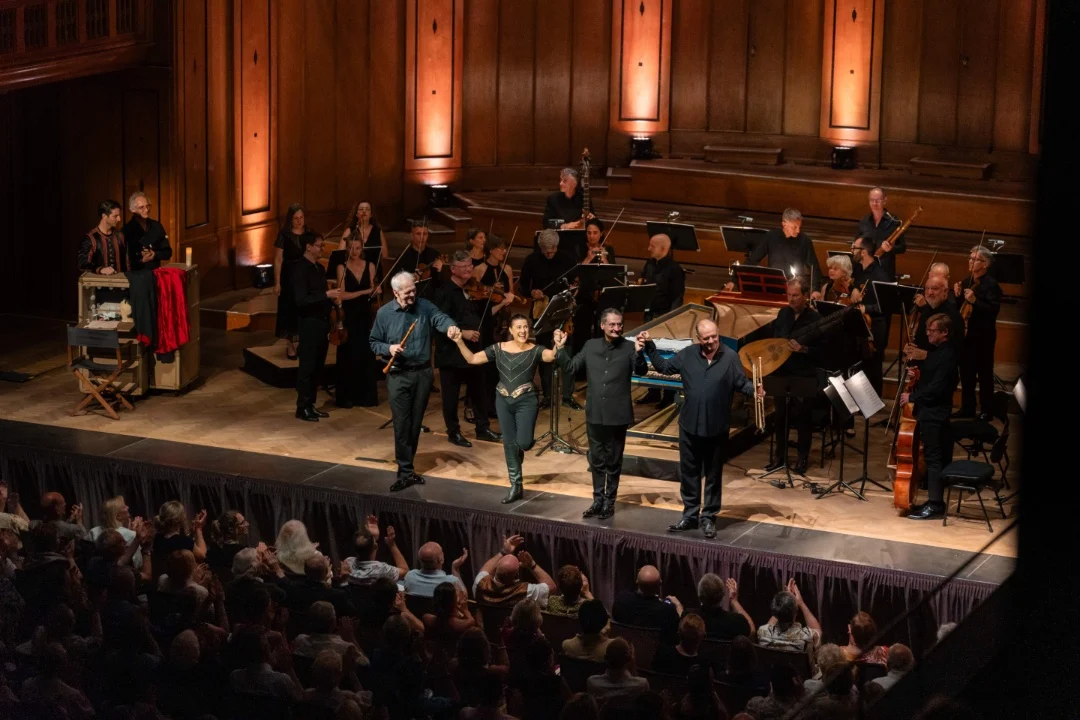
At the conclusion of the performance, the audience offered warm and thoroughly deserved ovations to Rosa Feola and the entire cast. However, it was noteworthy that the theatre was not entirely sold out, a somewhat unusual occurrence for a title that typically commands full houses at La Scala. Several factors may have contributed to this, including the intense summer heat that may have deterred some of Milan’s regular opera-going patrons. While tourists visiting the city partially filled the remaining seats, the slightly less than capacity attendance offered a point of observation in the context of the opera’s usual drawing power.
The production’s meticulous attention to detail, from the psychological staging to the nuanced musical interpretations, underscores Lucia di Lammermoor‘s enduring capacity to captivate audiences. This revival, by emphasizing the internal struggles of its characters within a starkly modern framework, reaffirms Donizetti’s genius in crafting music that speaks directly to the complexities of the human psyche. The performance at Teatro alla Scala serves as a powerful reminder that Lucia di Lammermoor remains not just a cornerstone of the operatic repertoire, but a living, breathing work capable of profound and relevant reinterpretation. The production’s success, despite the less-than-full house, lies in its artistic integrity and its ability to deliver a psychologically resonant operatic experience that lingers long after the final curtain.