Aveline Kirana
Cremona, Italy – The Monteverdi Festival Cremona has achieved a significant milestone in the realm of early opera with the groundbreaking modern premiere of Francesco Cavalli’s "Le Nozze di Teti e Peleo." This ambitious undertaking, held on June 19, 2026, at the historic Teatro Ponchielli, represented a major experimental endeavor in textual reconstruction and innovative staging, breathing new life into a largely forgotten masterpiece from the early Baroque period. The production not only celebrated the genius of Cavalli, a pivotal figure in the development of opera, but also underscored the festival’s commitment to scholarly research and artistic innovation.
A Rediscovered Gem: Cavalli’s Operatic Debut
Francesco Cavalli (1602–1676) stands as one of Claudio Monteverdi’s most esteemed students and a towering figure in 17th-century Venetian opera. Succeeding Monteverdi as the preeminent opera composer of his era, Cavalli’s prolific output included approximately 42 operas, solidifying his reputation as a master of musical drama. "Le Nozze di Teti e Peleo" (The Wedding of Thetis and Peleus), with a libretto by Orazio Persiani, marked Cavalli’s operatic debut in Venice’s Teatro San Cassiano in 1639. This seminal work established his distinctive style and paved the way for subsequent triumphs such as "Giasone" (1649), "La Calisto" (1651), and "L’Ormindo" (1644), all of which have since become cornerstones of the early opera repertoire.
The decision by the Monteverdi Festival Cremona to revive "Le Nozze di Teti e Peleo" was not merely an artistic choice but a testament to meticulous scholarship. The revival was based on a critical transcription by Angela Romagnoli of the University of Pavia’s Department of Musicology and Cultural Heritage. Romagnoli meticulously worked from the original manuscript housed in the Biblioteca Nazionale Marciana (It.IV,365(=9889)), a process that demands deep expertise in paleography and early music notation. The musical reconstruction was expertly helmed by concertmaster and harpsichordist Antonio Greco, whose sensitive interpretation brought Cavalli’s score to vibrant life. The directorial vision for this complex revival was entrusted to Chiara D’Anna from Turin, known for her innovative approaches to historical repertoire.
A Festival Highlight: The Production Unveiled
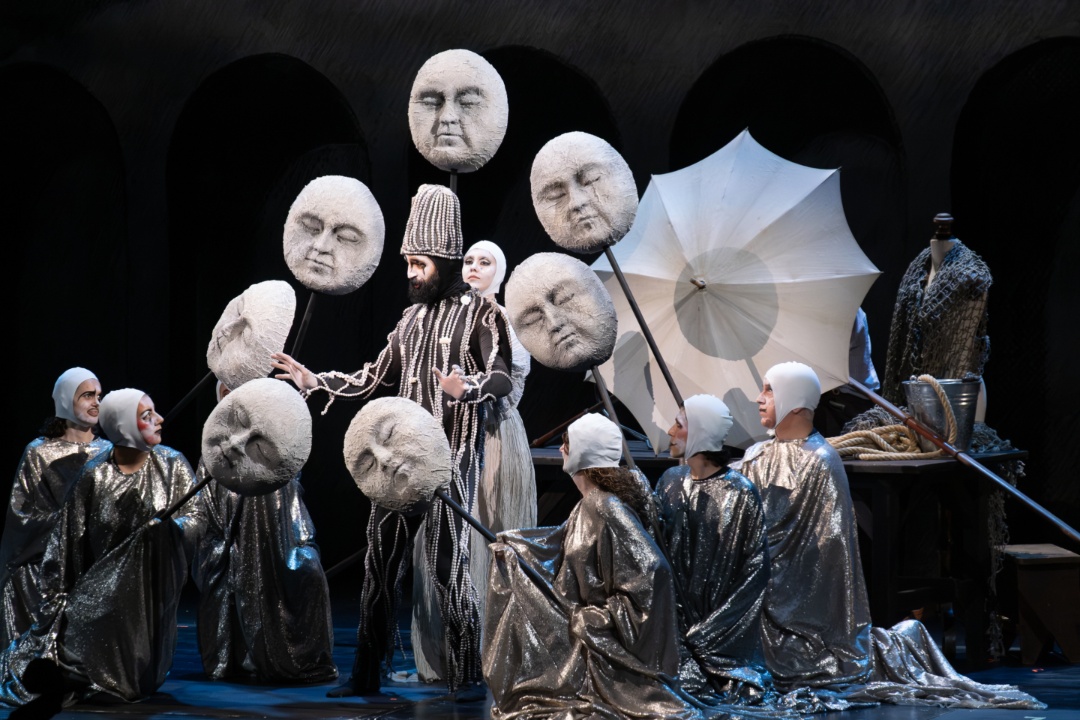
The premiere of "Le Nozze di Teti e Peleo" was a significant event within the Monteverdi Festival Cremona, drawing a capacity audience to the Teatro Ponchielli. The sheer scale of the revival, involving extensive textual reconstruction and a complex staging, was evident throughout the performance. For enthusiasts of early opera, witnessing a work nearly four centuries old resurrected with such dedication was an unparalleled experience. Reports from attendees highlighted the profound impact of the production, with one German couple, visiting Cremona spontaneously, describing the evening as "magical," underscoring the opera’s enduring power to captivate audiences across generations and borders.
The production embraced a holistic approach, integrating choreography and pacing to allow for significant musical moments to shine. While the opera itself is extensive, the careful arrangement of musical passages and dramatic action aimed to sustain audience engagement. The directorial concept, which involved singers utilizing the entire theater space, aimed for an immersive experience. However, this innovative staging occasionally led to moments of uncertainty for the audience regarding character placement and the clear delineation of narrative focus, a common challenge in experimental historical productions.
Narrative and Thematic Depth
"Le Nozze di Teti e Peleo" unfolds a narrative rich in mythology and allegory, exploring profound human emotions and relationships through the lens of operatic drama. The opera commences with a cosmic dispute between Fame and Time, who vie for dominance over human destiny. This overarching theme sets the stage for the central conflict involving the nymph Thetis and the warrior Peleus, whose union becomes the focal point of this cosmic struggle. The intervention of Discord and Hymen further complicates the plot, ultimately suggesting that fate plays a crucial role in the unfolding of events.
The opera’s three acts are imbued with symbolism and mythological allusions, offering a deep exploration of themes that continue to resonate. While the revival was a comprehensive and deeply considered experiment, certain narrative elements and staging choices remained open to interpretation from an audience perspective, a testament to the inherent complexities of presenting such a historically distant work.
Visual Spectacle: Costumes and Set Design
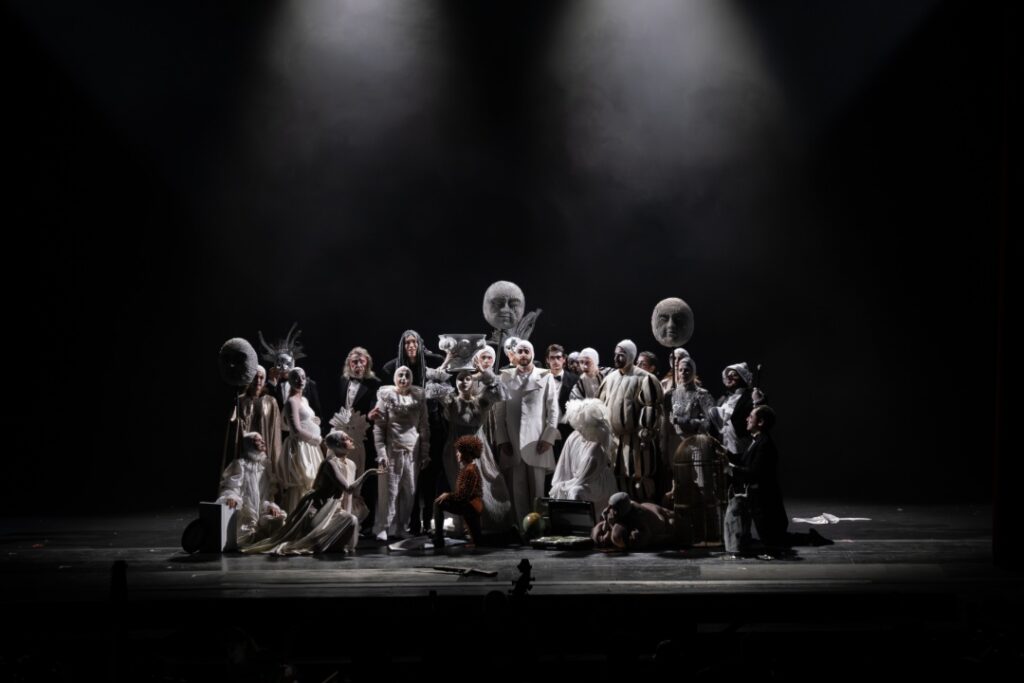
The visual presentation of "Le Nozze di Teti e Peleo" was a standout element, characterized by eye-catching and surreal costumes designed by Valentina Volpi. The production’s aesthetic was further enhanced by Oscar Frosio’s lighting design, which, in conjunction with a stark, pitch-black curtain and stage, created a dreamlike atmosphere. A particularly striking visual motif involved floating faces on rods, contributing to the otherworldly and ethereal quality of the performance. The intricate beadwork on the singers’ black bodysuits and the shimmering silver capes added a layer of tactile beauty, enhancing the dreamlike immersion for the audience.
A Stellar Cast and Musical Excellence
The success of the revival was significantly bolstered by a talented ensemble of singers, many of whom were winners and participants of the Cavalli and Monteverdi Competition 2025. The palpable camaraderie and genuine enthusiasm among the performers were a refreshing aspect of the production. Notable performances included those by tenor Angelo Testori, countertenor Maximiliano Danta, and mezzo-soprano Mara Gaudenzi, all of whom had previously impressed at the Innsbruck Early Music Festival’s Pietro Antonio Cesti Competition in 2024, as reviewed by OperaWire.
The principal roles were brought to life by a distinguished cast:
- Teti: Valentina Ferrarese
- Peleo: Ferran Albrich
- Discordia and Meleagro: Danilo Pastore
- Mercurio and Eaco: Matteo Straffi
- Marte, Momo, and Minos: Angelo Testori
- Giove and Nereo: Alessandro Ravasio
- Sileno, Plutone, and Tritone: Giacomo Pieracci
- Paride and Tempo: Jorge Navarro Colorado
- Giunone and Fama: Mara Gaudenzi
- Venere and Tesifone: Marzia Marzo
- Pallade: Benedetta Zanotto
- Bacco: Matteo Laconi
- Himeneo: Maximiliano Danta
- Megera and Mergellina: Gaia Ammaturo
- Aletto: Alessandro Simonato
- Radamanto: Marcello Zinzani
- Chirone: Arrigo Liverani Minzoni
The production also featured the directorial contributions of Petra Deidda, with set and costumes by Valentina Volpi, and lighting by Oscar Frosio. The Orchestra and Choir Cremona Antiqua, under the guidance of Choir Master Diego Maccagnola, provided a rich and nuanced musical foundation. The choir, in particular, played an active and integral role, not only vocally but also through memorizing and executing complex choreography and stage placement throughout the vast theater. This active engagement ensured that "there was never a dull moment," with every aspect of the performance designed to be memorable.
Broader Implications and Future Prospects
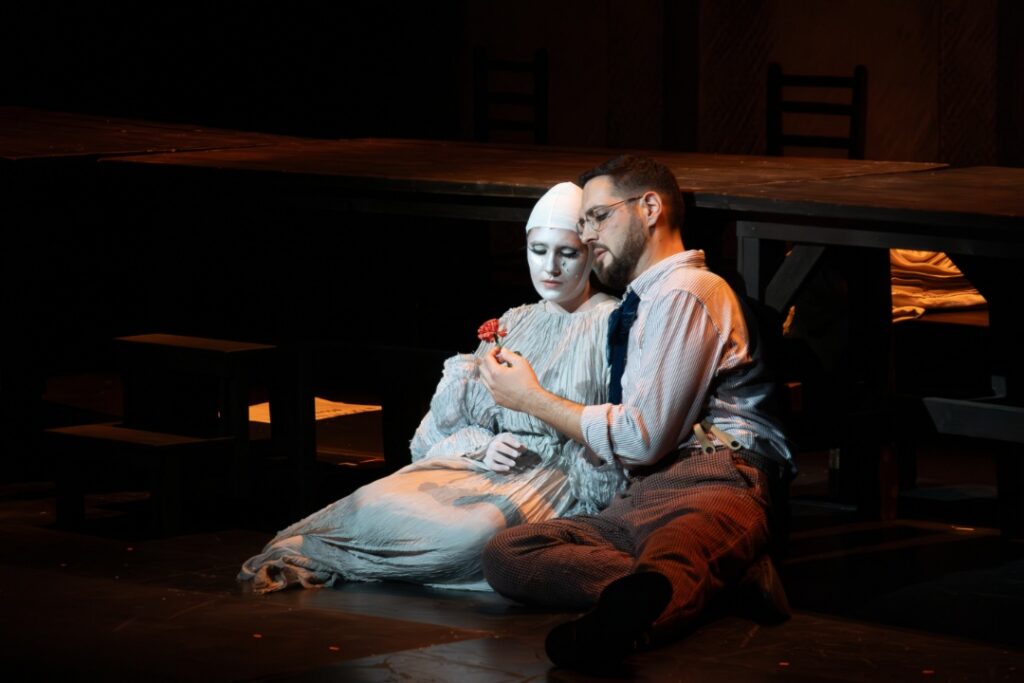
The modern premiere of "Le Nozze di Teti e Peleo" at the Monteverdi Festival Cremona represents more than just a single successful production; it signifies a crucial step in the ongoing effort to reclaim and reintroduce lesser-known works from the early opera canon. The meticulous research, scholarly reconstruction, and daring artistic interpretation involved in this project set a high bar for future revivals of early music.
The success of this production has several implications:
- Repertoire Expansion: It provides a compelling case for further exploration of Cavalli’s oeuvre and the broader Venetian operatic tradition, encouraging other festivals and opera houses to consider similar ambitious projects.
- Scholarly-Artistic Collaboration: The project highlights the indispensable synergy between musicological research and practical artistic realization. The collaboration between scholars like Angela Romagnoli and performers and directors like Antonio Greco and Chiara D’Anna is vital for bringing historical works to life authentically and compellingly.
- Audience Engagement with Early Opera: By presenting a challenging but ultimately rewarding work with innovative staging, the festival demonstrated that early opera can be both intellectually stimulating and emotionally engaging for contemporary audiences, even those new to the genre.
- The Role of Festivals: The Monteverdi Festival Cremona has solidified its position as a leading institution dedicated to the preservation and promotion of early music, particularly the works of Monteverdi and his contemporaries. Its commitment to experimentation and scholarly rigor makes it a vital hub for the early music community.
The extensive effort invested in reviving and remastering "Le Nozze di Teti e Peleo" was clearly appreciated by the audience, marking it as a definitive highlight of the festival. The careful balance of historical fidelity and contemporary artistic interpretation, while presenting some interpretative challenges, ultimately succeeded in showcasing the enduring power and beauty of Cavalli’s early operatic masterpiece, ensuring that this significant work will not be forgotten again.