 Jia Lissa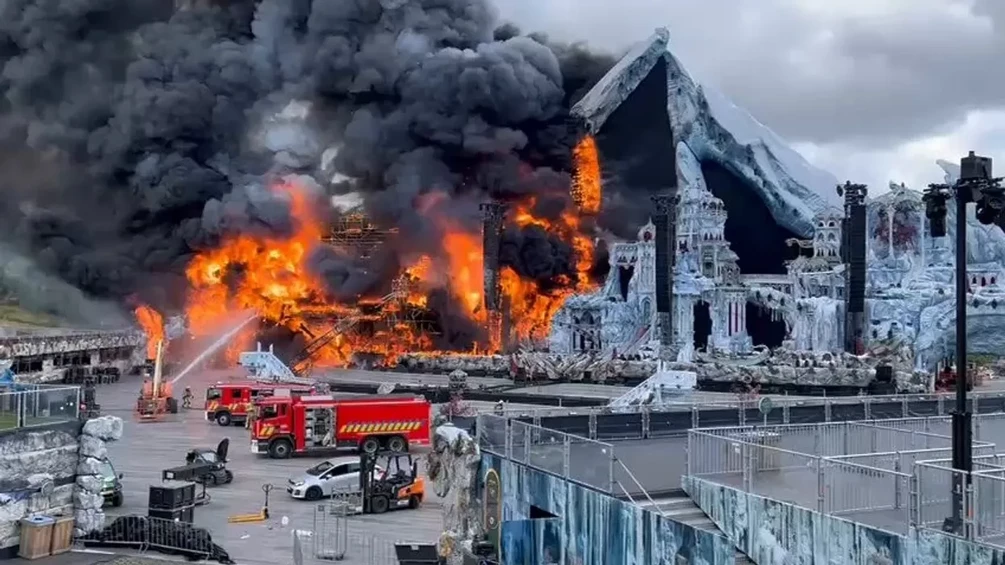
An accidental ethanol spill has been identified as the probable cause of the catastrophic fire that engulfed and destroyed Tomorrowland’s iconic Mainstage just days before last year’s highly anticipated festival, according to a recent investigative report by the prominent Dutch-language Belgian publication, Het Laatste Nieuws. The revelation sheds light on the origins of an incident that sent shockwaves through the global electronic dance music community and tested the resilience of one of the world’s most renowned music festivals.
Unveiling the Cause: A Deep Dive into the Investigation
The detailed report from Het Laatste Nieuws, citing sources intimately involved in the ongoing investigation, indicates that a leakage of ethanol, a highly flammable substance commonly used in pyrotechnic displays, likely occurred while subcontractors were conducting pre-festival tests on the stage’s elaborate fire bowls. These specialized pyrotechnic elements are integral to Tomorrowland’s immersive and visually spectacular performances, designed to synchronize with the music and amplify the festival experience. The accidental nature of the spill suggests a critical, albeit unintended, lapse in procedure or equipment integrity during a crucial preparatory phase. Ethanol, known for its rapid ignition and intense flame, would have quickly escalated any initial spark into a full-blown inferno, especially in an environment rich with decorative and structural materials.
The incident occurred a mere 48 hours before the gates were due to open for last year’s edition of the festival, transforming the majestic Orbyz Mainstage, the centerpiece of the event’s fantastical theme, into a smoldering ruin. The scale of the destruction was immense, compromising not only the structural integrity of the stage but also the intricate network of lighting, sound, and special effects equipment that define Tomorrowland’s legendary production values.
The Chronology of Crisis: From Pre-Festival Buzz to Fiery Aftermath
Tomorrowland, held annually in Boom, Belgium, has cultivated a reputation as a global mecca for electronic music enthusiasts, attracting hundreds of thousands of attendees from over 200 countries each year. Its Mainstage is not merely a platform for performers but an architectural marvel, a gateway to a meticulously crafted fantasy world that changes theme annually. The destruction of this central element just before the festival was poised to begin presented an unprecedented crisis.
The fire, which rapidly consumed the elaborate structure, prompted an immediate and extensive response from emergency services. Firefighters worked tirelessly to bring the devastating blaze under control, successfully preventing further spread to adjacent areas and mitigating potential environmental damage. Crucially, and testament to the prompt action and pre-emptive safety measures, no injuries were reported among the workers present on site during the incident. This outcome underscored the inherent risks associated with large-scale event production, particularly those involving complex pyrotechnics and temporary structures.
In the immediate aftermath, with the Mainstage in ruins, festival organizers faced an agonizing decision: cancel the event or find an unprecedented solution. Demonstrating remarkable resolve and logistical prowess, the Tomorrowland team, alongside their partners, swiftly devised a plan. Within hours, they initiated the installation of a smaller, albeit fully functional, replacement stage. This extraordinary feat of emergency engineering and coordination allowed the festival to proceed as planned, albeit with a significantly altered main performance area. The ability to pivot so rapidly and maintain the festival’s schedule was a testament to the robust contingency planning and the dedication of the entire Tomorrowland organization and its partners.
Tomorrowland’s Stance and Ongoing Safety Commitment
In response to inquiries regarding Het Laatste Nieuws‘s report, Debby Wilmsen, a spokesperson for Tomorrowland, offered a reflective and candid statement. "The fire will always remain a part of Tomorrowland’s history. We are very aware of that," Wilmsen acknowledged, recognizing the indelible mark the incident has left. She emphasized the organization’s unwavering commitment to safety: "Of course, we never want to experience anything like this again, but the risk analysis also confirmed that our safety procedures were already very well organised."
Wilmsen further articulated the festival’s proactive approach to safety: "We continuously evaluate our operations and implement additional measures wherever necessary." However, she also highlighted the inherent limitations in completely eradicating risk in such complex environments. "At the same time, we have to be honest: it is impossible to eliminate every risk entirely," she continued. "Weather conditions and human behaviour are factors that no one can fully control. That is why we prepare as thoroughly as possible for every conceivable scenario, with the aim of minimising risks and organising the safest festival possible." This statement underscores a philosophy of continuous improvement and realistic assessment of operational challenges, acknowledging that even the most stringent protocols can be tested by unforeseen circumstances.
Independent Risk Analysis: Reassuring Future Events
The comments from Tomorrowland’s spokesperson directly referenced an independent safety assessment conducted in the wake of the fire. This comprehensive review concluded that the current year’s Tomorrowland festival could proceed as planned, providing crucial reassurance to authorities, attendees, and stakeholders. The assessment was a collaborative effort, commissioned by Tomorrowland’s parent company, WEAREONE.world, in conjunction with the local municipalities of Boom and Rumst, and the Governor of the Province of Antwerp. This multi-stakeholder approach ensured a thorough and objective evaluation, incorporating perspectives from both event organizers and governmental safety authorities.
A key finding of the review was that, even if the fire had occurred during an active festival event, attendees would have been able to evacuate and reach designated safe areas within the required timeframes. This conclusion is paramount for demonstrating the efficacy of the festival’s emergency protocols, including exit routes, crowd management strategies, and communication systems. Such independent validations are vital for maintaining public trust and securing necessary permits for future editions, especially after a high-profile incident. The rigorous standards applied in this assessment reflect a broader industry trend towards enhanced safety and risk management for large-scale public gatherings.
Logistical Ripple Effects: Global Festival Network Impact
The aftermath of the Mainstage fire extended far beyond the fields of Boom, Belgium, creating significant logistical challenges for Tomorrowland’s global operations. In a remarkable display of industry solidarity and rapid problem-solving, the festival organizers received assistance from an unexpected source: the legendary rock band Metallica. The band, having recently concluded a European tour, generously loaned crucial stage parts to Tomorrowland. This gesture highlights the interconnectedness of the live entertainment industry and the willingness of major players to support one another in times of crisis, enabling the swift construction of the replacement stage that ultimately saved the Belgian festival.
However, this critical intervention for the flagship event in Belgium had direct consequences for other planned Tomorrowland endeavors. Organizers were compelled to postpone the 2026 edition of Tomorrowland Brasil, a burgeoning extension of the brand in South America. The reason for this postponement was directly linked to the Belgian incident: the original Mainstage, which was destroyed in the fire, had been slated for transportation and reuse at Tomorrowland Brasil. The diversion of resources, equipment, and logistical focus to salvage the Belgian festival meant that the Brazilian edition could not proceed as originally scheduled. This ripple effect underscores the intricate planning and global supply chain dependencies inherent in producing such massive international events, where an incident in one location can have far-reaching implications across continents. The economic impact on local Brazilian businesses, vendors, and tourism, while not explicitly detailed, would undoubtedly have been significant.
The Business of Festivals: Scale, Safety, and Economic Impact
Tomorrowland’s incident provides a stark reminder of the complexities and inherent risks within the multi-billion-dollar global festival industry. Attracting upwards of 400,000 visitors over two weekends, Tomorrowland generates substantial economic activity, contributing tens of millions of euros annually to the Belgian economy through tourism, local employment, and supplier contracts. The integrity of its brand, built on unparalleled production quality and an immersive experience, is paramount. A major incident like the Mainstage fire not only poses immediate safety concerns but also carries significant financial and reputational implications.
The meticulous planning required for such events extends to every facet: structural engineering for temporary stages, the safe handling of pyrotechnics and special effects, crowd management strategies, and comprehensive emergency response plans. Regulatory bodies, often at local and regional levels, impose stringent safety standards that festivals must meet to obtain permits. These typically involve multiple inspections by fire marshals, structural engineers, and health and safety officials. The fact that the festival proceeded, supported by an independent risk analysis, speaks volumes about the robustness of the underlying safety framework and the rapid crisis management capabilities employed by Tomorrowland. The insurance implications for an incident of this magnitude would also be considerable, involving extensive claims for property damage, business interruption, and liability, further highlighting the financial risks inherent in large-scale event production.
Looking Ahead: Tomorrowland Belgium 2024 and Beyond
As the electronic music world converges once again on Boom, Belgium, this weekend, Tomorrowland returns to its traditional home, ready to host hundreds of thousands of "People of Tomorrow." A second weekend of action is scheduled to commence the following Friday, July 24th, promising a renewed celebration of music and unity. Attendees are eagerly consulting the latest weather forecast updates and scrutinizing the recently announced streaming programme and comprehensive set times, all available on the festival’s official channels and partner publications.
The lessons learned from the Mainstage fire have undoubtedly reinforced Tomorrowland’s commitment to safety and innovation. While the incident was a challenging chapter in its history, the swift recovery, the dedication of its team, and the collaborative spirit shown by the industry have demonstrated the festival’s resilience. The ongoing evaluation of operations and the implementation of additional measures ensure that Tomorrowland continues to strive for the safest possible environment, preparing meticulously for every conceivable scenario, as it seeks to minimize risks and deliver its unparalleled experience to the world. The incident, while unfortunate, has served as a critical case study for the global festival industry, emphasizing the perpetual need for vigilance, robust safety protocols, and adaptable crisis management in the face of the unpredictable nature of large-scale live events.