Mia Khoirunisa
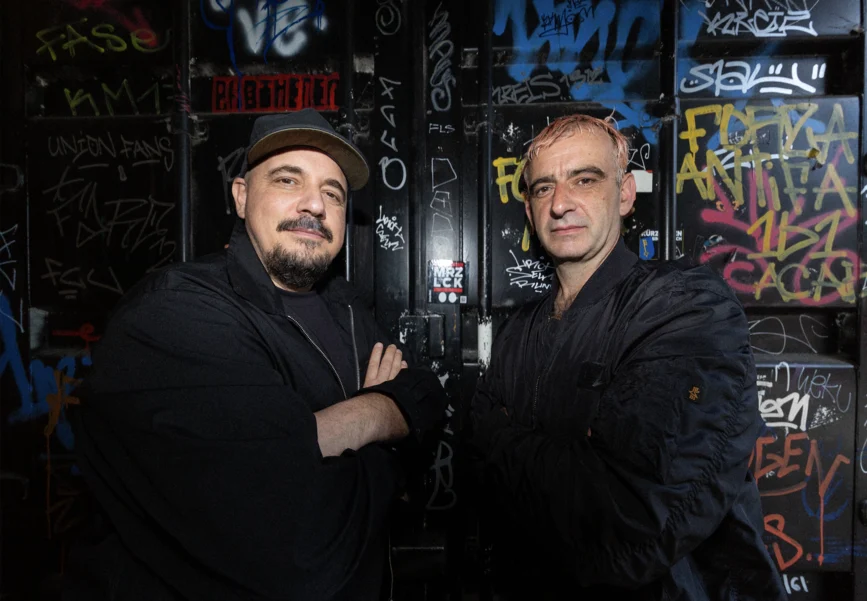
The landscape of algorithmic music production is undergoing a significant shift as specialized tools transition from niche walled gardens into universal digital audio workstations. Iftah, the electronic music technologist and former member of the renowned production duo Skinnerbox, has officially liberated his acclaimed generative sequence generator, Sting. No longer confined exclusively to Ableton Live’s Max for Live ecosystem, Sting is now widely available as a standard VST3, AU, and CLAP plug-in. This cross-platform release brings macOS, Windows, and Linux producers a powerful new instrument designed to blend generative automation with tactile, human expression.
Main Facts and Technological Evolution
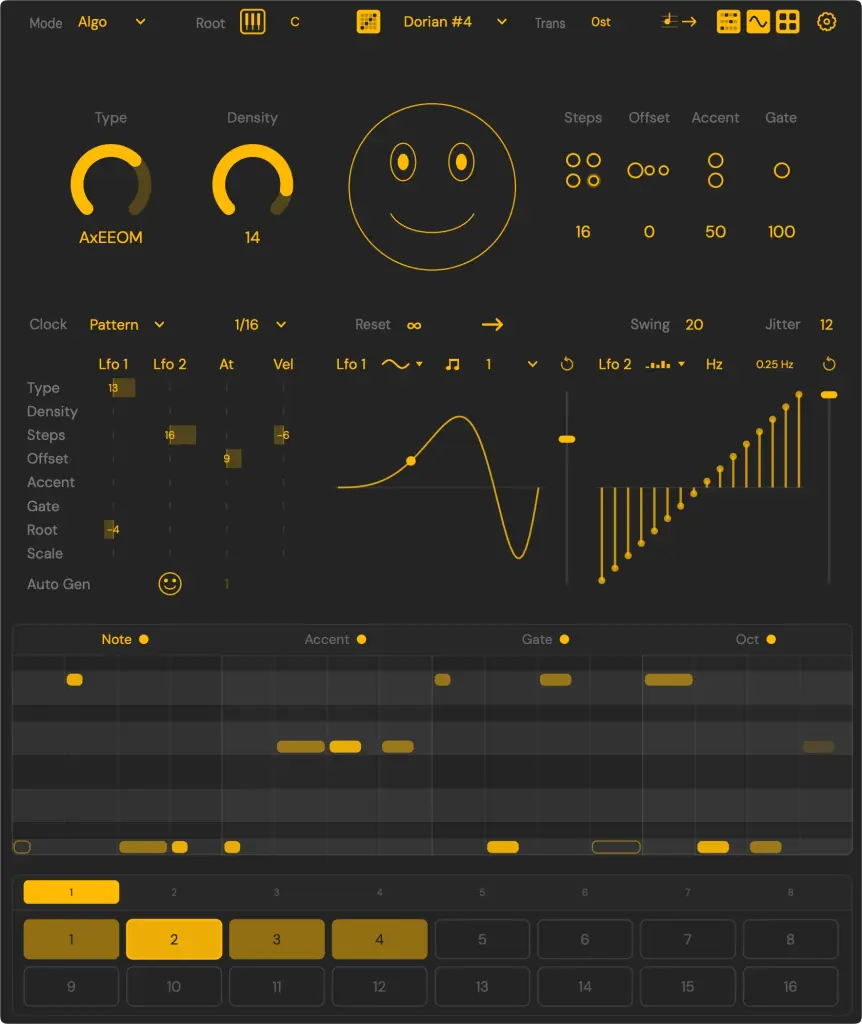
At its core, Sting is designed to construct fluid, evolving patterns that range from squelching, classic acid basslines to complex polyrhythmic melodies and percussion loops. Unlike text-prompted artificial intelligence tools that rely on conversational commands, Sting prioritizes physical interaction, allowing musicians to map parameters directly to hardware controllers like the Novation Launchpad and Monome grids.

The transition from a Max for Live device to a fully compiled plug-in has brought a suite of advanced features. The software now includes native MIDI file importing, an expansive modulation section, and a multi-voice counterpoint mode capable of generating independent musical lines, harmonies, and bass foundations simultaneously. Furthermore, the development team has prioritized universal accessibility, ensuring that visually impaired and blind producers can navigate and manipulate the interface seamlessly using screen readers and tactile hardware mapping.
A Chronological Look Back: From Skinnerbox Roots to Modern Plug-In
The evolution of Sting spans more than a decade, reflecting changing trends in electronic music software design.
- The Early Era (Skinnerbox Days): The conceptual foundation began under the banner of Skinnerbox, where the tool was initially known as STING!64. Built as a yellow-themed, highly specialized acid pattern generator, it gained a cult following among hardware-minded producers looking to inject randomized variation into strict rhythm boxes.
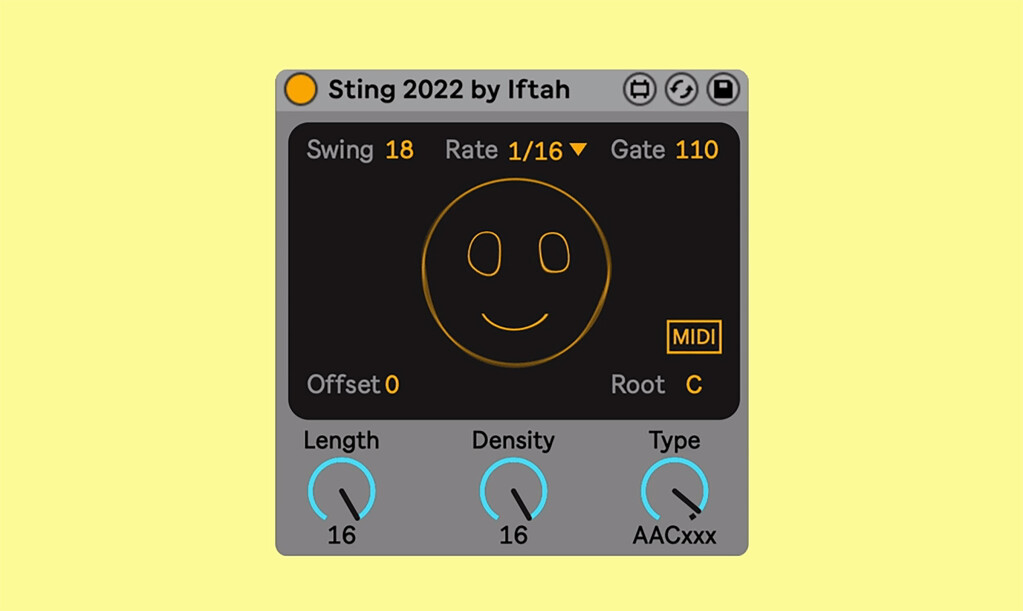
- The 2002 Max for Live Revival: Iftah revitalized the project under his own name, introducing the modernized "Sting 2022" for Max for Live. This version introduced critical parameter controls such as TYPE, length, and density knobs, alongside the plug-in’s signature minimalist smiley-face branding.
- The 2026 Cross-Platform Launch: Marking its biggest expansion to date, Sting drops its platform restrictions entirely. By rewriting the underlying architecture to support VST3, AU, and CLAP frameworks across major operating systems, the software opens its algorithmic potential to users of Logic Pro, FL Studio, Bitwig Studio, Reaper, and other digital audio workstations.
Accessibility as a Design Standard
One of the most notable achievements of the modern Sting release is its commitment to universal design. Software synthesizers and MIDI generators have historically presented severe barriers to entry for blind and visually impaired musicians due to heavy reliance on complex graphical user interfaces and mouse-driven parameter adjustments.
By integrating comprehensive screen-reader compatibility and deep hardware controller integration, Sting sets a new benchmark for independent software developers. Industry analysts and accessibility advocates have pointed to Iftah’s implementation as a model for future plug-in development, demonstrating that complex algorithmic tools do not need to sacrifice inclusivity for functionality.
Pricing, Distribution Model, and Performance Integration
Releasing a cross-platform audio plug-in involves substantial overhead, particularly concerning compilation costs across different operating systems, plugin formats (VST3, AU, CLAP), and modern framework dependencies like JUCE. To balance development sustainability with user accessibility, Iftah has implemented a hybrid distribution model.
While the software requires a purchase to support ongoing maintenance and compatibility updates, the official distribution website utilizes a live-updating daily counter that grants access to a limited number of free downloads—specifically seven per day. Early-adopter performance videos shared by Iftah demonstrate the plug-in’s robust live capabilities, highlighting its "Takeover Mode" on Novation Launchpad hardware, which turns the grid controller into a dynamic, performance-ready composition surface.
Industry Implications and Broader Market Impact
The release of Sting arrives at a time of intense debate over the role of automation in creative fields. While consumer-facing generative AI tools often abstract the creative process behind opaque text prompts, devices like Sting represent an alternative philosophy: generative music systems built for instrumentalists.
By keeping the musician’s hands on physical controls—whether through grid surfaces, modulation mappings, or real-time pattern manipulation—Sting proves that algorithmic composition can enhance, rather than replace, human performance instincts. As music technology continues to evolve, the successful transition of advanced generative tools into universal plug-in formats suggests a growing demand for software that balances machine intelligence with tactile, embodied expression.


![Sijya announces Leather and Brass [Retrofitted] EP, shares Do I Know [Rachika Nayar Edit]: Listen](https://empire-music.net/wp-content/uploads/2026/09/sijya-announces-leather-and-brass-retrofitted-ep-shares-do-i-know-rachika-nayar-edit-listen.webp)