Mia Khoirunisa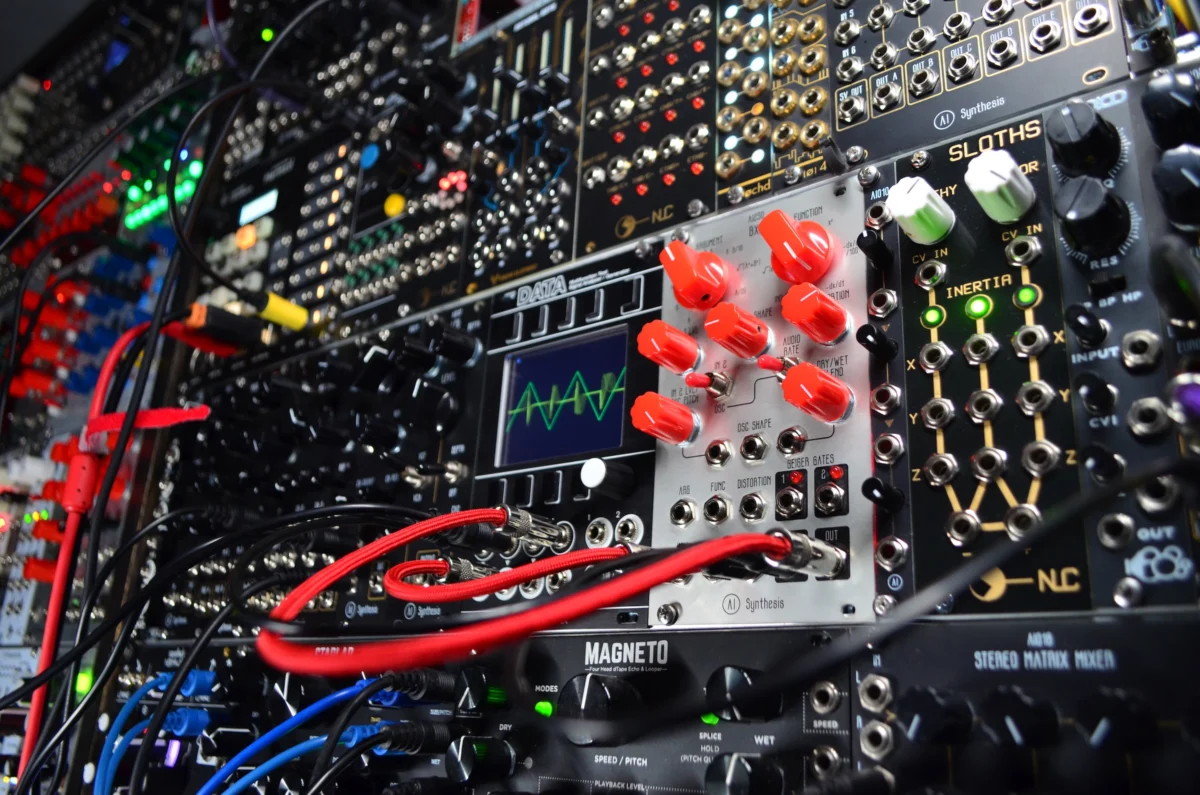
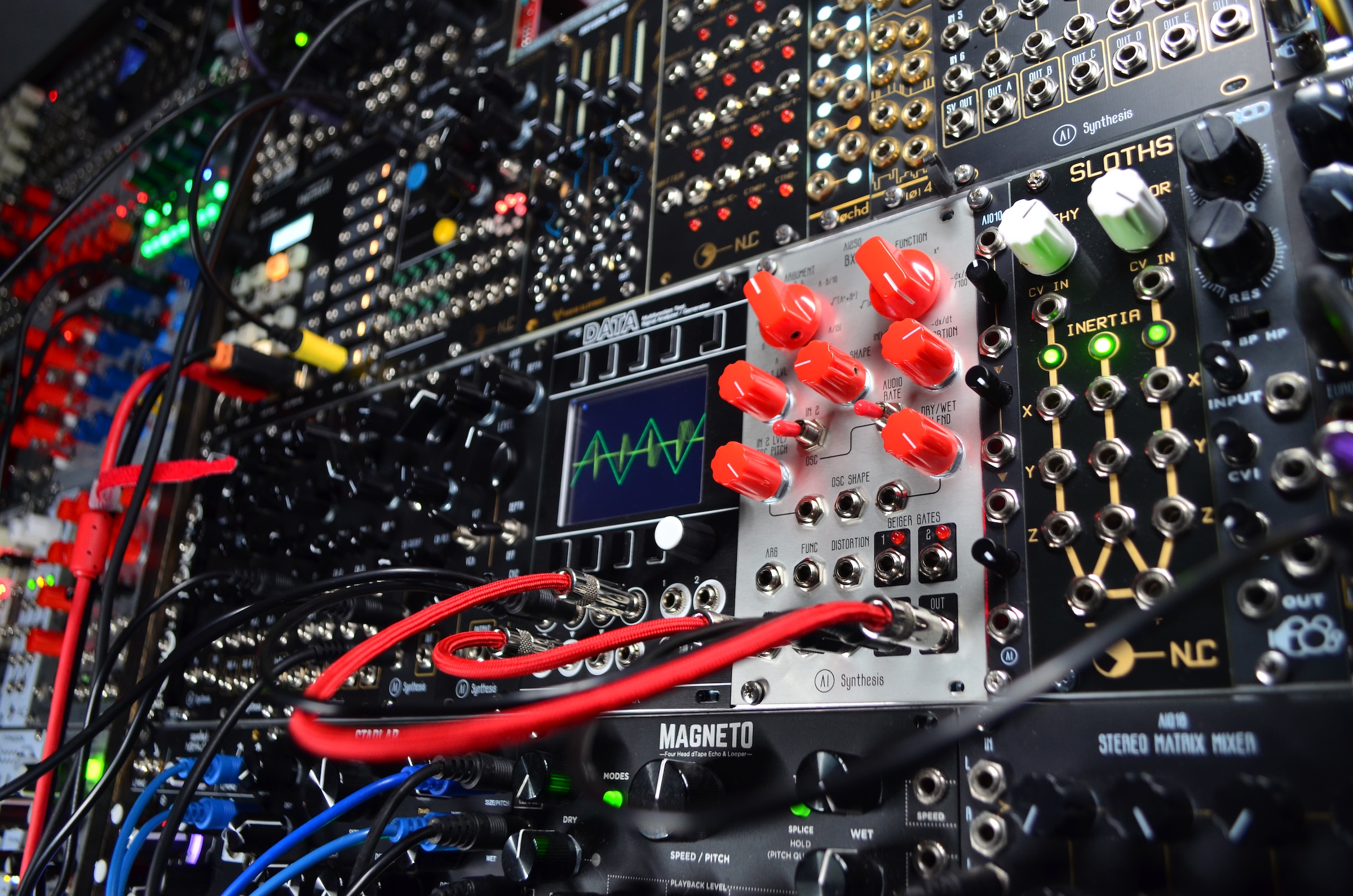
The intersection of vintage scientific instrumentation and modern electronic music synthesis has yielded an unusual and versatile new hardware device: the AI250 BXR, developed by Portland, Oregon-based boutique manufacturer AI Synthesis. Debuting at the annual Knobcon synthesizer convention in Chicagoland, the BXR represents a significant departure for the company as its first digital module. Powered by the Daisy Patch platform, the module adapts the real-time mathematical signal-processing capabilities of vintage nuclear test equipment—specifically boxcar averagers used to acquire and analyze fast electrical signals—into a hybrid tool that functions simultaneously as an oscillator, a voltage generator, and an audio mangler.
This release bridges a historical gap between laboratory-grade diagnostic hardware and contemporary sound design. By translating industrial and scientific signal processing into a format accessible to electronic musicians, AI Synthesis continues its mission of making modular synthesis hardware approachable, while simultaneously lowering the financial barrier to entry for creators through comprehensive educational resources and do-it-yourself (DIY) building guides.
Bridging Vintage Scientific Instruments and Modern Synthesis
The conceptual foundation of the AI250 BXR lies in a piece of technology rarely associated with music production: the boxcar averager. Historically utilized in vintage nuclear test equipment and advanced laboratories to measure repetitive signals buried in high levels of noise, boxcar averagers function by sampling a waveform at precise intervals and averaging those samples over time to extract clean data from chaotic environments.
Abraham Ingle, the founder of AI Synthesis, drew direct inspiration for the BXR from the Stanford Research Systems NIM (Nuclear Instrument Module) series, specifically referencing the SR-235 Analog Processor. In a traditional modular signal chain, audio and control voltage (CV) signals are typically manipulated using standard mixing, filtering, and wave-shaping topologies. By introducing the mathematical sampling and reconstruction principles of a boxcar averager into a Eurorack format, the BXR allows users to process audio or CV signals against either an external input or an internal, variable-waveshape oscillator.
This internal oscillator can be tracked via volts-per-octave standards, enabling the entire module to operate as a fully functional Voltage Controlled Oscillator (VCO). When audio signals are subjected to the real-time mathematical averaging and sampling routines of the BXR, the result is a distinct form of harmonic distortion, waveshaping, and complex modulation that introduces textures previously confined to scientific laboratories or specialized digital processors.
Hardware Specifications and Engineering Architecture
Designed to integrate seamlessly into standard Eurorack modular cases, the AI250 BXR balances advanced digital processing with physical footprint constraints. Hardware dimensions and power requirements reflect careful engineering tailored to modern synthesizer setups:
- Format: Eurorack Module
- Width: 14 HP (Horizontal Pitch)
- Depth: 39 mm
- Power Consumption: +120 mA (-V), +11 mA (+V)
- Core Processing Platform: Daisy Patch Submodule
The inclusion of the Daisy Patch platform marks a major milestone for AI Synthesis, which has historically focused on analog circuitry, utility modules, and beginner-friendly DIY kits. Utilizing the Daisy ecosystem allows the BXR to execute complex DSP (Digital Signal Processing) algorithms required to emulate real-time boxcar averaging while retaining the tactile, hands-on control interface expected of Eurorack hardware. Parameter knobs for Input 1 level, Input 2 level, and oscillator pitch dominate the front panel, allowing performers to dynamically warp waveforms, introduce aggressive digital artifacts, or generate complex modulation voltages on the fly.
The Evolution and Philosophy of AI Synthesis
AI Synthesis was founded by Abraham Ingle out of a personal frustration familiar to many musicians entering the electronic music hardware space: a profound interest in modular synthesis coupled with severe financial limitations. Reflecting on his college years spent dreaming about complex synthesizer patches while struggling to afford basic living expenses, Ingle established AI Synthesis with a dual mission. Beyond manufacturing commercial modules, the company has built a robust educational platform aimed at democratizing electronics knowledge for musicians.
The AI Synthesis web portal serves as an extensive repository for DIY electronics education. It provides step-by-step build instructions, complete schematics, detailed circuit explanations, and foundational guides covering core electronic principles. Among these resources is a comprehensive tutorial on how resistors function in circuit design, a guide to getting started in modular synthesis from scratch, and practical instructions on how to integrate an affordable, $26 oscilloscope into a Eurorack system for visual feedback during patching sessions.
By releasing the BXR alongside these continuous educational initiatives, AI Synthesis maintains its commitment to supporting budget-conscious creators, whether they choose to purchase fully assembled units or source components to build their own gear.
Industry Debut and Market Implications
The public unveiling of the AI250 BXR at Knobcon places the module directly in front of an engaged community of hardware enthusiasts, synthesizer designers, and modular practitioners. As the Eurorack market continues to saturate with standard filter, VCO, and VCA designs, manufacturers increasingly look to niche historical technologies, unconventional signal processors, and cross-disciplinary inspirations to differentiate their products.
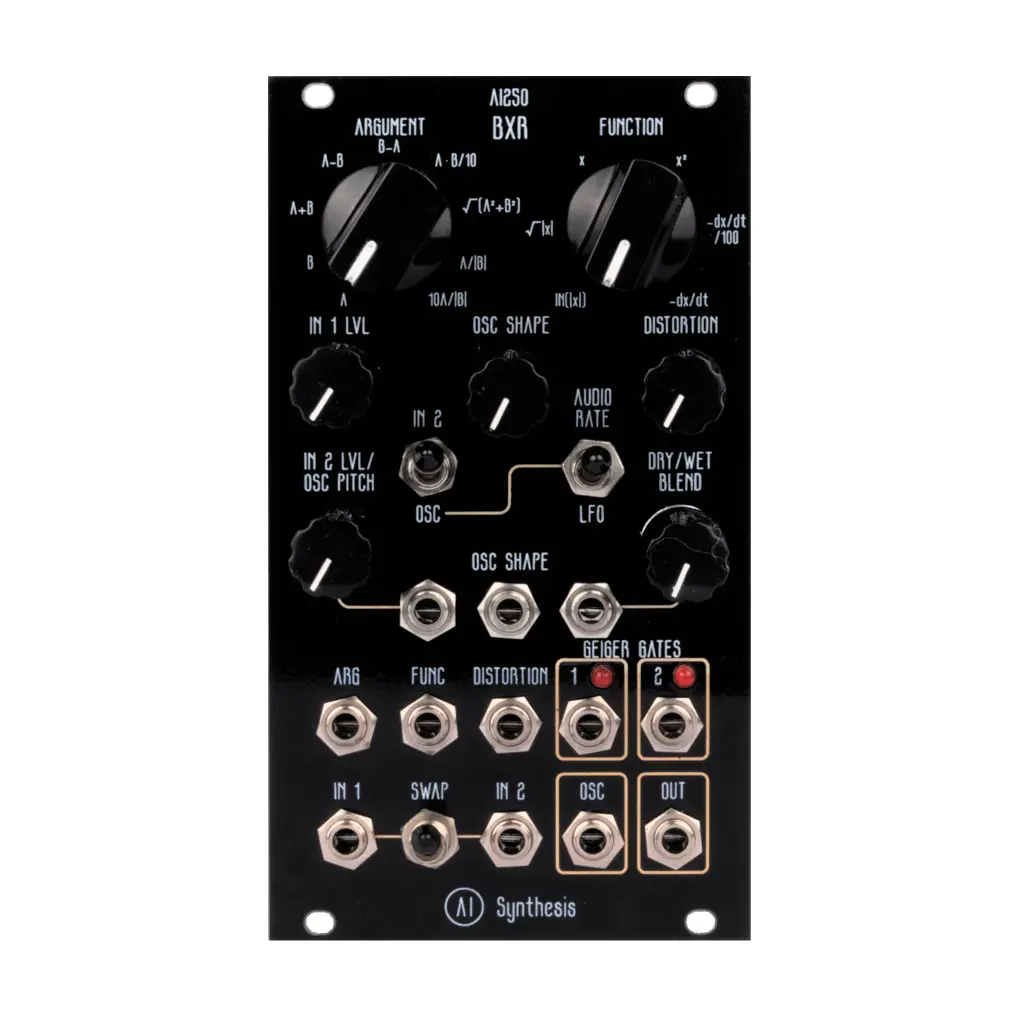
The adaptation of nuclear testing hardware into an audio mangler aligns with a broader trend in electronic music production that values unpredictability, industrial grit, and experimental timbre generation. While traditional waveshapers manipulate amplitude and phase through geometric curves, boxcar-based processing introduces discrete-time mathematical sampling artifacts that yield unique spectral characteristics.
Furthermore, the BXR highlights the growing viability of open-source and flexible digital platforms like Electrosmith’s Daisy in boutique module design. By leveraging established digital hardware architectures, independent developers can focus on unique software algorithms and interface design without having to engineer proprietary microcomputer boards from scratch.
Broader Impact on Sound Design and DIY Communities
The release of the AI250 BXR carries implications for both advanced sound designers and the grassroots DIY community. For professional producers and live performers, the module offers an unconventional source of rhythmic modulation, aggressive audio degradation, and precise oscillator tracking that expands the sonic palette of existing modular systems.
For hobbyists and students of electronics, the BXR—supported by AI Synthesis’s documentation—reinforces the educational value of understanding how physical and mathematical principles translate into sound. As modular synthesis evolves past its mid-20th-century analog roots into an era defined by hybrid analog-digital processing and cross-industry technological borrowing, instruments like the BXR demonstrate that innovation often emerges from looking backward into unexpected historical archives.