Mia Khoirunisa
The release of Ardour 9.8 marks another significant milestone in the rapid and rigorous development cycle of the free and open-source digital audio workstation (DAW). Available across Linux, macOS, and Windows platforms, version 9.8 introduces a comprehensive suite of workflow enhancements, including refined session recovery protocols, enhanced clip recording features, an expanded array of hardware and controller integrations, and a sophisticated new MIDI arpeggiator tool. However, the most profound addition to this release is the integration of scales and keys designed from the ground up to be tuning-aware—a development that challenges decades of software standardization rooted in Western common-practice traditions.
Main Facts of the Release
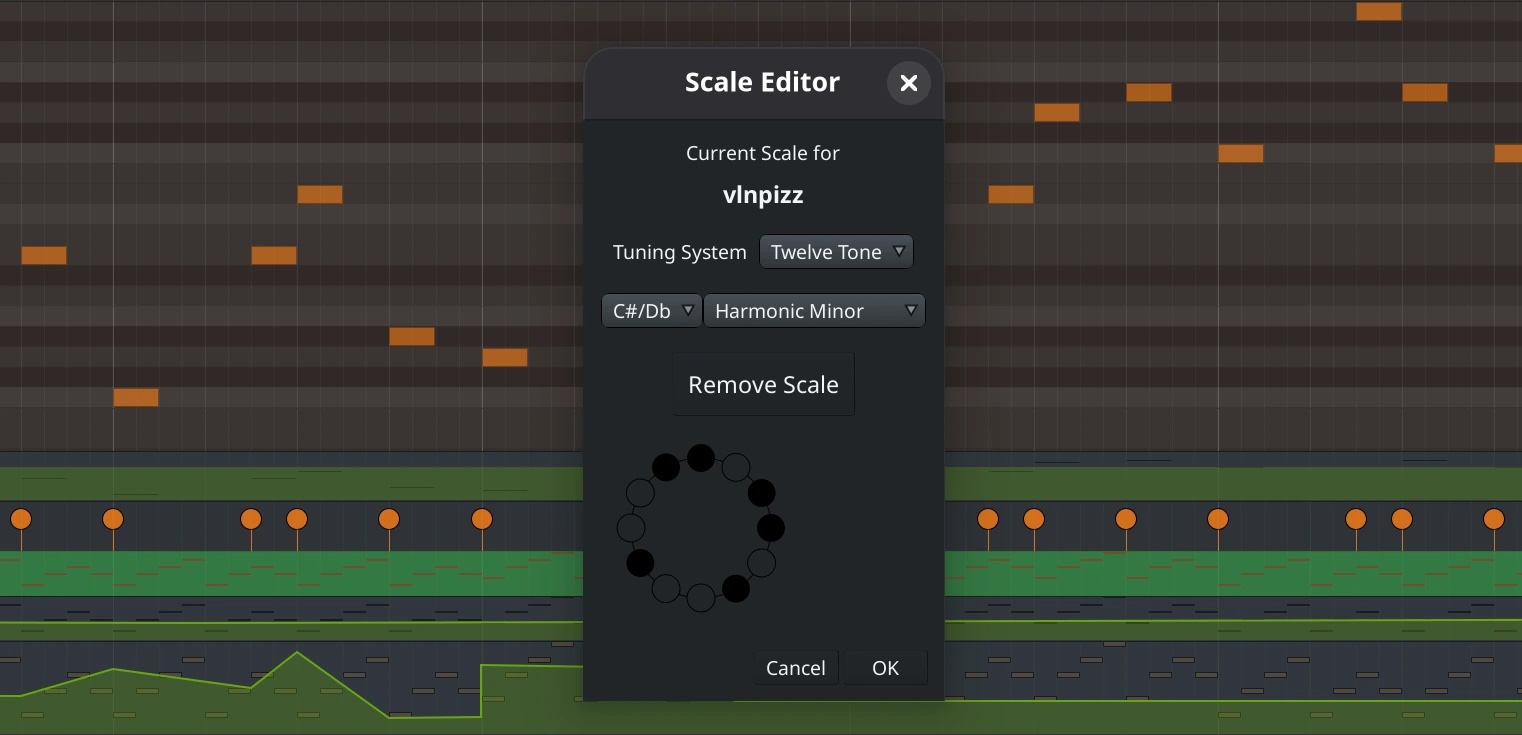
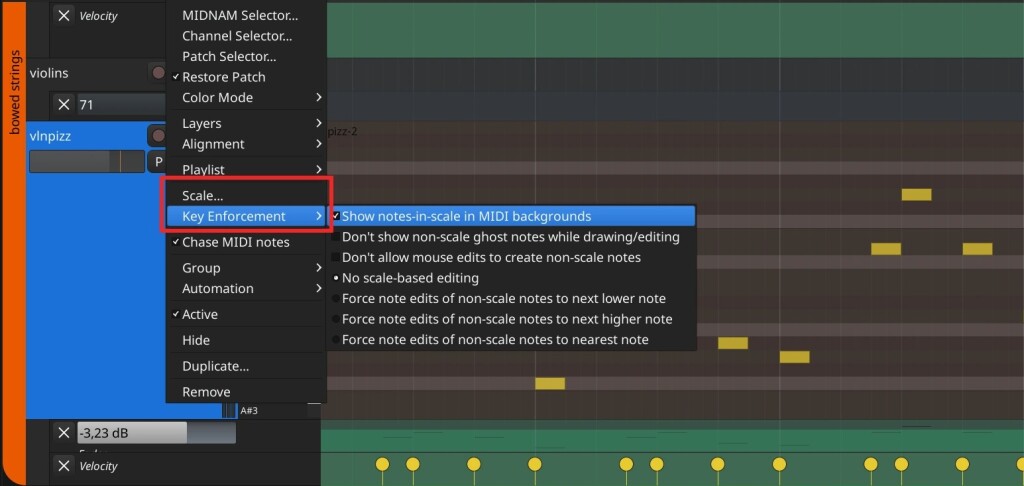
At its core, Ardour 9.8 continues to narrow the feature gap between open-source audio software and dominant commercial digital audio workstations like Ableton Live, Logic Pro, and Bitwig Studio. The newly implemented scale and key editing tools allow producers to define specific pitch collections directly within the interface, visualize scale steps dynamically, and enforce constraints on MIDI input. Users can configure the software to prevent the entry of out-of-scale notes or to automatically adjust stray MIDI notes in real time using three distinct mapping behaviors.
Beyond composition tools, the update brings considerable improvements to live-performance and loop-oriented workflows. Clip recording has been updated to include a functional two-bar countdown, visual feedback mechanisms, and enhancements to the underlying audio clip editor. MIDI tooling has likewise been upgraded, bringing arpeggio functionality directly into the chord-editing environment. Furthermore, hardware integration has been broadened to support popular control surfaces, including the Novation Launchkey series—with preliminary environments open for testing on the Mk4 88—as well as legacy hardware controllers such as Ableton’s Push 2.
Chronology and Development Trajectory
The evolution of Ardour has historically been driven by community contributions, transparent milestone releases, and a commitment to democratic software licensing under the GNU General Public License (GPL). Unlike proprietary DAWs governed by rigid corporate product roadmaps, Ardour’s development philosophy prioritizes iterative transparency, releasing architectural foundations early to gather direct user feedback from composers, sound designers, and live performers.
The implementation of scale and tuning support in version 9.8 represents the first phase of a multi-release initiative. Recognizing the technical complexity of supporting non-standard pitch collections, the development team deliberately opted to introduce a minimal viable feature set. This early rollout allows the user base to stress-test the initial framework—which currently supports root-note selection, mode editing, and basic tuning mappings—before deeper capabilities, such as non-repeating octaves and advanced microtonal scalar mathematics, are integrated into future minor and major versions.
Supporting Data and Context: The Hegemony of 12-TET
To understand the structural significance of Ardour’s tuning-aware scales, one must examine the historical monopoly of 12-tone equal temperament (12-TET) at a reference frequency of A=440 Hz within music software engineering. For decades, mainstream DAWs have treated 12-TET as an immutable universal standard. Scale systems, chord generators, and hardware scale-quantization features embedded in controllers have universally assumed that an octave is divided into twelve logarithmically equal semitones anchored to a fixed concert pitch.
Musicological data demonstrates that 12-TET at A=440 Hz is actually an historical and geographical edge case rather than a global norm. Even within Western art music, common-practice concert repertoire from the 18th century and earlier utilized a diverse array of temperament systems, including meantone, well-temperament, and Pythagorean tuning. Furthermore, historical pitch references varied wildly; historical organs and orchestral standards frequently hovered anywhere from A=415 Hz to A=465 Hz.
On a global scale, the assumption of 12-TET completely excludes millennia of rich musical traditions. Central Javanese and Balinese gamelan ensembles utilize non-tempered tuning systems—such as slendro and pelog—whose intervals are hammered directly into bronze percussion instruments and passed down aurally through generations. Middle Eastern and North Asian traditions similarly rely on complex modal frameworks, such as the Arabic maqam system, which frequently incorporate microtonal intervals (such as neutral thirds and quarter-tones) and dynamic modulations between pitch collections known as jins.
Industry Responses and Technological Approaches
The music software industry has slowly begun addressing microtonality and alternative tunings, though implementation strategies vary drastically in their utility. Some software synthesizers feature internal microtonal support, while platforms like Bitwig Studio have introduced built-in tuners to assist with alternative pitch realities. Ableton Live introduced project-wide "Tuning Systems" support, allowing users to apply alternative temperaments to their projects.
However, architectural limitations in commercial software have often resulted in disconnected user experiences. In Ableton Live’s implementation, enabling a custom Tuning System effectively disables standard scale-based features and Push controller scale modes. This separation stems from a design paradigm that views tuning as an afterthought applied exclusively to output audio or synth patches, rather than an intrinsic property of the compositional framework itself.
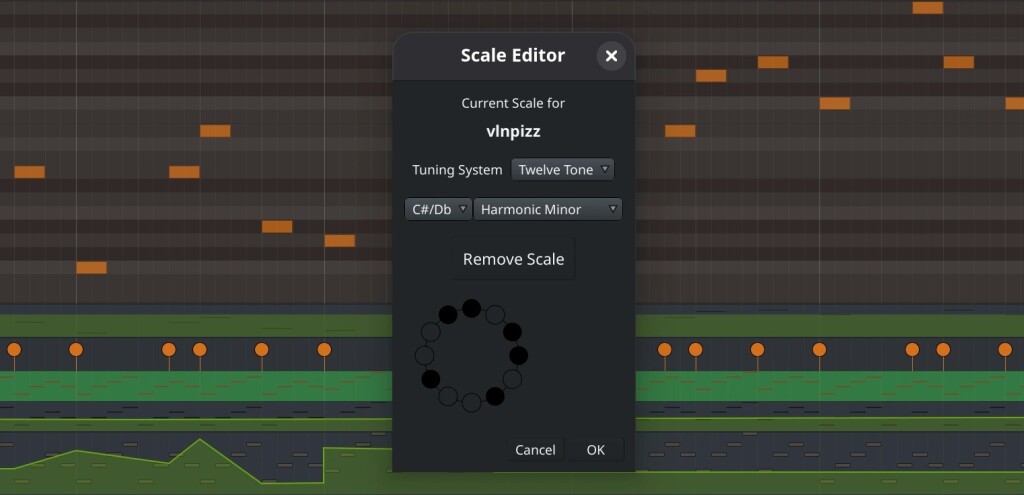
Ardour’s engineering team has approached this challenge by integrating tuning systems directly into the scale editor. By allowing users to apply a specific tuning system to a designated scale, root note, and mode simultaneously, Ardour bridges the conceptual gap between compositional theory (what notes are available on a score) and acoustic execution (how those notes are physically tuned). This mirrors open-source hardware and software initiatives spearheaded by independent developers and instrument designers, such as Khyam Allami’s Tanghām microtonal plug-in. While plug-ins often function akin to retuning an instrument, Ardour’s DAW-level implementation functions more like a dynamic score, providing a unified workspace for avant-garde, traditional, and non-Western practitioners alike.
Broader Impact and Technical Implications
The introduction of tuning-aware scales in Ardour 9.8 carries important implications for the future of digital audio workstation design. By rejecting the premise that music software must be inextricably bound to 12-TET, Ardour provides a technical blueprint for how open-source software can accommodate global music diversity without forcing users into restrictive workflows.
While the current implementation in version 9.8 contains functional limitations—such as restricted non-repeating octave handling and an interface vocabulary still heavily reliant on Western music theory terminology—it establishes an extensible foundation. As future releases expand upon this architecture, producers working in microtonal electronica, traditional folk, non-Western classical genres, and experimental composition will gain native tools that respect the exactitude of their chosen tonal languages.
For the open-source community, Ardour 9.8 reaffirms the platform’s viability as a professional-grade alternative to commercial software. Combined with its polished clip recording routines, expanded hardware support for Novation and Ableton controllers, and robust MIDI arpeggiators, the update delivers immediate utility to general music producers while pioneering structural advancements that commercial developers have been slow to adopt. Users across Linux, macOS, and Windows can download Ardour 9.8 directly from the official project website to explore the new features and contribute feedback to the ongoing development of its scale and tuning architecture.