Johan Budi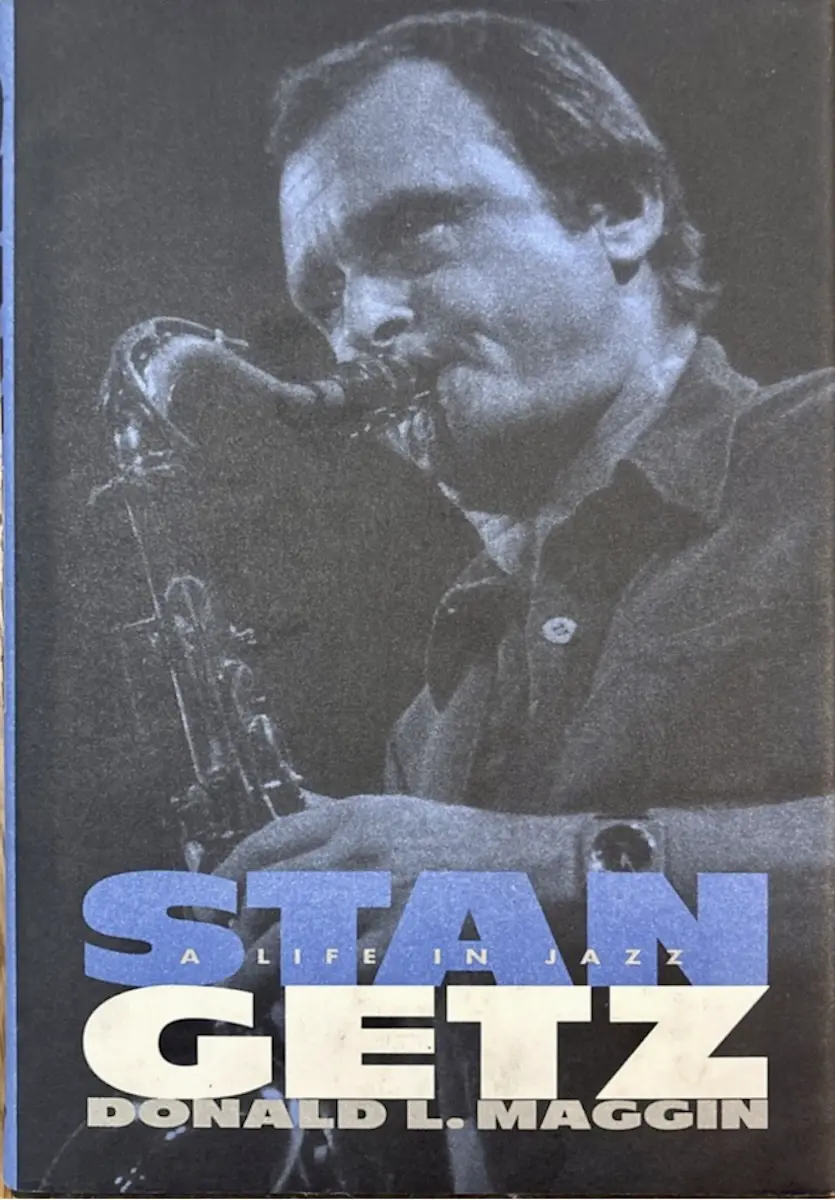
The publication of a major biographical work often serves as a cultural lightning rod, reigniting debates about the friction between artistic genius and personal turmoil. Donald L. Maggin’s substantial volume, Stan Getz: A Life In Jazz, published by William Morrow, arrives as a meticulously researched 417-page hardcover priced at £18.99 (ISBN 0-688-12315-5). Illustrated and accompanied by a companion Verve compact disc curated and annotated by the author, the biography attempts to capture the extraordinary trajectory of a musician widely regarded as one of the preeminent tenor saxophonists in the history of jazz. Yet, despite its comprehensive collection of historical data, the book has prompted nuanced critical evaluations regarding its psychological depth, its analytical approach to musicology, and the inherent challenges of chronicling a life defined by profound contradictions.
Main Facts and Biographical Overview
Stan Getz, born Stanley Gayetsky in Philadelphia in 1927, emerged during the swing era and rose to international prominence through his work with Woody Herman’s famed "Second Herd" orchestra in the late 1940s. Blessed with a signature, silvery tone often described as ethereal, Getz achieved commercial and artistic immortality by introducing the mellow cadence of bossa nova to American audiences through landmark recordings such as the 1964 global smash album Getz/Gilberto, featuring Antonio Carlos Jobim and Astrud Gilberto.
Maggin’s biography chronicles this extensive career with commendable diligence. The narrative traces Getz’s early professional steps in New York, his mentorship under Jack Teagarden, his relentless touring schedule, and his evolution through various stylistic phases, from cool jazz to modal explorations and fusion-influenced later work. The book benefits from exhaustive research, presenting readers with a near-comprehensive ledger of Getz’s recorded output, television appearances, and professional associations.
However, the biographical portrait is inextricably bound to the musician’s turbulent personal existence. Maggin delves deeply into Getz’s marital fractures, familial strife, and protracted battles with severe substance abuse. The accounts are frequently harrowing, detailing a domestic environment dominated by volatility and the immense strain placed upon those closest to the artist, notably his wife at the time, Monica Getz.
Chronology and Historical Context
To understand the weight of Maggin’s narrative, one must view it within the broader chronology of the twentieth-century jazz landscape. Getz’s career spanned over four decades, bridging the transition from the golden age of big bands to the fragmentation of the music industry in the late twentieth century.
- 1927: Stanley Gayetsky is born in Philadelphia, Pennsylvania.
- 1943–1945: Early professional engagements with major bandleaders, including Jack Teagarden, Stan Kenton, and Benny Goodman.
- 1947–1949: Tenure with Woody Herman’s orchestra, solidifying his reputation as one of the premier "Four Brothers" tenor section and scoring a massive hit with "Early Autumn."
- 1950s: Establishes himself as a leader of the West Coast "cool jazz" movement while battling escalating addictions to heroin and alcohol.
- 1961–1964: Relocates briefly to Europe before returning to launch the bossa nova craze in the United States, culminating in the historic Grammy-winning success of Getz/Gilberto.
- 1970s–1980s: Continues recording prolifically, exploring fusion, working with younger pianists like Jimmy Rowles and Chick Corea, and eventually achieving long-term sobriety toward the end of his life.
- 1991: Stan Getz passes away from liver cancer at the age of 63 in Malibu, California.
- 2004: Donald L. Maggin publishes Stan Getz: A Life In Jazz.
Critical Assessment of the Biographical Method
While Maggin’s compilation of biographical data is impressive, literary and jazz critics have identified notable shortcomings in how the author interprets his subject’s psychological profile. A primary critique centers on the biography’s deterministic reliance on chemical dependency as a blanket explanation for Getz’s often appalling interpersonal behavior. By attributing complex domestic and professional conflicts almost exclusively to the "twin evils" of drugs and alcohol, the narrative occasionally lapses into reductionism.
The portrayal of the Getz family—particularly Monica Getz—emerges as one-dimensional, casting relatives as saintly figures enduring sustained hardship without fully exploring the reciprocal dynamics of these relationships. Furthermore, music critics and historians have noted a surprising scarcity of dissenting voices from fellow musicians within the text. While tributes from peers praising Getz’s musical brilliance, professionalism on the bandstand, and openness to younger talent are abundant, the relative absence of critical commentary from colleagues who experienced his difficult temperament creates an imbalance in the historical record.
An illustrative anecdote concerning guitarist Herb Ellis highlights this gap. Late in life, following his definitive cessation of drinking, Getz reportedly informed Ellis of his intention to contact everyone he had mistreated to make amends. Ellis famously retorted, "I hope you’re not going to use a pay-phone." While folkloric within jazz circles, such anecdotes require rigorous contextualization to paint a complete picture. The omission of comprehensive counter-narratives leaves the reader with a sanitized view of how the saxophonist was perceived behind closed doors by those who worked alongside him for decades.
Musical Analysis and the Unsolved Enigma of Sound
Perhaps the most persistent challenge facing any biographer of Stan Getz is the profound disconnect between the artist’s personal demons and the transcendent beauty of his musical output. Time after time, amid domestic turmoil and professional instability, Getz produced improvisations of ravishing lyricism, emotional depth, and tonal purity. Maggin’s book touches upon this paradox but fails to probe it with the rigor required by musicologists and dedicated enthusiasts.
Moreover, the biography offers limited fresh insight into Getz’s musical mechanics. Rather than relying entirely on independent aural analysis and musicological inquiry, Maggin frequently leans upon the previously published commentary of established jazz writers such as Steve Voce, Alun Morgan, Ron Kirkpatrick, and contemporary critics. This reliance raises questions about editorial independence and the depth of primary source music criticism within the volume.
The technical and aesthetic mystery of Getz’s sound remains largely unilluminated. Music historians have long marveled at how Getz cultivated a tone so liquid, breathy, and distinct that virtually no contemporary tenor player—with the possible exception of altoist Paul Desmond in terms of lyrical purity—could successfully replicate it. By grazing past the technical and harmonic architecture of Getz’s style, the biography misses an opportunity to ground its psychological narrative in the very medium that earned Getz his legendary status.
Broader Impact and Industry Implications
Despite its structural and analytical limitations, Stan Getz: A Life In Jazz occupies an important space in the canon of jazz literature. Biographies of artists of this magnitude are rarely definitive upon initial publication; they require the passage of time to allow for complete historical perspective, unsealed archives, and the maturation of critical distance.
Maggin’s work succeeds fundamentally as a documentary repository. It aggregates a vast archive of dates, recordings, poll standings, and biographical milestones that will undoubtedly serve as a foundational reference point for future historians. The concurrent release of the companion Verve CD curated by the author further integrates the literary and sonic dimensions of Getz’s legacy, allowing consumers to experience the discography alongside the biographical narrative.
Ultimately, the book underscores the enduring fascination with the archetype of the tormented genius. It reminds contemporary audiences that artistic perfection does not necessitate personal equilibrium, nor does human frailty preclude the creation of immortal art. While readers seeking a definitive, fully integrated psychological and musicological masterpiece may find themselves desiring a more probing inquiry, Maggin’s volume stands as a valuable, deeply informative contribution to the documentation of America’s classical music. As jazz scholarship continues to evolve, future writers will undoubtedly build upon the framework provided here, continuing the quest to understand the complex man behind the golden horn.