 Aveline Kirana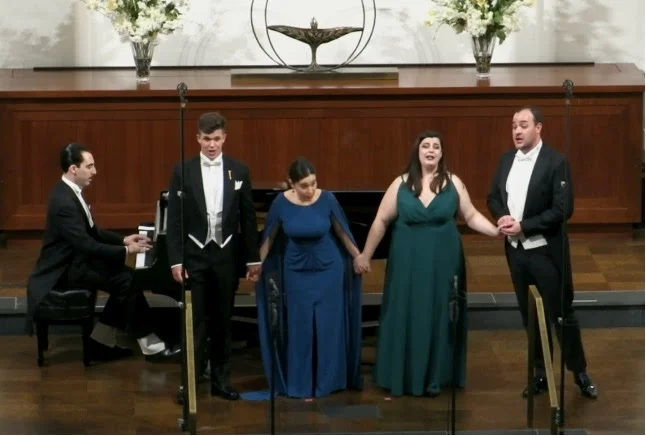
In a landmark display of international cultural exchange, the neo-colonial revivalist sanctuary of New York City’s All Souls Church served as the stage for "Rising Stars," a joint recital featuring ten emerging opera singers from two of the world’s most prestigious training institutions: The Metropolitan Opera’s Lindemann Young Artist Development Program and Madrid’s Teatro Real Crescendo. Under the guidance of Musica Viva artistic director Alejandro Hernandez-Valdez, the event marked the first time singers from these two programs have shared a stage, solidifying a partnership that was formally inaugurated in 2024 to foster global artistic camaraderie and technical excellence in the next generation of vocal performers.
The Genesis of the Partnership
The collaboration between the Lindemann Program—a cornerstone of the Metropolitan Opera’s talent cultivation since 1980—and the Teatro Real’s Crescendo program represents a strategic shift in how opera houses approach talent development. While regional training programs have long existed in isolation, the 2024 memorandum of understanding between New York and Madrid aims to create a cross-pollination of styles, repertoire, and professional networks. By bringing together artists who are simultaneously preparing for major debuts at the Metropolitan Opera and the Teatro Real, the partnership seeks to bridge the gap between conservatory training and the demands of global operatic careers.
Alejandro Hernandez-Valdez, who curated the program, noted that the initiative is designed to provide young artists with a performance environment that prioritizes intimate, chamber-style engagement over the high-pressure acoustics of a 3,800-seat opera house. This exposure allows performers to refine their diction, phrasing, and stage presence in a space where nuances of tone are magnified, offering a rigorous test of their technical foundational training.
A Chronology of the Evening
The program was carefully structured to showcase both individual vocal prowess and the ability to work within an ensemble. The evening began with a selection of solo arias that allowed the ten singers to demonstrate their distinct vocal profiles.
Bass-baritone Lonwabo Mose opened with a polished rendition of "Non piu andrai" from Mozart’s Le nozze di Figaro, highlighting a command of low-range resonance and character-driven performance. This was followed by soprano Lucía Iglesias, who performed "Ah! Je veux vivre" from Gounod’s Roméo et Juliette. Her performance was notable for its controlled vibrato, which she used to modulate the emotional trajectory of the piece, shifting from youthful exuberance to dramatic foreshadowing.
The mezzo-sopranos provided a study in contrast and technical range. Sophia Baete presented Samuel Barber’s "Must the Winter Come so Soon" from Vanessa, an aria that demands a balance of vocal weight and emotional restraint. Her interpretation was lauded for its melancholy and precision. In turn, Yasmin Forastiero tackled the demanding "Mon cœur s’ouvre à ta voix" from Saint-Saëns’ Samson and Delilah, showcasing the evenness of her legato phrasing—a hallmark of mature vocal technique.
The tenor contingent brought significant power to the stage. Pablo Puértolas performed "E la solita storia del pastore" from Cilea’s L’Arlesiana with a dramatic, soaring lyricism that emphasized the melodic line. His colleague, baritone Enrique Torres Domínguez, offered a nod to his Spanish roots with "Luche la fe por el Triunfo" from Torroba’s Luisa Fernanda, demonstrating a rounded tone and deep, emotive phrasing. The two later joined forces for the iconic duet "Au fond du temple saint" from Bizet’s Les Pêcheurs de perles, providing one of the evening’s most cohesive demonstrations of harmonic blending.
Rounding out the Lindemann representatives, tenor Angel Raii Gomez displayed athletic vocal agility in "Ah, mes amis" from Donizetti’s La Fille du Régiment, successfully navigating the high-C requirements of the piece. Soprano Laura Santamaria provided a grounded, lyrical interpretation of Puccini’s "O mio babbino caro," deliberately eschewing the overly dramatic stylistic choices often associated with the piece to focus on its structural beauty.
Technical Analysis and Vocal Maturity
A key observation during the recital was the degree of individual artistic flair displayed by these artists. While all ten singers have received top-tier training, the "Rising Stars" recital highlighted how they have begun to move beyond technical correctness toward signature interpretive styles.
The ensemble pieces served as a barometer for their stagecraft. In works by Massenet and the quartet "Bella figlia dell’amore" from Verdi’s Rigoletto, the singers demonstrated a sophisticated understanding of dramatic timing. The ability to switch from the punchy, staccato delivery required in Rigoletto to a sustained, sultry legato highlights the flexibility these singers are currently cultivating.
The influence of established professionals was also evident. The inclusion of guest artist and bass Paul Whelan provided a masterclass in dynamic management. During the sextet from Le nozze di Figaro, Whelan demonstrated how the manipulation of silence and volume can drive plot development, a technique that the younger singers successfully mirrored in the final ensemble movements.
Institutional Background and Data
The Lindemann Young Artist Development Program, founded by James Levine in 1980, has historically served as a gateway to the Metropolitan Opera for dozens of internationally recognized stars. The program provides participants with full-time musical, dramatic, and language training, as well as opportunities to perform in mainstage productions.
Conversely, Teatro Real’s Crescendo program represents a more recent, yet equally ambitious, effort by the Madrid-based house to foster artistic exchange. By integrating singers from this program with those from the Lindemann track, the event at All Souls Church functioned as an empirical test of the compatibility of these two distinct pedagogies. Preliminary feedback suggests that the differences in training—often categorized by the "New York school" of precise technical discipline versus the "European school" of emotive, text-forward interpretation—complemented one another rather than clashing.
Broader Implications for the Operatic Industry
The success of this collaboration points toward a growing trend in the performing arts: the move toward borderless, talent-centric initiatives. As the opera industry faces challenges regarding audience retention and the cost of mounting large-scale productions, small-scale, high-impact recitals like "Rising Stars" offer a viable model for sustainability.
These events allow for:
- Direct Audience Engagement: By removing the "fourth wall" of a large opera house, performers can build personal connections with the audience, which is essential for cultivating a new generation of opera enthusiasts.
- Cost-Effective Talent Showcasing: Utilizing existing sanctuary spaces and existing institutional partnerships reduces the overhead of producing traditional stage operas while providing the same quality of talent.
- Professional Networking: For the artists, these collaborations are critical for their career trajectory, allowing them to gain visibility in multiple international markets before they have reached the height of their professional tenure.
Conclusion: A Collaborative Finale
The evening concluded with a spirited performance of "Libiamo, ne’ lieti calici" from Verdi’s La Traviata. In a departure from formal concert etiquette, members of the Musica Viva NY chorus joined the soloists on stage, transforming the finale into a communal celebration. Alejandro Hernandez-Valdez, moving from the conductor’s podium to the piano, underscored the collaborative nature of the project.
This event was more than a mere showcase of vocal ability; it was a demonstration of a new organizational philosophy in the opera world. By prioritizing the integration of international talent and fostering a sense of "friendship without borders," the Metropolitan Opera and Teatro Real have created a template that may well define how young artists are prepared for the global stage in the coming decade. As these singers transition into their upcoming roles, the "Rising Stars" recital stands as a testament to the efficacy of international cooperation in maintaining the vitality and relevance of the operatic tradition.