 Mia Khoirunisa
The release of Resolume 7.28 marks a significant technical evolution for the prominent live video mixing and visual performance software suite. Designed for visual jockeys (VJs), media artists, and interactive installation designers, the update introduces localized computer vision capabilities—specifically Human Segmentation and Depth Estimation—directly into the software’s node-based patching environment, Wire. Unlike cloud-dependent artificial intelligence frameworks that require continuous internet connectivity and raise data privacy concerns, Resolume’s new vision features operate entirely offline and locally on the host machine. This architecture allows artists to manipulate pixel data, isolate human subjects, and generate dynamic depth maps in real time without sacrificing performance or exposing user data to external servers.
Core Technical Features of Resolume 7.28
At the heart of the 7.28 update are two foundational Wire building blocks: Human Segmentation and Depth Estimation. Human Segmentation processes incoming video feeds to isolate human figures from their surrounding backgrounds, effectively removing environmental noise and allowing performers or audience members to be cleanly extracted from a scene. Depth Estimation calculates the distance of objects relative to the camera sensor, outputting a real-time depth map that indexes spatial layers within a frame.
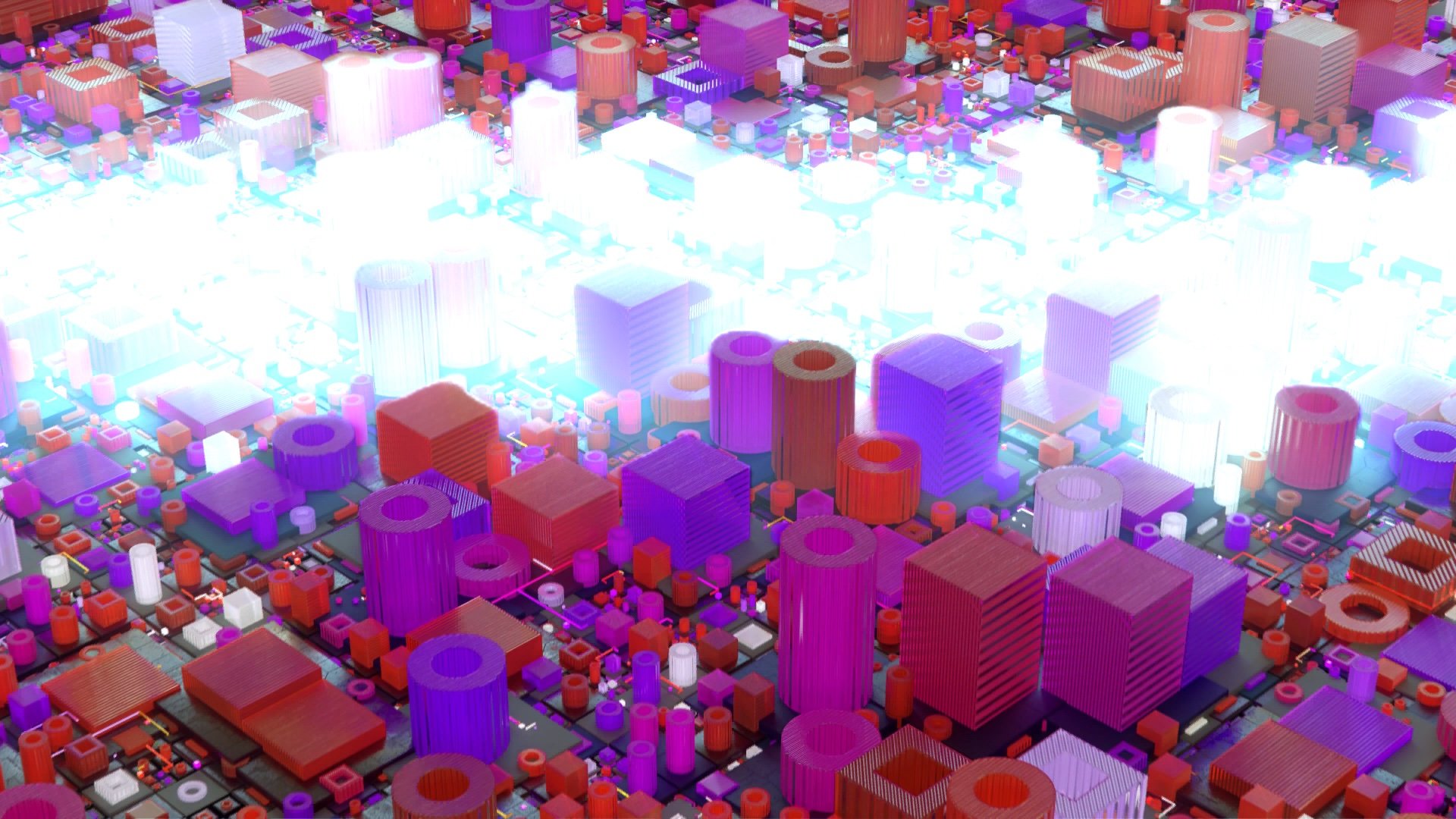
Building upon these foundational nodes, Resolume has introduced a suite of out-of-the-box effects and blending tools. Most notably, the new Depth Blend Mode allows users to mix visual layers based on depth data rather than traditional luminance or alpha transparency. This enables sophisticated compositional techniques, such as depth-of-field blurring, spatial shifting, and selective particle interactions that react strictly to volumetric placement within a scene.
Furthermore, because these effects are constructed natively within Wire, users are not restricted to preset parameters. Artists can dissect the underlying patches, modify individual nodes, study how the algorithms process spatial data, and build entirely custom visual effects tailored to specific performance requirements.
Expanding Audio-Reactive Capabilities and Future Roadmaps
Alongside computer vision upgrades, Resolume’s development team has outlined a comprehensive roadmap targeting audio-visual synchronization. The upcoming pipeline focuses heavily on upgrading the core audio engine within Resolume Arena to provide robust Fast Fourier Transform (FFT) audio reactivity. Concurrently, Wire is receiving an expanded library of audio spectrum features and advanced path-drawing tools. These additions are engineered to allow creators to construct complex, highly responsive audio-visual visualizations natively inside the patching environment.
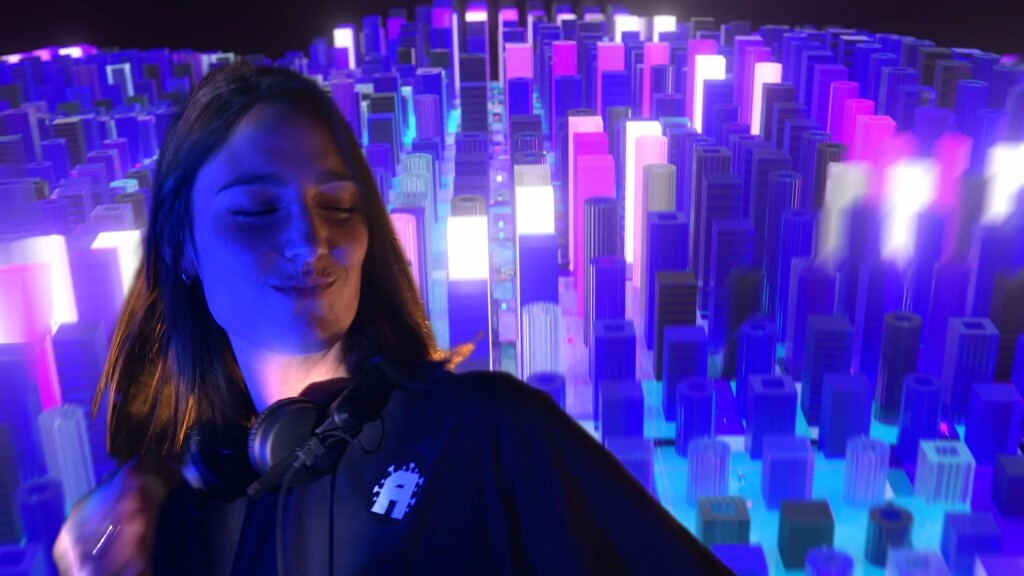
The company has also confirmed that version 7.29, scheduled for a subsequent release, will introduce a series of new slice effects designed for mapping complex geometric surfaces. This consistent update cadence underscores Resolume’s strategy to bridge the gap between procedural programming environments and high-performance live media servers.
Contextualizing Computer Vision in Media Art Versus Surveillance
The integration of local computer vision into creative software arrives at a time of intense public discourse surrounding mass surveillance, biometric tracking, and data privacy. In contemporary society, computer vision is frequently deployed in corporate and governmental contexts for automated monitoring, facial recognition, and behavioral analysis—technologies that have drawn widespread scrutiny from civil liberties organizations and lawmakers alike.
In contrast, the application of computer vision within live media art operates under a fundamentally different paradigm. Rather than extracting identifiable biometric profiles or cataloging individuals for identification, artistic computer vision treats pixel data as a malleable artistic medium. The technology functions as an intuitive sensor for human presence and spatial volume, serving an expressive rather than punitive purpose.

Moreover, interactive media design inherently relies on opt-in participation. Installations utilizing these tools typically construct localized physical spaces where participants consciously choose to step into a camera’s field of view, contrasting sharply with the ambient, non-consensual surveillance pervasive in public and digital infrastructure. By running these algorithms locally, Resolume ensures that video feeds remain confined to the artist’s hardware, mitigating the data harvesting risks associated with cloud-based AI systems.
The Controversy Surrounding AI Integration and Model Context Protocol (MCP)
While the computer vision updates in version 7.28 have been largely welcomed by the community, Resolume’s broader integration of artificial intelligence tools—specifically the Model Context Protocol (MCP) introduced in version 7.26—has elicited a divisive response among users. The MCP implementation, designed to assist users in generating and modifying Wire patches via AI-driven prompts, was marketed by the developers as a productivity booster aimed at accelerating workflow efficiency.
However, the reception within the user base highlights a philosophical schism regarding the role of automation in creative software. Critics of the AI integration argue that focusing strictly on "speed" and efficiency misses the core philosophy of node-based patching and live coding. For many digital artists, the creative value lies precisely in the exploratory process: manually tracing data paths, tweaking node values, encountering serendipitous mistakes, and developing mechanical fluency over years of practice. Speedrunning a patch generation process via an LLM bypasses the tactile experimentation that defines the medium.
Beyond workflow philosophy, broader ethical concerns regarding the parent companies behind major AI models—including associations with military defense applications and intellectual property controversies—continue to influence user sentiment. While proponents of the technology point to potential use cases in high-pressure, live-production environments where rapid prototyping is essential, critics maintain that software developers must engage in deeper discussions regarding long-term dependencies, subscription-based tool models, and the ethical implications of corporate AI integration.
Industry Implications and Future Outlook
Resolume 7.28 demonstrates the shifting landscape of real-time visual performance software, where advanced machine learning techniques are increasingly democratized for creative applications. By implementing these tools locally and transparently through open, modifiable Wire nodes, Resolume provides artists with powerful new avenues for spatial composition and interactive design.
As the platform continues to evolve through forthcoming audio engine overhauls and slice effect expansions, the creative community will undoubtedly continue to negotiate the balance between technological innovation, workflow efficiency, and artistic integrity. Whether utilized for subtle depth-of-field manipulations, complex projection mapping, or experimental interactive installations, the new feature set reaffirms the software’s position as a flexible, open-ended canvas for contemporary media artists.