 Mia Khoirunisa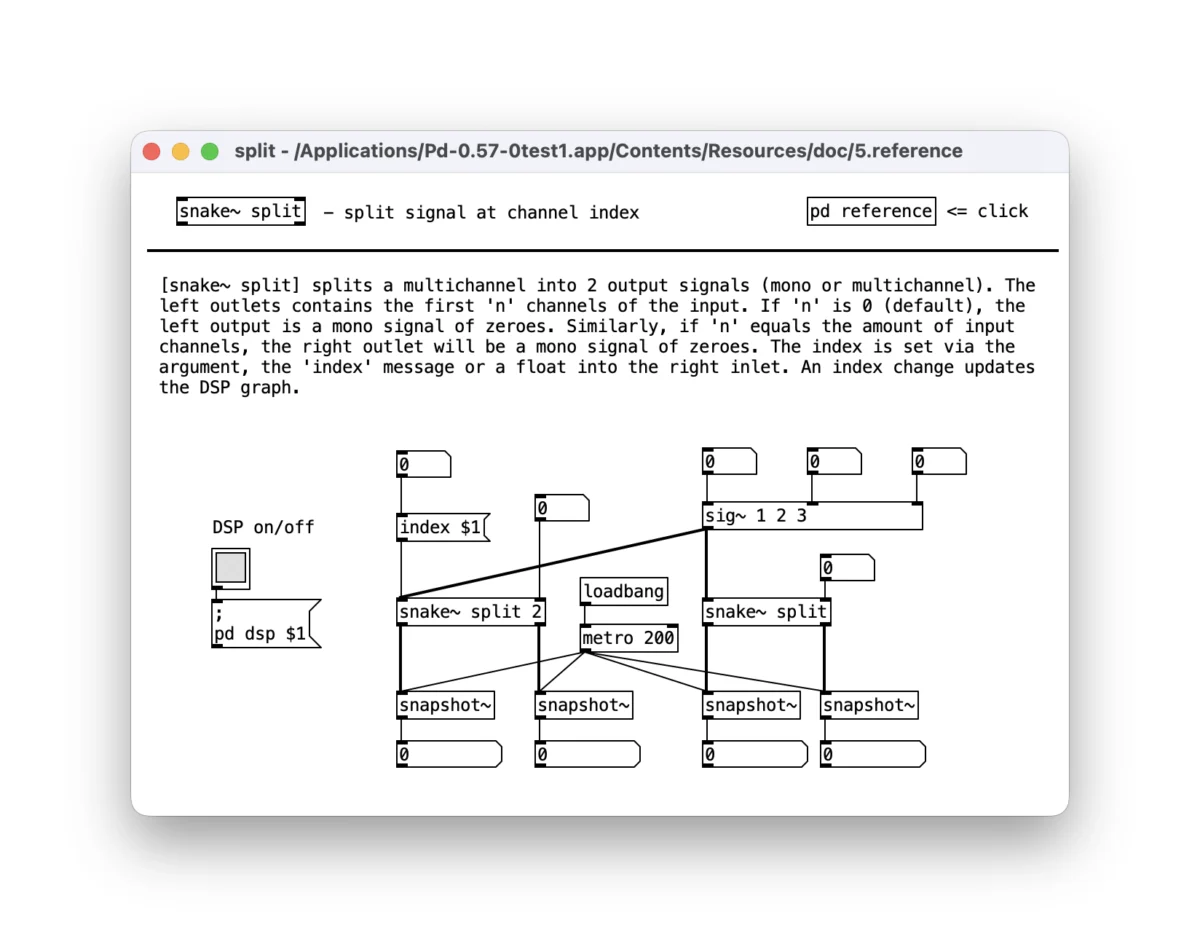
Pure Data (Pd), the free and open-source visual programming language created by Miller Puckette, has advanced toward its official 0.57 release with a suite of new test builds. While commercial alternatives such as Cycling ’74 Max dominate many institutional environments, Pure Data continues to offer a robust, zero-cost ecosystem for audio signal processing, experimental composition, and interactive media design. The upcoming 0.57 update introduces targeted workflow refinements, critical syntax updates, and powerful new routing architecture that benefits both the core "vanilla" software and dependent frameworks like plugdata and libpd.
As developers and sound designers test the pre-release builds, the software highlights the longevity of community-driven development in electronic music tooling. By prioritizing accessibility, modular integration, and low-level signal manipulation, the 0.57 cycle addresses longstanding feature requests while expanding the capability of external libraries.
Core Feature Updates and the Introduction of Snake Objects
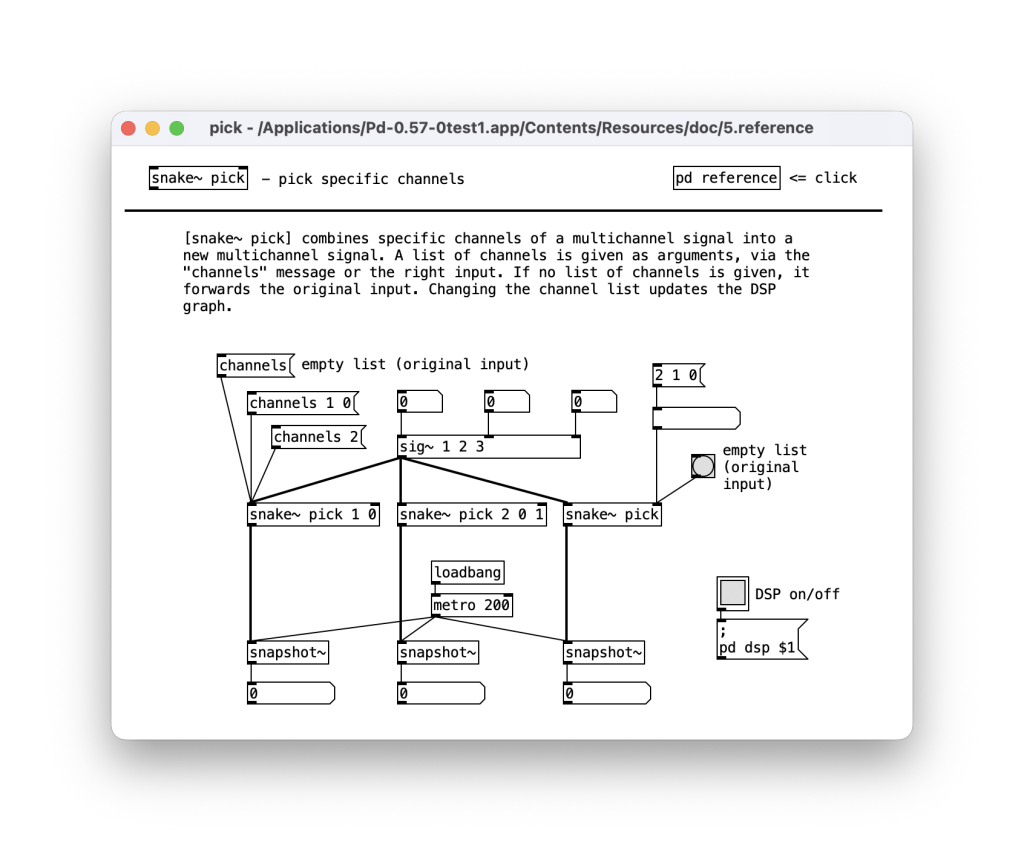
The most prominent architectural addition in Pure Data 0.57 is the implementation of new "snake" objects. Designed to emulate physical studio cable snakes, these objects manage complex multichannel audio routing directly within the visual patch.
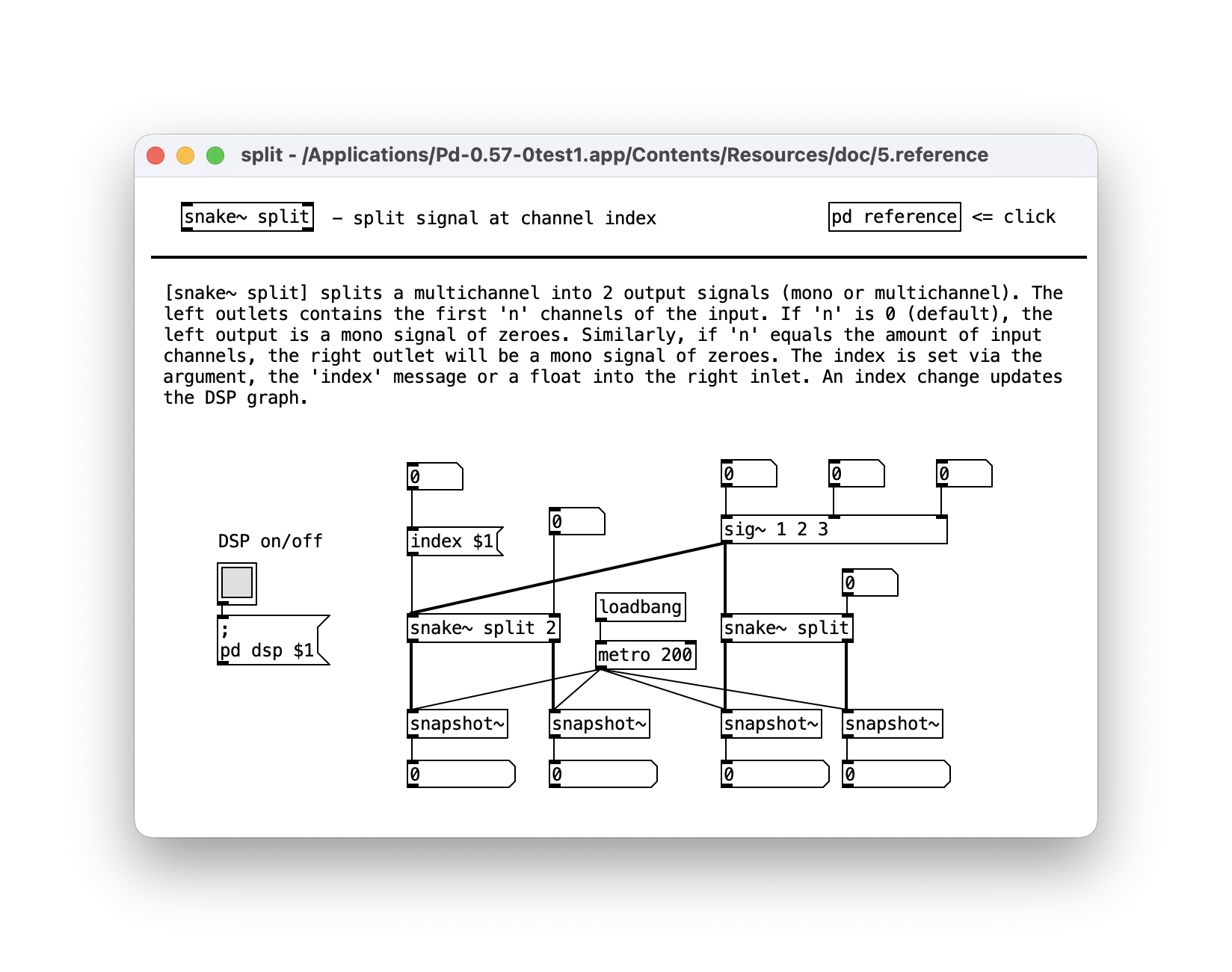
Historically, routing large numbers of discrete audio channels in visual programming environments required extensive duplication of basic objects or complex abstraction hierarchies. The new [snake~] family of objects streamlines this process by allowing users to:
- Combine multiple discrete audio channels into a unified multichannel signal.
- Split multichannel signals back into mono streams.
- Sum multiple channels down to mono.
- Isolate and pick specific channels dynamically.
- Split signals efficiently at the channel input stage.
According to technical documentation accompanying the test builds, objects like [snake~ pick] allow users to dynamically redefine digital signal processing (DSP) graphs simply by passing lists of channels as arguments or through dedicated message inlets. This drastically reduces visual clutter on the canvas, enabling patchers to construct immersive spatial audio arrays, granular synthesis engines, and large-scale modular patches with greater clarity.
Resolving Syntax Bottlenecks: JSON Bracket Integration
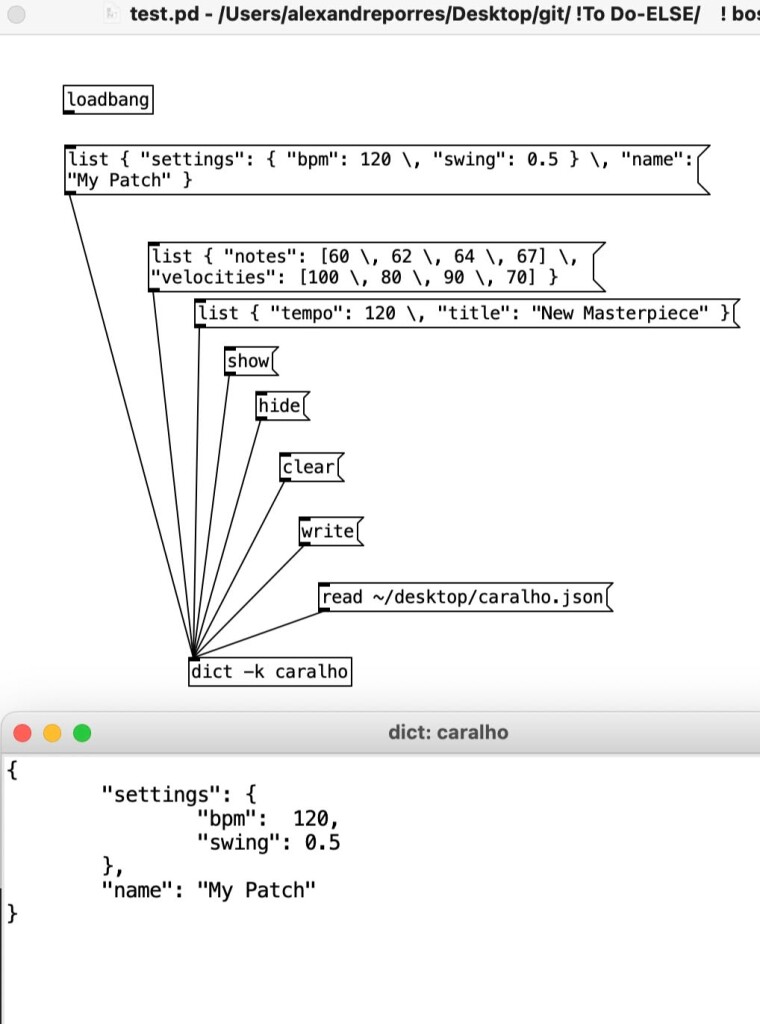
Beyond audio routing, Pure Data 0.57 solves a minor yet historically restrictive text-parsing limitation: the handling of curly brackets ( and ). In previous versions of the software, these characters were frequently dropped or mishandled within message boxes and patch files, creating compatibility friction when developers attempted to parse modern data formats.
The inclusion of native support for and marks a major milestone for advanced library development. Alexandre Torres Porres, a prominent developer within the Pure Data community known for his work on the comprehensive ELSE (Elk Lua Sound Engine) library, emphasized the significance of this update.
With bracket parsing now natively supported, developers can finally implement JSON-style dictionary objects directly inside Pure Data patches and message boxes. Porres has indicated plans to introduce a native family of dictionary-handling objects in the ELSE library. These objects will manage nested data structures, mirroring the functionality of advanced data-collection objects found in commercial counterparts while maintaining native integration with Pure Data’s open-source framework.
Background Context and the Open-Source Ecosystem
Pure Data’s development traces its roots back to the mid-1990s, when Miller Puckette developed the software at IRCAM (Institute for Research and Coordination in Acoustics/Music) before continuing his work at the University of California, San Diego (UCSD). Puckette originally designed Max at IRCAM before commercializing it through Cycling ’74, subsequently authoring Pure Data as an open-source alternative governed by a permissive license.
Unlike proprietary software, Pure Data operates on a decentralized development model. The canonical version—referred to as "vanilla"—is maintained directly by Puckette via his UCSD software repository. However, the ecosystem’s true breadth is defined by its extensive collection of "externals"—third-party libraries and wrappers developed by an active global community.
Projects like libpd allow Pure Data patches to be embedded directly into mobile applications, microcontrollers, and external desktop software. Meanwhile, environments like plugdata wrap Pure Data into standard audio plugin formats (VST3, AU, CLAP), allowing users to run complex visual patches directly inside conventional Digital Audio Workstations (DAWs) like Ableton Live, Logic Pro, and Reaper.
Expanding Horizons: Cross-Platform Integration and Modular Synthesis
The versatility of the Pure Data framework continues to inspire cross-platform experimentation. Community developers have increasingly bridged the gap between pure patching environments and modular synthesis hardware paradigms.
Notable developments within the ecosystem include the creation of VCV-PureData, an adaptation designed for the popular virtual Eurorack environment VCV Rack. This module enables users to run Pure Data externals directly within a modular patching workflow, effectively combining the algorithmic control of visual programming with the tactile voltage-controlled interface of modular synthesis.
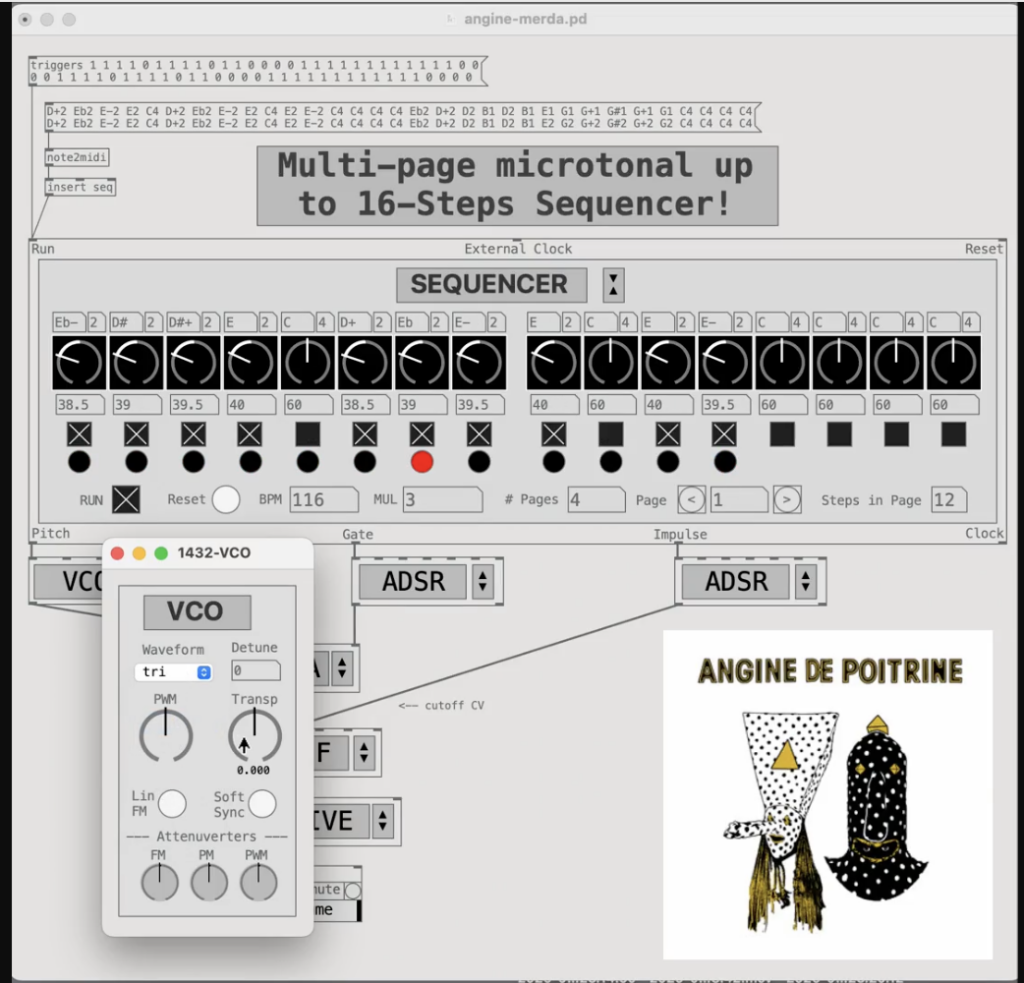
Additionally, specialized sequencing and microtonal modules developed for niche frameworks—such as recent modular additions within the ELSE ecosystem—demonstrate the software’s adaptability. Musicians and programmers routinely utilize these tools to explore non-standard acoustic temperaments, complex polyrhythms, and generative composition techniques that are difficult to achieve in rigid, timeline-based software.
Availability and Deployment
Pure Data 0.57 remains in active pre-release testing. Users interested in evaluating the test builds, examining source code, or reviewing detailed release notes can access the software directly through Miller Puckette’s official software repository at UCSD. For production environments requiring strict stability, the current stable release, version 0.56-5, remains widely deployed across Linux, macOS, and Windows operating systems.
For developers seeking to integrate the upcoming features immediately, ecosystem packages such as the ELSE library can be installed via package managers or integrated environments like plugdata. As the open-source community continues to refine the 0.57 codebase, Pure Data reinforces its position as an enduring foundational tool for computer music research, interactive art, and experimental sound design.