 Johan Budi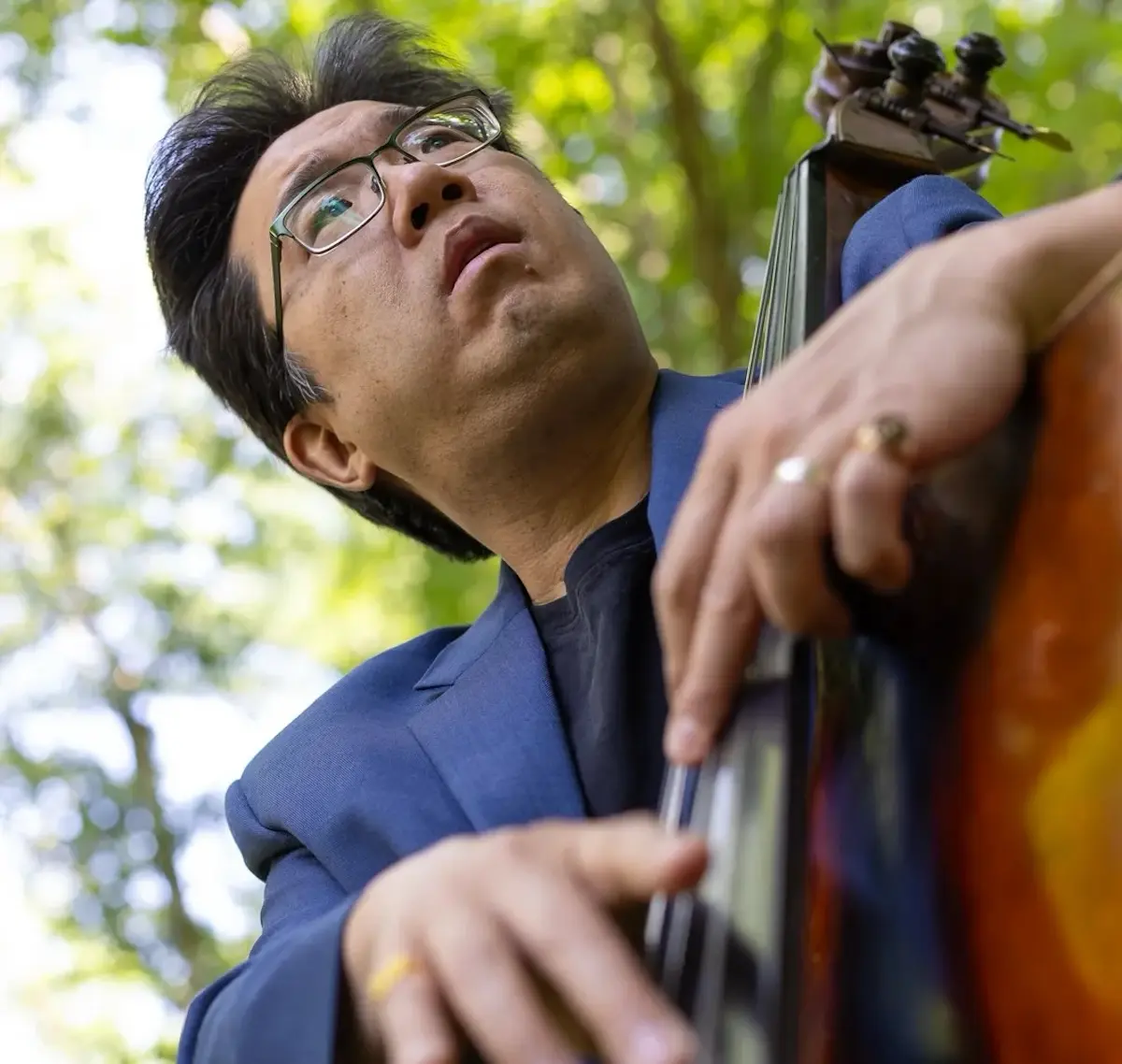
The intersection of traditional Japanese folklore and modern acoustic jazz has yielded a compelling transatlantic dialogue in recent years, manifesting most distinctly in contemporary compositions that seek to bridge cultural epochs. This artistic convergence is brought to the fore in bassist Fumi Tomita’s latest studio recording, Yokai: Songs Of The Japanese Supernatural, released via OA2 Records. Recorded over a two-day period in August 2025 at Northfire Studios in Amherst, Massachusetts, the album serves as both a cultural primer on Japanese mythology and a rigorous exercise in swinging hard-bop. While the Western music market has periodically embraced Japanese cinematic horror—most notably during the early 2000s wave of J-horror adaptations—public comprehension of the underlying folklore, specifically the realm of yōkai (supernatural spirits and entities), remains largely insular. Tomita’s conceptual project attempts to amend this knowledge gap through the medium of improvised music, pairing robust quartet arrangements with narrative-driven thematic frameworks.
Mythological Frameworks and Musical Translation
The structural integrity of Yokai relies heavily on the translation of disparate historical narratives into harmonic and rhythmic motifs. The opening composition, "Daija," translates the mythological presence of a giant serpent into a sprightly, dance-like movement, subverting expectations of menace through agile instrumentation. Conversely, "Kitsune" captures the duality of the mythical fox—an entity traditionally associated with both cunning and elegance—maintaining a restrained atmosphere punctuated by a prominent drum solo.
The psychological tension inherent in Japanese ghost lore is explored further in tracks such as "Betobeto," which utilizes an escalating, confident strut to mimic the sensation of being tailed by an unseen presence, compelling the listener to quicken their psychological pace. Historical figures from Japanese antiquity are granted similar musical characterization. "Princess Wakana," historically contextualized as a figure of arcane arts, is rendered through sinuous, atmospheric interplay between flute and guitar, emphasizing grace over direct narrative exposition. Similarly, the track dedicated to Kiyomori—the ruthless 13th-century samurai whose political dominance reshaped feudal Japan—focuses structurally on technical precision and unwavering momentum, mirroring the political acumen of its subject rather than his documented despotism.
Rounding out the mythological menagerie is "Amabiko," a prophetic sea demon historically invoked during periods of plague to ward off affliction. This leads into "Beasts Galore" (Tenju Zakushi Emaki), which introduces a quintessential bop bustle before settling into an orderly exhibition of trading fours and nimble solos from the ensemble. The narrative arc darkens with "Okiku," referencing the tragic folklore of a servant girl executed for breaking valued dishware, whose vengeful spirit purportedly haunts the well of Himeji Castle. The composition captures a dichotomy of sorrow and impending retribution, setting the stage for the album’s climax, "Hyakki Yagyo" (Night Parade Of 100 Demons). On this final 49-minute-spanning programmatic sequence, soprano saxophonist Carl Clements, guitarist Jason Ennis, bassist Tomita, and drummer Gary Feldman execute a volatile, high-intensity finale that synthesizes the album’s overarching motifs of structured chaos.
Recording Logistics and Ensemble Dynamics
The realization of Tomita’s vision depends heavily on the collaborative interplay of a seasoned New England-based rhythm and horn section. Captured by engineers at Northfire Studios on August 15 and 16, 2025, the session prioritizes acoustic transparency, allowing the individual timbres of Clements’ saxophone and flute work to blend seamlessly with Ennis’ harmonic voicings.
Musicological analysis of the project suggests that while the contextual liner notes provide valuable entry points for listeners unfamiliar with Shinto and Buddhist folklore, the compositions function entirely on their own merits as contemporary jazz artifacts. The ensemble avoids pastiche, opting instead for a traditional hard-bop vernacular that honors mid-20th-century Blue Note and Prestige aesthetics while accommodating non-Western programmatic themes. The deliberate choice to anchor complex, foreign narratives within familiar modal and hard-bop structures reflects a broader trend in contemporary jazz: the globalization of thematic material without the dilution of genre-specific rigor.
Historical Parallels: The Hard-Bop Revival and Archival Reissues
In tandem with contemporary releases exploring genre boundaries, the broader jazz economy continues to rely on the revaluation of foundational mid-century recordings. A prime example is the recent vinyl reissue campaign by WaxTime, which has brought Cannonball Adderley’s 1957 classic Sophisticated Swing back into circulation. Pressed on 180-gram virgin vinyl and housed in facsimile packaging that replicates the original-era sleeve art and liner notes, the release offers a window into the formative period of alto saxophonist Julian "Cannonball" Adderley’s career just prior to his seismic tenure with the Miles Davis Sextet.
Recorded in New York across three dates in February 1957—specifically February 6, 8, and 11—the sessions capture an ensemble operating at the peak of early hard-bop vitality. The lineup features Nat Adderley on cornet, Junior Mance on piano, Sam Jones on bass, and Jimmy Cobb on drums. Notably, three of the album’s original compositions were penned by bassist Gene Wright, whose sideman contributions on the West Coast preceded his fateful integration into the Dave Brubeck Quartet the following year.
The trajectory of Wright’s career highlights a recurring tension within the jazz historiography of the late 1950s: the commercial bifurcation between purist orthodoxy and populist accessibility. When Brubeck achieved unprecedented mainstream commercial success, he faced sharp rebukes from jazz critics and purists who equated popularity with artistic compromise. Cannonball Adderley would navigate a similar path a decade later with crossover chart successes, while simultaneously nurturing avant-garde and boundary-pushing talent such as saxophonist Charles Lloyd within his own ensembles.
Chronological Context of the 1957 Adderley Sessions
A retrospective examination of the February 1957 sessions reveals an artist rapidly consolidating his command of the bebop and hard-bop idioms. The album commences with an aggressive composition by Nat Adderley, immediately establishing a competitive, high-velocity dialogue between the brothers’ horn lines. "Miss Jackie’s Delight" introduces a more relaxed, blues-infused swing, showcasing the rhythm section’s capacity for understated propulsion.
The sequencing demonstrates dynamic range through the inclusion of the standard ballad "Spring Is Here," which serves as an intimate showcase for Cannonball’s lyrical phrasing, followed by "Tribute To Brownie," an explicit homage to the virtuosic trumpeter Clifford Brown, who had tragically died in a car accident just months prior in June 1956. This tribute underscores the generational grief and reverence that permeated the hard-bop community during this era, with Cannonball channeling Brownie’s articulate, fleet-fingered phrasing.
Further elevating the session’s tempo is "Spectacular," a co-composition by Nat Adderley and Jimmy Jones that tests the physical limits of the ensemble’s tempo capabilities. This momentum is sustained through "Jeannie," another showcase for Nat’s compositional acumen. The inclusion of the standard "Stella by Starlight" foregrounds pianist Junior Mance, whose thoughtful, harmonically rich solo is prefaced by a momentarily melodramatic introduction that reflects the theatricality occasionally favored in 1950s live club sets.
The reissue also preserves archival value by appending an alternate, up-tempo reading of the Gershwin standard "A Foggy Day," a track omitted from the original LP configuration but recovered from the same February sessions. Supported by the ironclad rhythm tandem of Jones and Cobb—whose ubiquitous presence across multiple definitive jazz sessions of the era speaks to their peerless time-keeping and dynamic sensitivity—the recording exemplifies the absolute zenith of hard-bop craftsmanship.
Industry Implications and Cross-Generational Synthesis
Evaluating these releases side by side—Fumi Tomita’s contemporary exploration of Japanese yōkai and WaxTime’s archival preservation of Cannonball Adderley’s 1957 sessions—illuminates the cyclical nature of jazz publishing. On one hand, contemporary independent labels like OA2 Records continue to provide a vital incubator for conceptual projects that stretch the geographical and narrative boundaries of the idiom. By tethering complex historical and mythological subject matter to accessible hard-bop structures, artists like Tomita ensure that jazz remains a viable vehicle for cross-cultural storytelling.
Conversely, the persistent market demand for heavyweight vinyl reissues of the 1950s hard-bop canon indicates that the foundational grammar established by artists like Adderley, Mance, and Cobb retains its pedagogical and aesthetic authority. Whether engaging with the spectral entities of ancient Japanese folklore or revisiting the rigorous blues-drenched modernism of mid-century New York, the contemporary listener is presented with a continuous, evolving tradition that values structural rigor, historical contextualization, and uncompromising instrumental execution above all else.