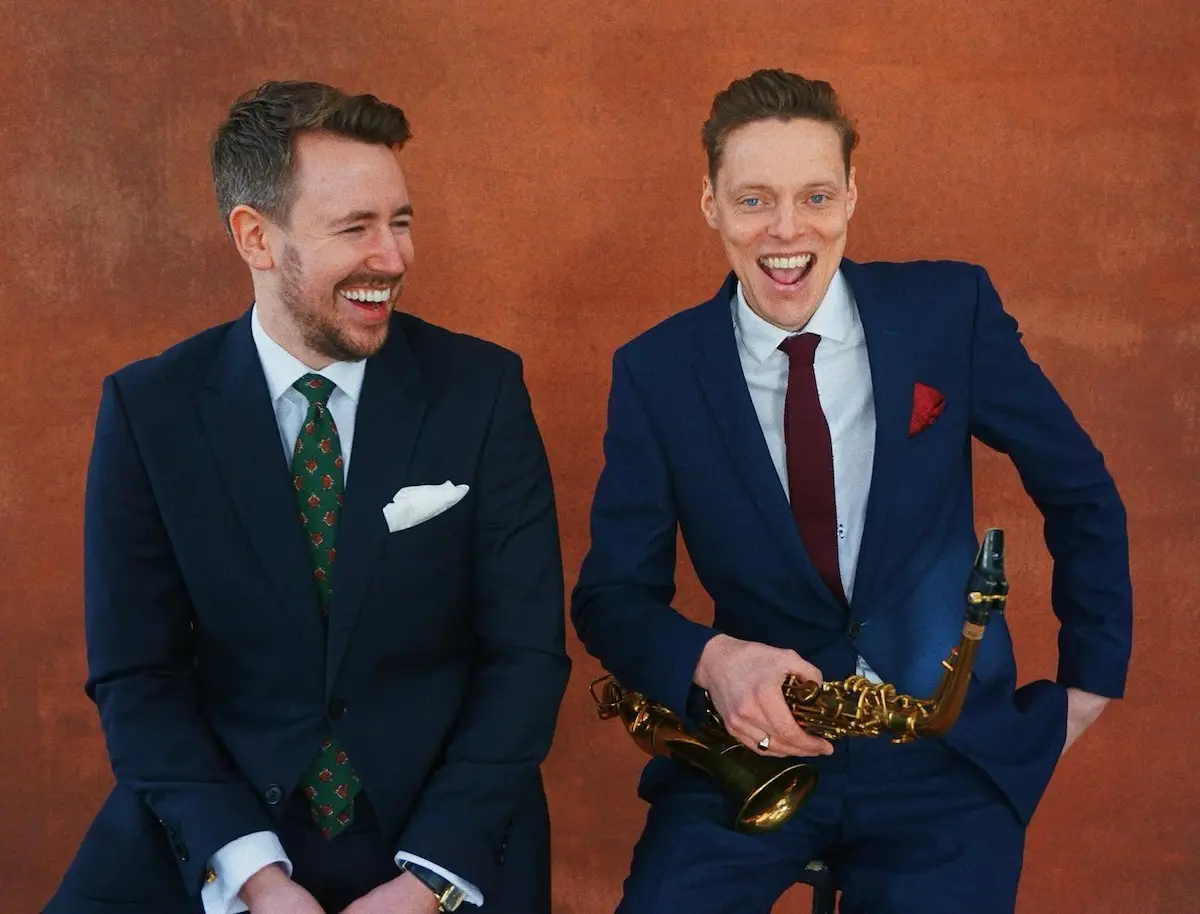
 Johan Budi

The contemporary global music landscape is experiencing a profound shift toward cross-genre experimentation, intimate storytelling, and cross-cultural dialogue, as evidenced by three notable January 2026 releases from April Records, Yoruba Girl Records, and ThinkBaby Music. In an era where streaming algorithms frequently favor hyper-commercialized, short-form singles, these independent releases demonstrate a steadfast commitment to the long-form album format, offering cohesive artistic statements that demand active listening.
Across Europe, from the recording studios of Odense and Hamburg to Athens, contemporary composers and performers are challenging traditional boundaries. Danish vocalist Emma Pilgaard explores feminist history through understated chamber jazz; German-Nigerian singer-songwriter Tokunbo refines her signature "folk noir" aesthetic with acoustic-pop vulnerability; and Greek oud virtuoso Alekos Vretos bridges classical Mediterranean and Arabic idioms with modern jazz textures. Together, these works reflect broader industry trends toward independent self-expression, acoustic authenticity, and culturally hybrid compositions.
Emma Pilgaard: Redefining Feminist Expression Through Chamber Jazz
Danish vocalist and composer Emma Pilgaard has returned with her most ambitious project to date, a sophisticated song cycle titled A Woman’s Voice, released via April Records in January 2026. Recorded in Odense, Denmark, the album serves as a musical meditation inspired by Gry Jexen’s acclaimed literary work Kvinde Kend Din Historie (Woman Know Your History). Rather than relying on overt political vitriol or aggressive delivery, Pilgaard employs a subtle, deeply internal lyricism that mirrors the intimate acoustic arrangements surrounding her.
The album’s foundational ethos relies on a delicate balance between message and medium. Tracks like the wistful opener Glowing In The Light Of A Sunbeam establish a gentle, captivating momentum that immediately engages the listener. Critics have noted that while Pilgaard’s vocal timbre does not directly mirror jazz icon Stacey Kent, both artists share a rare, tender approach to phrasing. More accurately, Pilgaard occupies a sonic space between Gretchen Parlato and Melody Gardot, projecting a calm, unhurried vocal presence that cuts effortlessly through the warm, golden gas of the accompanying ensemble’s backing tracks.
On subsequent pieces such as My Mother, Pilgaard adopts a more direct stance. Displaying a stylish, almost coquettish poise, she navigates the arrangement with remarkable ease. When she delivers the lyrical statement, "Women aren’t just mothers," the line borders on the heavy-handed; however, the ongoing cultural necessity of reiterating this fundamental truth renders such directness not only acceptable, but essential.
The Power of Mezzo-Piano and Subdued Dynamics
Ironically, for an album dedicated to female empowerment and historical reclamation, Pilgaard intentionally restricts her vocal dynamics to a mezzo-piano for the majority of the runtime. This stylistic choice could superficially be interpreted as a woman submitting to traditional societal norms that expect quietness from female voices. Yet, a closer examination reveals a more subversive artistic strategy: Pilgaard makes powerful statements precisely by refusing to shout.
Musicologists and jazz critics have long observed that the loudest voice does not inherently possess the greatest rhetorical weight. By letting her mellifluous melodies drift and her lyrics strike their marks with quiet, surgical precision, Pilgaard channels the emotive restraint of Joni Mitchell’s seminal 1975 masterpiece, Blue. This emotional range and sonic depth are equally apparent on atmospheric ballads like Mistress Of The Air and Above Expectations. These compositions serve as timely reminders that maintaining a calm, cool, and collected demeanor in artistic expression is far from overrated; rather, it cultivates a space for profound introspection.
Production, Personnel, and Reception
The recorded performances on A Woman’s Voice are anchored by a stellar ensemble of contemporary European jazz instrumentalists. The project features Rahel Talts on piano, Hilda Nordkvist on bass, Patrycja Wybrańczyk on drums, Viktoria Söndergaard on vibraphone, and Ida Brinch on trumpet. Together, they construct a cohesive 39-minute sonic journey that includes tracks such as Hidden Melodies, Interlude, Through The Gloom, and We Can Be Lonely.
Industry analysts point out that April Records’ decision to champion this project highlights a growing market appetite for vocal jazz that bridges historical documentation with contemporary chamber music sensibilities. By translating feminist historical texts into accessible, highly listenable jazz compositions, Pilgaard has positioned herself as a vital voice in modern Scandinavian jazz.
Tokunbo: Navigating Acoustic Vulnerability on Lost & Found
Shifting from the chamber jazz of Scandinavia to the rich, cross-cultural acoustic soundscapes of Germany, German-Nigerian artist Tokunbo presents her latest full-length release, Lost & Found, issued via Yoruba Girl Records. Blending elements of traditional jazz, contemporary acoustic guitar styling, pop hooks, and smooth R&B sensibilities, the album is an expressive, expansive collection that delves deeply into personal ordeals and emotional recovery.
The thematic core of the record is established early. "The ghosts are back in town," Tokunbo sings on the infectious track Stop Motion Movie. Utilizing soft, inviting vocals, the artist creates an immediate rapport with her audience. Remarkably, even across a tracklist comprising 13 distinct pieces, the album maintains an impressive level of sonic smoothness. The songs flow into one another with careful consideration, ensuring that the listener experiences a seamless narrative arc rather than a disjointed collection of singles.
The project opens with Cocoon, a brief yet remarkably sweet piece that sets the stylistic tone for what is to follow. Throughout the album, the tempos remain brisk and engaging, preventing the acoustic arrangements from ever lagging. Combined with Tokunbo’s elegant vocal delivery, these rhythmic foundations effortlessly hook the listener.
The Evolution of "Folk Noir"
The stylistic architecture of Lost & Found draws favorable comparisons to landmark releases in modern acoustic music, specifically evoking the breezy optimism of Corinne Bailey Rae’s Put Your Records On alongside the rhythmic and harmonic sophistication of Erykah Badu’s Apple Tree. The resulting material simultaneously looks backward to the golden eras of acoustic soul and forward to contemporary indie-folk innovations.
Tracks such as On The Corner Of Oak Street and Ballerina stand out as particularly catchy examples of what Tokunbo defines as "folk noir." This genre designation encapsulates her unique ability to infuse moody, atmospheric storytelling with accessible, melody-driven instrumentation.
A retrospective analysis of Tokunbo’s discography reveals a consistent artistic trajectory. Her previous efforts—including Near & Far (2022) and Outer Space (2018)—exhibit the same chilled, unhurried atmosphere that permeates Lost & Found. While critics might initially caution that such consistency risks bordering on monotony, a deeper listen suggests otherwise. Rather than repeating herself, Tokunbo has successfully refined a specific sonic signature that suits her vocal strengths perfectly. Because her unique blend of genres rests so comfortably on the ear, the tracks never feel recycled or redundant.
Comprehensive Production and Credited Personnel
The rich acoustic textures of Lost & Found were captured across multiple recording facilities, specifically BluHouseStudio and Boxhornstudio in Hamburg, Germany. The album features a versatile lineup of musicians who support Tokunbo’s lead vocals and guitar work. The core ensemble includes Ulrich Rode on electric guitar, electric bass, standard bass, keyboards, and backing vocals; Christian Flohr on electric bass; and Matthias “Maze” Meusel handling percussion, drums, and piano. Additionally, Anne de Wolff contributes a lush array of violin, viola, cello, vibraphone, and backing vocals, while Phil Siemers adds supplementary vocal textures.
The complete 41-minute tracklist—featuring Cocoon, Stop Motion Movie, 70s Magazine Memory, On The Corner Of Oak Street, Polaroid Life, Lost My Ace, Under Water, Ballerina, Empty Nest, True Dna, When The Summer Ends, To Be Alive, and It’s Alright—cements Tokunbo’s status as an exceptional artist. Music industry stakeholders predict that Lost & Found possesses the broad commercial appeal necessary to expand her international audience significantly.
Alekos Vretos: Bridging Traditions on Mediterranean Echoes
Rounding out this trio of notable early 2026 releases is Mediterranean Echoes, an ambitious classical crossover project spearheaded by master oud player Alekos Vretos, released on the ThinkBaby Music label. Recorded at Sierra Studios in Athens, Greece, in 2025, the album represents a conscientious effort to merge traditional classical music frameworks with indigenous regional folk styles and modern jazz textures.
Vretos’s work is characterized by a playful integration of musical allusions and cross-cultural dialogue. By placing the oud—a traditional fretless plucked lute central to Middle Eastern and North African music—in direct conversation with Western classical and jazz instruments, the artist attempts to bridge disparate sonic landscapes. While certain stylistic combinations yield mixed results, the majority of the experimentations succeed, offering an intriguing listening experience for open-minded audiences.
The Dialogue Between Oud and Clarinet
One of the most compelling aspects of Mediterranean Echoes is the dynamic partnership established between the oud and the clarinet. Historically, the clarinet has sometimes been marginalized in classical contexts; however, on this project, Giannis Diskos’s clarinet works diligently to amplify strong Arabic and Mediterranean music influences.
Tracks such as Rev highlight a vibrant cultural dance between the two lead instruments, symbolically uniting Greek and Arab musical sensibilities. In this regard, Vretos’s methodology echoes the celebrated cross-cultural collaborations pioneered by Anouar Brahem and Lucian Ban, where traditional folk idioms converge naturally with contemporary improvisational attitudes.
While Vretos’s synthesis occasionally lacks the absolute effortless fluidity found in the works of his predecessors, the overarching sonic vision remains robust. Minor structural critiques center on the persistent deployment of evocative Arabic atmospheres across nearly every track; the characteristic microtonal phrasing and whining sustained tones can occasionally become repetitive over the course of the album.
Orchestral Romance and Piano Counterweights
A distinct romantic air permeates many of the album’s compositions, most notably on the track H. Here, the string section plays a crucial role in establishing emotional resonance. Unlike the precise, mathematically rigid string arrangements found in the classical works of Arcangelo Corelli or the minimalist sacred music of Arvo Pärt, Vretos’s string section—featuring violinists Dimitris Semsis and Marina Haralampides, violist Enkela Kokolani, and cellist Vania Papadimitriou—deliberately employs whining, soaring intonations. Moments of tango-like sliding and pitch-bending further challenge traditional string quintet norms, which typically demand strict adherence to standardized tuning and tonal production.
To counteract these potent ethnic flavors and fluid string dynamics, Dimitris Verdinoglou’s piano serves as an essential structural counterweight. The piano reins in the more volatile improvisations, introducing a grounding, contemporary jazz element that stabilizes the arrangements. These contrasting characteristics converge magnificently in the multi-part centerpiece, The Freedom Suite, which is divided into three distinct movements: A. Lullaby, B. The Quest, and C. Dance Of Freedom.
Supported by a rhythm section featuring bassists Kimon Karoutzos and Takis Kapogiannis, Vretos compensates for any minor limitations in sonic variety through sheer compositional zeal and compelling storytelling. The complete 36-minute tracklist—comprising Now What, Rev, Jovano – Jovanke, H., the three-part Freedom Suite, Guerra, and Signature—demonstrates a unified artistic vision.
Broader Implications and Industry Outlook
The simultaneous release of these three distinct albums highlights several overarching trends in the current global music economy. First, independent labels such as April Records, Yoruba Girl Records, and ThinkBaby Music are increasingly becoming the primary incubators for sophisticated, genre-fluid projects that major commercial labels frequently overlook. By granting artists like Emma Pilgaard, Tokunbo, and Alekos Vretos complete creative autonomy, these imprints ensure that niche musical dialogues—whether feminist historical reflection, acoustic folk noir, or Mediterranean-Arabic jazz crossover—can find viable pathways to global audiences.
Furthermore, these releases underscore a growing consumer desire for authenticity and acoustic craftsmanship. In an era dominated by synthetic production and rapid content consumption, albums that prioritize live instrumentation, thoughtful lyricism, and deep cultural roots are securing a dedicated and expanding demographic of listeners. As these artists take their respective projects on tour throughout Europe and beyond, the critical reception of A Woman’s Voice, Lost & Found, and Mediterranean Echoes suggests that intelligent, cross-cultural musical storytelling will remain a vital force in the contemporary arts sector for the foreseeable future.