 Aveline Kirana

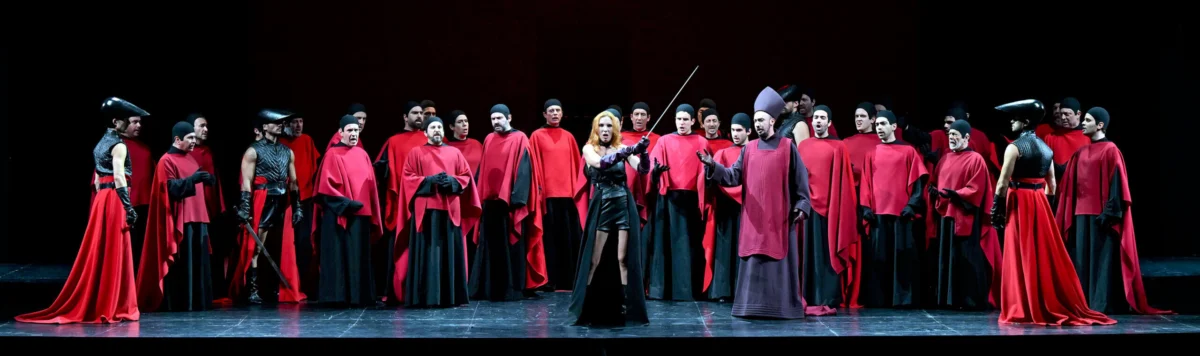
The Staatstheater Kassel is set to unveil a major new production of Felix Mendelssohn Bartholdy’s monumental oratorio, Elias (Elijah), with the premiere scheduled for December 5 at the company’s INTERIM venue. This high-profile staging reunites two of the most significant figures in contemporary European theater and opera: the visionary stage director Timofei Kuljabin and Kassel’s General Music Director, Ainārs Rubiķis. The production, which will remain in the company’s repertoire through March 17, 2027, marks a bold interpretive effort to bring the biblical drama of the prophet Elijah to a modern audience, utilizing a creative team that has long been established in the international avant-garde.
A Creative Partnership Forged in Controversy
The collaboration between Kuljabin and Rubiķis is not merely a professional pairing; it is a creative alliance born out of shared artistic values and a history of navigating political adversity. The two first gained significant international attention during their work on a 2014 production of Richard Wagner’s Tannhäuser in Novosibirsk, Russia.
That production, which sought to recontextualize the opera within a contemporary framework, sparked intense backlash from conservative groups and local authorities. The ensuing conflict led to protracted court proceedings and the eventual dismissal of the opera house’s leadership. The production was ultimately withdrawn from the repertoire, a decision that drew widespread condemnation from human rights organizations and arts advocates who viewed the move as an egregious violation of artistic freedom.
For Kuljabin, the experience was a precursor to his eventual departure from Russia in 2022. Following his public denunciation of the war in Ukraine, the director left his homeland to continue his career in the West, where he has become an outspoken voice for intellectual and artistic autonomy. His reunion with Rubiķis in Kassel represents a continuation of the dialogue they began a decade ago—a testament to their resilience and their ongoing commitment to using the stage as a platform for challenging, non-conformist narratives.
Mendelssohn’s Elias: A Historical and Musical Context
Mendelssohn’s Elias, first premiered in Birmingham in 1846, is widely considered one of the greatest oratorios of the 19th century. Written during the zenith of the Romantic movement, the work depicts the life of the prophet Elijah as recounted in the Books of Kings. It is a dramatic, highly theatrical score characterized by its vivid orchestration, massive choral textures, and the profound emotional depth of its protagonist.
Unlike a standard opera, an oratorio generally lacks formal staging, relying instead on the musical narrative to convey the drama. However, the decision by the Staatstheater Kassel to present a fully staged version of Elias suggests an intention to lean into the inherent operatic qualities of Mendelssohn’s writing. By engaging a director of Kuljabin’s caliber, the production aims to strip away the traditional, often static, presentation of the piece, replacing it with a kinetic, visually driven interpretation that explores the psychological burden of prophecy and the isolation of the individual standing against the collective.
The Production Team and Artistic Vision
The visual and thematic identity of the production is the result of an expansive collaboration among a seasoned team of theater professionals. Joining Kuljabin are set designer Oleg Golovko and costume designer Vlada Pomirkovanaja, both of whom have played pivotal roles in realizing the director’s specific aesthetic vision. The lighting design, essential for creating the stark, often atmospheric environments favored by Kuljabin, is helmed by Oskars Pauliņš.
The musical integrity of the production is anchored by the partnership between General Music Director Ainārs Rubiķis and the dramaturgical team of Teresa Martin and Ilya Kukharenko. The chorus, a fundamental component of the Elias structure, is prepared by chorus director Marco Zeiser Celesti, with additional support from extra chorus director Anne-Louise Bourion. This level of detail in the production’s hierarchy underscores the importance the Staatstheater Kassel has placed on this project, positioning it as a cornerstone of their current season.

Cast and Vocal Architecture
The vocal demands of the title role are substantial, requiring an interpreter with both the stamina to endure the lengthy score and the emotional nuance to convey the prophet’s internal conflict. Filippo Bettoschi has been cast as Elias, tasked with guiding the audience through the prophet’s journey from triumph to spiritual exhaustion.
The supporting cast features a blend of established vocal talent, including Johannes Strauß as Obadiah, Marta Kristín Friðriksdóttir as the Widow, Ilseyar Khayrullova and Christian Backhaus as the Voices, Annabelle Kern as the Angel, Maren Engelhardt as the Queen, and Björn Edelmann as Ahab. The role of the Boy, a pivotal symbolic figure in the narrative, will be alternated between young performers Kyotaro Weitzel and Leonardo Kehl. This casting choice reflects a focus on intergenerational storytelling, grounding the cosmic themes of the oratorio in human-scale interactions.
The Broader Implications of the Kassel Production
The choice of Elias for a major, multi-year residency at the Staatstheater Kassel carries significant cultural weight. In the current European political climate, where the intersection of religion, nationalism, and individual dissent is increasingly scrutinized, Mendelssohn’s depiction of a prophet at odds with his society remains strikingly relevant.
By selecting this work, the artistic team is signaling a desire to engage with themes of authority and moral courage. The production is also notable for its commitment to the “INTERIM” stage, a venue that allows for a more intimate and experimental approach than a traditional grand opera house. This suggests that the production will favor a focused, psychological exploration of the characters over the grandiose pageantry often associated with large-scale oratorio performances.
Furthermore, the longevity of the production—scheduled to run until March 2027—indicates that the Staatstheater Kassel views this work as a foundational pillar of their artistic identity for the coming years. This is a rare commitment for a single production, reflecting both the company’s confidence in the artistic vision of Kuljabin and Rubiķis and the perceived resonance of the material with contemporary audiences.
Chronology of Production Development
- 2014: Initial collaboration between Timofei Kuljabin and Ainārs Rubiķis on Tannhäuser in Novosibirsk.
- 2022: Kuljabin departs Russia following the invasion of Ukraine; the search for a new European base of operations for his creative work begins.
- 2023–2024: Development phase for the Elias project at Staatstheater Kassel, including casting and the assembly of the creative team.
- December 5, 2024: Premiere date of Elias at the INTERIM venue.
- 2025–2027: Scheduled performance run, establishing the production as a centerpiece of the theater’s repertoire.
A Signal for Artistic Freedom
The professional journey of the lead creative team—Kuljabin’s forced exile and his subsequent rise as a prominent European director—serves as an essential backdrop to the discourse surrounding this production. The theater world has watched closely as artists displaced by political regimes have sought to reclaim their work on international stages.
The fact that the Staatstheater Kassel has provided a multi-year platform for this team is a statement in itself. It highlights a growing trend in the German theater landscape to provide refuge and resources to artists whose voices have been suppressed elsewhere. This production is, therefore, not only a musical event but also a symbol of institutional support for the principle of free expression in the arts.
Conclusion
As the December 5 premiere approaches, the anticipation surrounding the Staatstheater Kassel’s Elias continues to grow. With its combination of a profound, historically significant score, a high-stakes directorial vision, and a commitment to long-term artistic development, the production stands as a major highlight of the current theatrical season. Through their interpretation of Mendelssohn’s masterpiece, Kuljabin and Rubiķis are poised to offer an interrogation of faith, power, and the individual, ensuring that the story of Elijah remains as urgent and transformative as it was in the mid-19th century. The outcome of this production will undoubtedly shape the reputation of the Kassel company and reaffirm the relevance of the oratorio form in a modern, often fragmented, world.