 Aveline Kirana
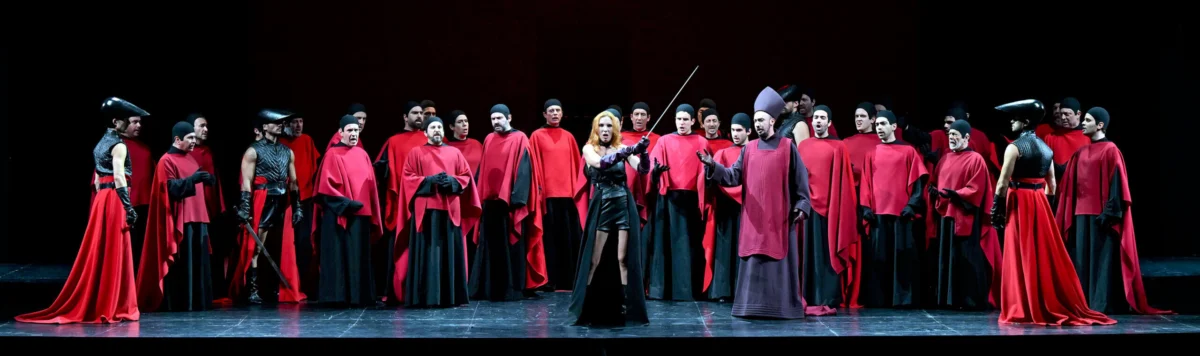
Giuseppe Verdi’s Nabucco, the transformative opera that catapulted the composer to international prominence in 1842, remains a cornerstone of the operatic canon. Premiering at La Scala in Milan during a period defined by the rigid constraints of bel canto, the work marked a radical departure from the period’s conventions by subordinating individual romantic entanglements to the broader, more visceral themes of political subjugation, religious identity, and collective human suffering. On October 18, the Teatro Regio di Parma unveiled a new production of this seminal work, directed by the esteemed Pier Luigi Pizzi, which challenged traditional expectations of the opera’s monumental scale in favor of a stark, symbolic aesthetic.
A Legacy of Revolution and Artistic Evolution
The historical significance of Nabucco cannot be overstated. Written during a time of immense personal tragedy for the young Verdi—who had recently lost both his wife and two children—the opera served as a cathartic vessel for his creative rebirth. Its libretto by Temistocle Solera, based on biblical accounts, introduced a new paradigm where the chorus was elevated from a background ornament to a primary dramatic protagonist. This shift mirrored the burgeoning Italian nationalistic fervor of the Risorgimento, establishing Verdi as a voice for the collective aspirations of the Italian people.
The Festival Verdi in Parma, an annual event dedicated to the scholarly exploration and performance of the composer’s complete oeuvre, provides the ideal venue for such a rigorous reassessment. By hosting this production, the theater continues its mission to strip away the accretions of traditionalism that have often turned Verdi’s early works into mere spectacles of sound and costume, focusing instead on the psychological architecture of the score.
Pizzi’s Aesthetic of Austerity
Pier Luigi Pizzi, serving as both director and set designer, opted for a visual language of radical restraint. The production eschewed the ornate, sprawling architectural recreations typically associated with ancient Babylon and Jerusalem. Instead, the stage was dominated by a stark monochromatic palette: a landscape of black and white, punctuated only by the vibrant red worn by the Assyrian forces. This color-coded dichotomy served to clarify the narrative conflict, visually anchoring the audience in the struggle between the oppressor and the oppressed.
The effectiveness of this minimalist approach was most evident in the use of singular, iconic objects. A colossal menorah stood as the central symbol of Hebrew identity; its eventual toppling by the Assyrian forces proved far more devastating than the grand-scale scenery often found in larger productions. Similarly, Pizzi’s treatment of Nabucco’s blasphemous claim to divinity was handled with psychological nuance rather than stage trickery. When the king was struck down, the absence of elaborate special effects forced the audience to focus on the sudden, terrifying reversal of power, leaving the weight of the moment entirely to Verdi’s orchestral score.
Lidia Fridman: A Tour de Force in the Role of Abigaille
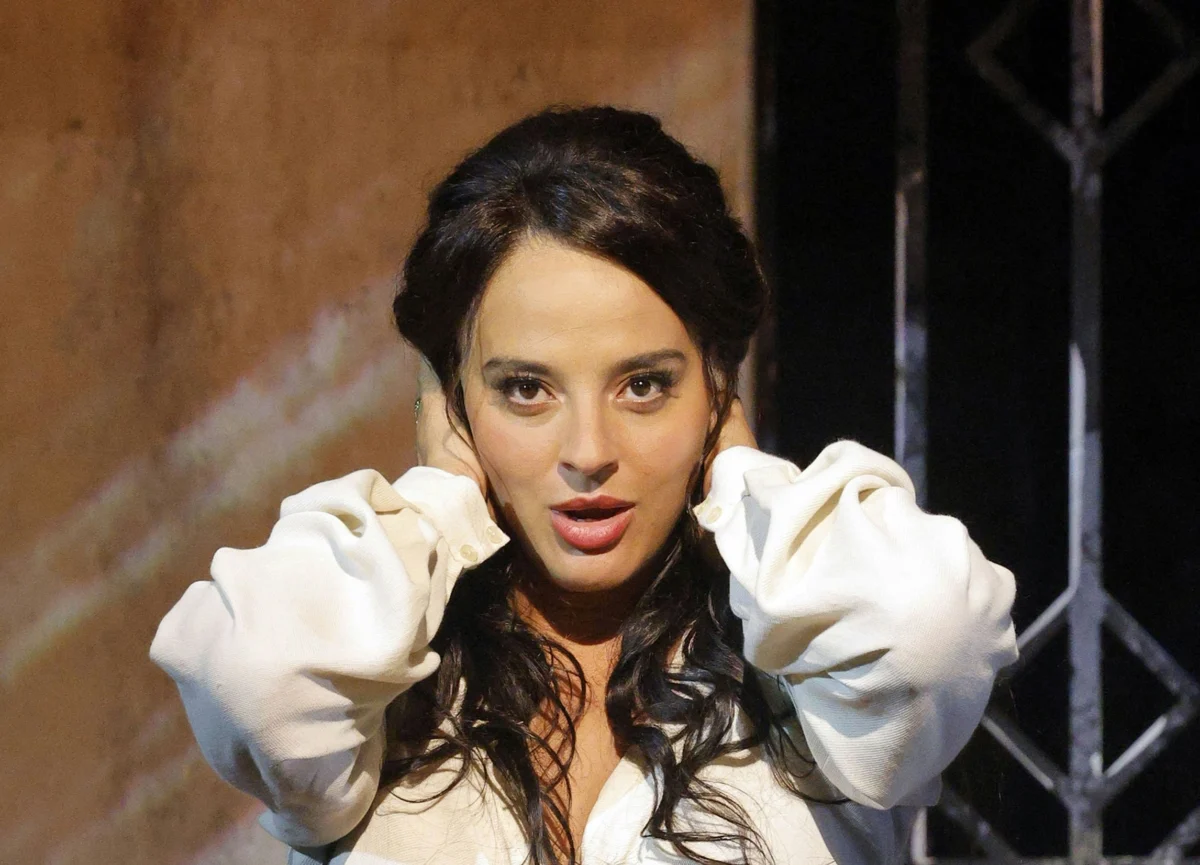
The production’s success rested largely on the performance of the 30-year-old Russian soprano Lidia Fridman. Cast as the villainous, power-hungry Abigaille, Fridman delivered a performance of astonishing technical range and emotional complexity. The role is widely considered one of the most perilous in the Verdi repertoire, requiring a soprano to traverse the entire vocal spectrum—from the explosive, high-wire coloratura of her entrance to the haunting, lyrical fragility of her death scene.
Fridman’s portrayal defied the standard trope of the one-dimensional operatic antagonist. Her Abigaille was a figure of immense internal contradiction, driven by an unquenchable thirst for power born of deep-seated resentment and a desperate need for belonging. Her execution of "Anch’io dischiuso un giorno" was a defining moment of the evening, where the character’s cold, Amazonian exterior dissolved to reveal a profoundly wounded individual grappling with the revelation of her slave-born parentage. Industry observers and critics present at the performance noted that Fridman’s ability to weave these conflicting emotional states into a single, cohesive narrative arc marks her as a significant talent in the contemporary operatic landscape.
Comparative Performances and Musical Direction
The cast surrounding Fridman provided a solid foundation for the production’s central conflicts. Mongolian baritone Ariunbaatar Ganbaatar offered a robust, resonant interpretation of the title role. While his vocal command was unquestionable—particularly in the moving rendition of "Dio di Giuda!"—his portrayal of Nabucco’s psychological disintegration from an arrogant despot to a vulnerable, repentant father offered room for further development in future iterations.
Michele Pertusi, a veteran of the stage, brought a seasoned, velvet-toned authority to the role of Zaccaria. His performance was characterized by an elegant command of phrasing and a deep, intuitive understanding of the religious weight inherent in the role of the High Priest. The interaction between Pertusi and the ensemble during the quieter, more introspective moments served to humanize the broader political tragedy. Conversely, the supporting cast, including Laura Verrecchia as Fenena and Andrés Moreno García as Ismaele, maintained the production’s high musical standards, although the dramatic tension in the central love triangle occasionally lacked the necessary intensity to fully anchor the subplot.
Conducting and the Role of the Orchestra
Under the baton of Francesco Lanzillotta, the Orchestra del Teatro Comunale di Bologna delivered a performance marked by precise balance and thoughtful pacing. Lanzillotta resisted the common temptation to interpret early Verdi through a lens of unremitting bombast. Instead, he treated the score as a nuanced dialogue between orchestral texture and dramatic intent. The orchestral tuttis were handled with a keen awareness of dynamic control, ensuring that the sheer force of the sound never overwhelmed the vocalists.
The Coro del Teatro Regio di Parma, under the preparation of Martino Faggiani, was widely cited as the evening’s structural pillar. The delivery of "Va, pensiero"—an anthem that has, over the last 180 years, transcended its operatic origins to become a symbol of resilience—was marked by a profound sense of restraint. By avoiding the temptation to turn the piece into an overwrought patriotic pageant, the chorus achieved a level of solemnity and vocal transparency that served as the emotional bedrock of the production.
Broader Implications for Modern Opera
The implications of this Parma production extend beyond the success of a single night. As major opera houses grapple with the dual challenges of attracting younger, more discerning audiences while honoring historical traditions, the "Pizzi approach" offers a blueprint for the future. By emphasizing "the essential" over "the superfluous," the production demonstrated that Verdi’s music does not require the crutch of elaborate sets to resonate with modern sensibilities.
Furthermore, the casting of rising stars like Lidia Fridman in lead roles highlights a shift toward prioritizing vocal agility and psychological depth over traditional star-power casting. This trend aligns with a growing movement in the industry to re-evaluate the "early Verdi" period, moving away from the "galley years" label and toward an appreciation of the composer’s youthful ingenuity and structural innovation.
While the production was not without its critics—some noting that the visual austerity occasionally risked creating an emotional distance between the stage and the audience—the consensus remains that the Teatro Regio di Parma successfully elevated Nabucco from a museum piece to a vital, living work of theater. By integrating rigorous musical standards with a modern, minimalist design language, the festival has once again solidified its role as a premier arbiter of the Verdian tradition. As the tour and season progress, this production will likely serve as a benchmark for how the composer’s early works can be adapted for the 21st-century stage without sacrificing their original, revolutionary intent.