 Mia Khoirunisa
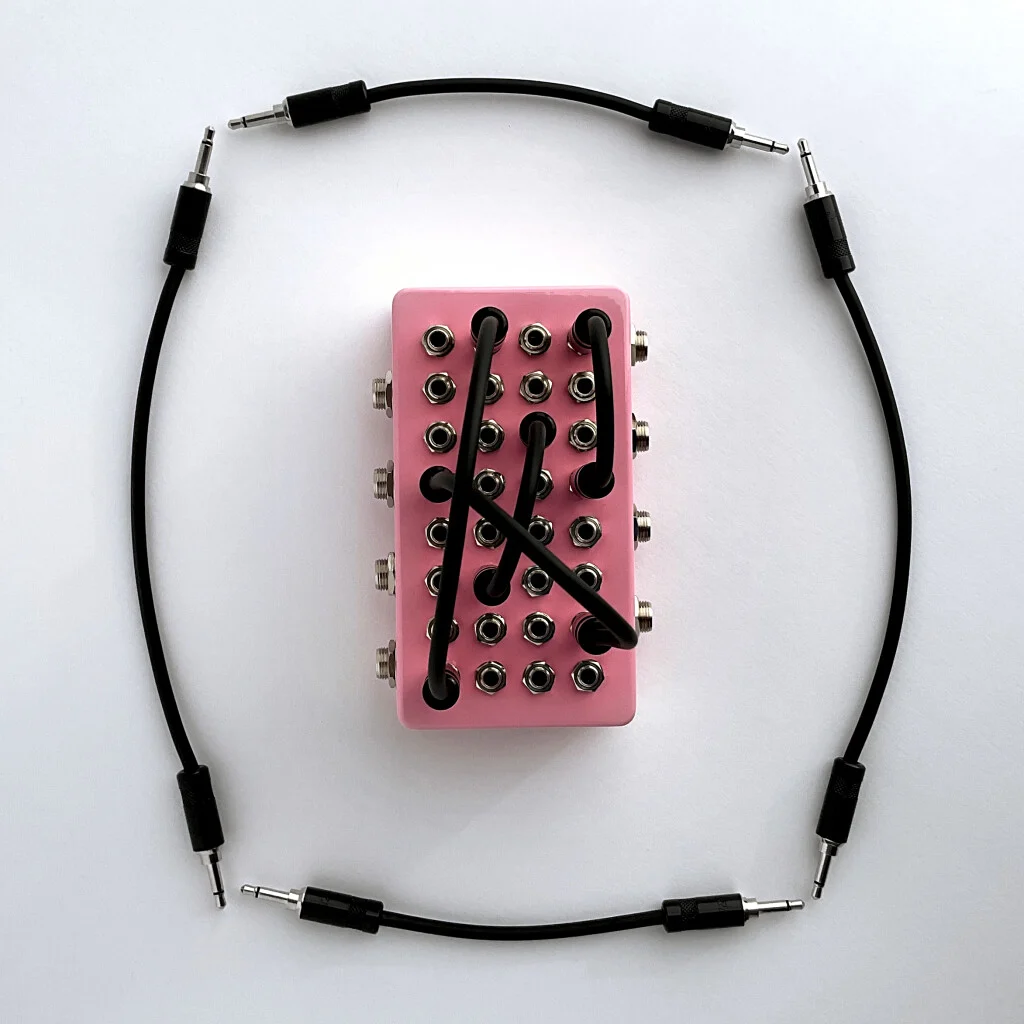
In an era dominated by digital plugins, software updates, and complex virtual studio environments, hardware connectivity often remains a frustrating physical bottleneck for musicians and producers. Addressing this persistent challenge, boutique manufacturer Go Outside has introduced its debut hardware product: the Mulch Box. Measuring roughly the size of a standard guitar effects pedal and operating entirely without external power, this unassuming pink enclosure functions as a completely passive patch bay and signal multiplier. Designed to seamlessly integrate both 1/4-inch and 3.5mm TS jacks, the device offers a straightforward, tactile solution for routing, splitting, looping, and combining audio signals across a wide spectrum of modern and vintage equipment.
Main Facts and Technical Design
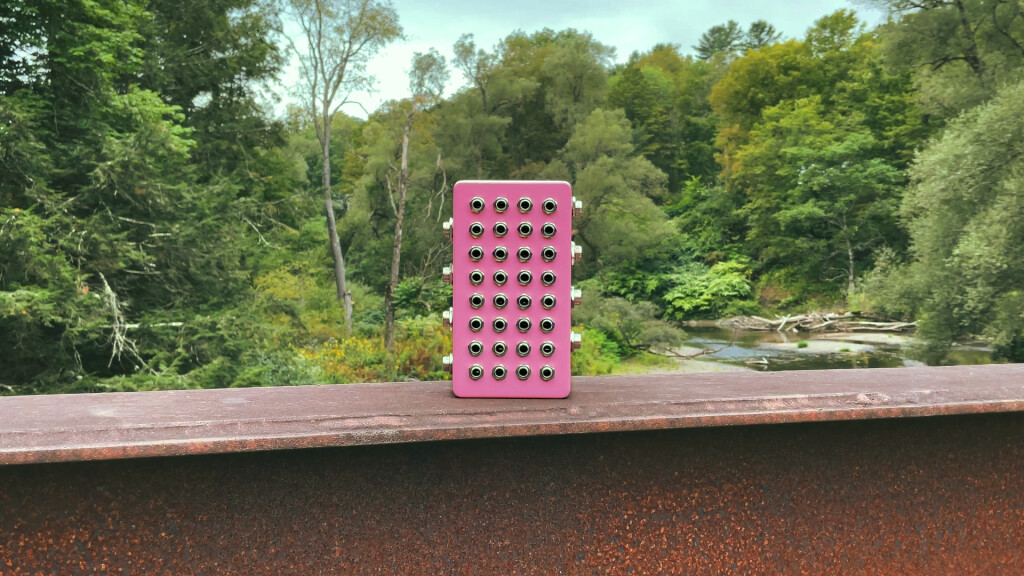
The Mulch Box is engineered around a philosophy of radical simplicity. Requiring zero electricity to operate, it serves as an entirely analog intermediary for a producer’s workspace. Its top surface is densely packed with a combination of full-sized 1/4-inch jacks and miniature 3.5mm jacks. This dual-format architecture allows musicians to interconnect disparate pieces of hardware that traditionally require specialized adapters, breakout cables, or complicated mixer configurations.
According to the manufacturer, the device functions as a passive multiplier and patch bay, meaning it simply passes electrical signals directly from one connected cable to another without altering, amplifying, or attenuating the audio. Users can route signals between traditional electric instruments, desktop synthesizers, guitar pedals, Eurorack modular systems, tape machines, and various other sound sources. Because it accepts TS (Tip-Sleeve) cables universally across its mixed-size inputs and outputs, it also opens up experimental routing possibilities for compatible analog video synthesis equipment and portable recording gear.
The hardware is manufactured in limited quantities, reflecting the boutique nature of its producer. Each unit is priced at $175.00, targeting musicians, sound designers, and electronic music producers who frequently encounter cable management hurdles in hybrid studio setups.
Chronology and Development of Studio Interconnectivity
The release of the Mulch Box arrives against a backdrop of evolving hardware ecosystems over the past several decades. Throughout the history of recorded music, signal routing has evolved from massive, hardwired mixing consoles in professional recording studios to flexible patch bays in institutional facilities. In the late 20th century, the rise of affordable polyphonic synthesizers and multi-effects processors introduced a diverse array of connection types, ranging from unbalanced 1/4-inch lines to RCA connectors.
The introduction of the Eurorack format in the mid-1990s—and its subsequent commercial explosion in the 2010s—popularized the widespread use of 3.5mm minijacks for control voltage and audio signals. Simultaneously, the revival of desktop synthesizers, portable grooveboxes, and boutique guitar pedals meant that modern producers routinely amassed collections of gear featuring incompatible physical connection sizes. While larger modular systems have long utilized dedicated mults (signal multipliers) and passive patch bays, desktop and hybrid setups rarely feature centralized, format-agnostic routing tools that bridge the gap between 1/4-inch and 3.5mm cables without requiring active conversion or power distribution.
Go Outside developed the Mulch Box to address this exact friction point in the modern creative workflow. By moving away from complex digital routing matrices and returning to a pure hardware approach, the company positioned the device as a physical playground for signal experimentation, reducing the time spent searching for adapters and increasing the time available for actual sound creation.
Supporting Data and Market Context
The market for boutique electronic music hardware and utility accessories has experienced steady growth over the past ten years. As software digital audio workstations (DAWs) have captured a massive share of music production, a dedicated counter-movement of hardware enthusiasts has driven demand for tactile, hands-on instruments and studio utilities. Industry analyses indicate that boutique hardware manufacturers thrive by solving specific ergonomic and workflow inefficiencies that mass-market audio corporations often overlook.
Utility devices—such as passive switches, attenuators, signal splitters, and patch bays—represent a vital sub-sector of the independent music technology market. Unlike complex synthesizers or multi-effects processors that rely on microcontrollers, proprietary firmware, and continuous software updates, passive utility boxes boast exceptional longevity. With no internal circuit boards requiring power supplies, capacitors that can degrade, or operating systems that can become obsolete, passive hardware like the Mulch Box is virtually impervious to technological obsolescence. This durability makes the $175 price point attractive to producers investing in permanent studio infrastructure.
Industry Implications and Workflow Analysis
The introduction of the Mulch Box highlights a broader conversation within the music production community regarding workspace ergonomics and cognitive load. Producers operating hybrid studios—combining software, vintage tape machines, modular synthesizers, and modern digital pedals—frequently face logistical challenges known colloquially as "cable friction." The time spent identifying missing connector cables, managing power bricks, and reconfiguring audio interfaces can disrupt the creative flow state.
By providing an all-jack, power-free matrix on the desktop, devices of this nature aim to lower the barrier to experimentation. In a traditional studio scenario, splitting a synth signal to feed both a guitar pedal and a tape machine simultaneously might require specialized splitters or mult cables. The Mulch Box simplifies this by allowing any connected input to be duplicated across multiple outputs through straightforward patching.
Furthermore, the design choice to paint the unit in a bright, playful color scheme with minimal branding reflects a shift in boutique manufacturing culture. Rather than mimicking the austere, industrial aesthetics of traditional studio rack gear, contemporary independent developers often embrace approachable, design-forward product identities that appeal to modern bedroom producers and live performers alike.
Broader Technological Context and Infrastructure Updates
The debut of the Mulch Box also coincides with concurrent developments in digital infrastructure across creative technology platforms. Notably, the release highlights the ongoing maintenance required to sustain online creative communities and digital archives. Alongside hardware announcements, technical ecosystems across the web continue to undergo critical updates, such as the widespread industry migration to modern PHP versions to ensure security and stability for content-driven music technology publications. While digital platforms rely heavily on continuous backend maintenance and software patches to remain operational, physical music hardware relies on the opposite philosophy: the enduring reliability of analog copper connections and passive electrical distribution.
Conclusion
As Go Outside begins shipping the Mulch Box in small batches, the device serves as both a practical studio utility and a philosophical statement on modern music production. In a landscape increasingly saturated with complex virtual instruments and digital signal processing, simple analog tools continue to offer irreplaceable utility. By offering a universal, power-free bridge between minijacks and full-sized connections, the Mulch Box addresses a universal frustration for hardware musicians, proving that sometimes the most innovative step forward in music technology is simply providing a better way to plug things together.