Johan Budi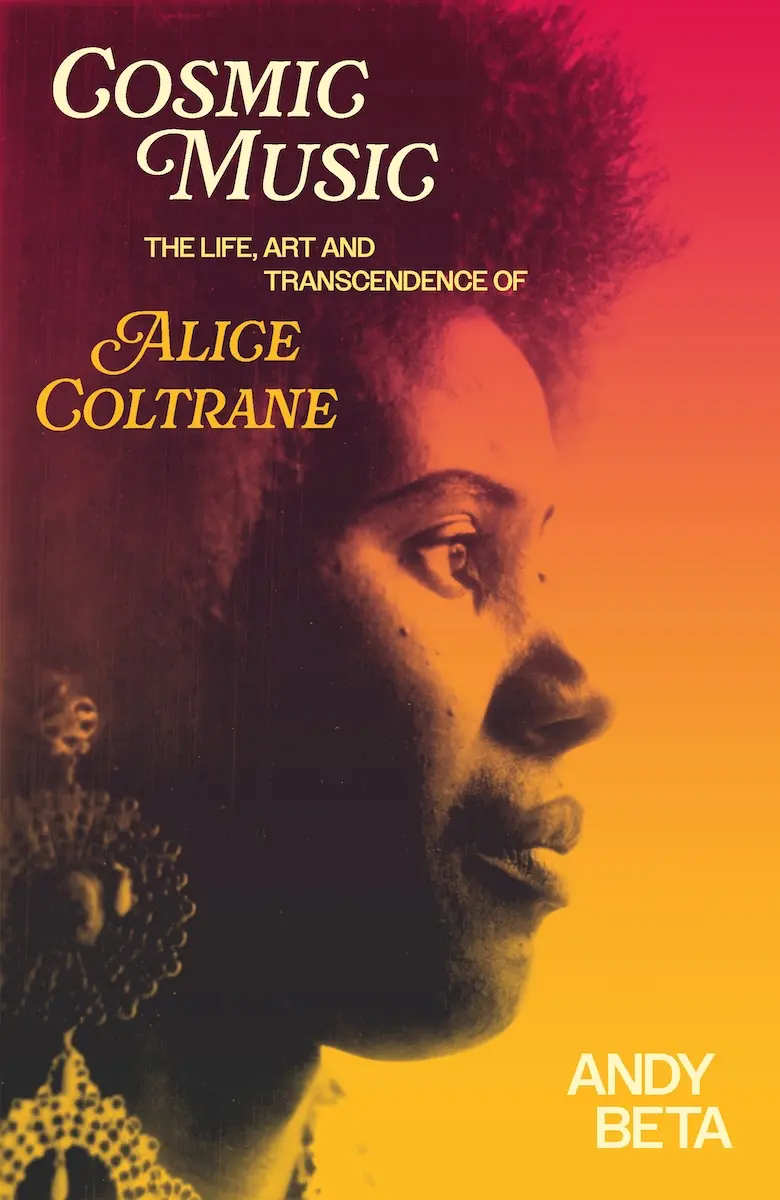
The Foundations of Alice McLeod in Detroit
The narrative of Alice Coltrane, born Alice McLeod in 1937, begins in the vibrant but volatile atmosphere of Detroit, Michigan. During the mid-20th century, Detroit served as a critical hub for the Great Migration, attracting Black families from the South with the promise of industrial labor. This demographic shift fostered a rich musical ecosystem, producing legends such as Donald Byrd, Yusef Lateef, and Kenny Burrell. However, as Beta details, this cultural flourishing occurred against a backdrop of systemic tension.
Alice McLeod came of age in an era where Detroit’s school systems were effectively desegregated, yet the city itself remained a patchwork of racial friction and economic disparity. Beta examines the devastating impact of "urban renewal" programs during the 1950s and 60s. These initiatives, which saw the construction of massive highway systems like the Chrysler Freeway, systematically dismantled thriving Black neighborhoods such as Black Bottom and Paradise Valley. This displacement of working-class communities informs the early chapters of the book, providing a socio-political context for the resilience and spiritual seeking that would later define Alice’s work.
Musically, Alice was a prodigy of the Detroit scene. Before her association with the Coltrane name, she was a respected bebop pianist who had studied under the tutelage of Bud Powell in Paris. Her early professional years included a tenure with Terry Gibbs’s group, where she demonstrated a sophisticated grasp of harmony and rhythm, occasionally doubling on the vibraphone. Her versatility was further evidenced by her work with The Premiers, a vocal trio for whom she served as both arranger and pianist, utilizing the then-novel sounds of the Wurlitzer electric piano.
The Meeting of Minds and the Evolution of the Avant-Garde
The trajectory of Alice’s life shifted irrevocably in 1963 when she met John Coltrane while performing with Terry Gibbs in Paris. The two married in Mexico in 1965, embarking on a partnership that was as much a spiritual union as a musical one. This period marked a radical shift in John Coltrane’s music, moving away from the "Classic Quartet" structure that featured McCoy Tyner on piano and Elvin Jones on drums.
Beta provides a deep dive into the internal tensions of the jazz world during the mid-1960s. Many purists and fans of the "Classic Quartet" were alienated by John Coltrane’s move toward "free jazz" and the inclusion of additional percussionists and unconventional structures. When Tyner and Jones departed the group, citing dissatisfaction with the increasingly chaotic and dense sonic direction, Alice stepped into the piano chair.
Her arrival coincided with a period of intense spiritual inquiry. Together, the Coltranes explored Eastern religions, Vedic philosophies, and the integration of meditation into the creative process. While critics at the time were often dismissive of Alice’s contributions—viewing her through a lens of nepotism or as a disruptive force—Beta’s analysis highlights how her harmonic sensibilities were essential to the "cosmic" sound of John’s final years. She brought a fluid, harp-like approach to the piano that provided a shimmering, ethereal foundation for John’s increasingly abstract saxophone explorations.
A Chronology of Artistic Independence (1967–1978)
Following the untimely death of John Coltrane in July 1967, Alice was left to navigate a profound personal and professional void. Rather than retreating, she entered a period of extraordinary productivity that cemented her status as a leader in her own right. The chronology of her solo career during the late 60s and early 70s represents a cornerstone of "spiritual jazz."
- 1968: A Monastic Trio. Her debut as a leader, this album served as a tribute to her late husband. It featured the debut of her work on the harp, an instrument she mastered with remarkable speed to fulfill a wish John had expressed before his death.
- 1970: Ptah, the El Daoud. Recorded in her home studio in Huntington, New York, this album featured Pharoah Sanders and Joe Henderson. It is widely regarded as a masterpiece of the genre, blending blues foundations with transcendental aspirations.
- 1971: Journey in Satchidananda. Inspired by her meeting with Swami Satchidananda, this record integrated the tamboura and oud, further bridging the gap between Western jazz and Indian classical music.
- 1971: Universal Consciousness. This recording saw Alice expanding her palette to include the organ and complex string arrangements, pushing the boundaries of what was considered "jazz" at the time.
Beta notes that during this era, Alice Coltrane was not merely a musician but a sonic architect. Her use of the Wurlitzer and the organ, characterized by sweeping glissandos and heavy use of the pitch-bend, created a "wall of sound" that anticipated later developments in ambient and new-age music.
Transition to Turiyasangitananda: The Ashram Years
The mid-1970s marked Alice Coltrane’s gradual withdrawal from the commercial music industry. Her spiritual journey led her to adopt the name Turiyasangitananda and to establish the Vedantic Center in 1975. By 1983, she had founded the Sai Anantam Ashram on a 48-acre site in the Santa Monica Mountains of California.
In this phase of her life, her music became purely functional—an aid for worship and meditation. Beta explores the recordings she made during this period, which were originally released only on cassette for members of her spiritual community. These works, such as Turiya Sings and Divine Songs, featured Alice leading the ashram’s choir from the organ, blending Hindu bhajans with the gospel traditions of her Detroit youth.
This period of her life represents the "transcendence" referenced in the book’s title. She moved beyond the constraints of the "jazz artist" label to become a spiritual guide. Beta argues that this transition was not a departure from her art but its ultimate realization. The ashram provided a sanctuary where the racial and social pressures of her early life in Detroit were replaced by a focus on universal consciousness and internal peace.
Critical Analysis and Cultural Implications
Andy Beta’s work arrives at a time of significant critical re-evaluation for Alice Coltrane. For decades, her work was overshadowed by the looming figure of her husband, often relegated to the status of a footnote in jazz history. However, the 21st century has seen a massive resurgence of interest in her discography.
Musicologists and contemporary artists now recognize Alice Coltrane as a precursor to several modern movements. Her blending of acoustic and electronic textures, her fearless integration of non-Western scales, and her focus on the meditative quality of sound have influenced a diverse array of artists, from Flying Lotus (her grand-nephew) to Radiohead and Kamasi Washington.
The book provides a necessary analysis of the gendered and racial biases that colored the initial reception of her music. Beta suggests that the "spiritual jazz" movement was, in part, a response to the trauma of the Civil Rights era—a search for a higher plane of existence when the earthly one was fraught with violence and inequality. By positioning Alice Coltrane at the center of this movement, the biography restores her agency as a visionary who navigated the complexities of being a Black woman in a male-dominated industry while simultaneously pursuing a divine calling.
Legacy and Conclusion
Cosmic Music: The Life, Art And Transcendence Of Alice Coltrane concludes by reflecting on the enduring power of her "Universal Consciousness." The book’s extensive notes and bibliography indicate a level of scholarly rigor that elevates it above standard musical biographies. Beta’s ability to weave together the technical aspects of her music with the social history of Detroit and the nuances of Vedantic philosophy provides a holistic view of her life.
The publication of this biography coincides with a broader cultural movement to archive and celebrate the contributions of Black female innovators who were previously sidelined. Alice Coltrane’s story is one of profound evolution: from the bebop clubs of Detroit and Paris to the vanguard of the 1960s avant-garde, and finally to the quietude of a California ashram.
Ultimately, Beta’s work asserts that Alice Coltrane’s music was never just about sound; it was an attempt to manifest the infinite. As the book suggests, her "cosmic music" continues to offer a roadmap for listeners seeking both artistic excellence and spiritual solace in an increasingly fragmented world. For historians, musicians, and seekers alike, this biography serves as an essential record of a life lived in pursuit of the transcendent.