Johan Budi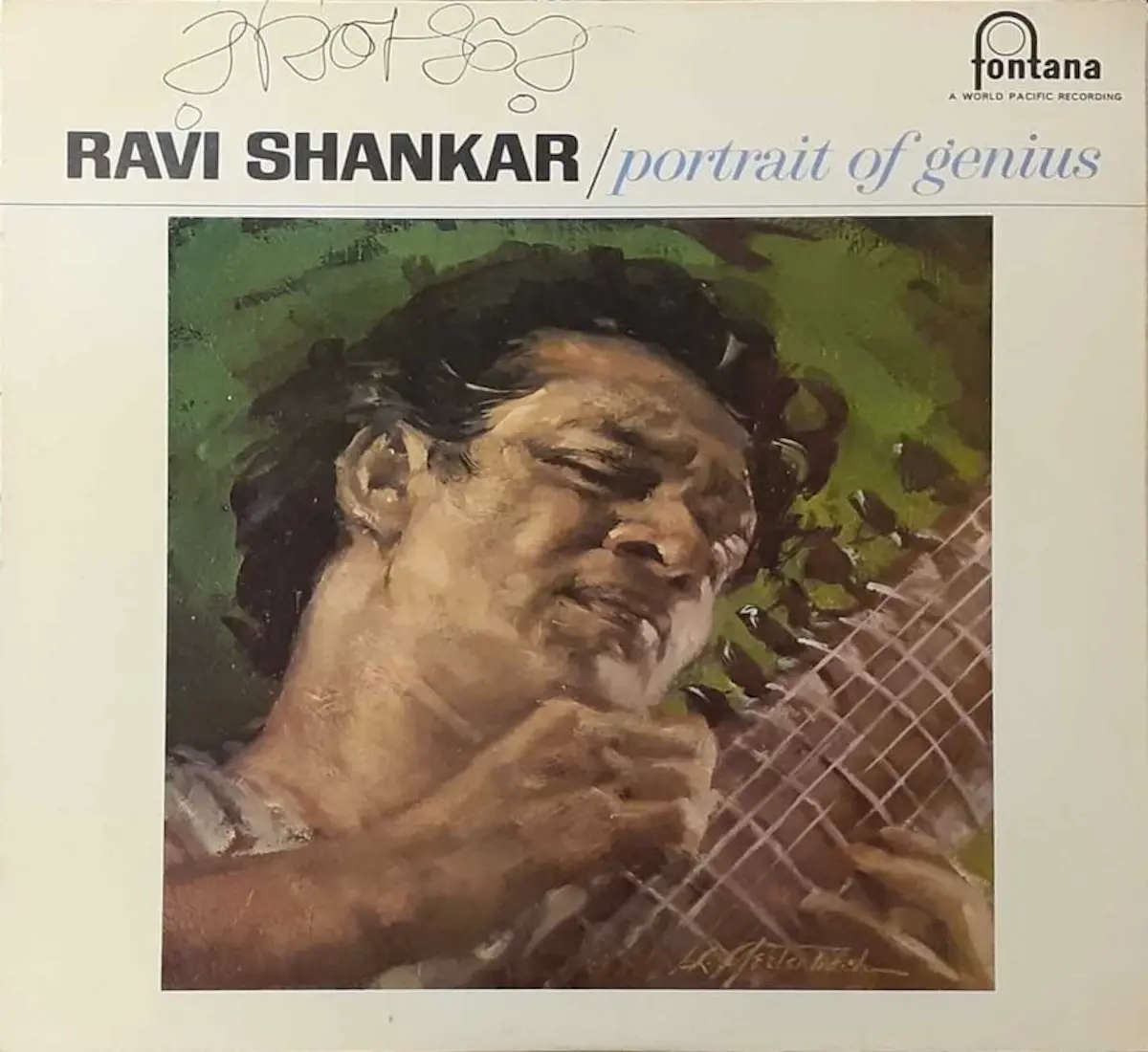
The mid-1960s represented a transformative era for global music, characterized by the breakdown of traditional genre boundaries and the infusion of Eastern philosophy into Western art forms. Central to this evolution was the work of Ravi Shankar, whose 1965 album Portrait of a Genius served as a critical touchstone for the burgeoning "Indo-Jazz" movement. In a 1966 assessment of the record, critic Mark Gardner, writing for Jazz Journal, explored the stylistic connections between Indian classical raga and the avant-garde jazz of the period. While Gardner acknowledged the technical brilliance of Shankar and his ensemble, his critique also highlighted the cultural friction of the time, specifically the Western struggle to reconcile the repetitive "drone" of Indian music with the harmonic progressions traditional to jazz. This tension between innovation and perceived monotony remains a significant chapter in the history of cross-cultural musical exchange.
The Cultural Landscape of 1965: Jazz Meets the East
By the time Ravi Shankar recorded Portrait of a Genius in Hollywood in 1965, the influence of Indian classical music had already begun to permeate the American jazz scene. Prominent figures such as John Coltrane, Yusef Lateef, and Archie Shepp were increasingly looking toward non-Western scales and structures to break free from the constraints of bebop and hard bop. John Coltrane, in particular, had become fascinated with the concept of the "drone" and the spiritual depth of Indian music, eventually naming his son Ravi after the sitar maestro.
The album Portrait of a Genius (released on Fontana TL 5285) arrived at a moment when the Western ear was being asked to adapt to a radically different musical vocabulary. The sitar, a complex instrument featuring 25 strings, presented a timbral quality that was entirely foreign to many jazz listeners. Unlike the piano or saxophone, the sitar relies on sympathetic strings that vibrate in response to the primary melody strings, creating a shimmering, continuous harmonic background. For critics like Gardner, this required a significant period of adjustment to what he described as a "rather peculiar sound."
Technical Composition and Instrumentation
The recording sessions for the album were split into two distinct parts, showcasing different facets of Shankar’s approach. Side A of the LP featured a more collaborative effort, including Western instrumentation that served as a bridge for listeners. The inclusion of Paul Horn, a gifted flautist, was noted by critics as a primary factor in making the "abstruse music easier on Western ears." Horn’s presence provided a familiar melodic anchor amidst the intricate improvisations of the sitar.
The ensemble for the "a" tracks included a diverse array of instruments:
- Ravi Shankar: Sitar
- Paul Horn: Flute
- Penelope Esterbrook: Sitar and Tamboura
- Harihar Rao: Tabla-tarang and Dhorak
- Sam Chianis: Santoor (a hammered dulcimer)
- Phil Harland: Tabla and Kartal
- N. C. Mullick: Tamboura
The second side of the album, specifically the track "Raga Multani," offered a more traditional and rigorous exploration of the raga form. Accompanied only by Alla Rakha on tabla and N. C. Mullick on tamboura, Shankar engaged in a nearly 20-minute improvisation that demanded intense concentration from the listener. The tamboura, a five-stringed drone instrument, provides the constant tonal foundation upon which the raga is built, while the tabla—a pair of hand drums—provides the rhythmic framework, or tala. Gardner likened the tabla to "jazz bongos," though he acknowledged the far greater complexity involved in Indian rhythmic cycles.
A Chronology of Influence: 1955–1966
To understand the weight of this 1966 review, one must look at the timeline of Shankar’s rise in the West and the corresponding shifts in jazz:
- 1955: Yehudi Menuhin invites Ravi Shankar to perform in New York, marking his first major exposure to American audiences.
- 1961: John Coltrane records "India," a track heavily influenced by the raga structure, featuring a persistent drone and modal improvisation.
- 1964: The "October Revolution in Jazz" in New York sees the rise of the avant-garde, with artists seeking new spiritual and technical heights.
- 1965: Shankar records Portrait of a Genius in Hollywood. This same year, he begins his association with George Harrison of The Beatles, which would soon catapult Indian music into the global pop consciousness.
- March 1966: Mark Gardner publishes his review in Jazz Journal, articulating the "monotony" debate that would follow the genre for decades.
The "Monotony" Debate: Western Criticism vs. Eastern Tradition
The primary point of contention in Gardner’s 1966 critique—one shared by his contemporary Gerald Lascelles—was the presence of a "monotonous element" within the raga. From a Western perspective rooted in the 12-tone equal temperament scale and frequent chord changes, the static nature of the raga’s drone was often misinterpreted as a lack of progression.
Gardner’s review suggested that the "sameness and repetition" found in Shankar’s work were the same elements that had alienated some listeners from John Coltrane’s post-1960 output. This critique highlights a fundamental cultural gap: in Indian classical music, the "drone" is not a lack of movement, but a sacred canvas that allows for the exploration of microtones (shrutis) and complex rhythmic permutations that are impossible within traditional Western harmony.
Despite these reservations, Gardner conceded that Shankar and his collaborators were "undoubtedly brilliant musicians with phenomenal ears and technique." He noted their ability to improvise imaginatively for extended periods, a trait that directly mirrored the "extended blowing" sessions of the jazz avant-garde. However, he warned that while Indian elements "fit jazz very nicely," they must be "carefully sifted" to avoid "strangling and stultifying" the jazz idiom.
Statistical and Discographical Data
The album Portrait of a Genius remains a significant entry in the Fontana catalog. The discography of the 1965 sessions provides a clear view of the album’s structure:
- Tala Rasa Ranga (Session A)
- Dhun (Session A)
- Tabla-Dhawani (Session A)
- Song From The Hills (Session A)
- Tala-Tabla Tarang (Session A)
- Gat Kirwani (19 minutes, 15 seconds)
- Raga Multani (19 minutes, 45 seconds)
At the time of its release, the LP was priced at 33s. 1d. (33 shillings and one penny), positioned as a specialty record of "limited appeal." It was marketed primarily to "students of the avant-garde" and those interested in the technical intersections of world music.
Analysis of Broader Implications and Legacy
The 1966 review of Ravi Shankar serves as a historical snapshot of a world on the brink of a massive cultural shift. Within a year of the review’s publication, Shankar would perform at the Monterey Pop Festival, becoming a global icon of the counterculture. The very "monotony" that Gardner and Lascelles feared would become the foundational sound of psychedelic rock and the "minimalism" movement in contemporary classical music (led by composers like Terry Riley and Philip Glass).
In the realm of jazz, the "sifting" process Gardner recommended did indeed take place. The fusion era of the 1970s, led by Miles Davis and John McLaughlin’s Mahavishnu Orchestra, successfully integrated Indian rhythmic cycles and scales into a high-energy jazz-rock context. McLaughlin, a student of Shankar, would go even further with his group Shakti, which removed Western drums entirely in favor of the tabla and ghatam, proving that the "monotony" of the drone could be a source of immense kinetic energy.
Furthermore, the critique of Coltrane’s post-1960 work as "monotonous" has been largely revised by modern musicology. What was once seen as repetition is now understood as "maximalism"—an attempt to exhaust every melodic possibility within a single mode. Shankar’s influence was the catalyst for this shift, moving jazz away from the "vertical" thinking of chord changes toward the "horizontal" thinking of melodic expansion.
Conclusion
The 1966 assessment of Portrait of a Genius reflects the growing pains of a musical world expanding its horizons. While Mark Gardner’s review was cautious—recommending the music only in "strictly small doses"—it nonetheless recognized the arrival of a "genius" whose technique was beyond reproach. The "monotonous" drone that once challenged Western ears eventually became the heartbeat of a new, globalized sound. Today, the collaboration between Ravi Shankar and Paul Horn is viewed not as a difficult experiment, but as a visionary bridge that allowed two distinct musical worlds to find common ground in the pursuit of improvisational excellence. For the jazz community of the 1960s, Shankar was more than a performer; he was a mirror reflecting the genre’s own evolution toward a more spiritual and rhythmically complex future.