Aveline Kirana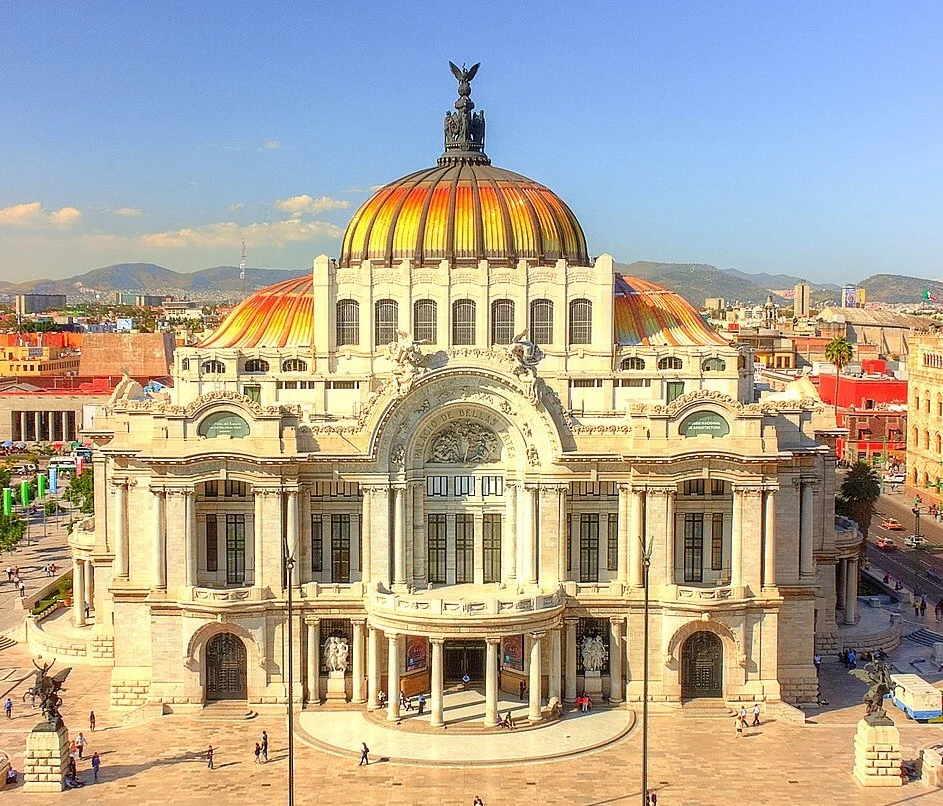
The author’s recent experience at the Palacio de Bellas Artes in Mexico City ignited a profound rekindling of their passion for opera, not through a specific performance, but through the palpable sense of community and belonging that permeated the iconic venue. This observation serves as a critical juncture in understanding how opera, as an art form and as an institution, can bridge the generational divide and reassert its relevance in contemporary society. The influx of young people, drawn to the grandeur and atmosphere of the Palacio de Bellas Artes without the immediate intention of attending an opera, illuminated a fundamental truth: the opera house itself, as a physical space and a cultural anchor, holds an untapped potential to attract and engage audiences. This insight challenges the prevailing notion that success hinges solely on the programming of performances, suggesting instead a strategic shift towards embracing the role of the opera house as a vibrant "third place" – a social environment distinct from home and work, fostering connection and community.
The "Third Place" Paradigm: A Framework for Engagement
The concept of the "third place," as articulated by sociologist Ray Oldenburg, refers to informal gathering spots that are crucial for community building and social capital. These spaces, such as coffee shops, libraries, and community centers, provide a sense of belonging and inclusivity, allowing individuals to interact and form social bonds without the obligations of formal membership. For opera houses, embracing this paradigm involves a deliberate reorientation of their operational model and public perception. It moves beyond the exclusive role of presenting performances to becoming dynamic cultural institutions that invite sustained engagement and communal experience.
The success of art museums in attracting younger demographics offers a compelling case study. Unlike the often rigid and time-intensive commitment required by opera performances, art museums typically offer a more fluid and accessible experience. Visitors can engage with diverse collections at their own pace, moving freely between galleries and exhibitions. The variety of styles, media, and subject matter ensures that even if one piece does not resonate, another will likely capture attention. This freedom to explore and interact with the space on personal terms significantly lowers the barrier to entry. Art museums effectively function as spaces where individuals can congregate around a shared cultural activity, with art serving as both a backdrop and a focal point for social interaction. This mirrors the philosophy behind ambient music, where art is present and enriching without demanding constant, singular attention.
Operational Challenges and Inherent Limitations of Opera
While the art museum model offers valuable insights, opera faces unique challenges rooted in its inherent nature as a linear, narrative-driven art form. The aesthetic fulfillment derived from opera typically necessitates sustained, focused attention, leaving little room for the kind of flexible engagement seen in visual arts. Operas are fixed in time and space, a characteristic that can be a disadvantage in an era defined by instant gratification and readily available digital content. Furthermore, distinguishing stylistic nuances between operas can be difficult for newcomers, unlike the more readily discernible variations in visual art. The social aspect of opera attendance, therefore, is often confined to the liminal spaces surrounding the performance itself – the lobby, intermissions, and post-show discussions – rather than being fully integrated into the artistic experience.
However, these limitations do not preclude opera houses from adapting. By understanding and emulating the successful strategies of other cultural third places, opera institutions can reorient their offerings without compromising the core integrity of the art form. The question then becomes identifying exemplary institutions that have successfully navigated this complex landscape.
Exemplary Institutions: Palacio de Bellas Artes and Opéra de Lille
The Palacio de Bellas Artes in Mexico City stands as a prime example of an opera house that transcends its primary function to become a vital community hub. The author’s observation of young people congregating in its open plaza, admiring its architectural splendor, underscores the venue’s appeal beyond its operatic programming. This suggests that the physical presence and historical significance of such monumental structures can serve as powerful attractors, fostering a sense of inspiration and belonging that can then be subtly channeled towards experiencing the performances within. In essence, the opera house itself becomes the most effective promoter of opera.
Another compelling case is the Opéra de Lille in northern France. Despite being a relatively new entity in the author’s personal experience, it has already established itself as a significant center for its community. Opéra de Lille distinguishes itself through diverse programming, including innovative series like the late-night "Insomniaque" chamber music and post-work "Heure Bleue" concert series, designed to appeal to a broader audience. Crucially, the institution actively cultivates its role as a gathering place. Its grand staircase, situated in the historic city center, serves as a popular meeting point where people of all ages can socialize. The company fosters an environment where visitors are welcome to "merely exist" within its space, allowing the cultural experience to be a backdrop or foreground to social interaction.
A particularly striking example from Opéra de Lille was the "Insomniaque" concert, where the Grand Foyer was transformed with mattresses, inviting audience members to recline and immerse themselves in the music. This approach attracted a diverse group of young people who engaged with both the artistic performance and the architectural beauty of the Neoclassical/Art Nouveau building. The experience of attending a challenging opera like "The Makropulos Case" at Opéra de Lille, even for a first-time opera-goer, highlights the power of the venue and atmosphere. The attendee reported that while the opera itself was unconventional, the inviting space and social context made him eager to return, prioritizing the overall experience over the specific artistic work. This demonstrates that Opéra de Lille has successfully positioned itself as a central third place, drawing in younger audiences through its commitment to community gathering and immersive experiences.
The "Vibe" Factor: The Social and Physical Experience
Interviews with individuals outside the opera industry reveal a common prioritization of the physical experience and social atmosphere over the artistic product itself. The term "vibe" frequently emerges in positive descriptions, encapsulating the enjoyment of dressing up, gathering with friends, and inhabiting a beautiful, monumental space. While this social dimension may lead some newcomers to return for performances, for many, the enduring appeal lies in the shared memories created within the opera house. These social manifestations – conversations in the lobby, champagne during intermission, post-performance applause – are intrinsically linked to the environment. Opera houses possess a unique strength in leveraging the majesty and history of their spaces to foster a deep sense of connection and belonging. This communal engagement with the building contributes to its institutional memory and sustains renewed social interest, thereby supporting the art form.
Reassessing the "Image Issue" and Industry Scaffolding
The perceived "image issue" of opera, particularly concerning accessibility and public sentiment, has been a recurring theme in industry discussions. In his book, "Voices of Tomorrow’s Songs," the author interviewed young opera professionals who identified systemic problems within institutions like the Metropolitan Opera. One interviewee pointed to the Met’s move to Lincoln Center as a turning point, suggesting that the sheer scale of the new venue contributed to issues of financial and cultural mismanagement by creating "overwhelming expectations" and size problems. This critique highlights how the physical infrastructure of opera houses can influence their operational and artistic trajectory.
The author’s conclusion in "Voices of Tomorrow’s Songs" was that opera suffers from an image problem, with accessibility and public perception being primary concerns. However, the focus has often been on the industry’s "scaffolding" – the organizational and marketing structures – rather than on the historic facades of the theaters themselves. This points to a core issue: opera houses have historically positioned themselves as mere presenters of shows, rather than as vital cultural centers and community monuments.
The Enduring Power of the Opera House as a Physical Space
As a consultant specializing in the built environment and sustainability, the author’s reflections naturally turn to the engagement with physical spaces, including the opera houses of their formative years. The initial encounter with opera is often as much about the grandeur of the theater as it is about the performance. The rich velvet seating, intricate gold filigree, imposing exteriors, and luminous chandeliers all contribute to a deep bond with the physical environment. Monumental structures possess an enduring quality that allows successive generations to forge connections and develop a sense of identity through affiliation. This personal and communal connection fosters stewardship and care for these buildings. In essence, the opera houses that first inspired a love for opera are as integral to one’s identity as the art form itself, thereby creating a vested interest in the continued survival of the art.
The author’s decision to step away from a four-year career in the opera industry, despite authoring "Voices of Tomorrow’s Songs" in 2020, stemmed from witnessing the industry’s hesitant approach to change. A timid movement towards innovation was often followed by a retreat to familiar formulas, perpetuating opera’s image as an outdated art form. However, a recent rekindling of passion has emerged, not through the industry’s staging practices, but through the very physical spaces where operas are presented. This suggests that other young people are discovering opera for the first time through the theaters themselves.
A Call for Transformation: Leveraging Physical Spaces for Community Engagement
The critical insight is that the fundamental fabric of opera as an institution need not be altered. Instead, the focus should shift to leveraging the physical opera houses as integral community institutions. This perspective reframes opera from solely an art form to an experience rooted in place. By embracing their role as physical anchors for community life, opera houses can attract new audiences, foster deeper engagement, and ultimately ensure their own enduring relevance in the 21st century. This strategic reorientation acknowledges that for many, the journey into the world of opera begins not with a specific aria, but with the awe-inspiring embrace of the opera house itself.