Johan Budi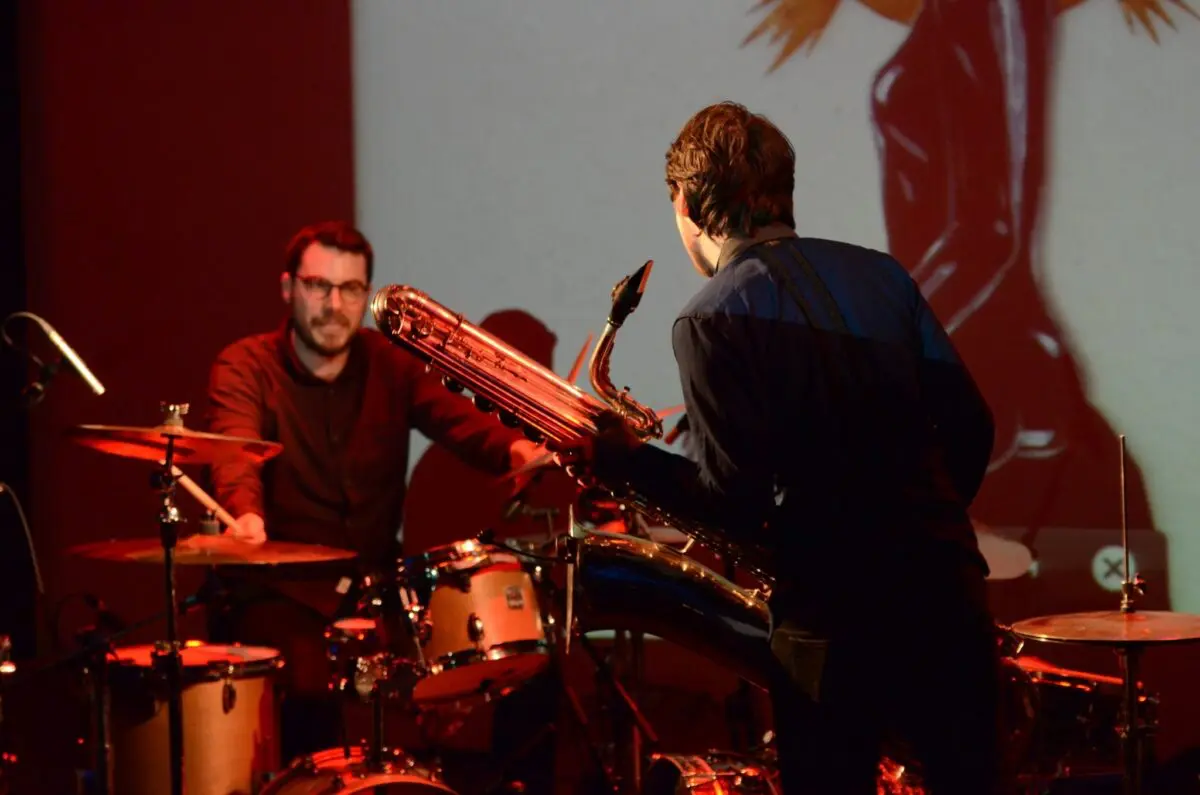
The global jazz recording industry is currently experiencing a period of significant dualism, characterized by the meticulous preservation of mid-century masterpieces and a simultaneous push toward avant-garde, cross-genre experimentation. From the archival re-emergence of foundational hard bop to the release of innovative big band compositions and experimental improvisations, the current slate of releases highlights the genre’s enduring capacity for reinvention. This comprehensive overview examines the latest contributions from established legends and emerging voices, providing a detailed look at the technical, historical, and cultural contexts defining these works.
Foundational Legacies and the Preservation of the Canon
The historical weight of jazz is anchored by several new reissues and late-career statements from figures who shaped the genre’s trajectory. Herbie Hancock’s debut as a leader, Takin’ Off, remains a cornerstone of the Blue Note era. Originally released in 1962, the album is noted for producing "Watermelon Man," a track that achieved rare crossover success by reaching the Billboard Top 100. The composition’s evolution into a jazz standard was accelerated by Mongo Santamaría’s subsequent Latin-jazz rendition, but the original session remains a masterclass in the hard bop idiom. Accompanied by an elite quintet including Dexter Gordon and Freddie Hubbard, Hancock’s debut signaled the arrival of a harmonic architect who would later redefine jazz-fusion.
Similarly, the reissue of Billie Holiday’s Lady Sings the Blues serves as a critical document of the vocal jazz tradition. The album compiles sessions from 1954 and 1956, emphasizing Holiday’s emotive delivery over instrumental virtuosity. During this period, the "Lady Day" persona was inextricably linked to her autobiography of the same name. Critics often point to these recordings as evidence of Holiday’s ability to use her voice as a nuanced instrument, despite the limited space provided for instrumental solos by her backing band.
Representing the living link to the "Kind of Blue" sessions, the Jimmy Cobb Quartet’s Jazz in the Key of Blue offers a reflective, atmospheric exploration of the ballad form. Featuring the late Roy Hargrove and guitarist Russell Malone, the album acts as a spiritual successor to the modal jazz revolution of 1959. Cobb’s restrained percussion provides a foundational pulse for late-night, moody interpretations that prioritize space and resonance.
The Evolution of the Large Ensemble: Big Bands and Orchestras
The modern big band format is undergoing a renaissance, moving away from traditional swing toward complex, polytonal arrangements. Montreal’s Jazzlab Orchestra, celebrating its 20th anniversary, exemplifies this shift with Glissement du Temps (Slip of Time). The album features ten original compositions that utilize impressionistic textures and polyrhythmic structures. It also serves as a poignant tribute to the late saxophonist Mario Allard, whose influence remains central to the ensemble’s identity.
In Indianapolis, saxophonist Sean Imboden has contributed to this orchestral expansion with Uncharted Realms. Leading a 17-piece modern jazz big band, Imboden’s second album focuses entirely on original material, demonstrating a commitment to contemporary composition within the large-group framework.
One of the most ambitious projects in the current cycle is Mathias Heise’s collaboration with the Danish Radio Big Band, titled A Love Supreme Revisited. Reimagining John Coltrane’s 1965 masterpiece is a formidable task, yet Heise—a world-class chromatic harmonica player—approaches the work by deconstructing Coltrane’s original improvisations. By integrating these elements into new big band arrangements, Heise avoids the pitfalls of a standard tribute, instead offering a structural dialogue with the source material.
Nordic Jazz and the European Improvisational Scene
Europe remains a primary hub for jazz innovation, particularly in the Nordic regions and France. The "Nordic Sound"—often characterized by restrained dynamics, long melodic lines, and an emphasis on "space to breathe"—is evident in the work of the Lille-based quartet Hasard Noir. Their third album, L’Adversaire, introduces the saxophone to their lineup for the first time, exploring themes of duality through the compositions of pianist Luis Galceran.
The Norwegian scene continues to blend traditional folk with improvisational music. The Hytta Trio’s Vindespel utilizes the Hardanger fiddle, a traditional Norwegian instrument, as its foundation. By combining Telemark folk traditions with jazz sensibilities, the trio creates a distinctive sound that transcends regional boundaries. Similarly, guitarist Joachim Lyche’s debut, Primal Heuristics, showcases the high technical standard of the younger generation of Norwegian musicians. Lyche’s trio balances original compositions with interpretations of works by Coltrane and Joe Henderson, signaling a deep respect for the American tradition filtered through a European lens.
In France, Les Haricots Rouges celebrate six decades of activity with 60 ans, Amazing Grace!!. As ambassadors of "à la française" New Orleans jazz, the group has maintained a consistent presence in the global jazz community since the early 1960s. Their longevity is a testament to the enduring appeal of swing and joyful, communal improvisation.
Experimentalism and Technical Innovation
The boundaries of the genre are being pushed by artists utilizing non-traditional instruments and recording techniques. Insufficient Funs, a duo consisting of drummer Matthew Jacobson and bass saxophonist Sam Comerford, explores "quasi-electronic" effects achieved through purely acoustic means. Their debut album, Chunk, focuses on texture and abstraction, unraveling jazz standards into bold, unrecognizable forms.
In the realm of solo piano, Tetsuro Hoshii’s Everything Is Alive highlights the technical superiority of the Fazioli piano. Recorded in Brooklyn and mastered in Oslo, the album captures the spontaneous interplay between silence and resonance. Hoshii’s work sits at the intersection of contemporary jazz and modern classical music, emphasizing the physical properties of the instrument.
The trio Leverton Fox offers an even more radical departure with Eternal Gong Bath of the Sunbed Mind. Drawing inspiration from Derek Bailey’s non-idiomatic ethos and the electronic experiments of Stockhausen and Holger Czukay, the group prioritizes collective interplay over traditional production. The result is a densely packed, expansive sonic landscape that subverts the traditional roles of jazz instrumentation.
Fusion, Crossover, and the Singer-Songwriter Tradition
The intersection of jazz with rock, blues, and pop continues to yield diverse results. The Jonas Larsson Band’s Point Nemo draws heavily on the jazz-fusion of the 1970s and 80s, featuring pronounced guitar riffs and heavy bass lines. This high-energy approach contrasts with the more intimate work of vocalists like Kathy Ingraham. On Jazz Dreams, Ingraham bridges the gap between iconic rock songs and jazz, citing influences ranging from Blossom Dearie to Nina Simone.
Russ Lorenson’s 20th-anniversary edition of A Little Travelin’ Music provides a case study in artistic evolution. Rather than a standard remaster, Lorenson has revisited his debut recordings to reflect his shift from cabaret to a more defined vocal jazz identity. By adding new instrumental parts and remixing the original sessions, Lorenson has aligned his early work with his current artistic trajectory.
Looking toward the future, singer-songwriter Paul Kahn is set to release Willingness in 2026. Produced by Catherine Russell, the project indicates a sustained interest in the intersection of lyrical songwriting and jazz arrangement, ensuring that the vocal tradition remains a vibrant part of the industry’s output.
Analytical Implications and Market Trends
The current variety of releases suggests several key trends in the jazz market. First, there is a clear demand for "live-to-tape" and analogue recording methods, as seen in Kronstad 23’s Dødehavet. This approach prioritizes interaction and momentum over the clinical precision of digital editing, appealing to an audience that values authenticity and "vibe."
Second, the geographic diversification of jazz is more pronounced than ever. While New York remains a vital center—evidenced by the collaboration between saxophonist Jed Levy and guitarist Phil Robson—the emergence of high-quality productions from Ireland, Denmark, Argentina, and Japan indicates a decentralized global scene. Martina Liviero’s Formas al Desaparecer, for instance, blends Argentine folk with chamber music, expanding the definition of South American jazz.
Finally, the role of prestigious labels like ECM Records continues to be significant. Joe Lovano’s new Paramount Quartet, featuring Julian Lage and Will Calhoun, represents the label’s commitment to "global awareness" in jazz. Recorded in the south of France and produced by Manfred Eicher, the project underscores the importance of high-level curation in a crowded marketplace.
In conclusion, the jazz world in the mid-2020s is a complex ecosystem of historical reverence and forward-looking experimentation. Whether through the preservation of Herbie Hancock’s early genius or the radical deconstructions of Mathias Heise and Insufficient Funs, the genre continues to prove its resilience and capacity for deep cultural resonance. These releases collectively affirm that jazz is not merely a historical artifact, but a living, breathing dialogue between the past and the future.