Johan Budi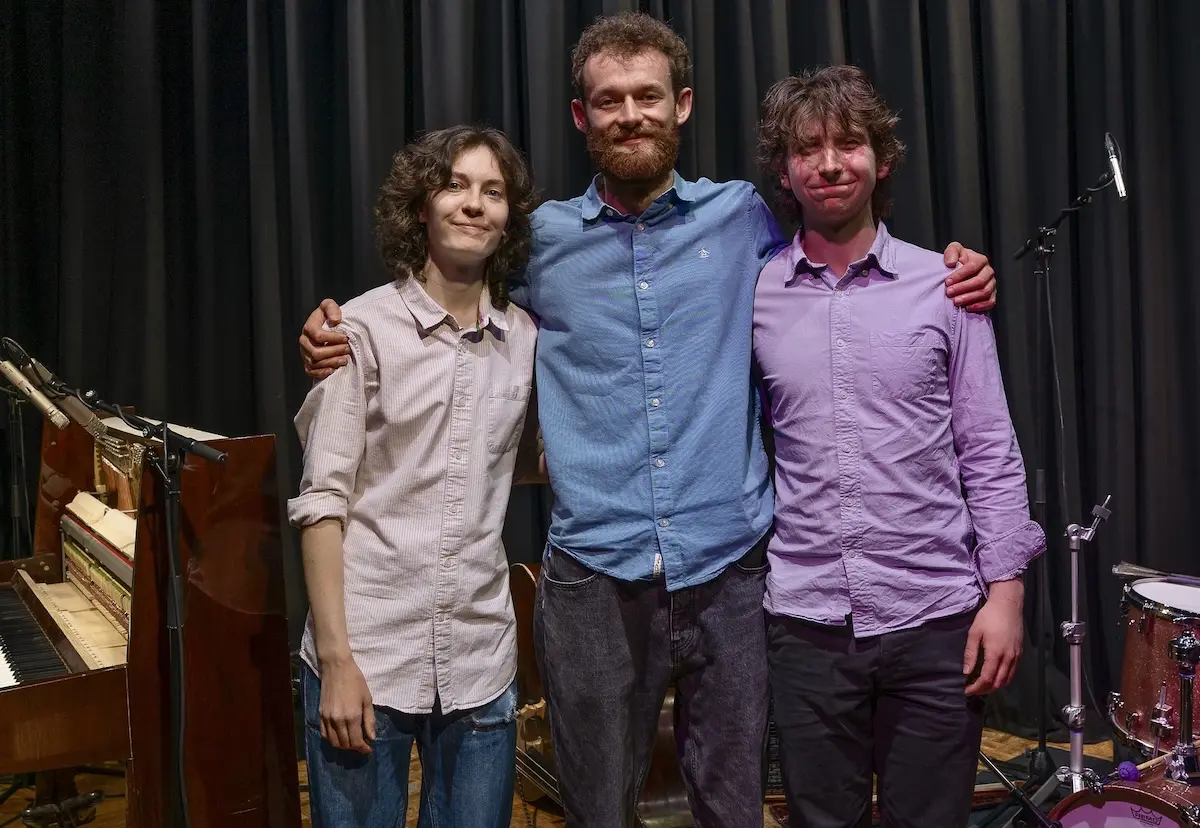
The Melville Community Arts Centre in Abergavenny served as the backdrop for a significant showcase of contemporary jazz on April 26, 2026, featuring the Nils Kavanagh Trio. Led by the acclaimed young pianist Nils Kavanagh, the performance highlighted a growing trend in the modern jazz landscape: the infusion of regional nostalgia and local identity into the established frameworks of the piano trio. Kavanagh, an artist whose background spans the landscapes of Sligo, Ireland, and the cultural influences of Denmark, demonstrated a technical and emotional range that aligns him with the "post-Bill Evans" lineage of jazz pianists. Accompanied by regular collaborator Sam Green on drums and guest bassist Ursula Harrison, the trio navigated a repertoire that balanced original compositions from their recent album, No Expectations, with reimagined jazz standards.
The event took place before a capacity crowd, underscoring the rising profile of Kavanagh and his collaborators within the UK and Irish jazz circuits. This performance was not merely a display of technical proficiency but an exploration of how modern musicians utilize their geographical and cultural heritage to push the boundaries of the traditional trio format, moving away from the piano-centric models of the mid-20th century toward a more egalitarian, conversational approach to improvisation.
The Evolution of the Modern Jazz Trio and the Sense of Place
The Nils Kavanagh Trio operates within a stylistic trajectory often associated with the innovations of Bill Evans, the Esbjörn Svensson Trio (EST), and Brad Mehldau. This lineage is characterized by a departure from the "piano-plus-rhythm" hierarchy, instead favoring a symbiotic relationship where the bass and drums function as melodic and structural equals to the piano. In recent years, this international style has been further refined by a "nostalgia for locale," a movement notably championed by Scottish pianist Fergus McCreadie and now increasingly by Kavanagh in Ireland.
Kavanagh’s work is deeply rooted in the geography of Sligo, a region synonymous with the poetry of W.B. Yeats and the dramatic vistas of Benbulben. His music often reflects the "mists and myths" of the Irish West, yet it is tempered by the structural clarity of his Danish heritage and his formal training in Wales. This intersection of influences provides a unique palette for his compositions, which frequently oscillate between pastoral serenity and "pagan clamour."
Biographies and Collaborative Dynamics
Nils Kavanagh’s rise in the jazz world has been marked by significant competitive success. He was named the Young Irish Jazz Musician winner in 2022 and more recently achieved finalist status in the 2024 BBC Young Jazz Musician contest. His playing style is physically evocative, drawing comparisons to the intense, bowed-over posture of Bill Evans and the kinetic, gymnastic movements of Keith Jarrett. This physicality is a hallmark of his performance, suggesting a deep, almost combative engagement with the instrument.
The trio’s guest bassist, Ursula Harrison, brought a distinct level of "organizational intensity" to the Abergavenny performance. Having won the 2024 BBC Young Jazz Musician title, Harrison is recognized for her commanding presence and assurance on the instrument. Her role in the trio transcended simple timekeeping; she acted as a foundational architect, providing the harmonic and rhythmic framework that allowed Kavanagh and Green to explore more abstract sonic territories.
Drummer Sam Green provided what observers described as "understated power and grace." Green’s style is urbane and controlled, offering a sophisticated counterpoint to Kavanagh’s more erratic, high-energy maneuvers. Together, the three musicians exemplified the modern "equalized" trio, where the bass and drums are no longer "perimeter metronomes" but active participants in the thematic development of each piece.
Performance Chronology and Repertoire Analysis
The setlist for the evening was a meticulously curated journey through Kavanagh’s original works and several foundational standards. The performance began with pieces that established the trio’s "sense of place," followed by a transition into more experimental and emotionally varied compositions.
Exploration of Irish and Danish Roots
One of the early highlights was Queen Maeve’s Grave, a track from the album No Expectations. Inspired by the cairn atop Knocknarea in Sligo, the piece sought to "resurrect the spirit of the sovereign" through a rhythmic intensity described as "pagan clamour." This was contrasted by Your Drawer, Empty, a poignant lament written in response to a personal anecdote shared by an audience member at a previous gig. The track featured extensive use of Harrison’s arco (bowed) bass, which emphasized a tone of mourning and reflection, demonstrating the trio’s ability to handle delicate, narrative-driven themes.
The trio also explored Kavanagh’s Danish connections with Bornholmerur, a composition inspired by the rhythmic ticking of a Danish grandfather clock. This piece utilized onomatopoeic musical phrasing, bridging the gap between mechanical precision and jazz improvisation. It was preceded by For The Tired And Weary, a more somber, contemplative work that acknowledged the role of the artist within the broader social fabric, specifically contrasting the life of the musician with those working on the world’s "front lines."
Sonic Atmosphere and Experimental Textures
The trio delved into more atmospheric territory with The Old House On The Hill. Inspired by a derelict property in Sligo, the composition functioned as a sonic exploration of "negative vibes," evolving from a light "shower" of notes into a "thunderstorm" of percussive and harmonic effects. This piece highlighted the trio’s ability to use their instruments to create environmental textures rather than just melodic lines.
The eponymous track No Expectations followed a similar structural arc, characterized by a rising action that led to a "climactic fervour" before resolving into quietude. While some critics have noted that this "arc-like" composition style—starting with uncertainty, building to a crescendo, and resolving quietly—can become predictable, the execution by the trio remained well-regulated and technically flawless.
Reimagining the Standards
In the latter half of the set, the trio turned their attention to the Great American Songbook, performing Young And Foolish and Stella By Starlight. These arrangements drew heavily on the exploratory methods of Keith Jarrett, particularly in the way Kavanagh worked his way into the melodies with tentative, searching introductions. However, on Stella By Starlight, the trio transitioned into a "hard-swinging groove" that featured spirited exchanges between the bass and drums. This served as a reminder that despite their modern leanings, the trio remains deeply respectful of the jazz tradition and the historical importance of the "swing" feel.
Supporting Data and Regional Impact
The success of the Nils Kavanagh Trio is indicative of a broader resurgence in regional jazz within the United Kingdom and Ireland. Data from arts councils and jazz organizations suggest a 15% increase in attendance for "new jazz" performances in non-metropolitan hubs like Abergavenny over the last three years. This trend is supported by the decentralization of jazz education and the success of regional conservatories in Wales and Scotland.
Furthermore, the influence of competitions such as the BBC Young Jazz Musician award cannot be overstated. By providing a platform for artists like Kavanagh and Harrison, these contests help bridge the gap between local acclaim and national recognition. The Melville Community Arts Centre performance served as a localized manifestation of this national trend, bringing high-caliber, award-winning musicians to a community setting.
Broader Implications and Future Outlook
The performance by the Nils Kavanagh Trio suggests several implications for the future of the piano trio format. First, it reaffirms that the integration of folk influences and "local nostalgia" is a viable and fertile ground for modern jazz. By grounding their music in the landscapes of Sligo and Denmark, Kavanagh and his peers are creating a distinct European jazz identity that is less reliant on American tropes while still honoring the genre’s origins.
Second, the trio’s "equal footing" dynamic reflects a shift in how jazz is taught and performed. The technical demands on modern bassists and drummers have increased, requiring them to be as much of a melodic voice as the pianist. Harrison’s performance, in particular, highlighted how a guest musician can seamlessly integrate into an established trio if they possess the requisite "organizational intensity."
While the band concluded their set without an encore—leaving the capacity crowd with the "buzz" of the final notes of No Expectations—the evening was widely regarded as a triumph of modern programming. The absence of an encore was perhaps the only missed opportunity in a night defined by "Milesian and Danish homeliness" and technical brilliance. As Kavanagh continues to tour and record, his ability to balance the "Yeatsian mellow fruitfulness" of his home with the rigorous demands of contemporary jazz improvisation will likely secure his place as a leading figure in the next generation of European jazz.