Lana Akmaluna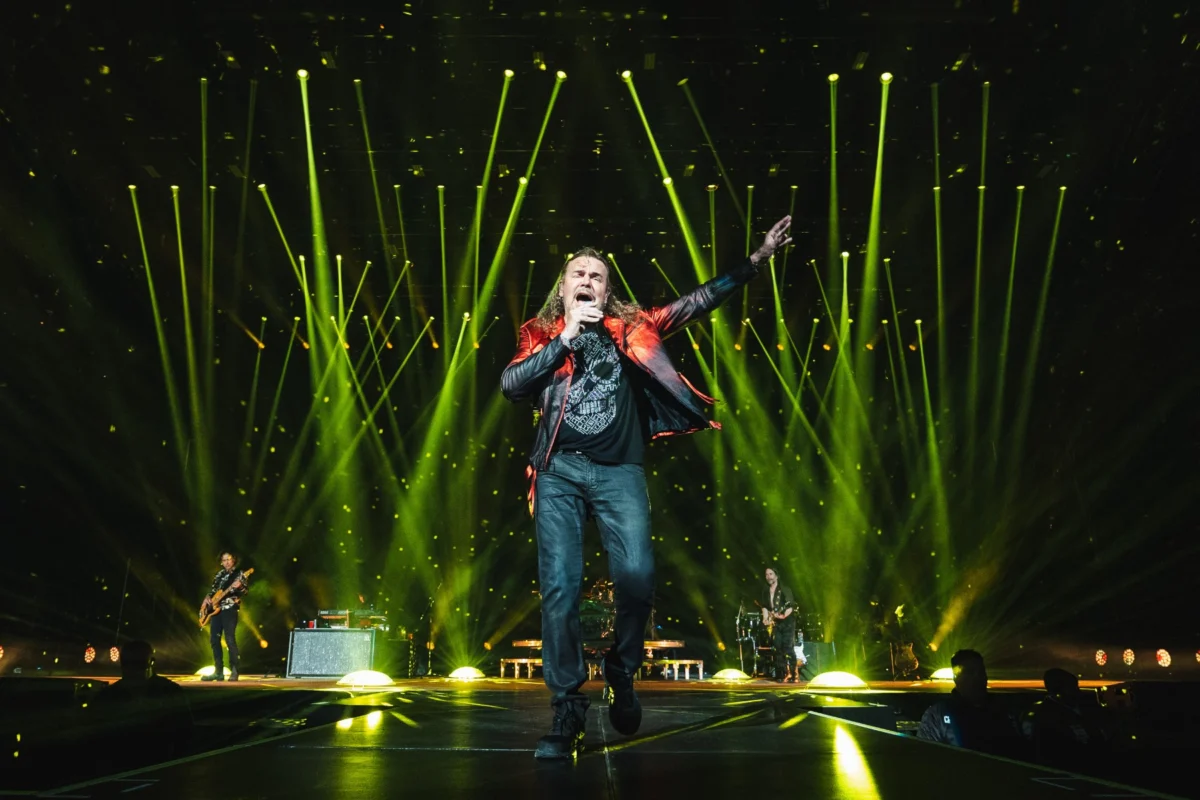
The legendary Mexican rock-pop ensemble Maná brought their high-octane Vivir Sin Aire Tour to a fever pitch on Friday night, performing the first of two sold-out shows at Miami’s Kaseya Center. On March 27, nearly 20,000 fans—a demographic largely comprised of Gen X and Millennials—converged upon the downtown arena to witness a career-spanning setlist that reaffirmed the band’s status as one of the most influential Spanish-language acts in music history. The tour, which began its global trek in Spain during the summer of 2025, has become a massive commercial success, blending nostalgia with a potent message of Latino empowerment and political engagement.
The evening’s festivities commenced at 9:40 p.m. as the house lights dimmed and the opening chords of "Déjame Entrar" echoed through the venue. The track, a standout from their 1995 masterpiece Cuando Los Ángeles Lloran, set an energetic tone that did not waver for the duration of the two-and-a-half-hour performance. Frontman Fher Olvera, maintaining his signature rock-star aesthetic, took the stage in a satin navy blue buttoned-up shirt over a black tee adorned with a studded cross, paired with black leather pants and rugged combat boots.
A Setlist of Timeless Anthems
Following the opening number, the band transitioned seamlessly into a string of hits that defined the "Rock en Español" movement of the 1990s and 2000s. Performances of "De Pies a Cabeza," "Manda Una Señal," and "Labios Compartidos" saw the audience take over vocal duties, often drowning out the sophisticated sound system of the Kaseya Center. The rapport between Olvera and the Miami crowd was instantaneous. Greeting the diverse audience, Olvera shouted, "Welcome, everyone. Cubans, Puerto Ricans… I know you guys know how to dance. Let’s get this party started tonight."
The concert’s pacing was a masterclass in arena rock dynamics. The band moved from high-energy "bangers" like "Me Vale" and "Clavado en un Bar" to the melancholic, mid-tempo ballads that have made them staples of Latin radio for four decades. Songs such as "Mariposa Traicionera" and "Se Me Olvidó Otra Vez" elicited massive sing-alongs, highlighting the cross-generational appeal of Maná’s songwriting.
A pivotal moment of the night occurred when Olvera paused to acknowledge the significance of the host city. "Let’s raise a glass to Miami—we’ve missed you. It’s the cradle of the United States," he remarked before consuming a shot of tequila, a ritualistic nod to the band’s Mexican heritage that has become a staple of their live shows.
Technical Prowess and the Acoustic Interlude
While Olvera remains the charismatic face of the group, the musical backbone of Maná was on full display throughout the night. Drummer Alex González, a Miami native, delivered a tour-de-force performance that culminated in a nearly 10-minute drum solo. The solo, which featured intricate polyrhythms and high-speed fills, showcased why González is widely considered one of the premier percussionists in the industry. The hometown hero’s performance was met with a standing ovation, serving as a high-point of the show’s technical execution.
As González concluded his solo, the atmospheric energy shifted. The rest of the band, including lead guitarist Sergio Vallín and bassist Juan Calleros, joined Olvera on a secondary stage located at the opposite end of the arena. This "B-stage" setup was designed to mimic the intimacy of a "cantina," or traditional Mexican bar. This segment of the show focused on the band’s more soul-stirring compositions, including "Te Lloré un Río," "El Reloj Cucú," "Eres Mi Religión," and "Bendita Tu Luz." The stripped-back arrangements allowed the band’s musicianship to shine, creating a "storytellers" vibe that resonated deeply with the long-term fans in attendance.
A Platform for Activism and Latino Rights
Maná has long been recognized for using their platform to address environmental and social issues, primarily through their Selva Negra Foundation. During the Miami show, Olvera utilized the mid-set transition to deliver a stirring message regarding the socio-political climate in the United States and Latin America.

"We are a beacon of hope… Latinos have the power," Olvera told the hushed crowd. His remarks touched on the growing influence of the Latino electorate and the importance of civic participation. "More and more, Latinos are commanding greater respect and have more options. Who you vote for has a great deal to do with this… you can make the change."
This call to action is a recurring theme in the Vivir Sin Aire Tour. Industry analysts note that Maná’s ability to weave political discourse into a mainstream entertainment product is a key factor in their enduring relevance. By positioning themselves as "the voice of the people," they maintain a connection with their audience that transcends mere musical preference.
Market Impact and the Business of Nostalgia
The success of the Vivir Sin Aire Tour reflects a broader trend in the global music industry: the unprecedented rise of Latin touring revenue. According to recent year-end reports from Billboard Boxscore and Luminate, Latin music has seen a triple-digit percentage increase in ticket sales over the last five years. Maná, alongside acts like Los Bukis and RBD, has tapped into a "nostalgia economy" where older fans are willing to pay premium prices for arena-level productions of the soundtracks of their youth.
The Kaseya Center engagement is a prime example of this economic force. With nearly 40,000 tickets sold across two nights, the Miami stop alone is expected to generate millions in gross revenue. This follows a successful residency in Los Angeles and a sold-out European leg that saw the band performing in major arenas in Madrid and Barcelona.
Chronology of the Vivir Sin Aire Trek
The Vivir Sin Aire Tour represents one of the most ambitious undertakings in the band’s 40-year history. The timeline of the tour illustrates a strategic rollout designed to maximize global reach:
- Summer 2025: The tour launched in Spain, marking the band’s return to the Iberian Peninsula after a multi-year hiatus. The European leg focused on outdoor stadiums and large-scale festivals.
- Late 2025: The band transitioned to South and Central America, performing in major hubs including Mexico City, Bogotá, and Buenos Aires.
- Early 2026: The North American leg commenced, focusing on "legacy markets" with high concentrations of Hispanic residents, such as Los Angeles, Chicago, Houston, and Miami.
- March 27-28, 2026: The two-night sell-out at Miami’s Kaseya Center.
- April – October 2026: Continued dates across the United States, including stops in New York, Las Vegas, and Phoenix.
- November 8, 2026: The tour is scheduled to conclude at the Moody Center in Austin, Texas.
Implications for the Future of Rock en Español
As the concert approached its midnight conclusion, the band returned to the main stage for a high-energy finale. The closing quartet of songs—"No Ha Parado de Llover," "El Muelle de San Blas," "Rayando el Sol," and "Oye Mi Amor"—served as a definitive reminder of the band’s hit-making prowess. These tracks, which span from their 1990 breakthrough to their 2000s dominance, were met with an explosion of confetti and synchronized light displays.
The enduring success of Maná raises important questions about the future of the "Rock en Español" genre. While urban genres like reggaeton and regional Mexican music currently dominate the streaming charts, Maná’s ability to sell out arenas suggests that there remains a massive, underserved market for guitar-driven Latin rock. The band’s technical proficiency, combined with Olvera’s poetic lyricism, provides a template for younger Spanish-language rock bands struggling to break into the mainstream.
For the fans in Miami, the night was more than just a concert; it was a cultural celebration. As the crowd filed out of the Kaseya Center into the humid Miami night, the consensus was clear: Maná remains the undisputed heavyweight champion of Latin rock. With the Vivir Sin Aire Tour set to continue through the autumn, the band is on track to set new records for longevity and box-office performance in the Latin music sector.
The tour continues its North American journey with upcoming dates in several major cities before its final curtain call in Austin this November. As the band moves toward the conclusion of this marathon trek, they do so having reinforced their legacy as musical icons and fierce advocates for the Latino community worldwide.