Lana Akmaluna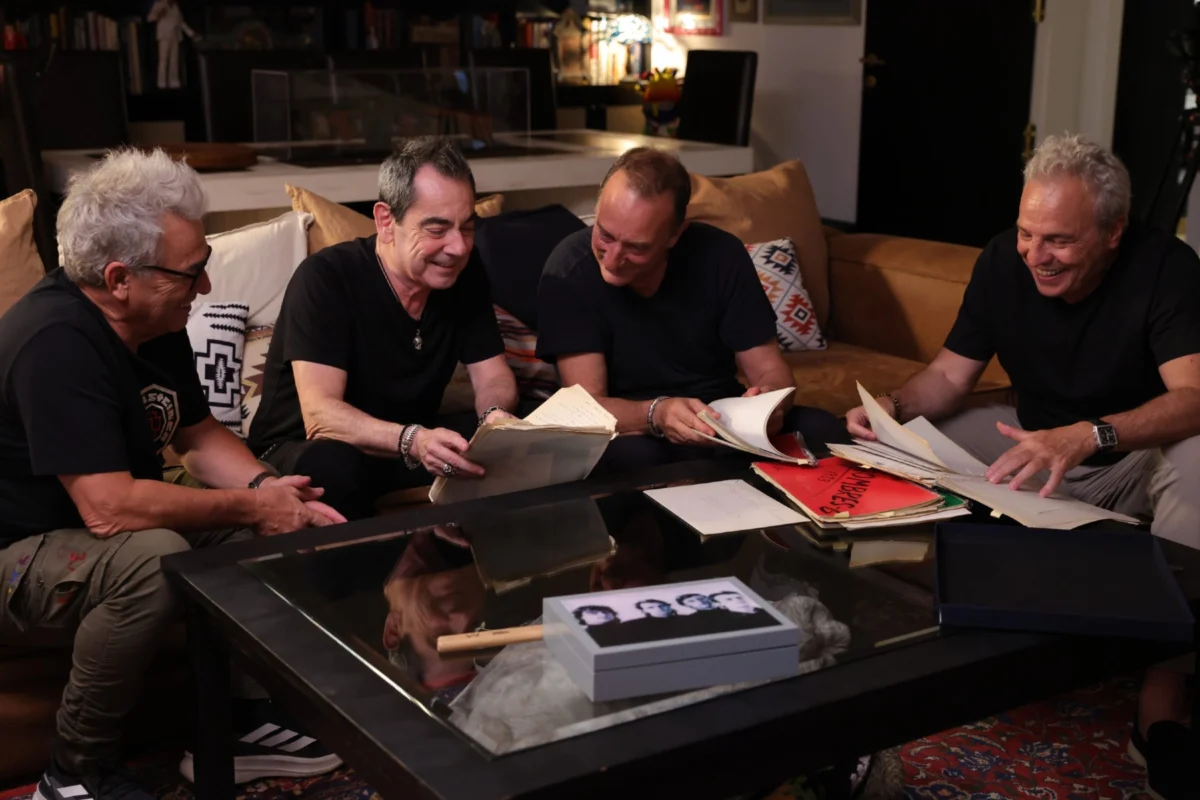
The enduring legacy of Hombres G, arguably the most successful Spanish pop-rock export of the 1980s, has been codified in a new feature-length documentary titled Los Mejores Años de Nuestra Vida (The Best Years of Our Life). Produced as a Movistar Plus+ original and directed by the acclaimed filmmaking duo Charlie Arnaiz and Alberto Ortega, the project offers a comprehensive retrospective of a career that has spanned more than forty years without a single change to the band’s original lineup. This cinematic endeavor, which premiered in Spanish theaters on May 8, serves as both a historical record and a celebration of the camaraderie between David Summers, Rafa Gutiérrez, Dani Mezquita, and Javi Molina—four friends who transitioned from the neighborhood bars of Madrid to the most prestigious stadiums across the Spanish-speaking world.
The documentary is built upon a foundation of archival wealth, utilizing never-before-seen footage, personal home videos, and intimate behind-the-scenes memories. It reconstructs the trajectory of a group that defied the fleeting nature of pop stardom to become a multi-generational phenomenon. By blending these private archives with contemporary interviews, the film illustrates how Hombres G maintained a unique, unwavering connection with an audience that now includes the children and even grandchildren of their original fans.
A Cinematic Reconstruction of Four Decades in Music
Los Mejores Años de Nuestra Vida is not merely a chronological list of achievements but an emotional mapping of the band’s evolution. Directors Arnaiz and Ortega, known for their ability to humanize musical icons, focused on the "human factor" that has kept the four members together since 1982. The documentary features an impressive roster of guest testimonies, including contributions from global superstars such as Alejandro Sanz, Ana Torroja, Carlos Vives, Carín León, and Carlos Rivera. These artists provide external validation of the band’s influence, discussing how Hombres G’s melodic sensibilities and irreverent lyrics reshaped the landscape of Latin pop and rock.
Alejandro Sanz, for instance, reflects on the band’s role in opening doors for Spanish artists in the Americas, while Carlos Vives notes the infectious energy of their live performances which helped define the "Rock en Español" movement of the late 1980s. Despite the film’s successful rollout in Spain, a confirmed release date for the United States and Latin American markets remains pending, though industry analysts expect a streaming debut to follow the theatrical window to satisfy the band’s massive overseas following.
The Genesis of a Phenomenon: From Madrid to the World
To understand the impact of Hombres G, one must look back to the early 1980s in Madrid. Formed in 1982, the band emerged during the tail end of "La Movida Madrileña," a counter-cultural movement that followed the end of the Francoist dictatorship. While many bands of that era leaned into dark post-punk or avant-garde aesthetics, Hombres G took a different path. Influenced by the power-pop of The Beatles and the energy of the punk-lite movement, they crafted a sound that was accessible, humorous, and unapologetically melodic.
The band’s rise was meteoric. Their self-titled debut album in 1985, released under the Twins label, featured hits like "Venezia" and "Devuélveme a Mi Chica" (popularly known as "Sufre Mamón"). These tracks resonated with a youth culture hungry for lightness and relatability. By 1986, with the release of La cagaste… Burt Lancaster, the band had become a cultural juggernaut. The phenomenon known as "Hombres G-mania" was born, characterized by sold-out concerts and a level of fan hysteria that had rarely been seen for a domestic Spanish act.
The chronology of their success soon expanded across the Atlantic. In 1987, the band made their first trip to Latin America, finding a reception in Mexico, Colombia, and Peru that rivaled their popularity at home. This expansion was a pivotal moment in music history, as it helped establish a transatlantic pipeline for Spanish-language rock that continues to benefit artists today.
Sustaining the Original Lineup: A Rarity in Rock History
One of the most significant themes explored in both the documentary and recent press cycles is the stability of the band’s membership. In an industry where creative differences and the pressures of fame frequently lead to internal fractures, Hombres G stands as a rare exception. David Summers (vocals and bass), Rafa Gutiérrez (guitar), Dani Mezquita (guitar and keyboards), and Javi Molina (drums) have remained the sole members of the group for over 40 years.

This internal cohesion is often cited as the secret to their longevity. The documentary highlights that their relationship is built on a friendship that predates their professional success. David Summers, the primary songwriter, has often remarked in interviews that the band functions more like a family than a business entity. This sense of brotherhood is palpable in their live performances, which continue to draw capacity crowds. Their inclusion in Billboard’s 2024 list of the "50 Best Latin Rock Bands of All Time" further solidifies their standing as icons of the genre, placing them alongside legendary acts like Soda Stereo and Maná.
New Music and the "Best Years" Global Tour
The release of the documentary is synchronized with new creative output. On April 30, the band released a new single, also titled "Los Mejores Años de Nuestra Vida." The track serves as a thematic companion to the film, reflecting on the passage of time with the same upbeat, guitar-driven energy that defined their early work. The single demonstrates the band’s ability to modernize their sound without losing the "Hombres G" essence—a blend of David Summers’ unmistakable vocal timbre and the rhythmic tightness of the Gutiérrez-Mezquita-Molina trio.
Accompanying the film and music is an extensive international tour. The "Los Mejores Años de Nuestra Vida" tour kicked off in Spain this spring, with a series of high-profile dates in major cities including Madrid, Barcelona, and Valencia. The tour is scheduled to reach Latin America in October, with planned stops in key markets such as Mexico City, Bogotá, and Buenos Aires.
Touring data from previous years suggests that Hombres G remains a top-tier live draw. In 2023, their 40th-anniversary tour sold over 200,000 tickets across Spain and the Americas, proving that the demand for their music transcends nostalgia. The current tour utilizes state-of-the-art visual production, incorporating elements from the documentary to create an immersive experience that bridges the gap between their 1980s heyday and the present day.
Supporting Data and Cultural Influence
The statistical footprint of Hombres G provides a factual basis for their legendary status. With over 20 million records sold worldwide and a digital presence that sees millions of monthly listeners on streaming platforms like Spotify and YouTube, their reach is undeniable. Hits like "Marta Tiene un Marcapasos" and "El Ataque de las Chicas Cocodrilo" have become permanent fixtures of the Spanish-language pop-rock canon, appearing on countless "best of" lists and remaining staples of radio airplay.
Their influence also extends to the stylistic evolution of the genre. Hombres G was instrumental in proving that "rock" in Spanish didn’t always have to be somber or politically charged; it could also be fun, irreverent, and commercially dominant. This paved the way for the "pop-rock" explosion of the 1990s and 2000s, influencing artists ranging from Enanitos Verdes to modern pop stars who cite the band’s songwriting structure as a blueprint for success.
Broader Impact and Industry Implications
The release of Los Mejores Años de Nuestra Vida comes at a time when the music industry is seeing a significant resurgence in the value of legacy acts. As streaming platforms prioritize deep catalogs and younger generations discover "classic" music through social media trends, bands like Hombres G are finding a renewed relevance. The documentary serves as a strategic tool to consolidate this legacy, ensuring that their story is told accurately and with the prestige it deserves.
Furthermore, the documentary highlights the importance of the Spanish market as a springboard for global Latin music. By documenting the band’s journey from the bars of Madrid to international stardom, the film provides a case study in how cultural identity can be exported successfully without losing its local flavor.
As the band prepares for the Latin American leg of their tour, the impact of their four-decade journey is clear. Hombres G has transitioned from being the "bad boys" of Spanish pop to the elder statesmen of the genre. They have managed to age with their audience while remaining accessible to new listeners, a feat achieved by very few in the history of recorded music. Through the lens of Charlie Arnaiz and Alberto Ortega, Los Mejores Años de Nuestra Vida captures this transition, offering a definitive look at a band that refuses to stop jumping, singing, and celebrating the "best years" of their lives—which, as it turns out, are still happening.