Aveline Kirana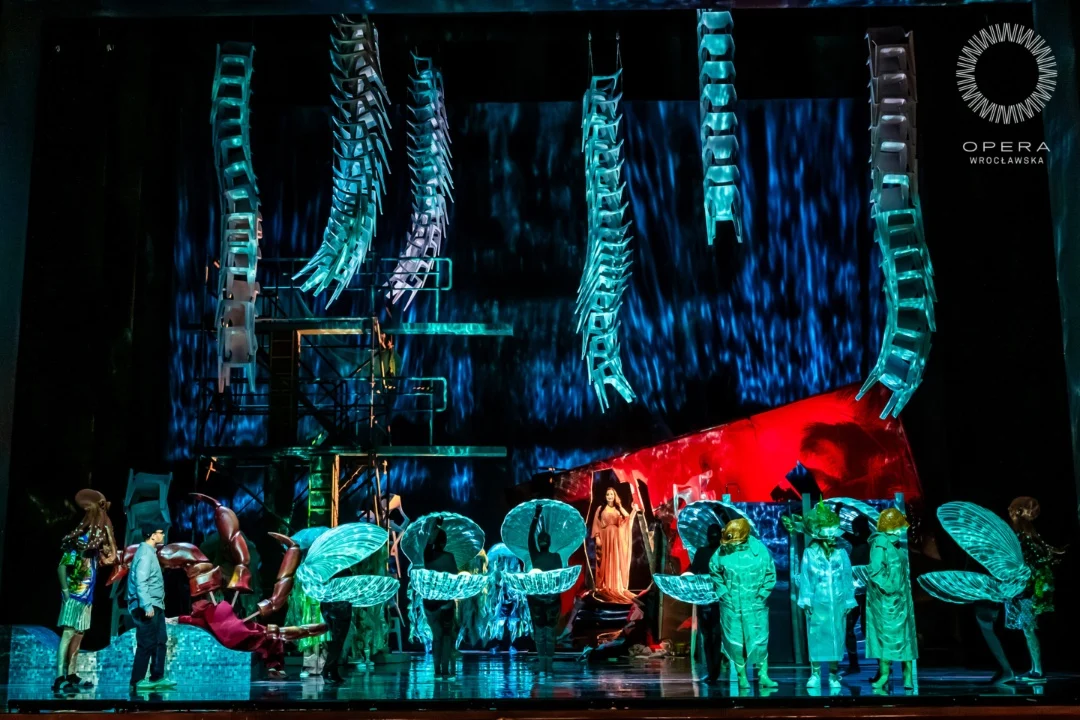
Opera Wroclaw’s recent production of Bohuslav Martinů’s “Juliette, or the Key to Dreams” offers a profound and visually arresting exploration of the fragility of memory and the elusive nature of identity. Premiering in Prague in 1938, just months before the dark clouds of war would descend upon Europe, Martinů’s opera, based on Georges Neveux’s surrealist play, transcends its historical context to deliver a timeless meditation on the human psyche. This production, helmed by stage director Barbara Wiśniewska, not only faithfully captures the opera’s dreamlike logic but elevates it through imaginative staging, compelling performances, and a musical interpretation that highlights Martinů’s distinctive modernist voice.
The opera’s premise is disarmingly simple yet profoundly unsettling. Michel, a Parisian bookseller, arrives in a desolate French seaside town haunted by an inexplicable affliction: its inhabitants suffer from pervasive amnesia, capable of recalling only a handful of minutes from their past. In this ephemeral reality, conversations become cyclical, personal histories are improvised daily, and the very fabric of existence is a provisional narrative. Michel, however, is an anomaly. He alone retains his memories, driven by the obsessive clarity of a hauntingly beautiful voice he heard years prior. This spectral melody has led him to this forgotten corner of the world, in pursuit of the woman whose voice it belongs to – Juliette. Their reunion, while seemingly destined, defies conventional romantic arcs, unfolding within the opera’s unique temporal and psychological landscape.
A Chronology of Disorientation: Martinů’s "Juliette" Through the Ages
Bohuslav Martinů, a prolific Czech composer who spent much of his adult life in exile, composed "Juliette, or the Key to Dreams" (originally "Julietta, an Opera in Three Acts") between 1935 and 1937. The opera premiered on March 16, 1938, at the National Theatre in Prague. This period was marked by increasing political instability in Czechoslovakia, with the Munich Agreement signed later that year, leading to the dismemberment of the country and the subsequent Nazi occupation. The opera’s themes of disorientation, fragmented reality, and the search for meaning in a chaotic world resonated deeply with its initial audiences, albeit perhaps subconsciously, amidst the prevailing anxieties.
Following its Prague premiere, "Juliette" was staged in Paris in 1939 and later in various European and American opera houses, though it has never achieved the widespread popularity of some of Martinů’s other works. Its complex libretto and unconventional narrative structure have often presented challenges for traditional opera productions. However, in recent decades, there has been a resurgence of interest in Martinů’s oeuvre, with opera companies increasingly recognizing the unique artistic merit and enduring relevance of "Juliette." Opera Wroclaw’s commitment to staging this work underscores a broader trend towards exploring less frequently performed yet artistically significant operas.
The Visual Landscape of a Dream: Wiśniewska’s Imaginative Direction
Stage director Barbara Wiśniewska masterfully embraces the opera’s inherent surrealism, translating Martinů’s psychological drama into a series of visually captivating and conceptually rich scenes. The production eschews linear narrative progression in favor of a fluid, dreamlike logic, where encounters repeat with subtle distortions, characters morph, and Juliette herself oscillates between tangible presence and ethereal mirage. This approach is vividly realized through Małko Prusak’s evocative set design and Natalia Kitamikado’s inspired costumes.
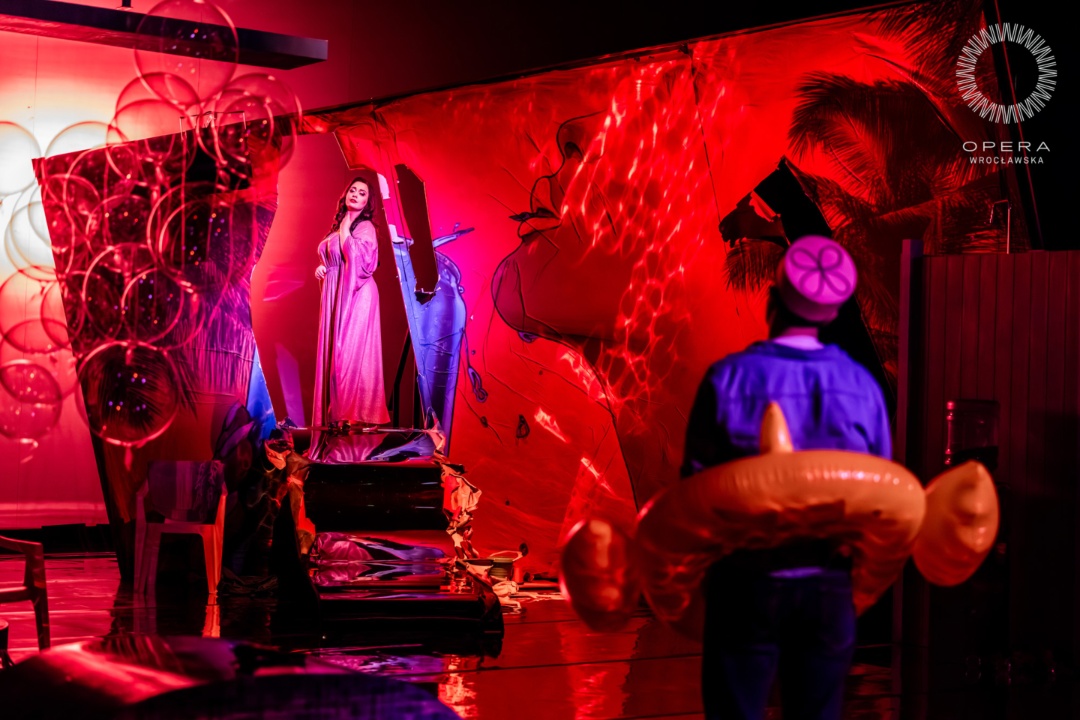
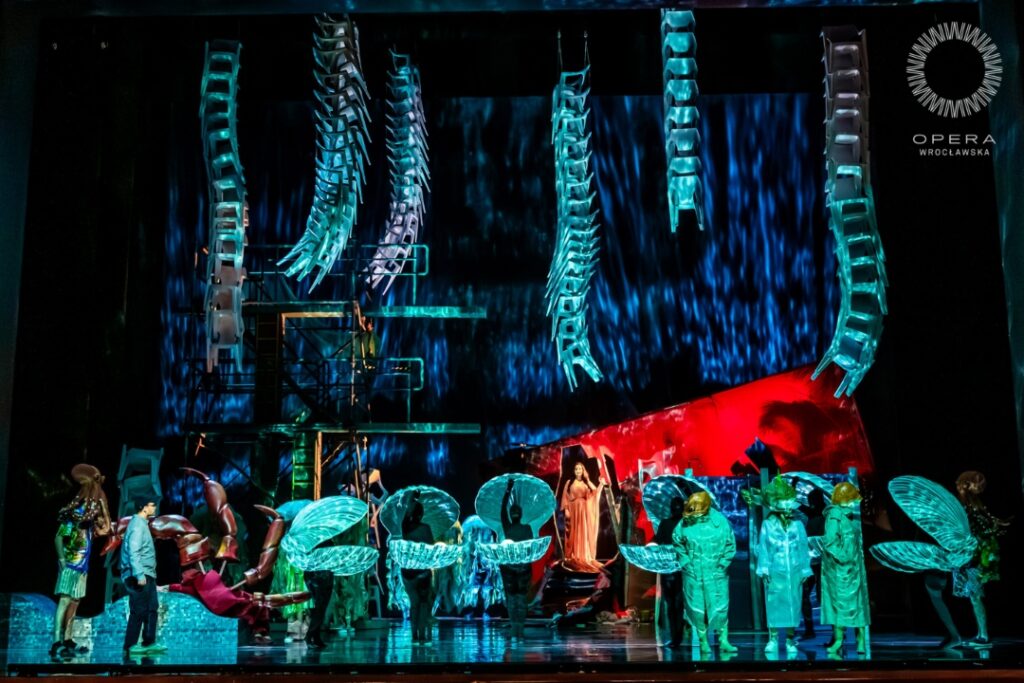
The stage design fluidly transitions between stark coastal landscapes, hinting at the opera’s seaside setting, and the fantastical depths of a surreal marine biotope. This is most dramatically illustrated by the unexpected "rain of green inflatable crocodiles," a bizarre yet fitting element that underscores the irrationality of the dream world. The inhabitants of this town are depicted as hybrid creatures, embodying the indistinguishable fusion of nature and imagination that defines their reality. This visual tapestry is not merely decorative; it serves as a potent symbol of a world where the boundaries of the tangible have dissolved.
Particularly in the second act, the production blossoms into a "voluptuous baroque theatre of dreams." This segment transforms into an "oceanic circus" of scenes, brimming with deliberately exuberant visual power. Audiences are treated to the spectacle of dancing oysters, a philosophizing red crab, long-tailed jellyfish, and shimmering sea stars. This deliberate excess, rather than being gratuitous, adheres to the internal logic of dreams, which are rarely timid or understated. Wiśniewska’s direction orchestrates this visual symphony with meticulous attention to movement, repetition, and subtle dislocations. Characters exchange identities, their functions blur, and their contours become indistinct, mirroring the instability of the characters’ inner lives. The ensemble, often performing multiple roles, navigates these shifts with remarkable precision, rendering palpable a world devoid of a stable center.
A Cast Navigating the Labyrinth of Memory
At the heart of the production, tenor Maciej Kwaśnikowski anchors the role of Michel with a performance characterized by lyrical clarity and a profound sense of existential drift. His near-constant presence on stage allows him to meticulously chart Michel’s unwavering pursuit of an idealized past and his increasing entanglement in the dreamlike fabric of the town. Kwaśnikowski’s portrayal captures the quiet desperation of a man clinging to memory in a world that has forgotten itself.
Kamila Dutkowska, as Juliette, embodies the opera’s central enigma. She is less a fixed character and more an elusive apparition, her warm soprano infusing the role with an intimacy that defies easy definition. Dutkowska skillfully navigates Juliette’s protean nature, shifting seamlessly from the serene Madonna to the seductive femme fatale and then to the approachable girl-next-door. This fluidity is essential to the opera’s premise, as Juliette herself embodies the elusive nature of desire and memory.
The supporting cast demonstrates impressive flexibility and alertness, adapting to the rapid shifts in character and identity with admirable skill. A notable performance comes from bass Grzegorz Szostak as "The Condemned," whose portrayal imbues the opera’s final scene with a disturbing gravity. Szostak’s commanding presence tips the dream toward a sense of inescapable entrapment, amplifying the tragic implications of Michel’s ultimate choice.
Musical Transparencies and Underlying Unease
Under the baton of conductor Mirian Khukhunaishvili, the score of "Juliette" emerged with striking transparency. Martinů’s musical idiom, which elegantly hovers between the iridescent textures reminiscent of Debussy and a sharper, rhythmically incisive modernity, demands a delicate balance. Khukhunaishvili and the Orchestra of the Opera Wroclaw achieved this equilibrium with fluid phrasing, preserving the subtle unease that permeates the work. The orchestra’s nuanced performance captured the delicate interplay of melodic fragments, dissonant harmonies, and rhythmic complexities that characterize Martinů’s distinctive voice.
Martinů’s compositional style in "Juliette" is often characterized by its atmospheric qualities and its ability to evoke a sense of psychological depth without resorting to overt melodrama. The score’s subtle dissonances and shifting harmonic landscapes perfectly mirror the opera’s exploration of fragmented memory and unstable reality. Khukhunaishvili’s interpretation highlighted these aspects, ensuring that the musical narrative remained both compelling and disorienting. The conductor’s sensitive handling of the orchestral textures allowed the audience to experience the full spectrum of Martinů’s musical language, from moments of ethereal beauty to passages of unsettling dissonance.
Wroclaw Opera’s Artistic Vision: A Bold Step Forward
The production of "Juliette" signals a compelling new artistic direction for Opera Wroclaw, particularly with the advent of its new artistic leadership at the start of the current season. General Director Agnieszka Franków-Żelazny, Music Director Mirian Khukhunaishvili, and Artistic Advisor Tomasz Konieczny have embarked on an ambitious path that prioritizes both artistic excellence and the exploration of diverse repertoire.
This staging of "Juliette" is more than a mere programmatic curiosity; it represents a persuasive argument for expanding the operatic canon beyond familiar works. Martinů, a composer whose career was significantly impacted by the tumultuous political circumstances of the 20th century, emerges through this production as a composer of remarkable modernity and distinctive artistic vision. His music, defying easy categorization, successfully arouses a palpable curiosity for further exploration. The opera’s intricate libretto, which delves into philosophical questions about the nature of reality, the construction of identity, and the power of longing, is matched by Martinů’s innovative musical language, which continues to captivate and challenge audiences.
The Broader Implications: Rediscovering a Modernist Master
Opera Wroclaw’s commitment to "Juliette" serves as a powerful reminder of the enduring significance of Bohuslav Martinů’s musical legacy. Often overshadowed by his contemporaries or by the political upheavals that marked his life, Martinů’s unique voice, blending Czech folk influences with cosmopolitan modernism, deserves greater recognition. His ability to craft psychologically nuanced and atmospherically rich operas like "Juliette" positions him as a vital figure in 20th-century operatic history.
The opera’s thematic resonance with contemporary anxieties about the nature of truth, the influence of digital realities, and the subjective experience of memory adds another layer of relevance. In an age where curated online personas and the ephemeral nature of digital information can blur the lines between reality and simulation, Michel’s struggle to hold onto authentic memory in a town of forgetful inhabitants strikes a chord. The production’s success lies in its ability to translate these complex ideas into a universally understandable operatic experience, one that is both intellectually stimulating and emotionally resonant.
The decision by Opera Wroclaw to champion "Juliette" is indicative of a broader trend within the opera world to engage with works that challenge conventions and offer fresh perspectives. By presenting this seldom-heard masterpiece with such artistic conviction, the company not only enriches its own repertoire but also contributes to a vital reassessment of Martinů’s place in the operatic canon. The production’s success is a testament to the vision of its creative team and the dedication of its performers, offering audiences a compelling argument for the continued exploration of groundbreaking works that push the boundaries of operatic expression. The ultimate choice of Michel, to remain within the dream, absorbed by his longing, serves as a potent metaphor for the seductive power of illusion and the profound dangers of mistaking desire for reality, leaving the audience with a lingering sense of profound, and perhaps eternal, suspension.