Johan Budi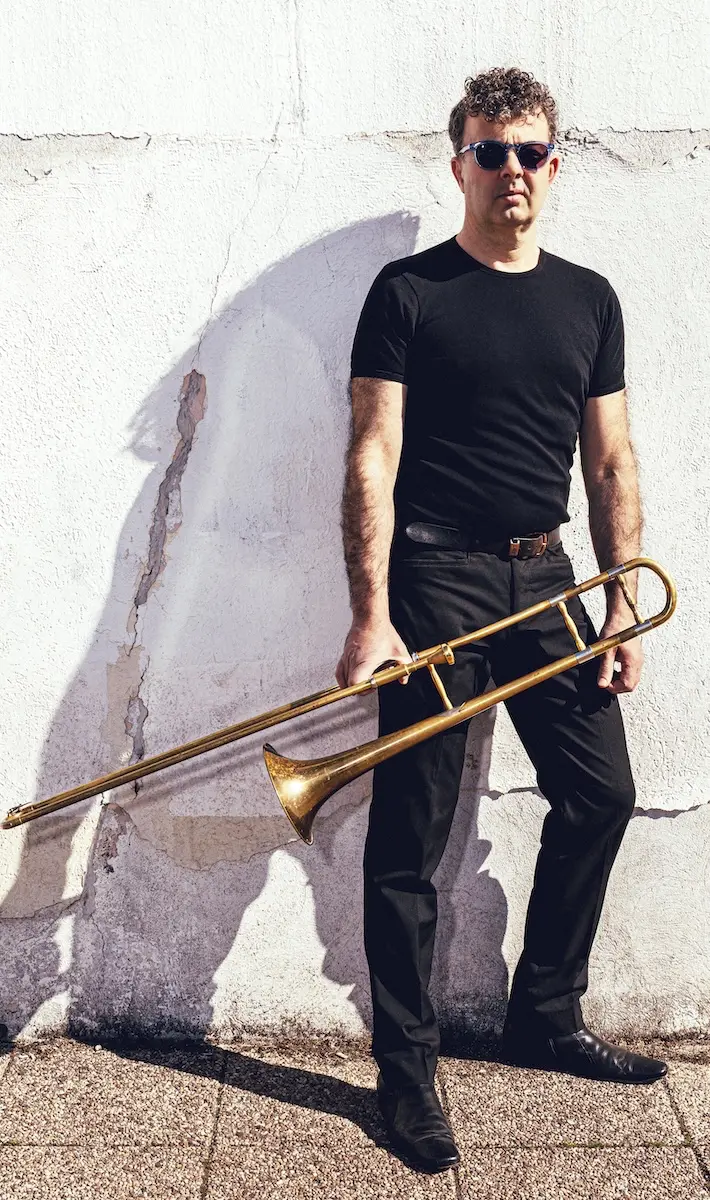
The Eclectic Fusion of Daniel Zimmermann’s Snapshots
French trombonist Daniel Zimmermann has long been recognized for his versatile approach to the brass idiom, but his latest release, Snapshots, marks a significant shift toward a more inclusive, multi-genre aesthetic. Recorded in January 2025 at the prestigious Studio Gil Evans in Amiens, the album is a product of Label Bleu, a label historically significant for its promotion of creative European jazz. Zimmermann’s compositions on this record depart from the rigorous intellectualism often associated with the Parisian avant-garde, opting instead for a "gorgeous blend" of country, folk, and French street music.
The technical foundation of the album is bolstered by a formidable quintet, featuring Elise Blanchard on bass, Julien Charlet on drums, and Pierre Durand on guitar. The inclusion of Thomas De Pourquery on alto saxophone and guest vocals by Sanseverino adds layers of textural variety that push the record beyond the boundaries of a standard jazz quintet. Industry analysts suggest that Zimmermann’s decision to incorporate vocal tracks—notably in the latter half of the discography—reflects a broader trend in European jazz to reach wider audiences without sacrificing artistic integrity. The tracks "Le Mieux Et Le Bien" and "Come Home" serve as anchors for the record, establishing a groove-oriented atmosphere that balances catchiness with sophisticated harmonic movement.
The inclusion of folk and country elements is particularly noteworthy. While the trombone is often relegated to either traditional New Orleans styles or complex bebop lines, Zimmermann utilizes the instrument’s lyrical capacity to mimic the "sway" of folk melodies. This approach has drawn comparisons to ensembles like 3 Leg Torso and Pink Martini, suggesting a cinematic quality to the arrangements. The production at Studio Gil Evans—named after the legendary arranger—further emphasizes this clarity, ensuring that the interplay between Durand’s guitar and Zimmermann’s trombone remains balanced and unobstructed.
Alain Métrailler and the Swiss-American Dialogue in Heights Prospection
While Zimmermann explores the rural and street-level sounds of France, Swiss saxophonist and composer Alain Métrailler looks toward the epicenter of the American jazz tradition for his latest project, Heights Prospection. Recorded at the Bunker Studio in New York City in March 2024, the album represents a significant investment in cross-continental collaboration. Métrailler assembled a high-profile rhythm section consisting of Elias Stemeseder on piano, Chris Tordini on contrabass, and Eric McPherson on drums—musicians who are deeply embedded in the modern New York scene.
The album, released under the Unit Records imprint, serves as a testament to the challenges and rewards of modern bandleading. Métrailler’s compositions are described as a "mix of various influences," blending European sensibilities with the aggressive, forward-leaning energy of American jazz. One of the standout features of the release is the guest appearance of Grégoire Maret on harmonica, particularly on the track "Flight Of The Humble Being." The harmonica adds a distinct "country vibe" that softens the modernistic edges of the record, providing a melodic counterpoint to Métrailler’s tenor saxophone.
However, Heights Prospection also serves as a case study in the complexities of group interplay. Critics have noted that while tracks like "Crispy" exhibit a clear, persistent groove and a sense of coherence, other sections of the album venture into more "vers libre" territory. This experimental approach occasionally leads to what some describe as a lack of spatial awareness or minor miscommunications between the players. Nevertheless, the technical proficiency of the ensemble—particularly the rhythm section’s ability to navigate Métrailler’s "raucous" shifts in "Jump Loud"—highlights the high level of musicianship required to execute such a demanding repertoire. The album’s recording timeline suggests a year-long post-production phase, common for independent releases aiming for international distribution.
Loren Stillman’s Seer and the Evolution of the Drumless Trio
In contrast to the quintet formats of Zimmermann and Métrailler, American saxophonist Loren Stillman opts for the intimacy of a trio on his new release, Seer. This project, recorded at EastSide Sound in New York in early February 2025, features the highly acclaimed pianist Craig Taborn and bassist Thomas Morgan. The absence of percussion is a deliberate aesthetic choice, aligning the album with the "chamber jazz" tradition popularized by figures such as Bill Evans and Lee Konitz.
Released on Newvelle Records—a label known for its high-fidelity recordings and emphasis on artistic curation—Seer focuses on the "unravelling" of tracks rather than immediate melodic gratification. Stillman, playing both alto and soprano saxophones, avoids the "noisy hornet’s buzz" often associated with modern horn players, favoring a "hum" that allows for a more organic, flowing narrative. The interplay between Stillman, Taborn, and Morgan is characterized by a "laidback quality," where no single instrument dominates the soundstage.
Data regarding the album’s structure indicates a focus on long-form development. Tracks like "Waterworks" and "Return" showcase Taborn’s ability to weave poetic passages through Stillman’s melodic lines. However, the drumless format presents unique challenges in maintaining momentum. While "Folk Song" is cited as a success in terms of direction, other tracks like "Mayday" have been described as "static," highlighting the delicate balance required when working with only three melodic/harmonic instruments. Despite these moments of stillness, the overall impact of Seer is one of profound intimacy, creating a "meditative landscape" that invites deep listening.
Comparative Chronology and Production Context
The production of these three albums provides a snapshot of the global jazz recording industry between early 2024 and early 2025.
- March 27, 2024: Alain Métrailler records Heights Prospection at Bunker Studio, New York. This session captures the high-energy "New York sound," utilizing veteran local sidemen to ground Métrailler’s Swiss compositions.
- January 2025: Daniel Zimmermann records Snapshots at Studio Gil Evans, Amiens. The timing suggests a deliberate effort to capture a "fresh" start to the year, with a focus on a "jovial" and "inclusive" sound.
- February 1-2, 2025: Loren Stillman records Seer at EastSide Sound, New York. The proximity in time to Zimmermann’s recording, yet the vast difference in style, underscores the diversity of the current jazz market.
The choice of labels—Label Bleu (France), Unit Records (Switzerland), and Newvelle Records (USA)—further illustrates the geographical distribution of modern jazz patronage. Label Bleu continues to benefit from French cultural subsidies that support "street music" and "folk" integrations, while Newvelle relies on a subscription-based model that prioritizes audiophile quality and minimalist arrangements.
Broader Impact and Implications for the Genre
The release of these three albums suggests several key trends for the future of jazz. First, there is a clear movement toward "genre-blind" composition. Daniel Zimmermann’s successful integration of country and folk into a trombone-led jazz record indicates that audiences are increasingly receptive to music that defies strict categorization. This "toothsome" quality, as described by early listeners, may be the key to jazz’s continued relevance in a fragmented digital streaming market.
Second, the "Swiss-New York" and "French-Amiens" connections highlight the importance of specific recording environments. The technical precision afforded by studios like Gil Evans and Bunker Studio allows for the nuanced capturing of acoustic instruments, which is essential for the "warm sound" found in Stillman’s trio or the "subtle variety" in Zimmermann’s quintet.
Finally, the critical reception of these works underscores the ongoing debate regarding "structure versus freedom." While Métrailler’s more "vers libre" sections may polarize some listeners, they represent the essential risk-taking that defines the genre. Conversely, Stillman’s meditative "Seer" and Zimmermann’s catchy "Snapshots" offer different paths—one toward internal reflection and the other toward outward celebration.
Collectively, these releases confirm that the state of contemporary jazz in 2025 is one of healthy experimentation. Whether through the inclusion of a harmonica in a New York quintet, the addition of French vocals to a trombone record, or the removal of drums from a saxophone trio, these artists are actively redefining the sonic boundaries of their craft. As these albums move into wider distribution through Label Bleu, Unit Records, and Newvelle, they are expected to find significant traction among both jazz aficionados and broader listeners seeking sophisticated, high-quality instrumental music.