Nana Wu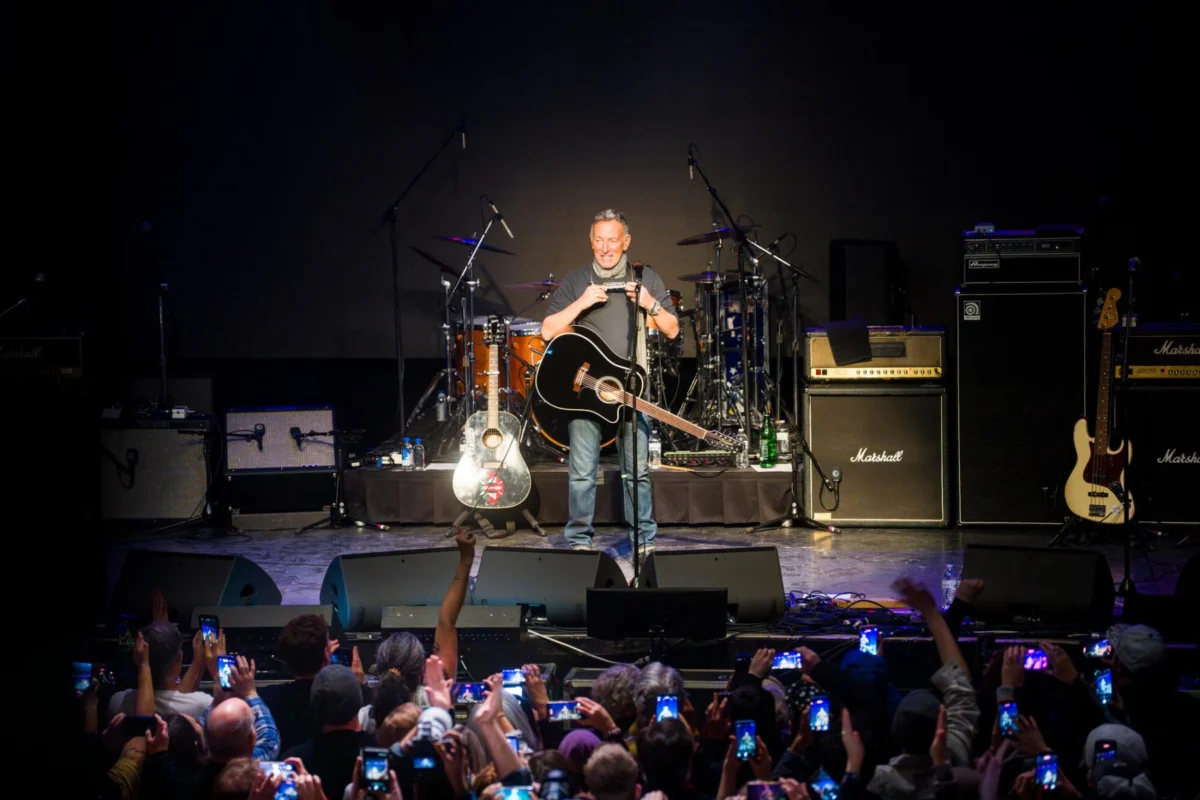
Minneapolis, MN – April 1, 2026 – Bruce Springsteen, affectionately known as "The Boss," launched his highly anticipated "Land of Hopes and Dreams American Tour" on Tuesday night, March 31, at the Target Center in Minneapolis. The concert marked not only the beginning of a major national tour but also a powerful continuation of Springsteen’s vocal advocacy against the Trump administration’s controversial immigration policies, particularly the recent, fatal ICE operations in Minnesota that have ignited widespread public outrage. The event served as a potent fusion of rock and roll spectacle and a poignant act of solidarity, underscoring Springsteen’s enduring role as a musical titan and a conscience of his generation.
A City on Edge: The Minneapolis ICE Controversy
The backdrop to Springsteen’s tour kick-off is a city and state still reeling from a series of harrowing incidents involving U.S. Immigration and Customs Enforcement (ICE) agents. January 2026 witnessed an unprecedented surge in ICE activity across Minnesota, culminating in two separate, tragic incidents in Minneapolis where U.S. citizens, Renée Good and Alex Pretti, were shot and killed by ICE agents. These events sent shockwaves through the community and ignited a fervent debate over immigration enforcement, civil liberties, and government accountability.
Renée Good, a mother of three, and Alex Pretti were both U.S. citizens residing in Minneapolis. Eyewitness accounts and video footage, widely circulated despite attempts by federal authorities to suppress them, painted a starkly different picture from the official narrative. The Trump administration, through spokespersons and official channels, swiftly moved to characterize Good and Pretti as "domestic terrorists," a label applied without substantive evidence or due process, designed to justify the agents’ actions and preempt public criticism. This characterization was met with fierce condemnation from civil rights organizations, local politicians, and community leaders who pointed to the lack of transparency and the apparent disregard for human life. The incidents quickly became a flashpoint, transforming Minneapolis into a crucible for the national conversation on immigration policy and the expansive powers of federal agencies.
The phrase "self-defense" became a contentious point in official statements, directly contradicted by the visual and testimonial evidence presented by numerous bystanders. These conflicting narratives fueled public distrust and galvanized a local resistance movement determined to uncover the truth and seek justice for the victims and their families. The political figures referenced in Springsteen’s anthem, Stephen Miller, a key architect of the Trump administration’s hardline immigration policies, and Kristi Noem, the conservative Governor of South Dakota often aligned with the administration’s stance, were seen by many as symbols of the policies and rhetoric contributing to the volatile climate in Minnesota. Their inclusion in the lyrics underscored the perceived top-down responsibility for the events unfolding on the "Streets of Minneapolis."
Springsteen’s Fiery Response: "Streets of Minneapolis"
In the immediate aftermath of Alex Pretti’s killing, Bruce Springsteen, a consistent and outspoken critic of the Trump administration, released his searing folk-rock protest anthem, "Streets of Minneapolis." The song, delivered with the raw emotion and narrative power characteristic of his legendary career, quickly became an unofficial anthem for the burgeoning resistance movement in Minnesota. Its lyrics directly challenged the official narrative, giving voice to the anguish and skepticism felt by many: "Their claim was self-defense, sir, just don’t believe your eyes," Springsteen sang, his voice resonating with a gravelly urgency. He continued, "It’s our blood and bones and these whistles and phones against [Stephen] Miller and [Kristi] Noem’s dirty lies."
The song was more than just a musical lament; it was a defiant call to action and a stark reminder of the power of art to articulate public sentiment and challenge authority. Springsteen, with his unparalleled ability to weave personal stories into universal truths, captured the essence of the tragedy and the subsequent governmental obfuscation. His choice to explicitly name figures associated with the administration’s immigration agenda was a bold political statement, leaving no ambiguity about where he stood. This directness harkened back to the protest songs of the 1960s, reaffirming music’s role as a vital tool for social commentary and dissent. "Streets of Minneapolis" rapidly gained traction, circulating widely on social media and independent news outlets, providing solace and a rallying cry to those impacted by the events.
Springsteen’s career, spanning over five decades, has often intertwined with American political and social narratives. From the working-class anthems of the 1970s and 80s to his more recent critiques of economic inequality and political polarization, he has consistently used his platform to champion the marginalized and question power. His decision to intervene so directly and swiftly in the Minnesota crisis was a testament to his deep-seated commitment to justice and his belief in the transformative power of collective action.
A Chronology of Solidarity: From First Avenue to the State Capitol
Springsteen’s engagement with the Minnesota resistance did not begin with the Target Center concert. It was a carefully orchestrated and deeply personal commitment that unfolded over several weeks.
January 2026: The tragic killings of Renée Good and Alex Pretti by ICE agents occur in Minneapolis, sparking widespread protests and national headlines. The Trump administration’s immediate labeling of the victims as "domestic terrorists" without evidence fuels public outrage and distrust.
Days After Pretti’s Killing: Bruce Springsteen releases "Streets of Minneapolis," a powerful protest song that immediately resonates with the local community and critics of the administration’s policies. The song’s raw lyrics become a focal point for discussion and dissent.
January 30, 2026: First Avenue Fundraiser: The legendary Minneapolis music venue, First Avenue, known for its deep roots in the city’s cultural history and its support for local artists and causes, hosted a crucial fundraiser. Organized by fellow activist musician Tom Morello of Rage Against the Machine fame, the event aimed to raise funds for the families of Alex Pretti and Renée Good. It was at this emotionally charged gathering that Springsteen gave "Streets of Minneapolis" its live debut. The performance, captured in striking photographs like the one depicting Springsteen on stage with his guitar, amplified the song’s message and solidified his commitment to the cause. Sharing the stage with Morello, an artist equally renowned for his political activism, created a powerful moment of musical solidarity, sending a clear signal of support to the grieving families and the broader resistance movement. The energy in First Avenue that night was described by attendees as electric, a potent mix of grief, defiance, and hope.
March 28, 2026: "No Kings Rally" in St. Paul: Just days before his tour launch, Springsteen returned to Minnesota for another significant appearance. He performed "Streets of Minneapolis" at the "No Kings Rally," a massive gathering held in front of the Minnesota State Capitol in St. Paul. This rally, attended by thousands, was a flagship event for the burgeoning anti-authoritarian and civil liberties movement in the state, specifically protesting the federal government’s overreach and the recent ICE actions. His presence elevated the rally’s profile, drawing national media attention and further cementing the song’s status as a powerful protest anthem. The sight of Springsteen performing against the backdrop of the Capitol building, a symbol of democratic governance, was a powerful visual testament to the ongoing struggle for justice and accountability.
March 31, 2026: Target Center Tour Kick-off: The "Land of Hopes and Dreams American Tour" officially commenced at the Target Center. This concert was not merely a standalone performance but the culmination of Springsteen’s dedicated engagement with the Minnesota crisis. It served as a grand platform to amplify his message to a national audience, weaving his political stance into the fabric of his expansive musical legacy. The strategic choice to launch the tour in Minneapolis was a deliberate and profound gesture of solidarity, transforming a typical tour opener into a significant cultural and political event.
The "Land of Hopes and Dreams" Tour: Music as a Message
The atmosphere at the Target Center on Tuesday night was palpable, charged with anticipation. Fans, many of whom had followed Springsteen’s career for decades, knew they were in for more than just a concert. They were witnessing an artist at the peak of his moral and musical power, using his unparalleled platform to address pressing societal issues. As a 20-time Grammy winner with countless Billboard Hot 100 hits, radio mainstays, and iconic deep cuts, Springsteen and the E Street Band have an embarrassment of riches to draw from for any setlist. However, given the profound events that had transpired in Minnesota throughout 2026, there was a widespread expectation that the opening night’s setlist would carry a heavier political weight than usual – an expectation that was indeed met.
The concert masterfully balanced Springsteen’s signature crowd-pleasing anthems with a poignant selection of politically charged songs. While the full setlist remains under wraps, reports from attendees confirmed that "Streets of Minneapolis" was a centerpiece, performed with an intensity that transcended a typical concert moment. It wasn’t just a song; it was a communal act of remembrance and defiance. This blend allowed Springsteen to both energize his loyal fanbase with beloved classics and challenge them with direct commentary on the current political climate. The E Street Band, renowned for their dynamic and powerful performances, provided the perfect sonic canvas for Springsteen’s dual mission, their instruments echoing the passion and urgency of his message.
The tour title itself, "Land of Hopes and Dreams," took on a renewed, perhaps more somber, significance in this context. While traditionally evoking a sense of American optimism and aspiration, in Minneapolis, it became a poignant question: could America still be a land of hopes and dreams for everyone, especially in the wake of such profound civil liberties violations? Springsteen’s performance offered a complex answer, acknowledging the pain and struggle while simultaneously igniting a spark of hope for a better future, a future where justice and empathy prevail.
Broader Implications and the Role of the Artist
Bruce Springsteen’s proactive and sustained engagement in the Minnesota ICE controversy highlights the critical role artists can play in shaping public discourse and galvanizing social movements. In an era often characterized by political polarization and the fragmentation of media, a figure of Springsteen’s stature possesses a unique ability to cut through the noise, draw attention to overlooked injustices, and foster a sense of collective purpose. His actions serve as a powerful reminder that celebrity, when wielded responsibly, can be a potent force for good.
The incidents in Minneapolis, brought to national and international attention by Springsteen and other activists, have forced a broader examination of immigration enforcement practices across the United States. They have fueled calls for greater accountability within federal agencies, stricter oversight of immigration operations, and a reassessment of the legal and ethical boundaries of government power. Civil liberties organizations, already vocal critics of the administration’s policies, found a powerful ally in Springsteen, whose reach extended far beyond traditional activist circles.
Moreover, the events in Minnesota and Springsteen’s response have reinvigorated the conversation about protest music in the 21st century. In a digital age where information spreads rapidly, a well-crafted song can quickly become a powerful emblem of resistance, uniting people across geographical and demographic divides. "Streets of Minneapolis" is poised to join the pantheon of iconic American protest anthems, a testament to its immediate relevance and its profound emotional impact.
The "Land of Hopes and Dreams" tour, with its politically charged opening, is set to be more than just a series of concerts. It is shaping up to be a rolling commentary on the state of the nation, a traveling forum for discussion, and a rallying point for those who believe in a more just and equitable America. As the tour progresses, it will undoubtedly continue to amplify the voices of those affected by the policies it critiques, carrying the story of Renée Good and Alex Pretti, and the broader struggle for civil liberties, to stages across the country.
Springsteen’s decision to launch his tour with such a strong political statement in Minneapolis underscores his unwavering commitment to using his voice for change. In a landscape often dominated by cynical headlines and political expediency, The Boss continues to stand as a beacon of integrity and passion, reminding us that music can indeed be a powerful engine for hope, even in the face of profound adversity. His tour promises to be a powerful journey, not just through his legendary catalog, but through the very heart of America’s ongoing struggle for its soul.