Kholidah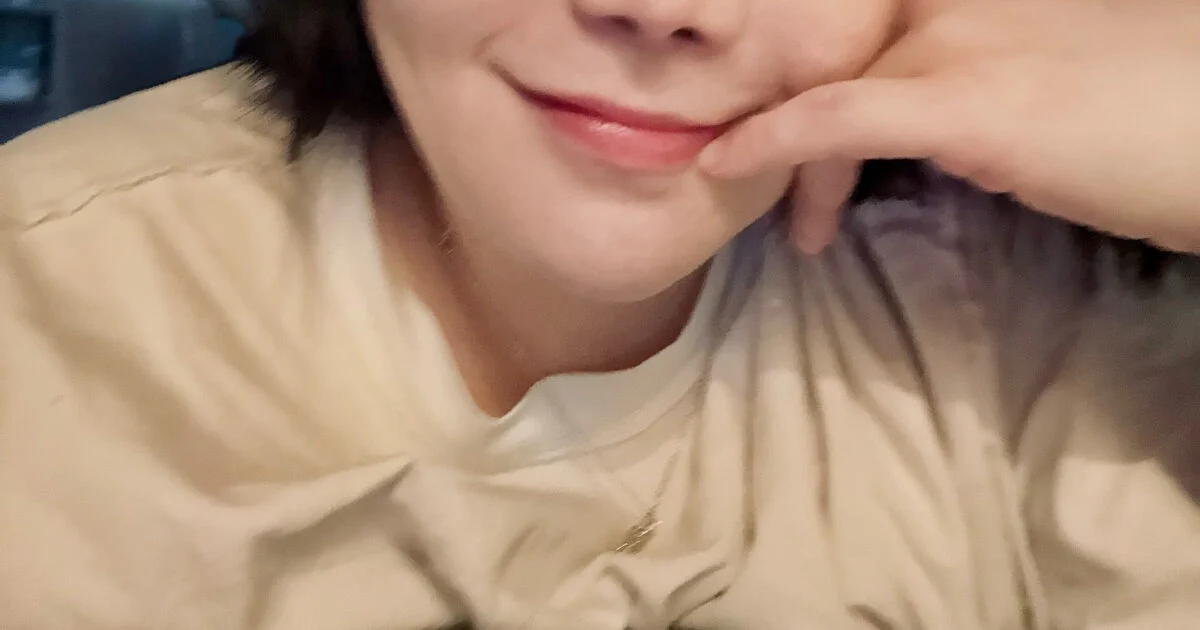
The television personality known as Amy, a United States citizen who gained fame in South Korea, has sparked significant public discourse following a series of recent statements made on her personal social media accounts. Breaking a period of relative silence since her most recent release from prison, the broadcaster has asserted that her past involvement with illicit substances was not entirely voluntary, claiming instead that she was the victim of a covert administration of drugs. These claims come as she announces a "new chapter" in her life, signaling an intent to return to the public eye while addressing the long-standing stigma surrounding her multiple criminal convictions.
On the first of the month, Amy took to her social media platforms to share her current mental and physical state with her followers. In a series of emotive posts, she expressed a desire to move past her tumultuous history. "Now begins a new chapter of my life," she wrote, adding that she is currently attempting to "smile and gather courage" despite the challenges she has faced. The broadcaster revealed that she had undergone a significant personal transformation, including weight loss aimed at returning to her former appearance, and described a process of overcoming the fear of public scrutiny. "I have picked myself up from when I was broken and am challenging everything," she stated, noting that she has begun venturing outside more frequently in an effort to regain her confidence.
However, the narrative of a fresh start was quickly met with skepticism from the public. When a social media user pointedly questioned her history of drug use and plastic surgery, Amy provided a response that has since gone viral. Denying the label of a "drug addict," she claimed that her initial exposure to certain substances was the result of foul play. "I’m not a drug addict," she replied. "Someone spiked a coffee I unknowingly drank. I hope the day comes when I can tell the full story." She further addressed rumors regarding cosmetic procedures, stating that she had ceased all plastic surgery and dermatological treatments years ago and has lived a reclusive lifestyle since her initial legal troubles.
A Chronology of Legal Infractions and Deportation
To understand the weight of Amy’s recent claims, it is necessary to examine the decade-long timeline of her legal issues within the South Korean justice system. Amy, whose legal name is Lee Yoon-ji, first faced criminal charges in 2012. She was arrested for the illegal use of propofol, a potent sedative and anesthetic. Following a high-profile trial, she was sentenced to eight months in prison, suspended for two years of probation. Under South Korean law, propofol is classified as a psychotropic drug, and its non-medical use is strictly prohibited.
Despite the leniency of her initial suspended sentence, Amy was involved in further legal complications in 2014. She was charged with the illegal use of zolpidem, a medication primarily used for the short-term treatment of sleeping problems. Because she was under probation at the time and held U.S. citizenship, the South Korean Ministry of Justice issued a departure order. This administrative action was based on the Immigration Control Act, which allows the government to deport foreign nationals who receive a suspended sentence or higher for drug-related crimes.
After exhausting her legal appeals against the deportation order, Amy was forced to leave South Korea in December 2015. She was banned from re-entering the country for a period of five years. During her time abroad, she resided primarily in the United States and China. Upon the expiration of her entry ban in January 2021, Amy returned to South Korea, expressing a desire to reunite with her family and live a quiet life.
However, her return was short-lived. In August 2021, only seven months after arriving back in the country, she was arrested again on charges of using methamphetamine. In this subsequent trial, the court took a harsher stance due to her status as a repeat offender. Despite her defense team’s arguments, she was sentenced to three years in prison. Having completed this term and being released, her recent social media activity represents her first major communication with the public since her latest incarceration.
Understanding the Substances: Propofol, Zolpidem, and Methamphetamine
The substances involved in Amy’s history carry different legal and medical implications in South Korea. Propofol, often referred to in local media as the "milk injection" due to its opaque appearance, became a focus of national attention in the early 2010s when several celebrities were found to be using it for non-medical purposes, such as combating insomnia or fatigue. The South Korean government reclassified propofol as a controlled psychotropic drug in 2011, making it the first country in the world to do so.
Zolpidem, while a common prescription sleep aid, is strictly regulated under the Narcotics Control Act. Unauthorized distribution or use without a valid prescription is a criminal offense. The most serious of Amy’s charges involved methamphetamine, a powerful central nervous system stimulant. Methamphetamine cases in South Korea are treated with extreme severity, often resulting in mandatory prison time even for first-time offenders if the quantity is significant or if there is an intent to distribute.

The broadcaster’s claim that she was "spiked" via coffee is a defense that has been seen in various high-profile drug cases globally, but it faces a high bar of proof in the South Korean legal system. To successfully argue "involuntary intoxication," a defendant must typically provide contemporaneous evidence, such as medical reports or witness testimony, which Amy suggests she may reveal in the future.
Public and Official Responses to the "Spiking" Allegation
The reaction from the South Korean public has been largely polarized. On one hand, a segment of her followers has expressed support for her recovery and her "new chapter." On the other hand, the prevailing sentiment on major Korean portals and community boards remains one of deep cynicism. Commentators have pointed out that her history involves three separate drug-related incidents over a period of nine years, making the claim of a single "spiked coffee" insufficient to explain the totality of her legal record.
Legal experts note that while her claims on social media do not hold legal weight in past settled cases, they could be an attempt to rehabilitate her public image. In South Korea, the "court of public opinion" is often as influential as the legal system for celebrities. A successful career "comeback" after a drug scandal is notoriously difficult in the K-entertainment industry, which maintains high moral standards for public figures.
While the Ministry of Justice and the prosecution have not issued formal statements regarding her social media posts—as they generally do not comment on the personal statements of individuals who have already served their sentences—the records of her trials remain public. In her 2022 trial for methamphetamine use, the court noted that her recidivism was a key factor in the three-year sentence, suggesting that the judiciary viewed her actions as a pattern of behavior rather than an isolated or accidental occurrence.
Broader Implications and the Stigma of Drugs in South Korea
Amy’s case highlights the broader societal issues regarding drug use and the treatment of foreign nationals in South Korea. The country has long prided itself on being "drug-free," although recent years have seen a sharp increase in drug-related arrests, particularly among the youth and the entertainment industry.
For a celebrity, a drug conviction often results in an indefinite ban from major broadcasting networks like KBS, MBC, and SBS. This "blacklisting" makes a return to the screen nearly impossible. Amy’s pivot to social media as a platform for her "new chapter" reflects a broader trend where disgraced public figures use independent digital channels to bypass traditional media gatekeepers.
Furthermore, the case underscores the strictness of South Korean immigration laws. As a U.S. citizen, Amy was subject to deportation—a penalty that a South Korean national would not face for the same crime. This has led to ongoing debates about the fairness of "double punishment" (prison plus deportation) for long-term residents who may have spent the majority of their lives in Korea but do not hold citizenship.
Conclusion: The Path to a "New Chapter"
As Amy attempts to navigate her life post-incarceration, the veracity of her "spiked coffee" claim remains a point of contention. Her assertion that "the truth will be revealed soon" suggests that she may be preparing a more formal or detailed account of her experiences, perhaps through a book or a documentary format, which has become a common path for individuals seeking to reframe their public narratives.
However, the road to redemption is fraught with obstacles. With a legal record that spans multiple substances and includes a forced deportation, Amy faces a public that is increasingly intolerant of drug-related scandals. Her success in this "new chapter" will likely depend not only on her ability to remain clear of further legal trouble but also on whether she can provide the "full story" she promised—and whether that story is supported by more than just personal testimony. For now, the former broadcaster remains a polarizing figure, standing at the intersection of celebrity culture, strict narcotics legislation, and the difficult process of social reintegration.