Nayara Elvina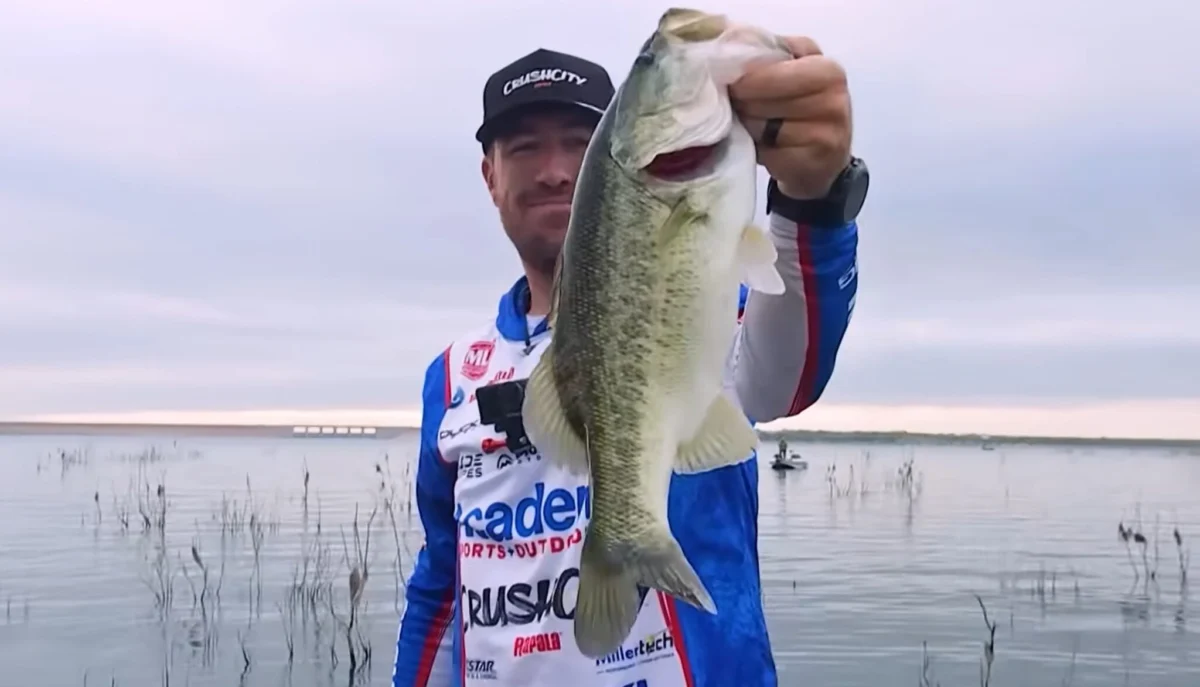
Professional bass fishing’s most consistent performer, Jacob Wheeler, has further solidified his legacy by securing his 11th Major League Fishing (MLF) Bass Pro Tour title during a high-stakes, two-lake challenge in Central Texas. The event, which pitted the world’s elite anglers against the legendary waters of O.H. Ivie and the tactical complexities of Lake Brownwood, showcased a diverse range of strategies necessitated by fluctuating water levels and varying stages of the bass spawn. Wheeler’s victory, punctuated by a final-day weight of 42 pounds, 13 ounces, underscores the tactical versatility required to succeed in the modern era of professional tournament angling, where technology and traditional woodcraft must be seamlessly integrated.
The tournament format presented a unique logistical and strategic hurdle: the field competed on O.H. Ivie for the qualifying and knockout rounds before the top 10 finalists transitioned to Lake Brownwood for the Championship Round. This shift required anglers to pivot from Ivie’s deep, flooded timber and potential for "legacy-class" trophy fish to Brownwood’s dock-heavy shorelines and rock-strewn points. While O.H. Ivie had been the center of the bass fishing world’s attention for several years due to its prolific production of double-digit bass, the tournament proved that consistency and adaptation across different water bodies remain the ultimate keys to a championship.
The Dual-Lake Challenge: Profiles of O.H. Ivie and Lake Brownwood
O.H. Ivie has recently ascended to the status of a premier "bucket list" destination for trophy hunters. Located on the Concho and Colorado Rivers, the reservoir has benefited from significant water level rises over the past decade, which submerged vast tracts of terrestrial vegetation, including saltcedar, mesquite, and various hardwoods. This "new lake" effect created a nutrient-rich environment and dense heavy cover that has fostered some of the fastest growth rates for Largemouth bass in the United States. In the current season alone, the lake has produced three fish weighing over 13 pounds, qualifying for the Texas Parks and Wildlife Department’s (TPWD) Toyota ShareLunker program. In previous years, the lake has yielded multiple specimens in the 14- to 16-pound range.
In contrast, Lake Brownwood, situated approximately 60 miles to the northeast, offers a more traditional Texas highland reservoir experience. While it lacks the sheer volume of double-digit monsters found in Ivie, it is a healthy fishery where 8-pound bass are common. The lake’s structure is defined by man-made features such as boat docks and retaining walls, alongside natural features like rocky bluffs and shallow pockets. The transition between these two lakes forced the Top 10 anglers to abandon their established patterns on Ivie and quickly decipher a new "bite" on Brownwood under the pressure of a live-broadcast championship finale.
Tournament Chronology and the Path to the Podium
The competition began with a grueling qualifying phase on O.H. Ivie. Anglers faced a lake that was "flooded" in more ways than one; the water levels had created a landscape where heavy cover existed in deep water, a phenomenon that challenged even those accustomed to northern deep-water fisheries. During the early rounds, the field dealt with bass in various biological stages, including pre-spawn, active spawning, and post-spawn, while a burgeoning shad spawn provided an additional early-morning window for reaction-bait success.
Jacob Wheeler established his dominance early at Ivie, utilizing a combination of flipping heavy cover and topwater tactics to punch an automatic ticket to the Championship Round. By winning his group’s qualifying round, Wheeler bypassed the Knockout Round, allowing him an extra day to scout and prepare for the final venue.
The Championship Round on Lake Brownwood saw a flurry of activity as the Top 10 anglers grappled with a significant shad spawn. This biological event, where Gizzard and Threadfin shad congregate near hard structures to spawn at dawn, often triggers a "feeding frenzy" among Largemouth bass. Anglers like Justin Lucas and Wesley Strader capitalized on this window using vibrating jigs and swim jigs, but it was Wheeler’s ability to transition from the morning flurry to a consistent "dock-and-drop-shot" pattern that ultimately secured his victory.
Technical Breakdown: Strategies of the Top 10 Finalists
The diversity of equipment and techniques used by the top finishers reflects the complexity of the Texas fisheries during the spring transition.
1. Jacob Wheeler (42-13)
Wheeler’s approach was a masterclass in versatility. On O.H. Ivie, he relied on flipping a Rapala Crush City Bronco Bug into dense submerged timber and utilized a hollow-body popping frog during low-light periods. Upon moving to Lake Brownwood, he pivoted to target boat docks. His primary tools for the win included a vibrating jig for the morning reaction bite and a finesse drop-shot rig to pick off pressured fish from dock pylons as the sun rose.
2. Justin Lucas (32-7)
After narrowly advancing through the qualifying rounds, Lucas found his rhythm on Brownwood. He focused heavily on the shad spawn, utilizing a Berkley swim jig around large boat docks and rocky bluffs. His secondary patterns involved a Berkley Power Hawg (green pumpkin) and a "dice bait" for technical finesse presentations, alongside a Berkley Swamp Lord frog for topwater opportunities.
3. Drew Gill (21-5)
Gill, a rising star known for his mastery of Forward-Facing Sonar (FFS), used technology to locate deep spawners on Ivie. On Brownwood, he adapted to a more structural approach, targeting channel swing docks and stumps. His primary producer was a Neko-rigged Big Bite Baits Nekorama worm, supplemented by a swim jig and a crankbait.
4. Wesley Strader (18-0)
Strader remained committed to a power-fishing approach, specifically the vibrating jig. He tailored his presentation to each lake by adjusting colors and trailers. On Ivie, a 3/8-ounce Z-Man Evergreen Jack Hammer in Clearwater Shad with a paddle tail trailer was his mainstay. On Brownwood, he switched to a more visible Chartreuse and White Jack Hammer paired with a Zoom Z-Craw Jr. trailer.
5. Mitchell Robinson (16-4)
The 20-year-old rookie secured his first career Top 10 by focusing on quality over quantity. Robinson targeted deeper structures with a Duo Realis Wriggle Crawler on a Neko rig, which accounted for two 7-pound-plus bass. He maintained this finesse approach on Brownwood, mixing in a ChatterBait around boat docks.
6. Michael Neal (11-14)
Neal employed a "tale of two lakes" strategy. He fished a wacky-rigged 5-inch Yamamoto Senko around shallow cover on Ivie. On Brownwood, he shifted to a SPRO Baby Fat John squarebill crankbait to target shallow rock points, later incorporating a spinnerbait during the final hours of the Championship Round.
7. Alton Jones Jr. (7-8)
A Texas native, Jones Jr. utilized his local knowledge to target brush piles on Ivie using a Geecrack SAF Stick and LiveScope technology. On Brownwood, he transitioned to boat docks and rock piles, utilizing an unreleased Geecrack swimbait and a vibrating jig.
8. Zack Birge (6-12)
Coming off a win in Stage 3, Birge opted for a simplified approach. He used a 3/8-ounce ChatterBait with a Missile Baits Spunk Shad trailer as his primary weapon on both lakes, supplemented by a 5/16-ounce swim jig in shad patterns.
9. Brent Ehrler (4-11)
Ehrler targeted steeper transition banks near shallow pockets. His arsenal included a 6-inch Yamamoto Senko for pitching, a Z-Man Jack Hammer, a Lucky Craft 1.5 squarebill, and a 5.8-inch Big Bite Baits Pro Swimmer swimbait.
10. Adrian Avena (2-7)
Avena’s strategy involved a morning flipping bite followed by reaction baits. On Ivie, he used a power drop-shot with a prototype 6-inch Berkley Lab Series worm. On Brownwood, he utilized a Berkley CullShad swimbait and a floating worm to target the shad spawn.
Environmental Analysis and Biological Factors
The success of the field was largely dictated by their ability to read the "shad spawn." In many Southern reservoirs, when water temperatures stabilize in the mid-to-upper 60s, shad begin their reproductive cycle. This typically occurs on hard surfaces—rip-rap, dock floats, and timber—in the very early morning. For professional anglers, this creates a high-pressure window where the "weight" can be stacked quickly. However, once the sun rises and the shad move deeper, the bass often shift their behavior, requiring anglers to slow down and use finesse tactics like Neko rigs or drop-shots.
Furthermore, the "heavy cover" at O.H. Ivie represented a significant technical challenge. Unlike the sparse brush found in many lakes, Ivie’s submerged forests are dense. This necessitates heavy braided lines and high-speed reels to extract large bass before they can wrap the line around limbs. The fact that several 8-pounders were landed during the event, but no double-digit fish were recorded in the Top 10’s final tally, suggests that the larger specimens may have moved into the "post-spawn funk," a period of lethargy following the stress of spawning.
Broader Implications for the Sport
Jacob Wheeler’s 11th victory is more than just another trophy; it is a statistical anomaly that highlights the current era of "power-finesse" fishing. Wheeler’s ability to win on diverse water bodies—from the Great Lakes to the Texas brush—demonstrates that the modern professional must be a generalist. The integration of Forward-Facing Sonar remains a point of discussion within the industry, as seen with Drew Gill’s performance, but the results from Brownwood also proved that traditional "bank-beating" and dock-shooting remain viable, and often necessary, paths to victory.
The MLF Bass Pro Tour’s decision to utilize a two-lake format also reflects a growing trend in tournament design aimed at testing the adaptability of the anglers. By removing the "home field advantage" that can come from spending a week on a single body of water, the format ensures that the winner is the individual most capable of making real-time adjustments.
As the tour moves forward, the data gathered from O.H. Ivie and Lake Brownwood will serve as a blueprint for anglers nationwide. The efficacy of specific baits, such as the Rapala Crush City line and various vibrating jig configurations, will likely see an uptick in consumer interest, further driving the multi-billion dollar sportfishing economy. For now, the story remains the same: the Lone Star State provided a formidable stage, but Jacob Wheeler remains the man to beat on the professional circuit.