Reynand Wu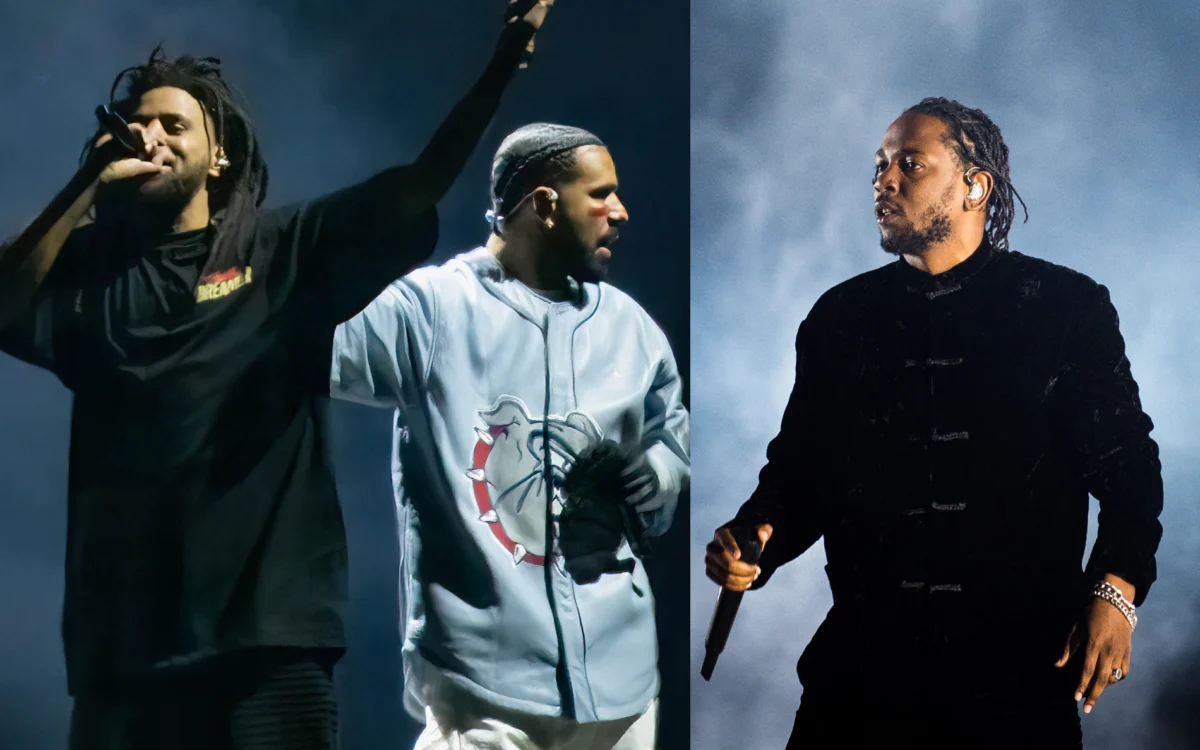
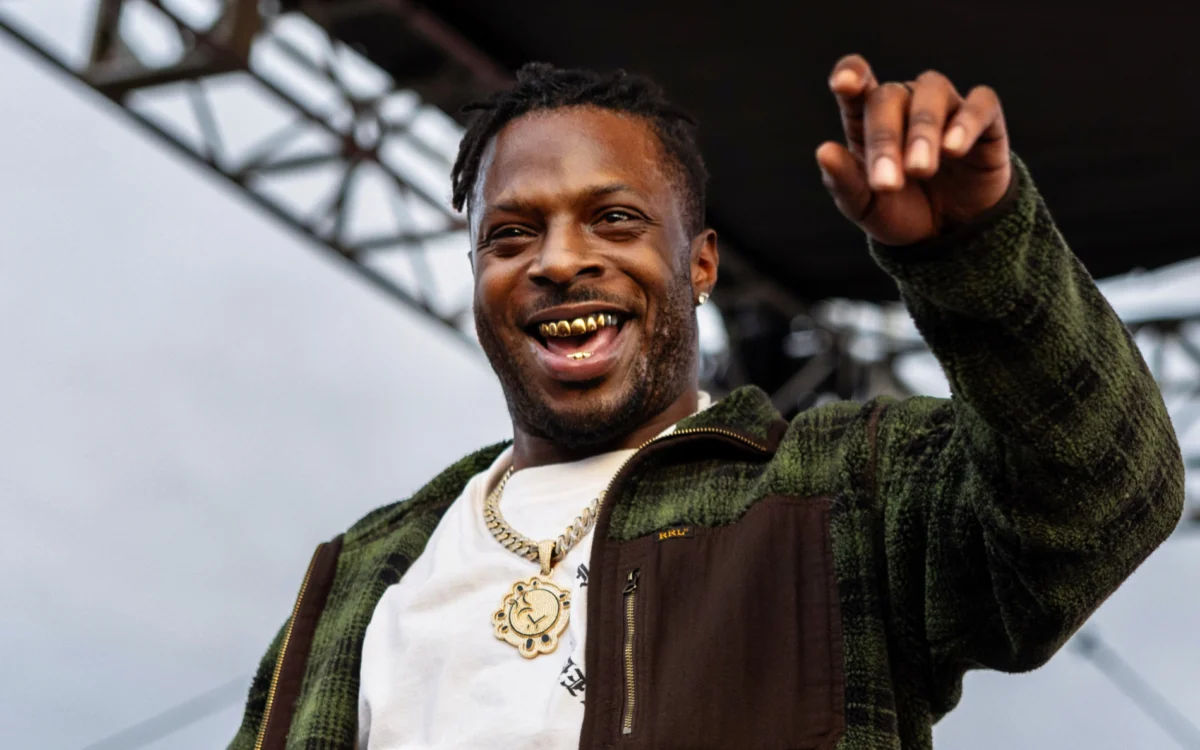
J. Cole, the acclaimed Dreamville rapper, has offered unprecedented clarity on several pivotal moments shaping the contemporary hip-hop landscape, including the true origins of his collaboration with Drake on "First Person Shooter" and the dramatic derailment of his ambitious plans for the 2024 Dreamville Festival. Speaking candidly on Carmelo Anthony’s 7PM In Brooklyn podcast as part of his press circuit for the anticipated album The Fall-Off, Cole meticulously dismantled prevailing rumors, providing an intricate look into the behind-the-scenes dynamics involving himself, Drake, and Kendrick Lamar, particularly against the backdrop of their highly publicized and contentious rivalry. His revelations underscore the complex web of relationships, artistic pressures, and strategic decisions that define the upper echelons of the music industry.
The Genesis of "First Person Shooter": A Shifting Collaboration
One of the most persistent rumors within the hip-hop community centered on the notion that Drake had initially envisioned "First Person Shooter," a track from his chart-topping 2023 album For All the Dogs, as a monumental collaboration featuring all three titans: Drake, J. Cole, and Kendrick Lamar. This hypothetical scenario had fueled extensive fan speculation, particularly given the historical narrative positioning them as the "Big Three" of their generation. However, Cole directly refuted this specific claim, offering a more nuanced account of the song’s genesis.
According to Cole, Drake’s initial aspiration for the track did indeed involve Kendrick Lamar, but not himself. "I’m not gonna say we were all supposed to be [on the song]. How it came to me was, before that beat ever made it to me, I think Drake wanted that to be a him and [Kendrick] song," Cole explained. This revelation significantly alters the perceived timeline and intent behind one of 2023’s most prominent rap collaborations. Cole further elaborated on what he interpreted as the subsequent pivot, suggesting that Kendrick Lamar might have been unresponsive or slow to commit to the feature. "My interpretation is like… maybe when it wasn’t moving fast enough or he wasn’t getting the response he wanted, maybe he was like, ‘Let me hit Cole,’" Cole recounted, crediting producer Boi-1da for potentially advocating for his inclusion. "’Cause I think Boi-1da was pushing him like, ‘Bro, you need to hit Cole.’"
This sequence of events positions J. Cole as a second choice, albeit a highly coveted one, for the track. Despite this, Cole embraced the opportunity with characteristic dedication. He revealed the immense creative pressure he felt to deliver a verse worthy of the moment. "I never looked at that song like it was going to be all of us. I thought it was me and Drake. And I just had the beat; there was nothing on it. And I felt mad pressure ’cause I wanted to come through for him. I had to write that verse several times." The resulting collaboration was a commercial success, with "First Person Shooter" debuting at number one on the Billboard Hot 100, marking the first time both Drake and J. Cole achieved this milestone as co-leads. Cole’s verse was widely lauded by critics and fans alike, solidifying his reputation for lyrical prowess and meticulous craftsmanship. The track’s success further cemented the commercial viability and critical acclaim of a Drake-Cole pairing, even if it wasn’t the initially rumored "Big Three" ensemble.
Unpacking the "Big Three" Dynamic: A History of Anticipation
The concept of a "Big Three" comprising Drake, J. Cole, and Kendrick Lamar has been a dominant narrative in hip-hop for over a decade. Emerging in the late 2000s and early 2010s, these three artists quickly ascended to unprecedented levels of commercial success and critical acclaim, each cultivating a distinct artistic identity while consistently pushing the boundaries of the genre. Drake, with his melodic trap-infused sound and introspective narratives, became a global pop culture phenomenon. Kendrick Lamar garnered Pulitzer Prize recognition for his profound lyricism and conceptual albums, hailed as a voice of a generation. J. Cole, often celebrated for his raw authenticity and socially conscious storytelling, built a loyal fanbase through his "no features" ethos and consistent chart performance.
Despite their individual successes, the prospect of a direct, extensive collaboration between all three remained largely elusive, fueling both anticipation and a subtle undercurrent of competitive tension. While Drake and Kendrick had collaborated early in their careers (notably on "Buried Alive" from Drake’s Take Care), and Drake and Cole shared several tracks ("Jodeci Freestyle," "In the Morning," and later "First Person Shooter"), a Kendrick-Cole joint track remained a holy grail for many fans. The perceived rivalry, often framed as a friendly competition for the "King of Rap" title, intensified public interest in any potential interaction, be it collaborative or confrontational. Cole’s revelation about "First Person Shooter" now adds another layer to this history, suggesting a deliberate attempt by Drake to bridge the gap with Kendrick prior to the eventual escalation of their beef. It also highlights the strategic maneuvering and individual artistic choices that have shaped their careers, often in parallel, sometimes intersecting, but rarely fully converging as a triumvirate.
The Dreamville Festival Vision: A Faction-Free Gathering Derailed
Beyond the studio revelations, J. Cole also unveiled ambitious plans for the 2024 Dreamville Festival that were ultimately shattered by the eruption of the Drake-Kendrick Lamar beef. Cole, who curates and headlines the annual festival in his home state of North Carolina, had a vision of bringing both Drake and Kendrick Lamar to the stage, creating a historic moment of unity that would transcend any perceived rivalries.
"I was trying to get Kendrick to come, too. That was my plan for Dreamville Fest that year," Cole disclosed. He had even shared this aspiration with Drake during their "It’s All A Blur – Big As The What?" tour. "When we were on tour I was like, ‘Yo, it’d be crazy if both of y’all came out at Dreamville Fest.’" This intention paints a picture of Cole as an aspiring peacemaker or at least a facilitator of a powerful, unifying moment in hip-hop. The idea was to present a united front, celebrating the collective artistry of the three biggest names in rap. However, the subsequent unraveling of events rendered this vision impossible. "Mind you, I never got a chance to [ask Kendrick]. I told Drake. Drake knew that that was something that I wanted to happen. When we were on tour I was like, ‘Yo, it’d be crazy if both of y’all came out at Dreamville Fest.’ It’s silly now to say. It’s like, ‘Nah, n*gga! There were other plans in the works.’"
Drake’s Calculated Absence and J. Cole’s Pivotal Apology
The escalating conflict between Drake and Kendrick Lamar directly impacted the Dreamville Festival, leading to Drake’s eventual withdrawal. Initially, there were rumors circulating about Drake’s absence being due to a disagreement with Cole himself. However, Cole clarified that Drake’s decision was a considerate move to prevent putting Cole in an untenable position on his own stage, especially given Cole’s fleeting, yet public, involvement in the beef.
"He could tell, when me and him talked, that my heart wasn’t equivalent to his," Cole recalled, referring to the difference in their respective approaches to the burgeoning lyrical war. "So he was like, ‘Yo, I didn’t want to come down there and put you in a situation on that stage and say some shit that you would have to stand behind.’" Cole expressed gratitude for Drake’s understanding, acknowledging that it created the necessary space for him to address his own misstep. "And I was like, ‘Thank you!’ Because it left the space for me to [do] what I was supposed to do."
What Cole "was supposed to do" was issue a public apology for his diss track, "7 Minute Drill," which he had released just days prior to the festival on his mixtape Might Delete Later. At the Dreamville Festival, Cole took to the stage to express profound regret for engaging in the lyrical battle, particularly for criticizing Kendrick Lamar’s discography. He publicly retracted the song, stating it felt "the weakest" and "the most cornball thing" he had ever done. This unprecedented public apology by a major artist, especially for a diss track, sent shockwaves through the hip-hop community. Cole’s transparency about Drake’s decision to withdraw now provides further context to the emotional weight of that moment, illustrating how the broader conflict directly influenced his personal and professional decisions.
The Catalytic Spark: Kendrick Lamar’s "Like That" and the Escalation of Rivalries
J. Cole’s involvement in the Drake-Kendrick Lamar feud, though brief, became a significant talking point. The catalyst for the entire modern beef can be traced back to Kendrick Lamar’s verse on Future and Metro Boomin’s track "Like That," released in late March 2024. In this verse, Kendrick explicitly dismissed the "Big Three" narrative, declaring himself superior to both Drake and J. Cole, stating, "Motherf* the Big 3, n**, it’s just Big Me." He also directly challenged Drake’s assertion that he, Drake, was "the greatest rapper of all time" from "First Person Shooter."
Kendrick’s aggressive stance immediately ignited a lyrical war. Drake responded first with the leaked track "Push Ups" and later with "Taylor Made Freestyle" (which controversially used AI-generated vocals of Tupac Shakur and Snoop Dogg). This intense exchange put pressure on J. Cole, who had been included in Kendrick’s challenge. Cole’s response, "7 Minute Drill," appeared on his surprise mixtape Might Delete Later in early April. In the track, Cole critiqued Kendrick’s recent album output and implied a decline in his artistic impact. However, within days of its release and just before his headlining Dreamville Festival performance, Cole publicly apologized and removed the song from streaming platforms, effectively withdrawing from the battle. His candid admissions now shed light on the internal struggle that led to both the diss track and its subsequent retraction.
J. Cole’s Brief Foray into Battle Rap: Pressure and Preservation
Cole’s press run has been marked by his remarkably open discussions about his motivations behind "7 Minute Drill" and his subsequent apology. In an interview with Cam’ron, he admitted that his decision to release the diss track was largely driven by a feeling of immense external pressure to respond to Kendrick’s "Like That" verse. His primary concern was preventing the escalating beef from overshadowing the carefully planned rollout for The Fall-Off, his highly anticipated album, which he had been meticulously crafting for years.
"There wasn’t any disrespect in [Kendrick’s verse]!" Cole stated, emphasizing that he didn’t perceive Kendrick’s challenge as a personal attack but rather as a strategic move within the competitive rap landscape. "My feeling was, ‘F!’ Because now I know this [album] that I’ve been working on for eight years, plus this other [mixtape, Might Delete Later*] that I did as a set-up, n*** ain’t gonna never let me put that out until I address this." This reveals Cole’s pragmatic approach, prioritizing his long-term artistic vision over immediate engagement in a beef that he seemingly felt was not his to fight.
He further elaborated on his mindset during the creation of "7 Minute Drill": "There was no malice in my heart… I [was] like, ‘Let me say just enough to where it looks like I said something.’ Everything I’m saying, I know and he knows, it’s all survivable. I’m not hitting him with no fatal blows." This admission underscores his discomfort with the confrontational nature of battle rap and his desire to navigate the situation with minimal lasting damage, both to his relationship with Kendrick and to his own artistic integrity. His quick retraction and apology, therefore, were not just a sign of humility but a strategic move to redirect focus back to his music and maintain his carefully cultivated public image as a thoughtful and introspective artist, rather than a participant in prolonged lyrical warfare.
Implications for Hip-Hop’s Elite: Reshaping Narratives and Futures
J. Cole’s recent revelations carry significant implications for the hip-hop landscape, particularly concerning the dynamics between its most prominent figures. His candidness has pulled back the curtain on the internal pressures and calculations that inform artistic decisions at the highest level.
Firstly, the "First Person Shooter" revelation reframes Drake’s relationship with Kendrick Lamar, suggesting an attempt at collaboration before the animosity took root. It paints Drake as an artist initially seeking to unite rather than divide, at least in a musical context. This historical detail adds complexity to the ongoing narrative of their rivalry.
Secondly, Cole’s detailed account of the Dreamville Festival plans and Drake’s withdrawal highlights the profound impact of the beef on broader industry events and artist relationships. It demonstrates how personal conflicts among leading artists can ripple through major cultural events, forcing difficult choices and altering carefully laid plans. Cole’s apology, now understood with the added context of Drake’s empathetic decision, further cements his unique position in hip-hop – an artist willing to admit fault and prioritize peace over prolonged conflict, even at the cost of perceived "strength" in a battle. This move, while initially debated, has largely solidified his reputation as a principled artist.
Thirdly, Cole’s explanation for "7 Minute Drill" provides valuable insight into the immense pressure artists face from fan expectations and industry narratives. It underscores the difficulty of remaining authentic while navigating the demands of public perception and album rollouts. His decision to step back from the beef, rather than escalate it, may set a precedent for future instances where artists are drawn into conflicts they would prefer to avoid.
Looking Ahead: The Lingering Echoes of a Modern Hip-Hop Saga
While J. Cole has largely exited the immediate fray, the broader conflict between Drake and Kendrick Lamar has continued to dominate headlines, involving a rapid-fire exchange of increasingly personal and scathing diss tracks ("Euphoria," "6:16 in LA," "Family Matters," "meet the grahams," "Not Like Us," "The Heart Part 6"). Cole’s revelations now serve as a poignant prologue to this unprecedented lyrical war, illustrating the pre-existing tensions and missed opportunities for unity.
As The Fall-Off approaches, J. Cole’s focus remains firmly on his music. His press run has not only promoted his upcoming work but also provided an invaluable public service by demystifying some of the most talked-about events in recent hip-hop history. His honesty offers a rare glimpse into the human element behind the headlines, reminding audiences that even at the pinnacle of success, artists grapple with complex choices, creative pressures, and the desire to maintain integrity amidst a highly competitive and scrutinized environment. The full impact of these revelations on the legacies of Drake, Kendrick Lamar, and J. Cole, as well as on the future of hip-hop collaborations, will continue to unfold, but Cole’s candidness has undoubtedly enriched the public understanding of this pivotal era.

![Sijya announces Leather and Brass [Retrofitted] EP, shares Do I Know [Rachika Nayar Edit]: Listen](https://empire-music.net/wp-content/uploads/2026/09/sijya-announces-leather-and-brass-retrofitted-ep-shares-do-i-know-rachika-nayar-edit-listen.webp)