Johan Budi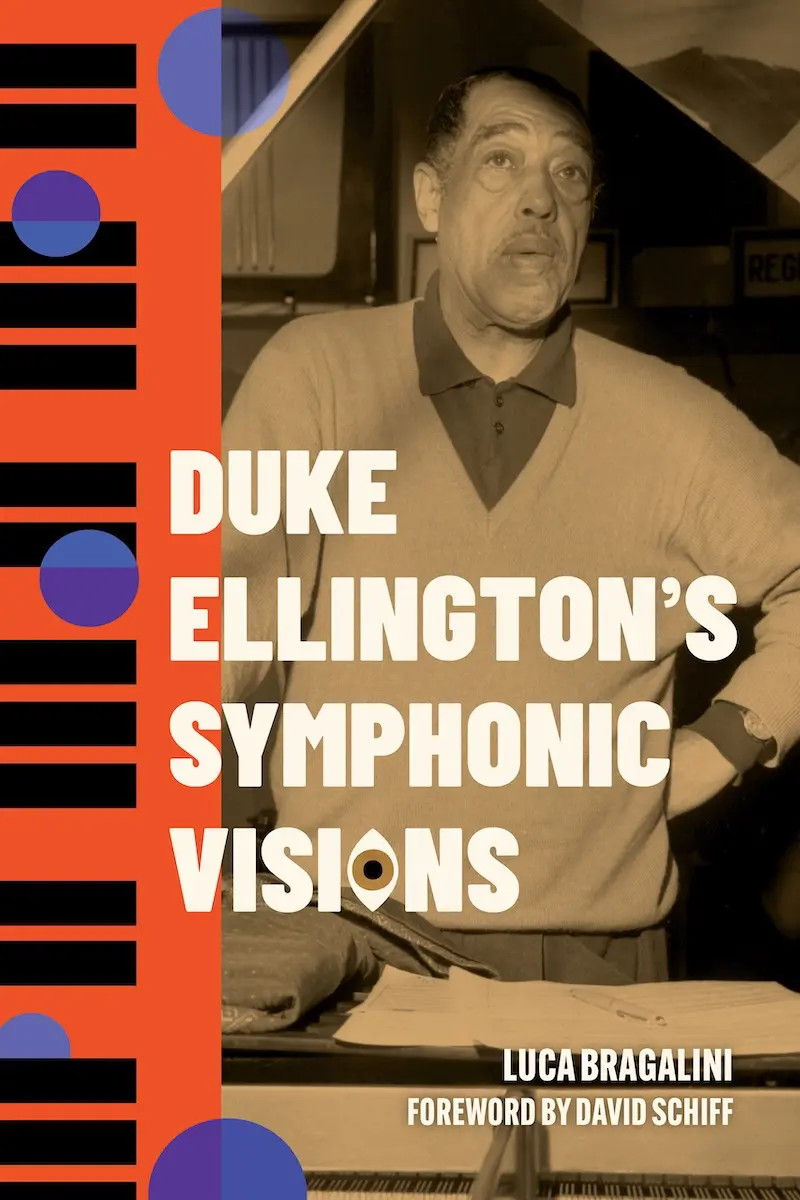
The release of Luca Bragalini’s Duke Ellington’s Symphonic Visions marks a significant milestone in the academic and musicological study of one of America’s most prolific composers. Originally published in Italian in 2025 and recently translated into English by the University Press of Mississippi, the work offers an exhaustive, interdisciplinary examination of Edward Kennedy "Duke" Ellington’s foray into extended symphonic compositions. Bragalini, a renowned musicologist and academic historian, provides a forensic analysis of Ellington’s attempts to bridge the gap between the jazz idiom and the European symphonic tradition, focusing on works that were often performed by major European orchestras in both live and studio environments.
The book arrives at a time when musicology is increasingly looking toward "Third Stream" music—the synthesis of classical and jazz—to understand the full scope of 20th-century artistic evolution. Bragalini’s research delves into the specific recordings and scores that defined Ellington’s later career, specifically those captured during his tenure with Frank Sinatra’s Reprise label in the early 1960s. By scrutinizing works such as Night Creature, Harlem, and the posthumously completed Three Black Kings, Bragalini aims to elevate Ellington from the status of a legendary bandleader to that of a premiere symphonic architect.
The Evolution of Ellington’s Extended Works
While Duke Ellington is most commonly associated with the three-minute masterpieces of the swing era, his ambition consistently reached toward larger, more complex forms. Bragalini’s study highlights the 1963 recording sessions that were eventually released on Sinatra’s Reprise label, now accessible to modern audiences through the Rhino CD-set, Duke Ellington: The Reprise Studio Recordings.
Among the primary subjects of Bragalini’s analysis is Night Creature, a three-movement suite that Ellington described as an attempt to depict the "jazz-inclined" creatures of the night. Bragalini provides a detailed breakdown of how Ellington integrated the jazz rhythm section with the lush textures of a full symphony orchestra. Similarly, the book examines Non-Violent Integration, a two-movement work that reflects Ellington’s preoccupation with social justice through musical harmony, and La Scala, a piece named after the legendary Milanese opera house where Ellington’s symphonic visions were frequently realized.
Perhaps the most significant piece discussed is Harlem, a 14-minute tone poem originally commissioned by Arturo Toscanini in 1950. Bragalini treats Harlem as the pinnacle of Ellington’s descriptive writing, a work that functions as a "musical map" of the African American experience in New York. The author also provides a deep dive into what he terms "prismatic music," specifically Black, Brown and Beige and Three Black Kings, the latter being a tribute to Balthazar, Solomon, and Martin Luther King Jr., which Ellington was working on at the time of his death in 1974.
Historical Context: The Harlem Renaissance and the Black Church
To understand the "symphonic vision" of Ellington, Bragalini argues that one must look beyond the stave and into the cultural milieu of the 1920s Harlem Renaissance. The book provides a rich historical tapestry, detailing Ellington’s associations with the era’s leading intellectuals, including James Weldon Johnson, W.E.B. Du Bois, and the journalist Roi Ottley. These figures provided the philosophical framework for Ellington’s belief that jazz could serve as a vehicle for racial uplift and sophisticated artistic expression.
A crucial element of Bragalini’s analysis is the influence of the Black church. Ellington, though not always traditionally religious until his later years, was deeply affected by the cadences, shouts, and harmonies of Harlem’s church services. Bragalini concludes that these spiritual roots allowed Ellington to perfect what he calls the "most versatile conception of the blues in the history of American music." By applying the emotional depth of the blues to the structural rigors of the symphony, Ellington created a unique American vernacular that Bragalini explores through a multidisciplinary lens, combining sociology, history, and music theory.
Chronology of Ellington’s Symphonic Milestones
The timeline of Ellington’s symphonic development, as outlined by Bragalini’s research, reveals a steady progression toward complexity:
- 1943: Premiere of Black, Brown and Beige at Carnegie Hall. This work represented Ellington’s first major attempt at a "tone parallel" to the history of the African American people.
- 1950: Commission of Harlem by Arturo Toscanini for the NBC Symphony Orchestra.
- 1955: Premiere of Night Creature with the Symphony of the Air at Carnegie Hall.
- 1963: Recording of the "Symphonic Ellington" sessions for Reprise Records in Europe (Paris, Stockholm, and Milan), featuring collaborations with European symphonic musicians.
- 1974: Composition of Three Black Kings, Ellington’s final major work, completed and orchestrated by his son, Mercer Ellington, following Duke’s death.
- 2025: Publication of Luca Bragalini’s original Italian text, providing the first comprehensive musicological study of these specific recordings.
Technical Analysis and Academic Reception
Bragalini’s work has been lauded by fellow critics for its depth, though it has also faced scrutiny for its technical density. The book includes numerous extracts from musical scores, offering a granular look at Ellington’s harmonic language. For instance, in his analysis of La Scala, Bragalini discusses the use of a "dominant pedal in the opening bars" that creates a Mixolydian mode on G, effectively masking a blues structure in C major.
While such forensic detail is a boon for musicologists and professional musicians, some critics have noted that it may present a barrier for the general reader. The academic reception has been generally positive, praising Bragalini for his "interdisciplinary analysis," but some reviewers have pointed out the book’s "didactic and discursive" prose style. There is also a consensus among critics that the English translation occasionally struggles with the complexity of Bragalini’s original Italian sentences, leading to occasional circumlocutions.
The book is heavily supplemented with a vast bibliography and exhaustive indexes of works, titles, and names. While these sections occupy nearly as much space as the narrative text, they serve as an essential resource for future scholars of Ellingtonia.
New Discoveries and Biographical Insights
Beyond the musicological data, Duke Ellington’s Symphonic Visions contributes new primary source material to the Ellington canon. The volume includes five previously unpublished photographs taken by an Italian journalist during the recording sessions of La Scala. these images provide a rare glimpse into Ellington’s working process with European orchestral musicians, capturing the "Duke" in a moment of intense creative labor.
Bragalini also offers a compelling biographical thesis regarding Ellington’s public persona. He posits that for much of his life, Ellington wore a "costume of a benign and moderate character." This carefully curated image of the "Duke" served as a strategic camouflage for Edward Kennedy Ellington, the man and the activist. Bragalini argues that Ellington’s symphonic works were, in themselves, acts of activism—demanding that the music of the Black experience be afforded the same prestige and institutional support as the European classics.
Comparison and Broader Implications
The publication of Bragalini’s work invites comparison to other recent scholarly monographs, most notably Jack Chambers’ A Tone Parallel to Duke Ellington: The Man in the Music (2025). While Chambers focuses more on the biographical intersection of the man and his music, Bragalini’s focus remains squarely on the structural and symphonic elements of the compositions. Together, these works represent a new wave of Ellington scholarship that seeks to move beyond the anecdotes of the swing era to address Ellington’s late-period masterpieces.
The broader implications of Bragalini’s study are significant for the future of jazz education and orchestral programming. By providing a rigorous academic framework for Ellington’s symphonic works, Bragalini makes a persuasive case for their inclusion in the standard orchestral repertoire. The book suggests that Ellington’s "symphonic visions" were not mere experiments or "vanity projects," but were central to his identity as a composer.
Conclusion
Duke Ellington’s Symphonic Visions by Luca Bragalini stands as a complex, demanding, and ultimately rewarding addition to the literature on American music. Despite its dense academic style and technical jargon, the book provides an invaluable service by documenting a lesser-known chapter of Ellington’s career. Through its forensic analysis of the Reprise recordings and its exploration of the cultural forces that shaped Ellington’s imagination, Bragalini’s work ensures that the Duke’s "symphonic visions" will be studied and performed for generations to come.
As the University Press of Mississippi brings this work to an English-speaking audience, it reinforces the global nature of Ellington’s legacy. Bragalini’s perspective as an Italian musicologist offers a unique vantage point, reminding readers that Ellington’s music transcended national borders to become a truly universal language. Whether viewed as a technical manual for the musicologist or a historical deep-dive for the dedicated jazz enthusiast, this book serves as a testament to the enduring complexity of Edward Kennedy Ellington.


![Sijya announces Leather and Brass [Retrofitted] EP, shares Do I Know [Rachika Nayar Edit]: Listen](https://empire-music.net/wp-content/uploads/2026/09/sijya-announces-leather-and-brass-retrofitted-ep-shares-do-i-know-rachika-nayar-edit-listen.webp)