Johan Budi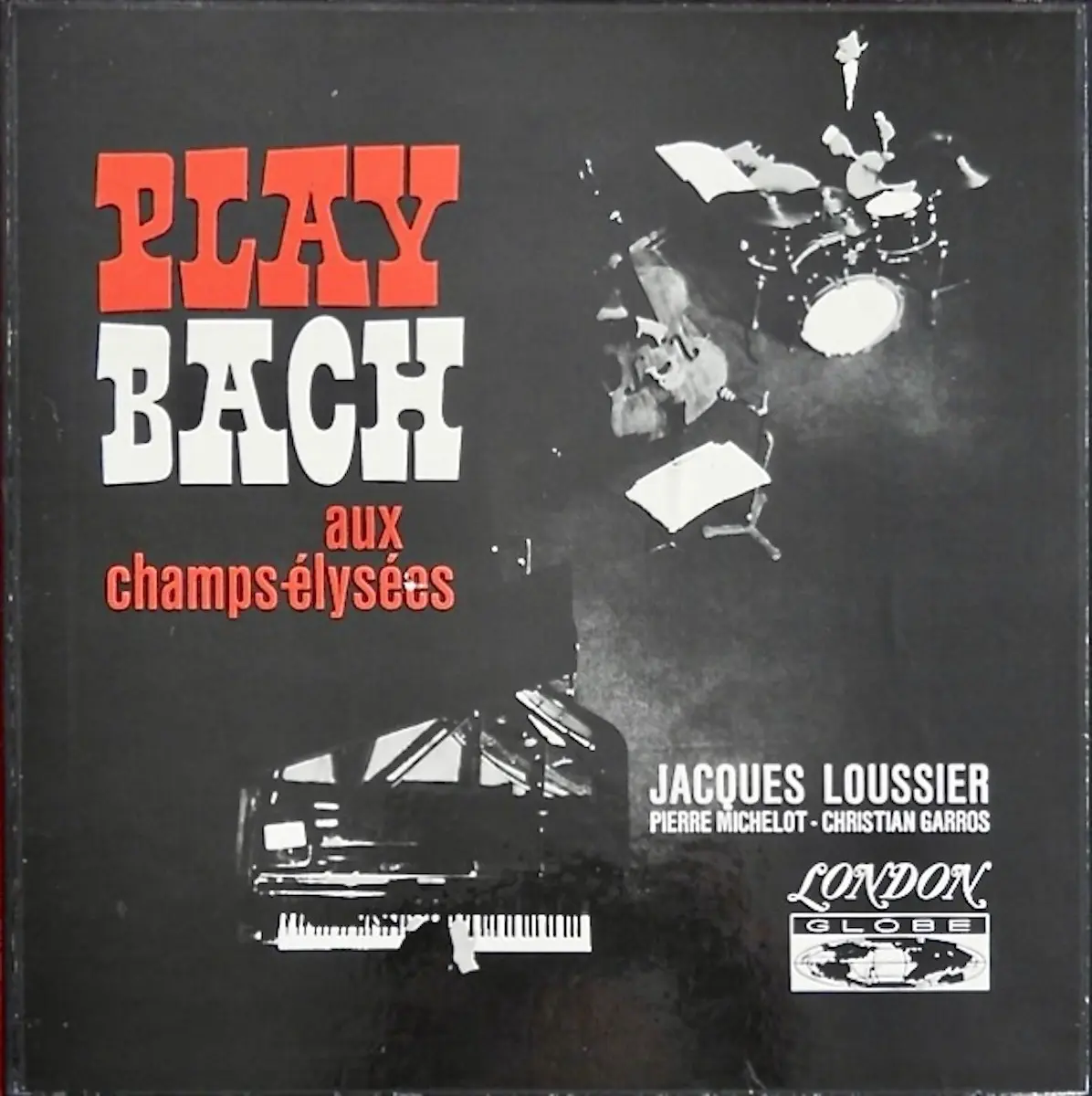
The critical assessment of Jacques Loussier’s contributions to the jazz idiom reached a significant milestone in May 1966 when the noted critic Gerald Lascelles, writing for Jazz Journal, observed that Loussier had effectively outclassed other contemporary "jazzers of the classics." Lascelles attributed this superiority to Loussier’s profound and meticulous understanding of Johann Sebastian Bach’s original scores, a quality that distinguished his work from the superficial adaptations that had previously characterized the subgenre. This evaluation came at a time when the Play Bach Trio, led by Loussier, was transitioning from a controversial musical experiment into a globally recognized cultural phenomenon. By the mid-1960s, Loussier had successfully navigated the precarious boundary between the rigid structures of the Baroque era and the fluid, improvisational nature of 20th-century jazz, creating a bridge that appealed to both traditionalists and modernists.
The 1966 Critical Re-evaluation and the BBC2 Presentation
The emergence of Jacques Loussier as a central figure in the mid-1960s musical landscape was punctuated by his appearances on high-profile media platforms, most notably a late 1965 BBC2 television program. During this broadcast, Loussier was presented to the British public as a "sombre-faced young man" whose technical facility at the piano allowed him to perform "prodigious exercises" rooted in the works of Bach. At the time, the act of "jazzing the classics" was often viewed with skepticism by purists of both genres. Critics frequently "spared no pains to damn the practice," arguing that most attempts were merely "blatant plagiarism" of classical themes by musicians who lacked the requisite technique or historical understanding.
However, Loussier’s approach was fundamentally different. As Lascelles noted, his success was predicated on a "detailed understanding of the intricacies of Bach’s scores." Rather than simply imposing a swing beat onto a classical melody, Loussier maintained the integrity of Bach’s counterpoint while introducing the rhythmic vitality of jazz. This nuanced methodology ensured that the music remained recognizable to classical scholars while offering the improvisational depth demanded by jazz enthusiasts. The 1966 review of the London Globe SLB 1035/6 LPs served as a formal acknowledgment that Loussier had elevated the practice of cross-genre adaptation to a sophisticated art form.
Historical Context: The Genesis of the Play Bach Trio
To understand the impact of Loussier’s 1966 recordings, one must look back to the formation of the Play Bach Trio in 1959. Jacques Loussier, a classically trained pianist who studied at the Conservatoire de Paris under the legendary Yves Nat, began his career with a deep reverence for the European canon. His decision to integrate jazz elements into Bach’s compositions was not born of a desire for commercial novelty, but rather from a realization of the inherent rhythmic similarities between the two styles.
Loussier was joined in this endeavor by two formidable musicians: bassist Pierre Michelot and drummer Christian Garros. Michelot was already a towering figure in European jazz, having performed with American icons such as Miles Davis—most notably on the soundtrack for Ascenseur pour l’échafaud—Chet Baker, and Dexter Gordon. His ability to provide a walking bassline that complemented Bach’s pedal points was essential to the trio’s sound. Garros, a versatile drummer, provided a subtle but driving rhythmic foundation that allowed the music to "swing" without obscuring the delicate textures of the piano.
Between 1959 and 1965, the trio released a series of albums titled Play Bach (Volumes 1 through 4), which sold millions of copies worldwide. This commercial success was unprecedented for a jazz-classical fusion project and set the stage for the 1966 London Globe release, which featured live recordings from the Théâtre des Champs-Élysées in Paris.
Technical Proficiency and the Bach-Jazz Affinity
The relationship between the Baroque period and modern jazz is rooted in the concepts of "basso continuo" and improvisation. During Bach’s time, keyboard players were expected to improvise based on a figured bass, a practice remarkably similar to the way jazz musicians improvise over a chord progression. Loussier recognized this "close affinity," which had been previously explored by John Lewis and the Modern Jazz Quartet (MJQ). While the MJQ utilized Bach-like fugal structures to create "Third Stream" music, Loussier’s approach was more direct: he played the scores "almost as written," deviating primarily to accentuate rhythmic passages or to create space for Michelot’s "well-conceived solos."
The technical mastery required for this task cannot be overstated. Bach’s music is characterized by its mathematical precision and independent melodic lines. To introduce jazz syncopation without collapsing the structure requires a pianist of exceptional caliber. Loussier’s ability to maintain the "splendid opportunities for improvisation" afforded by Bach’s compositions meant that the music never felt forced. As Lascelles observed, Loussier’s work was "a remarkable achievement" that would "not cause Bach to turn in his grave."
Chronology of the Play Bach Phenomenon (1959–1966)
The trajectory of Jacques Loussier’s career during this period illustrates the rapid acceptance of his musical vision:
- 1959: Formation of the Play Bach Trio and the release of Play Bach No. 1. The album becomes an unexpected hit in France.
- 1960–1962: Release of Volumes 2 and 3. The trio begins touring extensively throughout Europe, performing in both concert halls and jazz clubs.
- 1963: Release of Play Bach No. 4. The trio’s international reputation grows, leading to performances in the United States and Japan.
- 1965: Loussier appears on BBC2, introducing his "updated" Bach to a wider British audience. The performance sparks debate regarding the modernization of classical works.
- 1966: The publication of Gerald Lascelles’ review in Jazz Journal. The release of the double LP Play Bach Aux Champs-Élysées (London Globe SLB 1035/6) marks a peak in the trio’s first iteration.
This timeline reflects a steady progression from a niche experimental project to a staple of the mid-century musical canon. By 1966, the trio had moved beyond the status of a "fad" and was being treated with the "serious attention" that Lascelles argued it deserved.
Analysis of the London Globe SLB 1035/6 Recordings
The 1966 double-LP release under the London Globe label provided a comprehensive overview of the trio’s repertoire. The tracklist included some of Bach’s most demanding and recognizable works:
- Prelude No. 1: Often used as the trio’s signature opening, this piece demonstrated Loussier’s ability to take a familiar harmonic progression and infuse it with a modern rhythmic sensibility.
- Concerto Italien (Italian Concerto): A major work that showcased the trio’s ability to handle extended structures. The 18-minute performance highlighted the interplay between the piano and bass.
- Partita en si bémol (Partita in B-flat): A 20-minute exploration of dance movements, which naturally lent themselves to the trio’s jazz-inflected interpretations.
- Choral No. 1 ("Wachet auf, ruft uns die Stimme"): This performance was noted for its "sombre" and "reverent" tone, proving that the trio could handle Bach’s liturgical works with the necessary gravity.
At a price of 32s. 2d. each, these LPs were positioned as premium offerings for the discerning listener. The inclusion of the Concerto en ré mineur (Concerto in D minor) further solidified the trio’s credentials, as it required a high degree of ensemble precision to execute the complex counterpoint at a jazz tempo.
Official Responses and the "Third Stream" Impact
The reaction to Loussier’s work in 1966 was indicative of a broader shift in musical philosophy known as "Third Stream"—a term coined by Gunther Schuller to describe a synthesis of classical music and jazz. While some classical purists remained resistant, many esteemed figures in the jazz world, like John Lewis of the MJQ, welcomed Loussier’s contributions. Lewis himself had noted that Bach was the "first jazz musician" due to the improvisational nature of his work.
The "official" response from the jazz community, as represented by Lascelles, was one of cautious but firm approval. Lascelles acknowledged that while Loussier’s work might not fall into "the scope of everyone’s taste," it provided a "strong link" between two seemingly disparate musical forms. This endorsement was crucial in an era where jazz was struggling to maintain its cultural relevance against the rising tide of rock and roll. Loussier’s "Play Bach" series offered a sophisticated, intellectual alternative that respected the past while looking toward the future.
Broader Implications and Long-term Legacy
The success of Jacques Loussier in 1966 paved the way for decades of "crossover" music. His influence can be seen in the later works of artists like Keith Jarrett, who balanced a career in jazz with acclaimed recordings of Bach’s Well-Tempered Clavier, and more contemporary groups like the Bad Plus, who apply jazz improvisation to a wide range of classical and modern sources.
Loussier’s career continued for another five decades after the 1966 review. Although the original trio disbanded in 1978, Loussier formed a new trio in 1985 to commemorate the 300th anniversary of Bach’s birth. He eventually expanded his repertoire to include the works of Satie, Debussy, and Vivaldi, but he always returned to Bach as his primary inspiration.
Ultimately, the 1966 assessment by Gerald Lascelles proved prescient. Jacques Loussier did not merely "jazz up" the classics; he conducted a deep inquiry into the shared DNA of Baroque and Modern music. By maintaining a "detailed understanding of Bach’s scores," Loussier ensured that his work was not a temporary novelty, but a lasting contribution to the evolution of 20th-century music. The London Globe recordings of 1966 remain a testament to a moment when the boundaries of musical genre were being expanded by a pianist who possessed the technique of a master and the soul of a jazzman.