 Mia Khoirunisa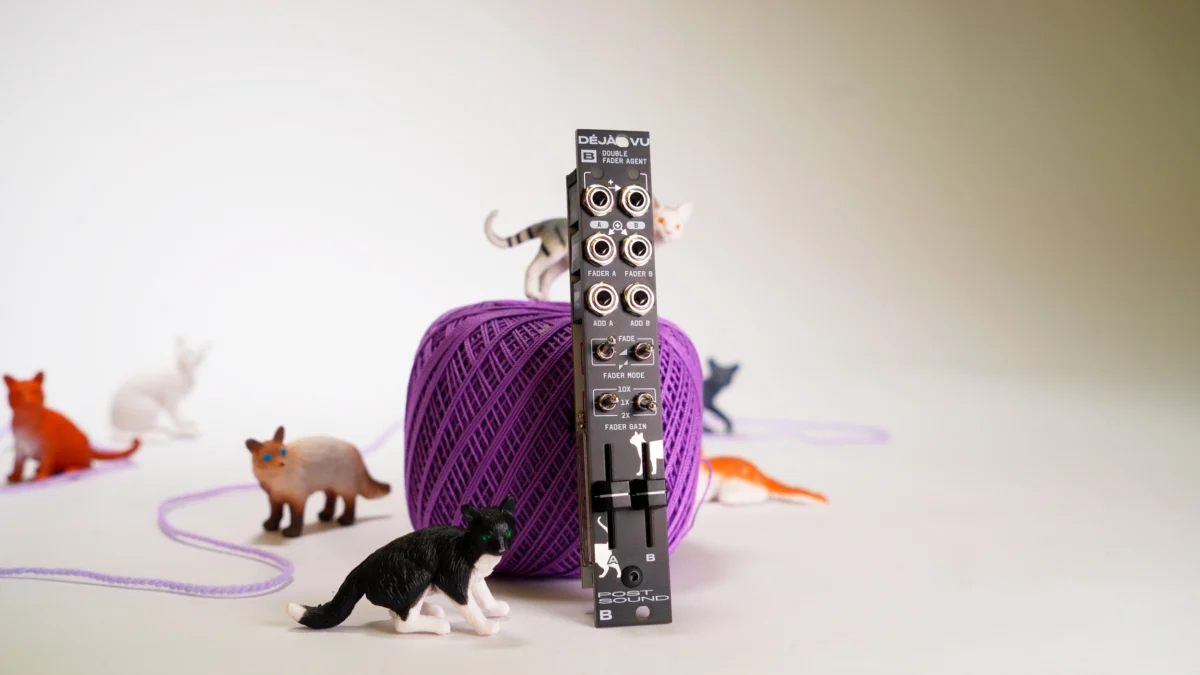
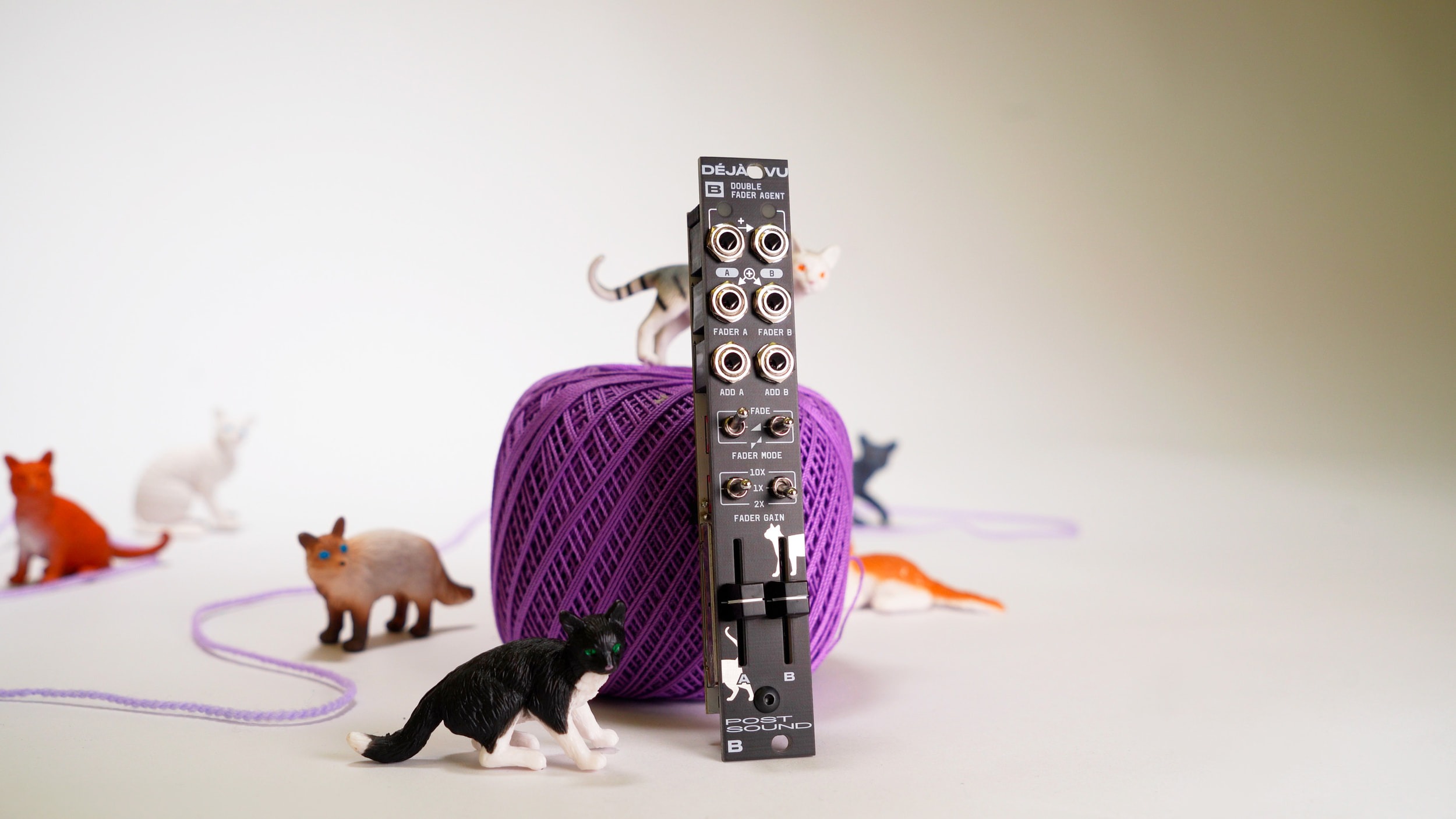
Bastl Instruments, a prominent name in the Eurorack modular synthesizer community, has announced the release of its latest module, the Déjà Vu. This innovative unit, designed to offer an extensive array of signal processing functionalities within a compact 4U footprint, promises to be a versatile tool for both audio and control voltage (CV) manipulation. The module’s core concept revolves around two faders, each capable of performing multiple functions, effectively acting as the antithesis of single-purpose devices. Instead of being a "unitasker," the Déjà Vu aims to consolidate a significant number of essential audio and CV processing tasks, including attenuation, attenuversion, crossfading, preamplification, line-level boosting, panning, and mixing, into a single, highly efficient module.
A Deeper Dive into Functionality and Design Philosophy
At its heart, the Déjà Vu module is built around two independent channels, labeled A and B. Each channel features a dedicated fader, complete with CV control over its position, allowing for dynamic and automated adjustments. This fundamental setup is augmented by "ADD" input jacks, which significantly expand the module’s capabilities. The design philosophy behind the Déjà Vu appears to be centered on maximizing utility and flexibility within a constrained Eurorack space.
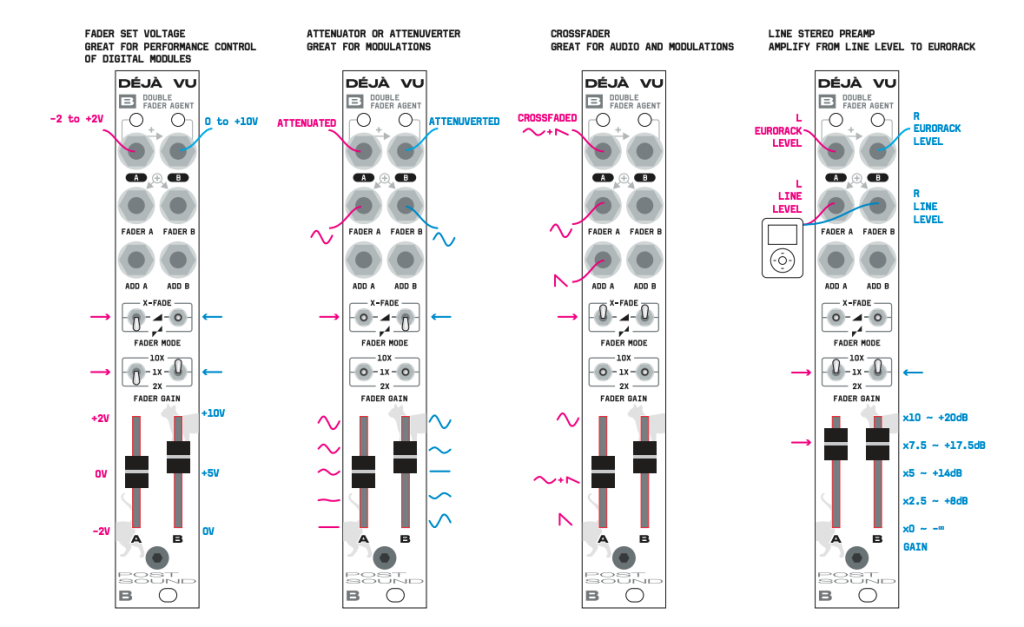
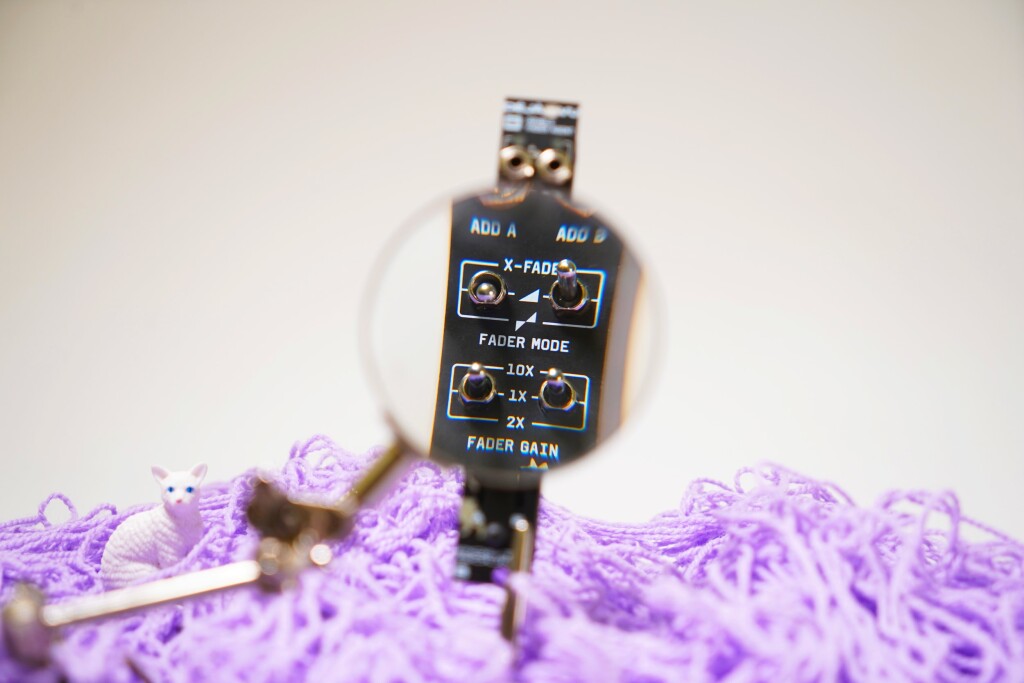
The module’s versatility is further highlighted by its ability to function in multiple modes, selectable via physical switches. Users can choose to attenuate signals, invert them (attenuvert), or engage in crossfading between the two channels. This sophisticated approach to fader control allows for intricate mixing and signal shaping. The inclusion of dedicated switches for crossfade modes and fader modes (1x, 2x, 10x gain) provides granular control over the signal flow and amplification.
Beyond its core fader and crossfader functions, the Déjà Vu addresses several common challenges encountered by Eurorack users. One significant issue in modular synthesis is the often-excessive signal levels generated by various modules, which can lead to unwanted distortion or clipping. The Déjà Vu tackles this by incorporating a preamp section, designed to bring these "hot" signals into a more manageable range, thereby preserving audio fidelity and facilitating smoother mixing. Furthermore, a bias distortion clipper is integrated, offering another layer of sonic character and control, particularly at Eurorack signal levels.
The module also functions as a 4-channel mixer, allowing for the combination of multiple audio or CV sources. This feature is particularly useful for complex patch configurations where summing signals is a frequent requirement. Additionally, the Déjà Vu can be employed for oscillator waveform mixing, a technique that can lead to rich and evolving timbres by blending different harmonic content. This multi-faceted approach to signal processing underscores Bastl Instruments’ commitment to creating intelligent and practical tools for electronic musicians.
A Comprehensive Solution for Signal Management
The extensive list of functionalities offered by the Déjà Vu module can be broadly categorized as follows:
- Attenuation and Amplification: The faders themselves act as voltage-controlled attenuators, allowing users to reduce the amplitude of incoming signals. The selectable fader modes (1x, 2x, 10x) provide options for subtle adjustments or significant boosts.
- Attenuversion: This function allows for both attenuation and inversion of signals. This is crucial for CV manipulation, enabling the creation of inverted control voltages that can have opposing effects on other modules.
- Crossfading: The module facilitates smooth transitions between two input signals (channels A and B). This is invaluable for creating dynamic mixes, evolving textures, and stereo panning effects.
- Preamplification and Line Level Boosting: The integrated preamp addresses the issue of overly hot Eurorack signals, providing a clean way to normalize levels. It can also serve as a line-level booster for signals that may be too weak.
- Mixing: As a 4-channel mixer, the Déjà Vu can combine multiple signals, offering a convenient way to sum audio or CV sources without needing a separate dedicated mixer module.
- Distortion and Clipping: The bias distortion clipper adds a sonic sculpting tool, allowing for the introduction of grit, saturation, or aggressive clipping to signals.
- CV Processing: All these functions are applicable to control voltages as well as audio signals, making the Déjà Vu a powerful tool for manipulating modulation sources, creating complex CV landscapes, and performing sophisticated crossfades of control signals.
Context and Development
Bastl Instruments, a company founded in the Czech Republic, has consistently produced creative and often quirky Eurorack modules that challenge conventional design paradigms. Their approach frequently emphasizes intuitive interfaces, robust functionality, and a playful spirit, often incorporating unexpected features or sonic characteristics. The Déjà Vu appears to be a direct continuation of this ethos.
The module’s development likely involved extensive iterative testing to ensure its various functions performed reliably and sounded good across a range of applications. The inclusion of a "cookbook" – a downloadable PDF document offering practical examples and patch ideas – suggests a deliberate effort by Bastl Instruments to guide users in exploring the full potential of the Déjà Vu. This pedagogical approach is characteristic of companies that aim to empower their users and foster creative exploration within their product ecosystems.
The reference to pairing the Déjà Vu with Bastl’s Neo Trinity modulation hub further contextualizes its intended use. The Neo Trinity is a multi-channel modulation source, and the Déjà Vu’s ability to process and mix both audio and CV signals makes it a natural complement to such a device, enabling sophisticated layering and dynamic control of complex modulation schemes. However, the article also acknowledges that the Déjà Vu’s utility extends beyond this specific pairing, suggesting its broad applicability within diverse Eurorack setups.
Broader Implications for the Eurorack Ecosystem
The introduction of a module like the Déjà Vu has several notable implications for the Eurorack community. Firstly, it speaks to the ongoing trend of increasing functionality within smaller module footprints. As Eurorack systems become more complex and users seek to achieve more with less space, modules that consolidate multiple tasks become highly desirable. The Déjà Vu, by offering a comprehensive suite of fader-based signal processing, directly addresses this demand.
Secondly, the module’s design addresses perennial user pain points, such as managing hot signals and the need for versatile mixing and modulation control. By providing integrated solutions for these issues, Bastl Instruments not only simplifies patching but also potentially reduces the overall number of modules required in a system, thereby offering cost and space efficiencies.
The Déjà Vu’s success could also influence future module designs, encouraging other manufacturers to explore similar multi-functional approaches. The emphasis on physical switches for mode selection, rather than relying solely on complex menu systems or software interfaces, aligns with the tactile and immediate nature of modular synthesis. This design choice enhances usability and allows for rapid parameter adjustments during live performance or creative sessions.
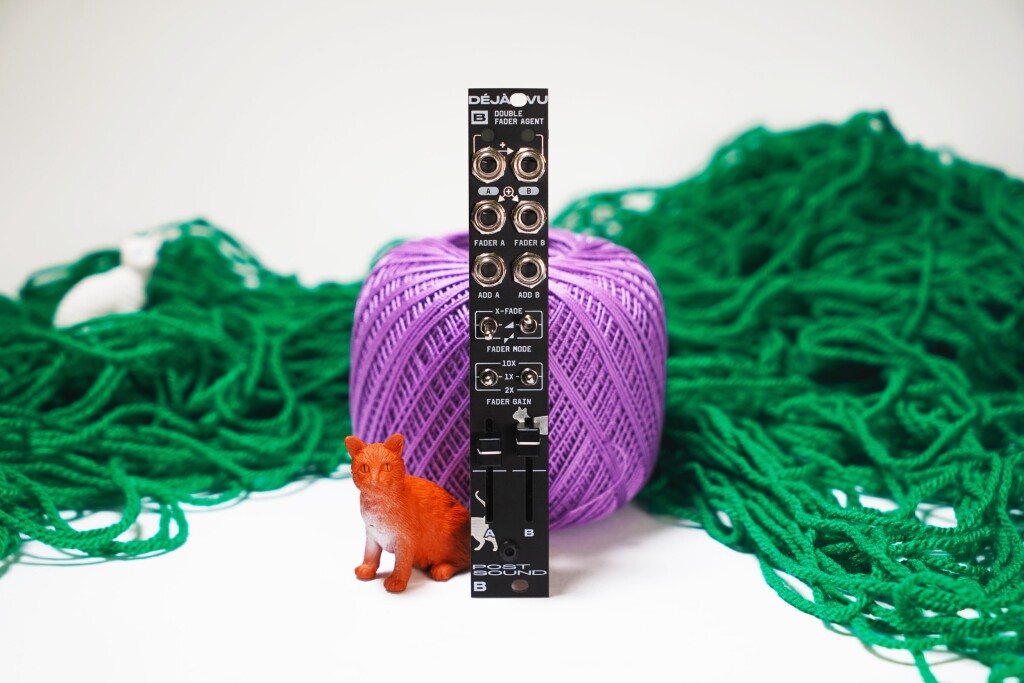
The inclusion of "cats" in some of the promotional materials, while whimsical, also points to a growing trend of brands infusing their product marketing with personality and a sense of community. While seemingly trivial, such elements can contribute to brand identity and foster a stronger connection with users.
Availability and Future Prospects
The Bastl Instruments Déjà Vu module is available for purchase through the company’s official website and select retailers. The accompanying "cookbook" PDF offers a valuable resource for users seeking to unlock its full potential, showcasing creative applications ranging from subtle audio mixing to intricate CV manipulation.
The pricing and exact specifications, while not detailed in the provided text, are crucial factors for potential buyers. However, the conceptual appeal and the described functionality suggest that the Déjà Vu is poised to become a popular addition to many Eurorack setups. Its ability to perform a wide range of tasks efficiently makes it a compelling option for both seasoned modular enthusiasts and newcomers looking to build a versatile and powerful system.
The article also highlights the potential for the Déjà Vu to displace other, more specialized modules from users’ racks. With its comprehensive feature set, it’s plausible that a single Déjà Vu module could replace several individual attenuators, mixers, or crossfaders, freeing up valuable rack space for other creative endeavors. This consolidation of functionality is a significant advantage in the often space-constrained world of modular synthesis.
In conclusion, the Bastl Instruments Déjà Vu module represents a significant advancement in Eurorack signal processing. Its ingenious design, which packs an extensive array of functions into a user-friendly package, underscores Bastl’s reputation for innovation and their deep understanding of the modular synthesis landscape. By offering a powerful and versatile solution for audio and CV manipulation, the Déjà Vu is set to become an indispensable tool for a wide range of electronic music producers and sound designers. The thoughtful inclusion of resources like the "cookbook" further solidifies its value proposition, ensuring that users can effectively integrate this sophisticated module into their creative workflows.