 Muhammad Ibadurrohman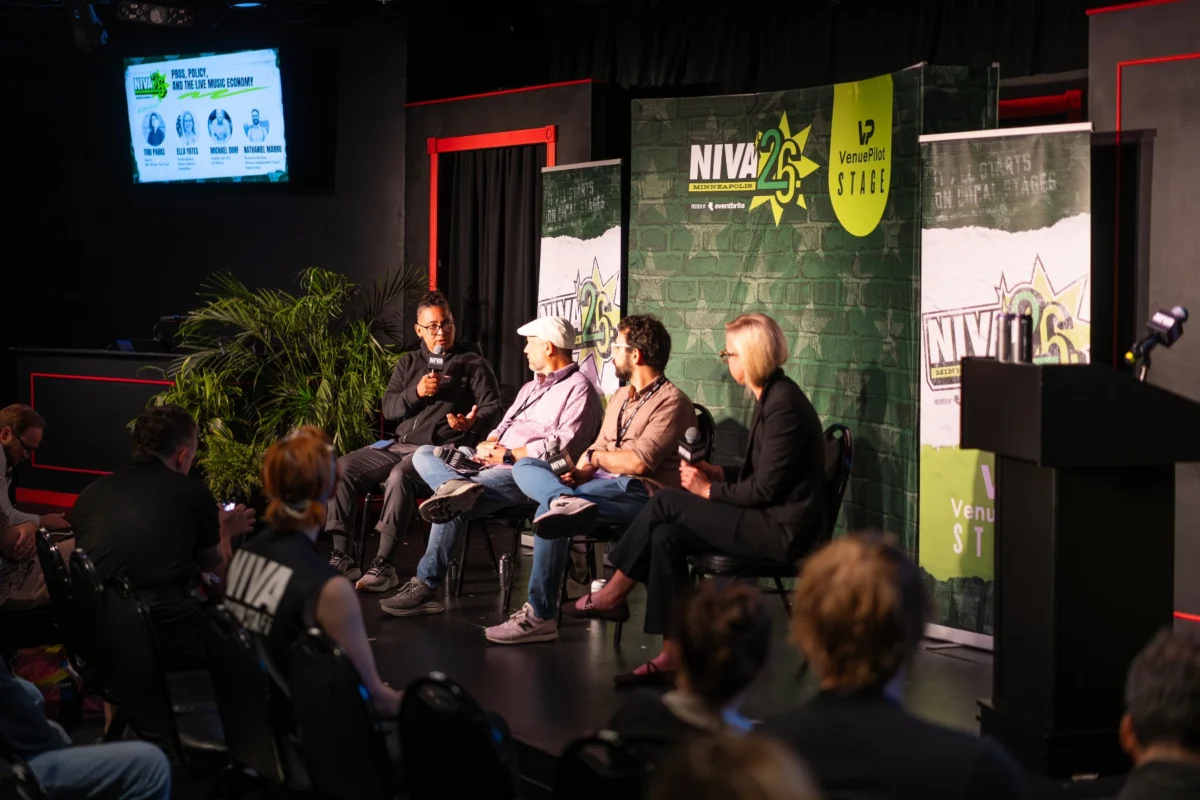
Minneapolis, MN – The critical intersection of intellectual property rights, fair compensation for artists, and the economic viability of live music venues took center stage at the National Independent Venue Association (NIVA) conference in Minneapolis this week. Members of NIVA and the National Independent Talent Organizations (NITO) convened to address the contentious issue of blanket licensing employed by performing rights organizations (PROs) and to advocate for solutions that align with the realities of the modern music industry. The "PROs, Policy, and the Live Music Economy" panel at NIVA’26 brought together key stakeholders who voiced concerns over what they describe as outdated and often punitive licensing practices that disproportionately burden independent venues and touring artists.
The Heart of the Dispute: Blanket Licensing Under Scrutiny
At the core of the discussion is the long-standing practice of blanket licensing, a system where PROs like BMI, SESAC, ASCAP, and AllTrack require businesses that play music – from radio stations and restaurants to live music venues – to pay a flat fee for the right to perform any song in their vast repertoire. This fee, often calculated as a percentage of ticket sales or venue capacity, is then distributed by the PROs to the songwriters they represent. While the intention is to ensure creators are compensated for their work, the application of this system in the live music sector has sparked widespread frustration and calls for reform.
Michael Dorf, owner of City Winery and a veteran of the independent venue scene, including founding the original Knitting Factory in New York, articulated the industry’s profound discontent. Dorf shared his personal experiences of receiving what he described as "mafioso, thug-like practices" from PROs when he challenged the blanket licensing model. He recounted an incident where, after requesting specific information on which of AllTrack’s songs were performed at his venues, he received a letter threatening fines of up to $150,000 per track if the appropriate blanket license was not secured. "This is an outdated law, and it’s being abused," Dorf asserted to a room filled with independent venue owners, promoters, and talent agents. "It’s making everyone nervous that they are going to get sued."
Historical Context: The Evolution of Performing Rights
To fully grasp the current debate, it’s essential to understand the historical context of performing rights. Performing rights organizations emerged in the early 20th century, a time when tracking individual song performances across countless venues and broadcasts was logistically impossible. The blanket license was conceived as a pragmatic solution, offering venues a single, comprehensive license that covered virtually all copyrighted musical works in a PRO’s repertoire, thus avoiding the complex and unwieldy task of securing individual licenses for each song performed. This system allowed for a broad and efficient collection of royalties, ensuring that songwriters received some compensation for public performances of their work.

However, critics argue that while this system served its purpose in a pre-digital era, it has become increasingly anachronistic. The rise of sophisticated digital technologies for music identification and data aggregation has challenged the fundamental premise of the blanket license. Furthermore, PROs like ASCAP and BMI operate under federal consent decrees, designed to prevent anti-competitive practices, which mandate certain licensing practices. While these decrees have shaped the landscape of performance licensing for decades, they primarily address the availability of licenses, not necessarily the fairness or accuracy of the distribution model in every specific context, particularly for live performances in independent venues. The Music Modernization Act (MMA) of 2018, while a landmark achievement for mechanical royalties, largely sidestepped a comprehensive overhaul of performance royalty issues in the live sector, leaving many of the challenges discussed at NIVA’26 unaddressed.
The Economic Squeeze: Artists and Venues Caught in the Middle
The financial implications of blanket licensing are a significant concern for both independent venues and touring artists. Nathaniel Marro, executive director of the National Independent Talent Organization (NITO), highlighted a glaring disparity. While he acknowledged that PROs generally fulfill 85% to 90% of what artists need to be paid for their work, the blanket licensing practice represents "a very serious hole in the bucket." NITO’s 2025 studies revealed alarming figures: some artists were paying upward of $15,000 in PRO fees during their tours, only to receive a paltry $26 back for performing their own compositions. This stark imbalance underscores a fundamental flaw in the current distribution mechanism for live performance royalties.
For independent venues, which often operate on razor-thin margins, PRO fees can be a make-or-break expense. These venues are the lifeblood of emerging artists, providing crucial platforms for developing talent and connecting musicians with local communities. When a significant portion of their revenue, or an unquantifiable and potentially punitive fine, is at stake due to a licensing model that doesn’t accurately reflect actual music usage, it creates immense financial pressure. Tobi Parks, owner of xBK Live venue and co-founder of Tour Tech, moderated the panel and emphasized this point. "This is money that we’re already paying into the system," Parks stated. "If we can help it get in creators’ pockets to keep them on the road, that helps us keep our doors open, and it keeps us sort of a thriving economy." The current system, by potentially diverting funds away from artists whose music is actually performed, and by burdening venues with fees for music they may not even host, threatens the very ecosystem of live independent music.
Legal and Policy Framework: Business Practice vs. Federal Mandate
A crucial distinction in the debate was drawn by Ella Yates, a senior adviser to the House Judiciary Committee, who began her career in Congress during the negotiations for the Music Modernization Act. Yates questioned whether the problem lay with the law itself or with the way PROs leverage their existing authority. "My question would be, is it the law itself that is the problem or is it the way the PROs are leveraging it?" Yates posed to the panel. "Because they’re suggesting you can’t go work by work. ‘You have to get this blanket license. Sorry, deal with it.’ And that’s not really a federal law. That’s just a business practice."
This distinction is critical. If the requirement for blanket licenses is primarily a business practice rather than a strict federal mandate, it opens avenues for negotiation and reform without necessarily requiring an act of Congress to rewrite foundational copyright law. Policymakers, artists, and venues can then focus on advocating for changes in industry standards and PRO policies. The current framework allows PROs significant discretion in how they enforce their licensing, leading to concerns about transparency, accountability, and fairness in fee assessment and royalty distribution. The implication is that a more equitable system could be achieved through industry consensus and voluntary adoption of new technologies, perhaps guided by legislative oversight or incentives, rather than a top-down legislative overhaul.

Technological Solutions for a Modern Era
The panel strongly advocated for leveraging modern technology to address the shortcomings of the blanket licensing model. The consensus was that technology now exists to enable a more precise, "work-by-work" licensing system, where venues and artists pay only for the songs actually performed. Tobi Parks highlighted her own platform, Tour Tech, which includes the Setlist Aggregator & Royalty Application (SARA). SARA simplifies the process for artists to submit their setlists directly to PROs, ensuring that royalties for their own works are accurately tracked and paid.
Marro echoed this sentiment, stating, "They built this system 100 years ago. They didn’t have what we have today in terms of reporting mechanisms." He emphasized that most touring artists perform largely the same setlist each night, making the act of "just hitting a button, saying, ‘same songs,’ and then recording it…fairly simple" through platforms like SARA. Such systems could incentivize artists to report their setlists diligently, thereby removing the perceived administrative burden that PROs often cite as a justification for blanket licenses.
International precedents further bolster this argument. Parks pointed to the United Kingdom’s single PRO, PRS, which has actively encouraged songwriters to submit their setlists to improve royalty distribution accuracy. More significantly, the Music Venue Trust (MVT), the UK’s equivalent of NIVA, has partnered with Audoo to deploy its Audio Meter technology in 120 grassroots music venues. This innovative system captures real-time data on music played, allowing for a precise assessment of whether current royalty distribution methodologies accurately reflect actual music usage within indie venues. Michael Dorf also suggested that widely available audio recognition technology, like Shazam, could be adapted to provide similar real-time tracking solutions, eliminating the guesswork and potential for abuse inherent in the blanket licensing model.
Charting a Sustainable Future for Live Music
The discussions at NIVA’26 underscored a collective desire for a licensing system that is equitable, transparent, and reflective of the digital age. The current blanket licensing model, while historically significant, is increasingly seen as a relic that hinders rather than helps the independent live music economy. The push for "work-by-work" licensing is not merely about cost reduction for venues; it’s about ensuring fair compensation for creators, fostering a healthier touring environment for artists, and ultimately enriching the cultural landscape that independent venues provide.
The challenge now lies in bridging the gap between current PRO practices and the technological capabilities available. This will require sustained advocacy from organizations like NIVA and NITO, coupled with open dialogue and collaboration with PROs and policymakers. The goal is to develop a modernized framework that accurately identifies and compensates creators for the actual use of their intellectual property in live settings, without imposing undue financial or administrative burdens on the venues that serve as essential cultural hubs. Such a framework would not only address the immediate concerns of independent venues and artists but also establish a more sustainable and equitable foundation for the entire live music ecosystem in the years to come. The message from NIVA’26 is clear: the time for reform is now, and the tools for a more just system are already within reach.