Jia Lissa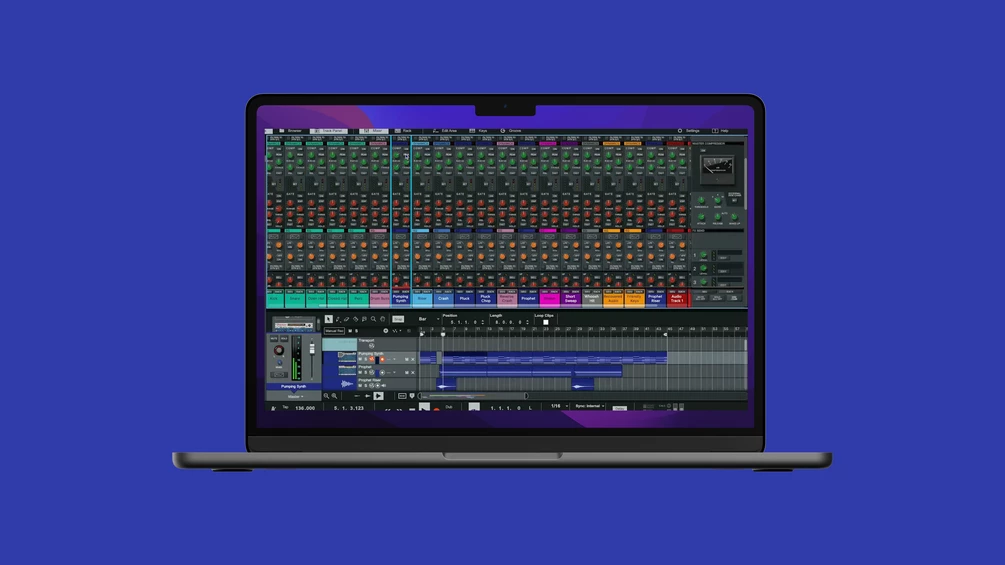
Reason Studios, the venerable Swedish technology brand formerly known as Propellerhead, has officially announced Reason 14, a substantial update to its flagship digital audio workstation (DAW) software. This release marks a significant milestone, not only for its array of new features and workflow improvements but also as the first major product update since the company’s acquisition by Montreal-based AI music production firm LANDR in January of this year. The new version introduces a host of creative tools and enhancements designed to streamline the music-making process, alongside strategic pricing adjustments through its Reason+ subscription model.
Key Enhancements in Reason 14: A Deeper Dive into Creative Tools
At the core of Reason 14’s update are several key additions aimed at enriching the sound palette and optimizing the user experience. The software now boasts an impressive collection of 900 new drum samples, a substantial expansion for producers working across various genres, from electronic music to hip-hop and pop. These samples are curated to offer a wide range of percussive elements, providing fresh inspiration and foundational sounds for countless tracks. Complementing this expansion are 50 fresh patches for Europa, Reason’s powerful spectral wavetable synthesizer. Europa, known for its deep sound design capabilities and distinctive sonic character, gains new presets that showcase its versatility, allowing users to immediately access new textures, leads, pads, and bass sounds without extensive programming. Furthermore, the update includes 20 new impulse responses for the RV7000 Advanced Reverb. The RV7000 is a staple effect in Reason’s rack, and these new impulse responses expand its spatial capabilities, offering new ambient environments, plate reverbs, and hall simulations that can dramatically alter the perceived space and depth of instruments and vocals.
Beyond sound content, Reason 14 introduces critical workflow enhancements. A notable sequencer upgrade promises greater precision and efficiency in arranging and editing musical ideas. While specific details of the upgrade were not fully elaborated in the initial announcement, such improvements typically involve refinements to MIDI and audio editing tools, improved quantization options, enhanced automation capabilities, or new compositional aids. These types of updates are crucial for modern producers who demand fluid interaction with their creative environment, enabling faster iteration and more intuitive control over complex arrangements.
A significant user interface enhancement arrives in the form of a new dark mode. This aesthetic and ergonomic improvement caters to producers who often work in low-light environments or prefer a less visually strenuous interface during long production sessions. Dark modes have become an industry standard across various software applications, reducing eye strain and allowing users to focus more intently on the creative process without the distraction of bright interface elements. Reason Studios describes the overall workflow as "transformative," suggesting a holistic re-evaluation of how users interact with the DAW, aiming for a more seamless and inspiring experience from conception to completion.
Additional updates in Reason 14 include automatic tempo detection on import and MIDI note chase. Automatic tempo detection is a powerful feature for producers who frequently sample, remix, or collaborate with external audio files. It intelligently analyzes incoming audio and adjusts the project tempo accordingly, eliminating manual adjustments and ensuring seamless synchronization. MIDI note chase, on the other hand, improves real-time performance and editing by ensuring that MIDI notes trigger correctly even when playback is started mid-note, a common frustration for composers and performers. These quality-of-life improvements collectively contribute to a more professional and less interruptive production environment.
Pricing and Accessibility: The Reason+ Subscription Model
Reason 14 is exclusively available through the Reason+ subscription service, priced at $169/€135/£169 per year. This subscription model, which Reason Studios adopted prior to the LANDR acquisition, provides access to the latest version of Reason, along with a continuous stream of new sounds, patches, and Rack Extensions. The shift to a subscription-only model reflects a broader trend in the software industry, offering users ongoing updates and content in exchange for a recurring fee. While some users might prefer a perpetual license, the subscription model aims to keep the software consistently updated and enriched, ensuring access to the newest features and a vibrant sound library without additional purchase costs for each major version. Reason+ is designed to foster a dynamic creative ecosystem, providing continuous value to its subscriber base.
A New Chapter Under LANDR Ownership: Strategic Integration and Future Vision
The release of Reason 14 takes on added significance given the recent acquisition of Reason Studios by LANDR in January. LANDR, a Montreal-based company renowned for its AI-powered mastering service, sample library, and distribution platform, has outlined an ambitious vision for integrating Reason into its broader ecosystem. At the time of the acquisition, Reason Studios communicated to its user base via a blog post, stating, "This next chapter is about giving Reason room to grow by gradually and transparently integrating it with LANDR’s powerful ecosystem of plugins, samples, intelligent mastering and distribution." This statement provides crucial insight into the strategic direction for Reason under its new ownership.
The integration promises several key synergies. Firstly, it could mean a more seamless workflow for Reason users who utilize LANDR’s AI mastering services, potentially allowing for direct export and mastering from within the DAW environment. This would streamline the final stage of music production, providing an efficient route to a professionally polished sound. Secondly, access to LANDR’s extensive sample library could be integrated directly into Reason’s browser, offering producers a vast repository of sounds curated and managed by LANDR, enhancing the creative possibilities available within Reason’s unique rack architecture.
Furthermore, the "powerful ecosystem of plugins" suggests that LANDR’s proprietary plugins or those from its partners might become more readily available or deeply integrated within Reason. Most intriguingly, the mention of "intelligent mastering and distribution" hints at the potential for Reason to become a more comprehensive platform that not only facilitates creation but also simplifies the release process. Imagine a future where a finished track in Reason could be mastered by LANDR’s AI and then distributed to major streaming platforms with just a few clicks, all from within the same software environment. This would transform Reason from solely a production tool into a full-service creative and distribution hub, a compelling proposition in today’s competitive music industry.
For Reason users, this acquisition could usher in an era of enhanced connectivity and expanded functionalities, leveraging LANDR’s expertise in AI and distribution to complement Reason’s strong foundation in creative sound design and composition. It signals a strategic move to future-proof Reason, embedding it within a larger, more interconnected digital music services landscape. The success of this integration will depend on how "gradually and transparently" these changes are rolled out, ensuring that Reason’s core identity and user experience are preserved while new capabilities are introduced.
The Legacy of Innovation: From Propellerhead to Reason Studios
To fully appreciate the significance of Reason 14 and the LANDR acquisition, it’s essential to understand the rich history of Reason Studios, formerly Propellerhead. Founded in 1994 in Stockholm, Sweden, Propellerhead quickly established itself as a pioneer in music software innovation. Their early products, such as ReCycle, released in 1994, revolutionized beat-slicing and sampling techniques, becoming an indispensable tool for hip-hop and electronic music producers worldwide. ReCycle’s ability to chop drum loops into individual hits and assign them to MIDI notes was groundbreaking, influencing countless tracks and production workflows. The company’s decision last year to roll out a free-to-use version of ReCycle made this classic tool accessible to a new generation of producers, underscoring its enduring impact.
Propellerhead continued its innovative streak with ReBirth RB-338 in 1997, a software emulation of the legendary Roland TB-303 bass synthesizer and TR-808/909 drum machines, which played a crucial role in the development of acid house and techno music. However, it was the release of Reason 1.0 in 2000 that truly cemented the company’s place in music production history. Reason introduced a unique virtual studio rack environment, allowing users to connect virtual instruments, effects, and mixers using virtual cables, mimicking the tactile experience of hardware studios. This intuitive, modular approach fostered creativity and offered a stable, self-contained ecosystem for music production.
Over the years, Reason evolved significantly. Initially designed as a compositional tool that could be "rewired" into other DAWs, it eventually gained full audio recording capabilities, transforming into a standalone DAW. Key updates introduced Rack Extensions (REs), a proprietary plugin format that allowed third-party developers to create instruments and effects that seamlessly integrated into Reason’s rack, expanding its sonic palette while maintaining the software’s stability. The company’s rebranding to Reason Studios in 2019 reflected its focus on its flagship product and its commitment to developing a comprehensive creative environment for musicians.
This long history of innovation, marked by a dedication to unique interfaces and powerful sound engines, positions Reason as a distinct player in the DAW market. Its user base often comprises individuals who appreciate its self-contained ecosystem, creative workflow, and robust sonic capabilities. Reason 14, therefore, builds upon this legacy, aiming to integrate modern workflow demands with the foundational principles that have defined the software for over two decades.
Market Dynamics and Future Trajectories for Reason Studios
The digital audio workstation market is fiercely competitive, dominated by established players like Ableton Live, Logic Pro, FL Studio, Cubase, and Pro Tools. Each DAW caters to slightly different user bases and production styles, and the industry is constantly evolving with new technologies, particularly in areas like artificial intelligence, cloud collaboration, and immersive audio. Reason Studios’ move towards a subscription-only model and its acquisition by LANDR are direct responses to these market dynamics.
The subscription model, while offering continuous updates and content, places Reason in direct competition with services that offer similar ongoing value. Its success will depend on the perceived value of the Reason+ offering compared to the one-time purchase models or other subscription services available from competitors. The integration with LANDR’s AI and distribution services could provide Reason with a unique selling proposition, differentiating it from other DAWs that primarily focus on creation. If Reason can successfully blend advanced AI tools for mastering and composition assistance with a streamlined distribution pipeline, it could attract a new segment of users looking for an all-in-one solution.
However, the integration also presents challenges. Ensuring seamless technical compatibility between Reason’s complex architecture and LANDR’s diverse services will be crucial. User adoption of new AI features and changes to established workflows will also need careful management. The "gradual and transparent" integration promised by Reason Studios suggests an awareness of these challenges and a commitment to a user-centric approach.
From a broader industry perspective, the LANDR acquisition highlights a growing trend of consolidation and diversification in the music technology sector. Companies are increasingly looking to offer comprehensive solutions that span the entire music production lifecycle, from creation and mixing to mastering and distribution. This move positions Reason Studios, under LANDR’s umbrella, to be a more formidable player in this evolving landscape, potentially expanding its market reach beyond its traditional niche.
In conclusion, Reason 14 represents more than just another software update; it is a declaration of intent for Reason Studios’ future. With significant enhancements to its sound library, workflow, and technical capabilities, it aims to empower creators with even more tools. Crucially, as the first major release since the LANDR acquisition, it signals the beginning of a strategic integration that could redefine Reason’s role in the digital music ecosystem, transforming it into a more interconnected and comprehensive platform for music creation, refinement, and distribution. The coming years will reveal the full extent of this transformation and its impact on the millions of musicians who rely on Reason for their creative endeavors.