Muhammad Ibadurrohman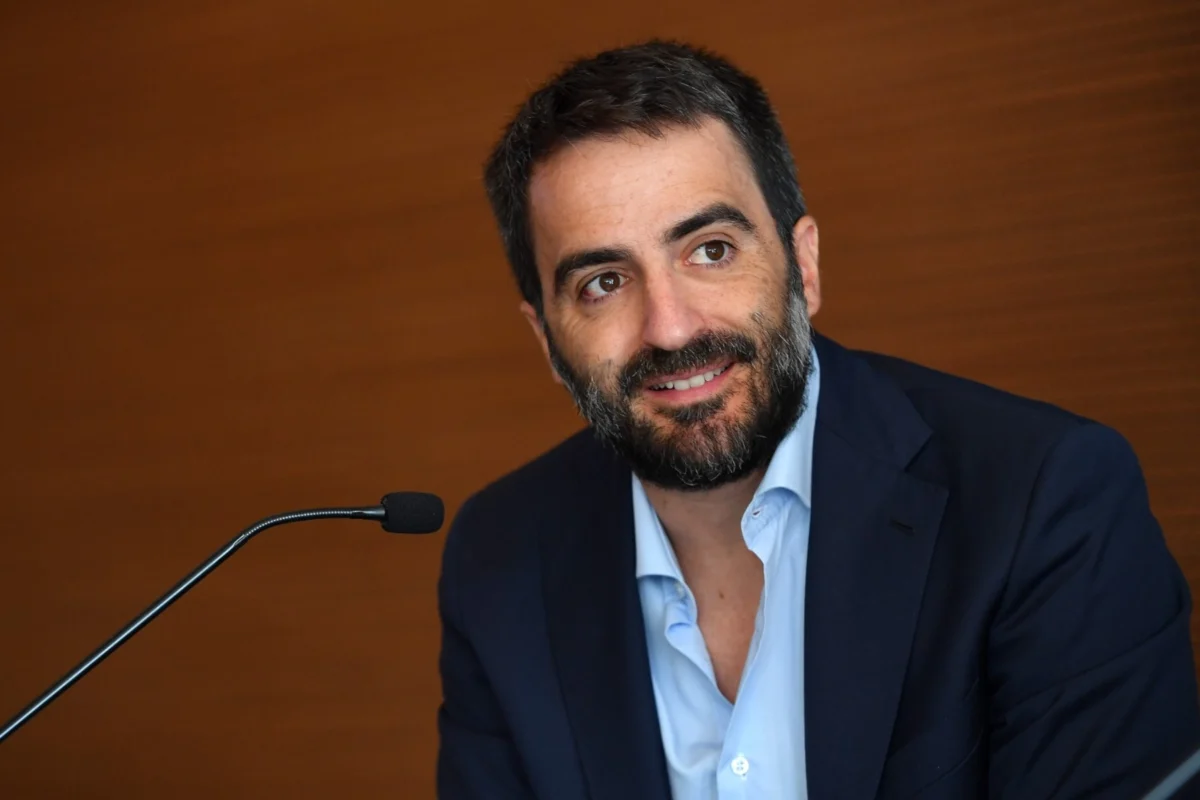
Established in Milan in 1882 with the active participation of some of Italy’s leading artists and intellectuals, SIAE, an acronym for "Italian Society of Authors and Publishers," stands as one of the oldest and most respected collection societies globally. For many years, this profound historical legacy, while a source of pride, inadvertently rendered the institution resistant to the winds of change. Its entrenched processes and traditional operational models remained largely impervious to innovation, even as the global music and content industries began their dramatic shifts. However, the dual forces of market liberalization and rapid technological evolution eventually compelled a reevaluation, ushering in an era of unprecedented change. Today, under new leadership and guided by a fundamentally different strategic vision, SIAE is navigating the most radical transformation in its 140-year history, resolutely placing itself at the vanguard of the technological revolution reshaping intellectual property rights management.
A New Chapter: Breaking Financial Barriers and Strategic Overhauls
The year 2025 emerged as a monumental milestone for SIAE, marking a definitive break from its past performance. For the first time ever, the society surpassed the coveted 1 billion euro ($1.16 billion) threshold in revenue, signaling robust growth and enhanced operational efficiency. This impressive financial achievement was directly accompanied by a significant increase in distributions to rights holders, with €849 million ($987 million) paid out. This figure represents a substantial 15% increase compared to 2024, underscoring the success of the society’s strategic shifts. Such growth is not an isolated incident but rather the culmination of several years of sustained effort and a clear departure from its former monopolist status. SIAE, now the undisputed Italian market leader, has redefined its mission with a renewed and vigorous vocation for innovation.
Matteo Fedeli, SIAE’s CEO, attributes this remarkable trajectory to a confluence of strategic initiatives. These include a sweeping simplification of internal processes, an aggressive push towards comprehensive digitalization of services, a fortified negotiation capacity with major digital platforms, and a progressive and sustained reduction in commissions. These ingredients, Fedeli asserts, have been and will continue to be central to the ongoing growth and modernization of the institution.
Understanding the Drivers of Sustained Growth
When probed about the underlying factors driving such significant and sustained growth leading up to and through 2025, Fedeli outlined three principal contributors. The first, he conceded, is largely external and beyond SIAE’s direct control: the continued robust growth of the broader market for both recorded music and live events. In a period of market recession, he noted, achieving such figures would be considerably more challenging. The other two variables, however, are internal and reflective of SIAE’s proactive strategies. Firstly, there has been a marked improvement in SIAE’s negotiation capabilities, particularly with major global players. This enhanced leverage has translated into more favorable terms for rights holders. Secondly, and perhaps most critically, is the profound internal transformation of SIAE’s operational structure and fundamental functioning.
Fedeli elaborated on this transformation in an interview with the financial newspaper Il Sole 24 Ore, stating, "We’ve moved from a predominantly legal structure to a model in which data, technology, and analytical capabilities are central." This pivot signifies a fundamental shift in identity. SIAE is no longer merely an administrative body focused solely on the formal and legal aspects of copyright business. Instead, it is actively building a data-driven digital infrastructure designed to serve authors with unparalleled efficiency and transparency. This paradigm shift necessitates the acquisition of new, future-proof skills and the attraction of talent capable of navigating an increasingly complex, technology-driven landscape.
The Dawn of the AI-First Era in Copyright Management

The integration of artificial intelligence (AI) into SIAE’s operational framework is a cornerstone of its forward-looking strategy. Fedeli views AI through a dual lens: on one hand, there is an imperative to robustly protect rights holders from unfair exploitation by AI technologies. On the other hand, he strongly believes that any organization failing to leverage advanced AI tools, such as large language models like Claude (for tasks like Cowork and Code), is inherently missing out on significant opportunities for efficiency and innovation.
This embrace of AI is driving a demand for entirely new professional skill sets within the realm of copyright protection. The "AI engineer," for instance, has become a critical role, tasked with optimally implementing artificial intelligence solutions. SIAE has developed an in-house software development kit, a pioneering move that allows the society to provide AI—rather than just human developers—with direct guidance on its desired behavior, from ethical considerations to user experience protocols. This approach aims to break down barriers between conceptual ideas and their digital realization, seeking professionals who can lead the transition from a world without pervasive AI to an "AI first" operational environment.
Beyond direct AI implementation, there is a pressing need to restructure and digitize knowledge itself. Most corporate knowledge bases are designed for human interaction and are often scattered across various formats—network folders, cloud drives, SharePoint, emails, or even physical paper. The challenge, Fedeli notes, is to activate these disparate knowledge pillars and integrate them with sophisticated AI systems. Once accomplished, he asserts, the collective capabilities of the organization become "supernatural" compared to traditional methods, enabling faster, more accurate decision-making and service delivery.
Navigating the Complexities of AI and Copyright Protection
The future of copyright protection is inextricably linked to the ongoing interaction with generative AI platforms. This presents both immense opportunities and significant challenges, particularly concerning licensing models. Fedeli acknowledges that the market is only just beginning to grapple with effective solutions. He cites examples like Udio, an AI music generation platform that has secured more deals than its competitor Suno, yet operates as a "closed" system. This means that if a user distorts a copyrighted song using such a platform and then uploads it to a streaming service, falsely claiming authorship, it becomes incredibly difficult for collection societies and creators to detect and prevent such infringement.
The core issue, Fedeli emphasizes, is a structural problem within the market. While European legislation, such as the AI Act, represents an important initial attempt to address these challenges, the "opt-out" formula often proves impractical for rights holders. Despite these hurdles, Fedeli remains optimistic, drawing parallels to the early days of internet and digital rights legislation, which were imperfect but served as crucial first steps.
A recent ruling by the Court of Justice against Meta, in favor of the Italian state, highlighted a fundamental issue facing these large tech players: transparency. Without clear insight into the business models of generative AI platforms and, crucially, how their training data is sourced and utilized, any licensing solution risks being fundamentally flawed. Fedeli warns against the dangers of a "flat tax" approach, where a percentage of revenue is requested without a deep understanding of the underlying mechanics. He asks, even if a platform offered €100 million ($116 million), how would SIAE fairly redistribute it without knowing which creators’ works contributed to the AI’s output?
Fedeli’s hope is for the development of training algorithms that can directly connect the training data to the generated output. This would allow for a system where if a creator’s work contributed to a specific AI output, they would receive a micro-fraction of value truly connected to their contribution, ensuring equitable compensation in the AI era.
Streamlining for Efficiency: Reducing Commissions, Maximizing Distributions

SIAE’s strategic objective is not simply to generate record revenues but, more importantly, to redistribute the maximum possible amount to its rights holders. The fact that, as a percentage, distributions are growing faster than revenues is a testament to the success of its efficiency drives. This indicates that SIAE’s operational improvements have more than proportionally benefited those entitled to compensation.
The commitment to reducing commissions is a tangible demonstration of this philosophy. From 2013 to the present, SIAE’s average commission has decreased significantly, from 16% to 13.7%. Specific sectors have seen even more dramatic reductions:
- Digital commissions have already been cut from 10% to 8%, with a further reduction to 7% planned for the following year. These figures are among the most competitive globally.
- TV commissions have been lowered from 11.5% to 10.5%.
- While commissions on live events have increased to 5%, this is part of a broader rebalancing strategy.
- Crucially, for the audiovisual sector—encompassing major streaming platforms like Netflix, Disney+, and Prime Video, which collectively represent €50-€60 million annually for SIAE—commissions have been reduced from 10% to 8%. While a two-percentage-point difference might seem minor in absolute terms, Fedeli highlights that in relative terms, this signifies a one-fifth reduction in SIAE’s operational costs for managing these rights, a substantial achievement in efficiency.
The Enduring Power of the Catalog and Future Talent Attraction
SIAE’s extensive catalog, comprising nearly 30 million registered works, remains a colossal strength, particularly in the realm of negotiation. While SIAE is the sixth-largest collection society globally, it is still considered "small" compared to the massive conglomerates that dominate certain segments of the international market. However, its catalog is sufficiently vast and influential to secure excellent contractual conditions with major global players like Google, Meta, Spotify, and Netflix. This bargaining power directly translates into a higher value per stream for SIAE authors. Fedeli notes that, in the global market, 50% of a SIAE author’s earnings might be worth more than 50% of their co-author abroad, illustrating the tangible benefit of SIAE’s strong negotiation position.
Looking towards the future of musical creativity, SIAE is implementing strategies to attract new talent and cultivate tomorrow’s catalogs. The key, Fedeli asserts, is to be as "frictionless as possible," providing a robust digital infrastructure that liberates creators from administrative burdens. Historically, filing a copyright application involved cumbersome processes like registered letters or in-person office visits. The introduction of the SIAE+ app has revolutionized this. Designed for simplicity, the app allows authors to manage their rights without unnecessary complications. Last year alone, 225,000 applications were filed via the app, often without even requiring a computer, showcasing the success of this digital empowerment.
Envisioning the Collection Society of Tomorrow
Matteo Fedeli envisions the collection society of tomorrow as an agile, technologically advanced entity unequivocally dedicated to serving its authors. This dedication manifests through several core principles: maximizing the value of their catalogs, actively advocating and, if necessary, fighting for greater transparency from digital platforms, relentlessly focusing on building and enhancing digital infrastructure, and continually maximizing operational efficiency.
SIAE is currently laying the foundational groundwork for the next five years, with a clear objective: to evolve into a company that delivers more money to rights holders, more quickly, and at the lowest possible cost. This ambitious goal is to be achieved primarily through the continued embrace of digitalization and the strategic, ethical integration of artificial intelligence across all facets of its operations. The transformation of SIAE is not merely an internal corporate restructuring; it represents a significant shift in how intellectual property is managed and valued in the digital age, setting a potential benchmark for collection societies worldwide.