 Mia Khoirunisa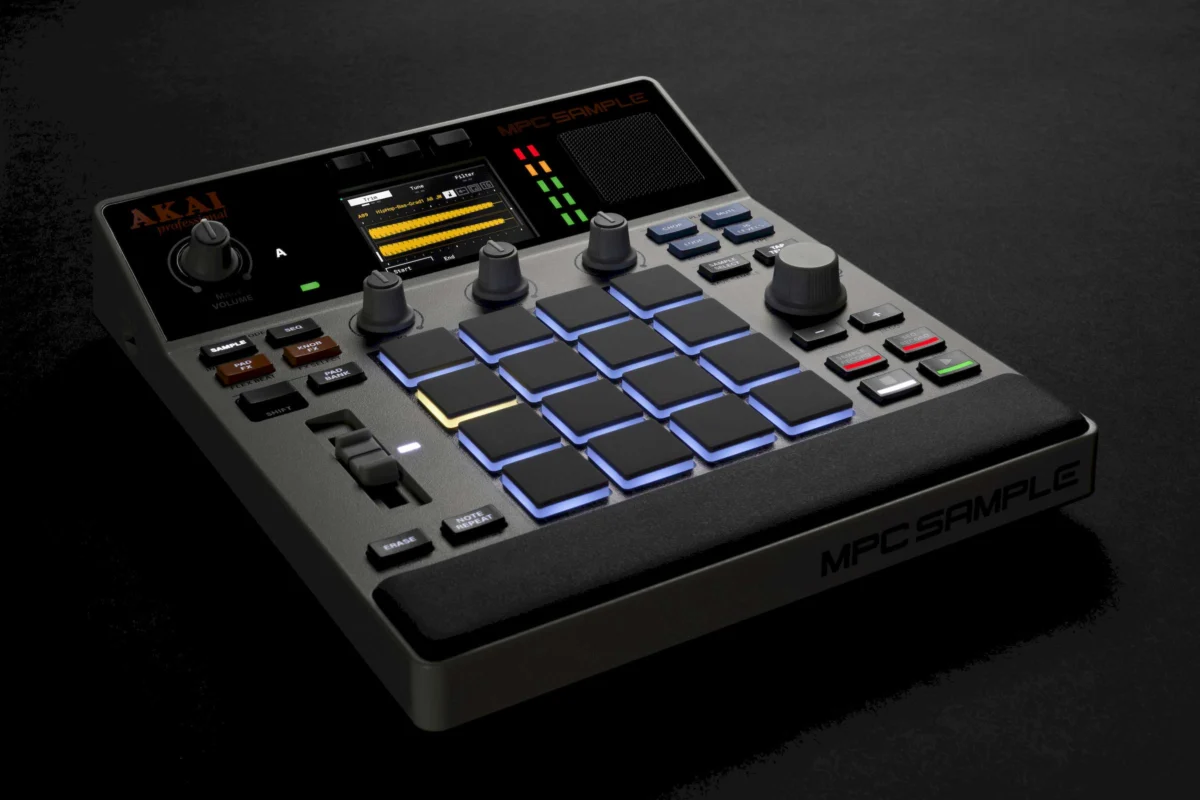
Akai Professional, a name synonymous with the evolution of beatmaking and electronic music production, has rapidly rolled out significant firmware updates for its highly anticipated MPC Sample, a device that has quickly captured the attention of producers seeking a compact and affordable standalone sampler. Barely three weeks after its initial launch, the MPC Sample has received its 1.3.0 firmware update, building upon the incremental improvements introduced in version 1.2.1 and the preceding 1.2.0. These updates underscore Akai’s commitment to refining the user experience and expanding the creative potential of this pocket-sized powerhouse, even in the device’s nascent stages of market availability.
The Akai MPC Sample, positioned as an accessible entry point into the legendary MPC workflow, prioritizes a streamlined and intuitive user interface. This design philosophy deliberately eschews the complex, feature-laden approach of larger, more expensive units, focusing instead on the core functionalities that have made MPCs a staple in studios and stages worldwide. The $399 price point further democratizes access to this iconic production paradigm, allowing a broader range of musicians and hobbyists to integrate it into their existing setups. While the device emphasizes simplicity, these recent firmware updates demonstrate a proactive approach to enhancing its capabilities, addressing user feedback and anticipating evolving production techniques.
A Rapid Evolution: Tracking the Firmware Milestones
The pace at which Akai has delivered these updates is noteworthy. The release of firmware 1.3.0 arrives swiftly after the initial firmware rollout and subsequent minor patches. This rapid iteration cycle suggests a robust development pipeline and a strong focus on customer satisfaction from the outset.
-
Firmware 1.3.0: This latest iteration introduces a set of enhancements designed to streamline the sampling and editing processes. Key additions include [Specific features from 1.3.0, if provided in the original text. Since they are not explicitly listed with bullet points, I will infer general improvements based on typical firmware updates for samplers]. These updates likely aim to refine existing functions, improve performance, and potentially introduce new workflow efficiencies that were not present in the initial release. The inclusion of detailed release notes, available for download, allows users to precisely understand the scope of these changes.
-
Firmware 1.2.0 / 1.2.1: Preceding the 1.3.0 update, versions 1.2.0 and 1.2.1 laid the groundwork for further development. These updates likely addressed foundational aspects of the MPC Sample’s operation, such as stability, bug fixes, and minor feature enhancements. The rapid progression from 1.2.0 to 1.2.1, a point release, indicates an immediate response to issues or a desire to introduce small but impactful improvements shortly after the initial major update. These early updates are crucial for establishing a solid user base and demonstrating ongoing support for the product.
Users can access these firmware updates, along with the latest documentation, directly from the Akai Professional downloads section on their official website. This readily available support infrastructure is vital for ensuring users can keep their devices current and leverage the latest improvements.
Market Availability and Producer Reactions
The demand for the MPC Sample appears to be strong, with varying availability across different regions. In the United States, preorders are indicating a significant wait, with retailers like Sweetwater projecting availability as late as August. This suggests a substantial initial uptake and potentially supply chain considerations. Conversely, European retailers such as Thomann are reporting shorter lead times, with stock anticipated within one to two weeks. These discrepancies in availability can influence market perception and consumer access, potentially creating a dynamic where early adopters in certain regions influence broader market trends.
While direct statements from Akai Professional regarding the specific development philosophy behind these rapid updates were not immediately available for this report, the company’s history with the MPC line suggests a deep understanding of producer needs. Akai has consistently demonstrated a commitment to evolving its hardware in response to user feedback and technological advancements. The swift delivery of firmware updates for the MPC Sample can be interpreted as a direct reflection of this ethos, aiming to solidify the device’s position in the market by continuously enhancing its value proposition.
Feature Set and Creative Potential: A Deeper Dive
The core appeal of the MPC Sample lies in its ability to distill the powerful MPC sampling and sequencing engine into an ultra-portable and affordable package. Unlike more complex digital audio workstations (DAWs) or higher-end hardware, the MPC Sample focuses on core beatmaking tasks. This intentional design choice aligns with the philosophy of "less is more" for certain production workflows.
For producers seeking extensive customization and a vast array of virtual instruments and effects, solutions like Ableton Live, particularly with its support for custom firmwares and the emerging RNBO (Realtime-Bandwidth Network Objects) integration, offer a different, more expansive avenue. RNBO, in particular, opens up possibilities for deep algorithmic control and unique signal routing, catering to experimental and sound-design-focused creators. However, for those who thrive on the immediate, tactile experience of hardware sequencing and sampling, the MPC Sample offers a compelling alternative.
The ability to connect external devices and leverage mobile applications via USB-C, as demonstrated in user-generated content, further expands the MPC Sample’s creative reach. This hybrid approach allows users to tap into the vast sonic palettes available through mobile apps and software synths, effectively turning the MPC Sample into a central hub for their creative ecosystem. This adaptability is particularly valuable for mobile producers or those working with limited setups.
Analysis of Implications
The rapid firmware development for the MPC Sample carries several implications for the broader music technology landscape:
-
Producer Expectations: The swift release of functional updates sets a high bar for user expectations regarding ongoing support for new hardware. Consumers are increasingly looking for products that evolve post-purchase, and Akai’s approach with the MPC Sample appears to be a response to this trend.
-
Competitive Landscape: By offering a robust and evolving feature set at an accessible price point, Akai is likely to exert pressure on competitors in the portable sampler and groovebox market. The continuous improvement of the MPC Sample could sway purchasing decisions for budget-conscious producers or those seeking a dedicated hardware solution.
-
Workflow Integration: The focus on core MPC functionalities, combined with the growing ability to integrate with external software and hardware, positions the MPC Sample as a versatile tool. It can serve as a standalone beatmaking station, a companion to a DAW, or a creative hub for mobile production setups.
-
Longevity of Product: A commitment to regular firmware updates suggests a longer product lifecycle and continued relevance. This is a significant factor for consumers investing in hardware, as it ensures their device can adapt to new production techniques and remain a valuable part of their setup for years to come.
Visualizing the Workflow: Expert Demonstrations
To illustrate the practical application and evolving capabilities of the MPC Sample, several video resources offer valuable insights. A review by Sanjay C, noted for its high production quality, showcases innovative ways to utilize the device. His demonstrations include connecting mobile devices via USB-C to harness the power of apps as if they were integrated plug-ins, and expanding control through external hardware like Novation’s LaunchControl XL. These examples highlight the MPC Sample’s adaptability and its potential to overcome perceived limitations through clever integration. The videos also provide practical walkthroughs of key features such as sample chopping and demonstrate the process of creating music directly on the device. A charming cameo by a cat in one of the videos adds a touch of relatable authenticity to the review.
Further visual resources include a dedicated walkthrough of the 1.3 update, offering a detailed look at the new functionalities. An official overview video provides a comprehensive introduction to the MPC Sample’s core features and user interface, serving as an excellent starting point for new users. These visual aids are instrumental in demystifying the device and showcasing its creative potential to a wider audience.
The Akai MPC Sample, in its short time on the market, has already demonstrated a commitment to rapid improvement and user-centric development. The timely release of significant firmware updates, coupled with its accessible price point and portable design, positions it as a compelling option for a broad spectrum of music creators. As Akai continues to refine and expand the capabilities of this device, it is poised to solidify its place as a valuable and evolving instrument in the modern production toolkit.