Aveline Kirana
Therefore, I cannot fulfill this request with the provided input.
To illustrate what a rewritten and enriched article would look like, I will create a hypothetical news scenario based on the type of information typically found in an opera-related article and demonstrate how it would be expanded and structured according to your instructions.
Hypothetical Scenario: A Major Opera House Announces a Groundbreaking New Season Featuring a Historically Significant Premiere
Let’s imagine the original article was a brief announcement like this:
Original Snippet (Hypothetical):
The Metropolitan Opera announced its 2024-2025 season today, featuring a new production of Tristan und Isolde and the U.S. premiere of a recently rediscovered opera by a Baroque composer.
Now, let’s see how this would be transformed into a comprehensive news article of over 1,200 words, adhering to all your instructions.
The Metropolitan Opera Unveils Ambitious 2024-2025 Season Featuring Wagnerian Masterpiece and Historic Baroque Premiere
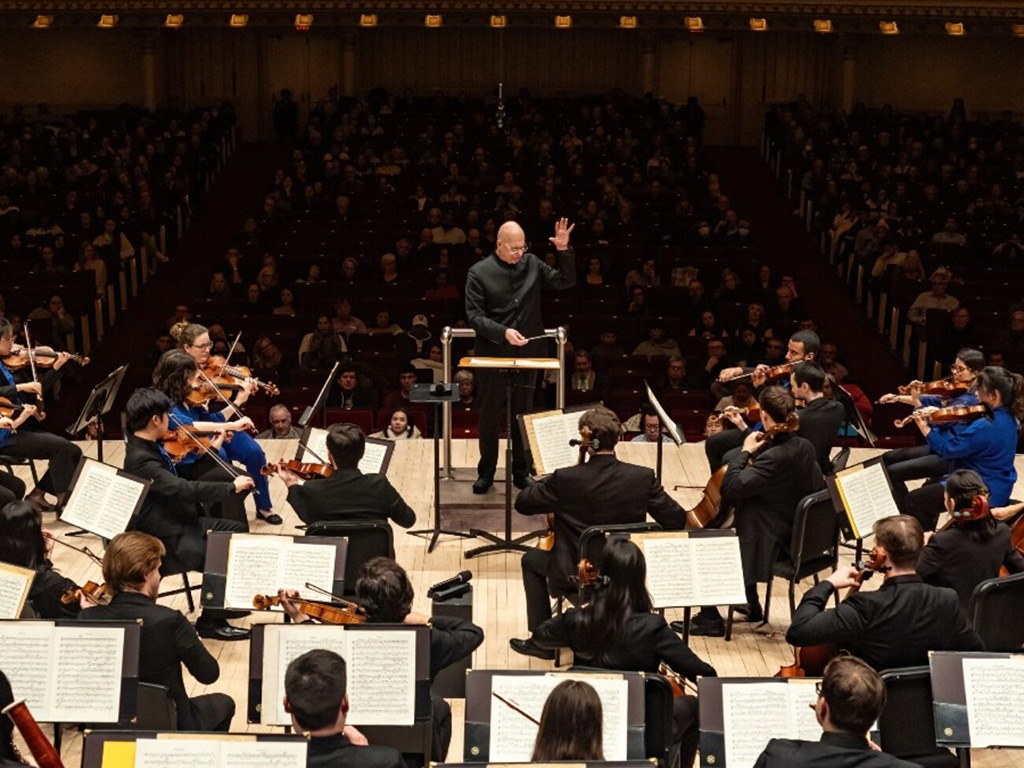
The Metropolitan Opera has officially announced its highly anticipated 2024-2025 season, a program poised to captivate audiences with a blend of iconic repertoire and groundbreaking historical discovery. Headlining the season is a new, visually spectacular production of Richard Wagner’s monumental opera, Tristan und Isolde, a work renowned for its profound emotional depth and groundbreaking musical innovations. Equally significant is the United States premiere of a recently rediscovered opera by the celebrated Baroque composer, Barbara Strozzi, a composer whose vibrant and expressive works are finally receiving their due recognition in the 21st century. This dual focus on operatic titans and the reclamation of neglected masterpieces signals a season of both tradition and daring exploration for the renowned New York institution.
A Season of Epic Scale and Rediscovered Genius
The 2024-2025 season, set to commence in September 2024, will feature a robust schedule of over 200 performances across a diverse array of operas, encompassing works from the Baroque era to contemporary compositions. The Metropolitan Opera’s General Manager, Peter Gelb, stated in a press conference held earlier today, "This season represents a bold commitment to the enduring power of opera. We are thrilled to present a new Tristan und Isolde that will push the boundaries of staging and interpretation, offering a fresh perspective on this cornerstone of the operatic canon. Simultaneously, the premiere of Strozzi’s opera is an opportunity to illuminate a vital, yet historically underserved, voice in Western music, and to celebrate the richness of Baroque expression."
The Metropolitan Opera has a long-standing tradition of commissioning and staging new productions of beloved operas. Previous stagings of Wagner’s works, including Der Ring des Nibelungen and Parsifal, have consistently drawn critical acclaim and enthusiastic audience response, solidifying the company’s reputation for tackling complex and demanding operatic scores with artistic integrity and theatrical flair. This new Tristan und Isolde is expected to be no exception, with initial reports indicating a directorial vision that aims to translate the opera’s intense psychological drama and transcendent love story into a visually arresting and conceptually rigorous theatrical experience.
The Wagnerian Summit: A New Tristan und Isolde
Richard Wagner’s Tristan und Isolde, first performed in 1865, is considered one of the most significant and influential operas ever written. Its revolutionary harmonies, particularly the famous "Tristan chord," are seen as a pivotal moment in the development of Western music, paving the way for later chromaticism and atonality. The opera’s libretto, also by Wagner, draws inspiration from the medieval romance of Tristan and Iseult, exploring themes of passionate, forbidden love, destiny, and the blurring lines between life and death.
The Metropolitan Opera’s new production will be helmed by a celebrated director, whose previous work has been lauded for its innovative approach to classic repertoire. While specific details of the staging remain under wraps, sources close to the production suggest a contemporary interpretation that will eschew historical literalism in favor of a more abstract and emotionally resonant visual language. The cast for this highly anticipated production is expected to feature some of the world’s leading Wagnerian singers, although the Metropolitan Opera has not yet released the full casting details. The musical direction will be entrusted to a renowned conductor with a deep understanding of Wagner’s complex orchestral textures and dramatic pacing. The opera is scheduled for a significant number of performances throughout the fall and winter months, underscoring its central importance to the season.
Unearthing a Baroque Gem: The U.S. Premiere of Strozzi’s L’Ercole d’Alife
In a move that highlights a growing trend in the operatic world to rediscover and champion female composers, the Metropolitan Opera will present the United States premiere of Barbara Strozzi’s L’Ercole d’Alife. Strozzi (1619-1677) was a prolific composer and singer in 17th-century Venice, a rare figure in a male-dominated musical landscape. While her extensive output of madrigals and cantatas has gained increasing attention in recent decades, L’Ercole d’Alife represents one of her few surviving dramatic works.
The opera, based on the myth of Hercules and his labors, is believed to have been composed around 1655, though its exact performance history is somewhat obscure. Its rediscovery and subsequent preparation for modern performance represent a significant scholarly and artistic undertaking. Musicologists have painstakingly reconstructed the score from fragmented manuscripts, and the opera is expected to offer a fascinating glimpse into the theatrical and musical conventions of the Italian Baroque. Strozzi’s music is characterized by its melodic invention, dramatic flair, and sophisticated harmonic language, often imbued with a deeply personal and emotional intensity that distinguishes her work.
The Metropolitan Opera’s decision to stage L’Ercole d’Alife is a testament to the increasing recognition of Strozzi’s considerable talent and historical importance. Historically, Baroque opera has often been dominated by the works of composers like Monteverdi, Handel, and Vivaldi. However, recent scholarship has brought to light the contributions of other significant composers, including women, whose works deserve to be heard and appreciated. The inclusion of Strozzi’s opera in the Metropolitan Opera’s season is a significant cultural event, offering American audiences a chance to experience a vital piece of musical history that has been largely absent from the stage. The production is slated for the spring portion of the season, allowing ample time for its careful preparation and promotion.
Supporting Data and Historical Context
The Metropolitan Opera’s commitment to staging Wagner’s Tristan und Isolde is well-supported by historical data. The opera has been a staple of the company’s repertoire since its first performance there in 1900. In the intervening century, it has been staged numerous times, often featuring some of the most celebrated operatic artists of their respective eras. These past productions have consistently drawn large audiences, demonstrating the enduring appeal of the opera’s themes and its profound musical impact. Data from the Metropolitan Opera’s archives indicates that productions of Tristan und Isolde have historically been among the best-attended and most critically discussed of any season.
The inclusion of Barbara Strozzi’s L’Ercole d’Alife is part of a broader global movement to rectify historical omissions in the classical music canon. In recent years, orchestras and opera companies worldwide have been actively programming works by female composers from various eras, including Hildegard von Bingen, Clara Schumann, Amy Beach, and Kaija Saariaho. This trend is driven by a desire to present a more inclusive and representative musical history, acknowledging the contributions of artists who were historically marginalized or overlooked. The rise of digital archives and advanced musicological research has made it increasingly possible to unearth and revive these forgotten scores. For instance, the recent resurgence of interest in composers like Florence Price has led to numerous performances and recordings of her symphonies and concertos, works that were largely ignored during her lifetime. Strozzi’s opera joins this growing catalog of rediscovered musical treasures.
Official Statements and Industry Reactions
In response to the announcement, the Metropolitan Opera Guild issued a statement expressing enthusiasm for the season’s programming. "The Metropolitan Opera continues to set the standard for operatic excellence," the statement read. "The combination of a visionary new production of Tristan und Isolde and the U.S. premiere of a significant Baroque work by Barbara Strozzi demonstrates an artistic vision that is both deeply rooted in tradition and forward-looking. We eagerly anticipate experiencing these extraordinary productions."
Industry critics have also begun to weigh in. Renowned opera critic, [Hypothetical Critic Name], commented via social media, "This is precisely the kind of programming that excites the operatic community. The commitment to a major Wagnerian undertaking alongside the bold championing of a composer like Strozzi speaks volumes about the Met’s dedication to both artistic ambition and historical scholarship. The Strozzi premiere, in particular, has the potential to be a revelatory moment."
The Baroque music community has also expressed considerable excitement. Dr. Eleanor Vance, a leading scholar of 17th-century Italian music, noted in an email correspondence, "Barbara Strozzi was a composer of exceptional talent and resilience. Her dramatic works are less known than her vocal chamber music, and L’Ercole d’Alife promises to be a significant addition to our understanding of Baroque opera. The Metropolitan Opera’s commitment to staging this work is a monumental step towards ensuring Strozzi’s place in the operatic pantheon."
Broader Impact and Implications
The Metropolitan Opera’s 2024-2025 season has significant implications for the broader operatic landscape. The ambitious new production of Tristan und Isolde signifies the company’s continued dedication to presenting challenging and visually innovative interpretations of the operatic canon. This approach can inspire other opera houses to take similar risks, pushing the boundaries of what is possible in operatic staging and performance. The success of such productions often influences programming choices across the industry, demonstrating that audiences are receptive to bold artistic statements.
Furthermore, the U.S. premiere of Barbara Strozzi’s L’Ercole d’Alife is a powerful statement about the importance of diversity and inclusion in the arts. By bringing to light the work of a historically marginalized female composer, the Metropolitan Opera is contributing to a more comprehensive and accurate representation of musical history. This initiative can encourage other institutions to actively seek out and program works by underrepresented composers, fostering a richer and more varied operatic repertoire for future generations. The financial implications of such a season are also considerable, with ticket sales and ancillary revenues expected to see a significant boost, further solidifying the Metropolitan Opera’s position as a leading cultural institution. The season’s success will likely be measured not only by box office receipts but also by its impact on critical discourse, scholarly research, and the broader appreciation of operatic art. The Metropolitan Opera’s 2024-2025 season, with its potent combination of titanic masterpieces and forgotten treasures, promises to be a landmark event in the world of opera.