Nayara Elvina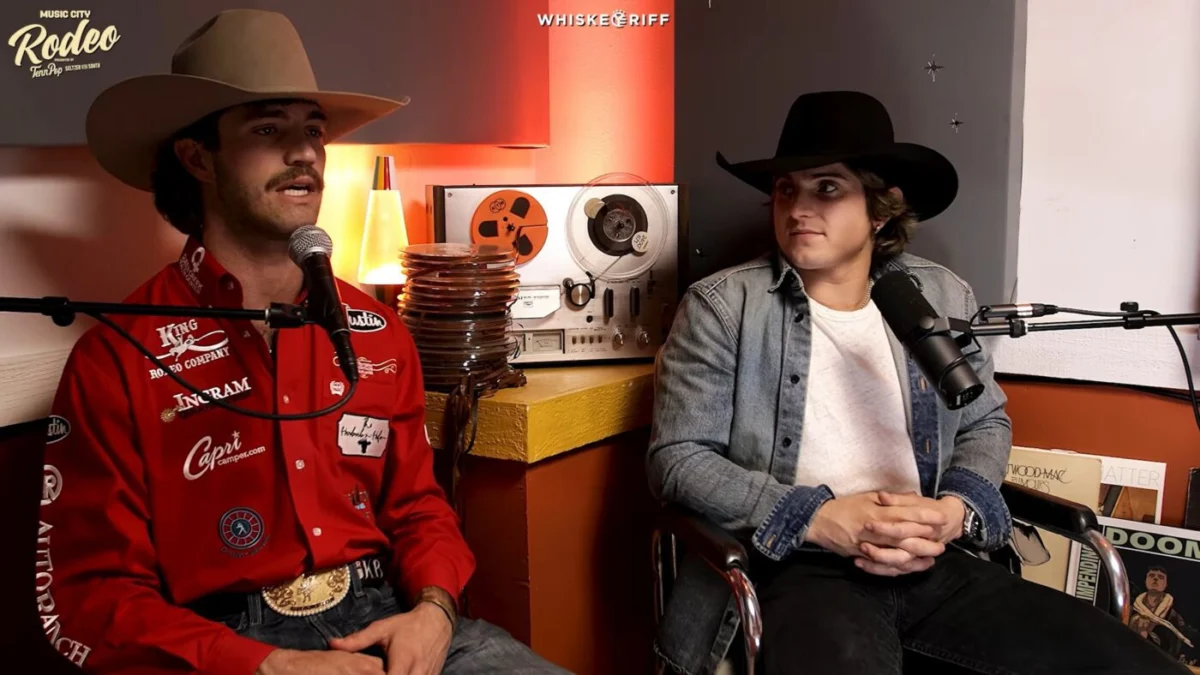
The professional rodeo circuit, long characterized by its rugged imagery and itinerant lifestyle, is undergoing a significant financial and cultural transformation, as highlighted by prominent competitors Rocker Steiner and Kade Bruno. During a recent appearance on the Whiskey Riff Raff podcast, Steiner, a bareback bronc rider, and Bruno, a saddle bronc rider, provided an inside look into the modern economics of the sport, the influence of mainstream media on its popularity, and the logistical parallels between professional athletes and touring entertainers. The discussion served as a prelude to the upcoming Music City Rodeo, scheduled to take place at Nashville’s Bridgestone Arena from May 28 through May 30, an event that exemplifies the convergence of Western sports and mainstream entertainment.
The Fiscal Evolution of Professional Rodeo
One of the most striking revelations from the interview was the clarification of earnings potential within the Professional Rodeo Cowboys Association (PRCA). Both Steiner and Bruno addressed a persistent misconception: that rodeo is a "weekend hobby" or a secondary occupation rather than a lucrative professional career. Steiner noted that top-tier competitors can see weekly payouts exceeding $100,000 during peak season runs. This level of compensation places elite rodeo athletes in a financial bracket comparable to mid-tier players in more traditional professional sports leagues, a fact that remains largely unrecognized by the general public.
Steiner recounted his rapid ascent in the sport, noting that at the age of 18, he earned approximately $300,000 in a single year through competition winnings and endorsement deals. His first major windfall came from the Houston Livestock Show and Rodeo, where a single victory secured him $27,000. Steiner’s experience highlights the "high-risk, high-reward" nature of the sport, where physical peril is matched by the potential for significant financial gain. In a display of youthful success, Steiner utilized his early earnings to purchase a 1970 Chevrolet Nova, a vintage muscle car that symbolizes the "rock star" persona often associated with the Steiner rodeo dynasty.
Conversely, Kade Bruno offered a perspective on fiscal conservatism within the industry. Bruno, who described himself as coming from a background where money was not abundant, emphasized the importance of capital preservation. Rather than luxury purchases, Bruno’s first major financial milestone was the payment of $50,000 in taxes, a figure that underscores the substantial gross income generated by top-ranked saddle bronc riders. Bruno noted that while some athletes invest in "toys" such as skid steers, high-end trucks, or performance vehicles, a growing segment of the younger generation is focused on land acquisition and long-term financial stability.
Challenging the "Weekend Warrior" Narrative
The transition of rodeo from a regional pastime to a high-stakes professional industry has been hampered by public perception. Steiner expressed frustration with the frequent inquiry regarding his "actual job." The reality of the modern circuit involves a grueling schedule of nearly constant travel, rigorous physical conditioning, and the management of a personal brand. For Steiner and Bruno, the "job" involves competing in over 100 rodeos a year, often driving thousands of miles between venues to secure points for the National Finals Rodeo (NFR) in Las Vegas.
This professionalization is supported by data from the PRCA, which has seen record-breaking prize money in recent years. In 2023, the total payout for the PRCA season exceeded $45 million, a significant increase from previous decades. This growth is driven by increased sponsorship from national brands, higher broadcasting rights fees, and the expansion of rodeo events into major metropolitan markets that were previously untapped by the Western sports industry.
The "Yellowstone" Effect and Cultural Mainstreaming
A significant catalyst for the renewed interest in rodeo and Western culture is the influence of Taylor Sheridan’s television franchise, Yellowstone. Both Steiner and Bruno acknowledged that Sheridan’s work has played a pivotal role in bringing the "cowboy" aesthetic and the mechanics of rodeo to a global audience. The "Yellowstone" effect has not only boosted television ratings for rodeo broadcasts but has also influenced fashion, tourism, and real estate markets across the American West.
The portrayal of the grit and discipline required in the Western lifestyle has resonated with a demographic that may have previously viewed rodeo as a niche or antiquated spectacle. This cultural shift has allowed athletes like Steiner—who brings a modern, high-energy flair to the arena—to bridge the gap between traditional rodeo fans and a younger, more diverse audience. Steiner’s family background provides additional context to this evolution; as the grandson of 1973 World Champion Bobby Steiner and the son of Sid Steiner, Rocker represents the third generation of a family that has consistently pushed the boundaries of how rodeo athletes present themselves to the world.
Nashville: The Strategic Hub for the Music City Rodeo
The selection of Nashville as the host for the Music City Rodeo is a strategic move that capitalizes on the cultural overlap between country music and the Western lifestyle. Steiner and Bruno noted that the life of a rodeo competitor closely mirrors that of a touring country musician. Both professions require months of travel, the navigation of a "gig economy" structure, and the necessity of performing at a high level regardless of physical exhaustion or personal circumstances.
The Music City Rodeo, returning to the Bridgestone Arena, is designed to be a "can’t-miss" hybrid event. By integrating high-level PRCA competition with performances by major recording artists, the event aims to maximize its economic impact on the city of Nashville. The 2025 schedule includes:
- May 28: Bareback riding, steer wrestling, and team roping, followed by a headline performance by Miranda Lambert.
- May 29: Saddle bronc riding and tie-down roping, followed by a performance by Charley Crockett.
- May 30: Bull riding and barrel racing finals, capped by a performance by Jon Pardi.
Bridgestone Arena, which has a capacity of approximately 20,000 for such events, provides a high-visibility platform that elevates the sport out of traditional fairground settings and into a world-class entertainment venue. This transition is essential for attracting the corporate sponsorships and media contracts necessary to sustain the current upward trajectory of athlete earnings.
Risk Management and Professional Longevity
Despite the rising payouts, the inherent risks of the sport remain a primary concern. Bareback and saddle bronc riding are among the most physically demanding disciplines in all of professional sports. The athletes discussed the mental fortitude required to return to the chutes after sustaining injuries. For Bruno and Steiner, the financial rewards serve as both a compensation for this risk and a means to fund the specialized medical care and physical therapy required to maintain professional longevity.
The PRCA has implemented various safety protocols and insurance programs to assist athletes, but the "independent contractor" status of rodeo competitors means that individual financial management—such as the tax planning mentioned by Bruno—is critical. The ability of these young stars to navigate both the physical dangers of the arena and the complexities of six-figure financial management is a testament to the increasing sophistication of the modern rodeo professional.
Broader Implications for the Western Industry
The insights provided by Steiner and Bruno suggest a bright future for the Western sports industry, albeit one that requires constant adaptation. As rodeo continues to integrate with mainstream entertainment, the distinction between "athlete" and "celebrity" is blurring. This evolution is expected to lead to:
- Increased Endorsement Opportunities: Beyond traditional Western brands (e.g., Wrangler, Justin Boots), rodeo athletes are beginning to attract interest from mainstream beverage, automotive, and technology companies.
- Expanded Media Coverage: The success of events like the Music City Rodeo encourages networks to invest in more comprehensive coverage, moving beyond highlight reels to deep-dive documentaries and live-streamed season-long narratives.
- Youth Participation: The visibility of high earnings and cultural relevance is likely to attract a new generation of athletes who see rodeo as a viable alternative to traditional sports like football or baseball.
The Music City Rodeo stands as a litmus test for this new era. By combining the raw athleticism of Steiner and Bruno with the star power of artists like Miranda Lambert, the event seeks to solidify rodeo’s place in the modern American cultural landscape. As the gates open at Bridgestone Arena this May, the focus will be on the scores and the times, but the underlying story will be the continued professionalization and economic expansion of a sport that was once thought to be a relic of the past.