Johan Budi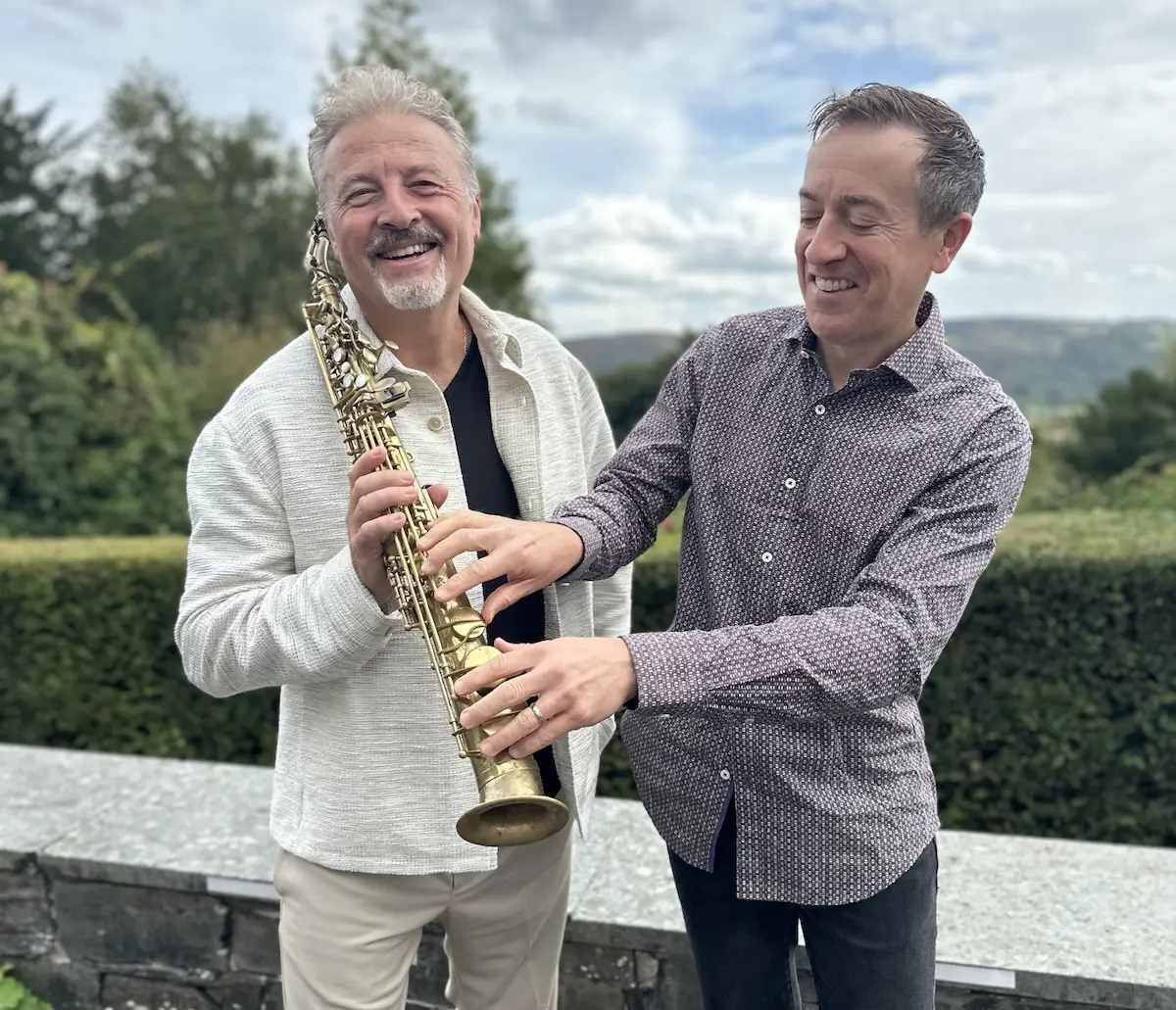
The contemporary jazz landscape has been significantly enriched by a series of high-profile releases that bridge the gap between technical innovation and emotional resonance. Among these, the collaborative effort between British saxophonist Tim Garland and American pianist Geoffrey Keezer, titled Mezzo, stands as a testament to the enduring power of transatlantic musical partnerships. Recorded in New York on May 28, 2025, the album is a sophisticated duo project that highlights not only the virtuosity of its protagonists but also the introduction of rare instrumentation into the modern jazz canon. Central to the album’s identity is Garland’s use of the mezzo-soprano saxophone on seven of the nine tracks. This instrument, pitched in the key of G—nestled between the traditional E-flat alto and B-flat soprano—is a rarity in the woodwind world, with historical records suggesting only a small number of functional units remain in existence globally.
The partnership between Garland and Keezer is rooted in a deep shared history, most notably their work within the Storms/Nocturnes chamber trio alongside vibraphonist Joe Locke. Their individual pedigrees further elevate the project; Keezer rose to prominence through his formative years with Art Blakey’s Jazz Messengers, while Garland enjoyed a long-standing professional association with the late Chick Corea. This lineage is reflected in the album’s repertoire, which opens with a spirited rendition of Corea’s "La Fiesta." The track serves as a showcase for the duo’s ability to balance "unbridled fun" with technical precision. Furthermore, the album features an interpretation of Erik Satie’s "Gnossienne No. 1," where the duo resists the temptation of excessive ornamentation, opting instead for a subtle harmonization that preserves the original’s haunting, unravelling line.
Technical Innovation and Instrumentation in Mezzo
The mezzo-soprano saxophone offers a tonal palette that Garland exploits to full effect. Critics and contemporaries have noted that the instrument possesses a hybrid quality, occasionally evoking the raw, home-made horn textures associated with Rahsaan Roland Kirk, yet maintained with a refined control that avoids manic edginess. Garland’s mastery of the instrument allows for a seamless transition between the "alto-soprano duality" that characterizes the mezzo’s range. On tracks such as "Ghost In The Photograph" and Mulgrew Miller’s "Carousel," Garland reverts to the more familiar B-flat soprano saxophone, providing a point of reference for listeners to appreciate the distinct tonal shift offered by the mezzo.
Keezer’s role in the duo transcends that of a mere accompanist. In a medium where the piano often provides a "heavy sonic armoury," Keezer adopts a more egalitarian approach. The two musicians approach each chart "line abreast," engaging in what musicologists describe as an uninhibited exegesis of melodic development. This equal partnership is bolstered by pre-launch endorsements from jazz luminaries including Gary Burton, Joe Lovano, and Billy Childs, signaling the album’s importance within the community.
Rachel Sutton and the Narrative Strength of Realms
Parallel to the technical explorations of Garland and Keezer is the release of Realms by vocalist Rachel Sutton. Recorded in London in April 2024, Realms is a deeply personal project that showcases Sutton’s capabilities as both a songwriter and a theatrical interpreter of music. Of the ten tracks, nine are original compositions or co-writes, marking Sutton as a significant voice in the contemporary jazz-vocal sphere. The album is anchored by the piano work of Roland Perrin, Sutton’s husband, whose arrangements provide a foundation for Sutton’s narrative-driven lyrics.
The album’s opening track, "Summer Song," begins with a chord-plotted introduction by Perrin before transitioning into a light Latin arrangement. This versatility is a recurring theme throughout the record. "There’s A Feeling" incorporates a quintet choir to provide gospel-inspired leverage, while "The Jester And The Jewel" features a dramatic crescendo underscored by a plangent solo from guitarist Sandy Buglass. The emotional core of the album is perhaps most evident in "Farley’s Song," a dedication to the couple’s young daughter, which serves as a poignant wish for a life defined by peace and music.
Sutton’s ability to take "theatrical possession" of her material is further demonstrated in her rendition of Billy Barnes’ "Something Cool." Her sultry vocal delivery on this track meditates on urban liaison and isolation, proving her ability to inhabit standard-style material with the same conviction as her original works. The inclusion of a three-man horn section, featuring trumpet soloist Ryan Quigley, on the track "Time" adds a layer of "oomph" and variety to the album’s sonic landscape, ensuring that Realms remains engaging throughout its 43-minute duration.
Diana Torti and the Avant-Garde Textures of Fearless
In Rome, October 2024, vocalist Diana Torti recorded Fearless, an album that explores the intersection of jazz, classical guitar, and avant-garde vocal techniques. The project is a collaboration with guitarist Sabino de Bari, who composed the music to which Torti provided challenging, sophisticated lyrics. The album’s unique timbre is derived from de Bari’s use of both classical and fretless guitars, creating a harmonic environment that allows Torti’s "free-floating vocal lines" to flourish.
The interaction between Torti’s voice and the rhythm section—consisting of Andrea Colella on bass and Francesco De Rubeis on drums—is characterized by a "cosy" intimacy. Unlike traditional jazz albums that adhere to strict solo assignments, Fearless treats melody and lyric as a unified entity shaped by the twin guitar-voice approach. Torti’s vocal style is described as clear and diaphanous, demonstrating a command of intonation over long-breathed phrases and difficult interval leaps.
While the album largely focuses on sophisticated references to nature and locale—such as "Montmartre Café," which evokes the cityscape paintings of Maurice Utrillo—it also ventures into more traditional tropes. The track "Whisky," written by de Bari, adopts a blues-inflected sentiment, though some critics suggest the song’s requirement for a "lived-in" voice stands in contrast to Torti’s generally understated and ethereal delivery. Nevertheless, the album is praised for its originality and its contribution to the "bounty" of contemporary female jazz singing.
Chronology and Production Data
The release of these three albums highlights a period of intense creative activity across the international jazz scene between 2024 and 2025.
- April 2024: Rachel Sutton records Realms at a London studio. The album features a diverse lineup including Paul Robinson (drums), Michael Curtis Ruiz (bass), and guest appearances by Paul Booth (saxophone) and Ebenezer Oke (guitar).
- October 2024: Diana Torti and Sabino de Bari record Fearless in Rome. The session emphasizes the use of fretless guitar to create non-traditional harmonic structures.
- May 28, 2025: Tim Garland and Geoffrey Keezer record Mezzo in New York. The session is notable for the use of the rare mezzo-soprano saxophone, an instrument that required significant research and acquisition efforts by Garland.
Official Responses and Critical Analysis
The jazz community has responded to these releases with a mixture of academic interest and critical acclaim. Gary Burton, a pioneer of the vibraphone, noted that the Garland-Keezer collaboration represents a "high-water mark for duo performance," specifically citing the "seamless integration of the mezzo saxophone’s unique voice." Joe Lovano praised the duo’s "joyous discovery" in their improvisational passages.
From an industry perspective, these albums signify a trend toward independent label resilience. Mezzo was released under Tim Garland Music (TGM 1111CD), Realms via 33 Records (33Jazz318), and Fearless through Tambora Music. The success of these projects suggests that niche, high-concept jazz continues to find a dedicated global audience despite the shifting dynamics of the broader music industry.
Broader Impact and Implications
The implications of these releases extend beyond their immediate musical value. Garland’s promotion of the mezzo-soprano saxophone may spark a renewed interest in historical and rare instruments among woodwind players, potentially leading to a small-scale revival of the instrument’s manufacture or restoration.
Furthermore, the work of Rachel Sutton and Diana Torti underscores the evolving role of the jazz vocalist as a primary songwriter and conceptualist. By moving away from a total reliance on the Great American Songbook, these artists are contributing to a new body of work that reflects contemporary themes, personal histories, and complex lyrical structures.
In summary, the arrival of Mezzo, Realms, and Fearless provides a comprehensive snapshot of the current state of jazz: a genre that remains deeply respectful of its traditions—as seen in the nods to Art Blakey, Chick Corea, and Mulgrew Miller—while aggressively pursuing new sounds, rare instruments, and original narratives. These albums collectively reinforce the idea that jazz is not merely a historical style but a living, breathing medium for high-level artistic exegesis.