Johan Budi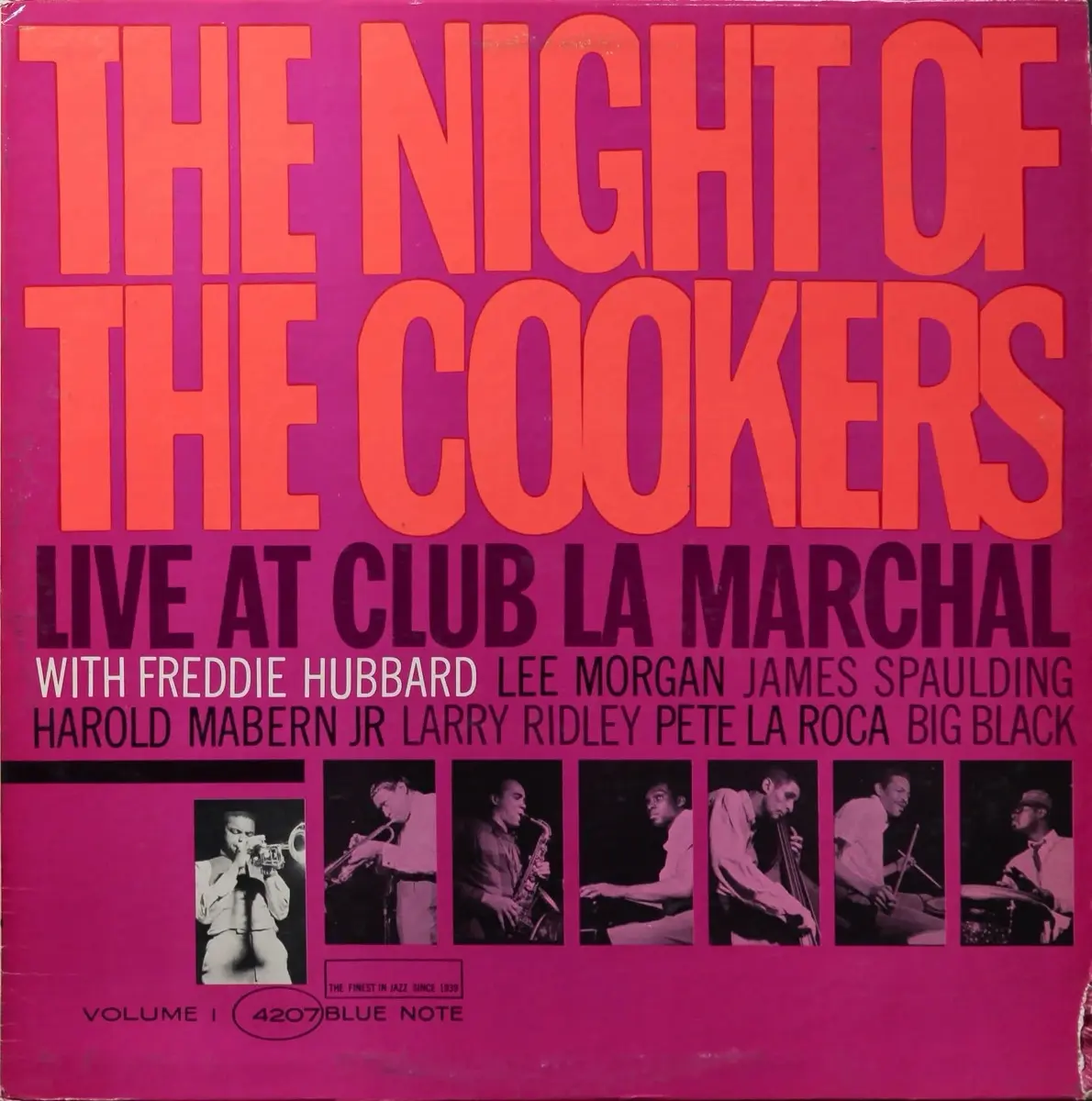
The landscape of mid-1960s jazz was defined by a tension between the established structures of hard bop and the burgeoning abstractions of the avant-garde. In April 1965, this tension found a visceral, high-energy outlet at Club La Marchal in Brooklyn, New York, during a live recording session that would eventually be immortalized by Blue Note Records. The centerpiece of this event was a formidable musical confrontation between two of the era’s most influential trumpeters: Freddie Hubbard and Lee Morgan. Titled The Night of the Cookers: Live at Club La Marchal, Volume 1, the resulting album captures a "cutting contest" of historic proportions, reviving a competitive tradition that has long served as a catalyst for innovation within the genre.
The Tradition of the Trumpet Duel
The concept of the "cutting contest" is deeply rooted in the history of jazz, serving as a rite of passage and a public demonstration of technical mastery. From the legendary encounters between Louis Armstrong and Bix Beiderbecke to the bebop-era skirmishes involving Fats Navarro and Howard McGhee, or Clifford Brown and Art Farmer, the presence of a peer has historically pushed musicians to the limits of their creative and physical endurance.
In 1965, Freddie Hubbard and Lee Morgan represented the pinnacle of the modern trumpet. Morgan, a prodigy who had joined Art Blakey’s Jazz Messengers at age 18, was enjoying massive commercial success following the 1964 release of The Sidewinder. Hubbard, meanwhile, had established himself as a technical virtuoso with a robust tone and a penchant for harmonic exploration. When Morgan joined Hubbard’s quintet for the engagement at Club La Marchal, the expectation was not merely a collaborative performance, but a high-stakes exchange of ideas, speed, and stamina.
Technical Analysis of Pensativa
The first volume of these transcriptions is dominated by "Pensativa," a composition by Clare Fischer that runs for an expansive 23 minutes. The history of this track provides essential context for Hubbard’s performance. Originally a bossa nova-influenced piece recorded by Fischer on a World Pacific LP, the melody captivated Hubbard. After hearing the composer perform it, Hubbard persuaded Art Blakey to incorporate the arrangement into the Jazz Messengers’ repertoire. It was subsequently recorded on the 1964 album Free for All (Blue Note 4170). Hubbard’s affinity for the tune is well-documented; he frequently cited the beauty of the melody as a haunting influence on his musical direction during this period.
In this live treatment, the wistfulness of the original composition is largely subsumed by high-voltage intensity. The performance begins with Lee Morgan delivering a sensitive, muted solo. However, the archival value of this moment is somewhat marred by technical limitations. The original recording captures significant distortion during Morgan’s opening salvos, likely due to over-recording or improper microphone placement in the cramped quarters of the Brooklyn club.
As the track progresses, the audio engineering stabilizes, coinciding with Freddie Hubbard taking over on open trumpet. The contrast between the two players is immediate. While Morgan’s approach is often characterized by a "cocky" blues-inflected swagger and rhythmic precision, Hubbard counters with a more expansive, muscular tone and rapid-fire chromatic runs.
The rhythm section, led by pianist Harold Mabern Jr., provides a churning foundation, though the recording reveals the challenges of the venue. Mabern, a stalwart of the hard bop scene known for his powerful "Memphis" style, performs on a piano that is noticeably out of tune. Despite this, his harmonic support remains steadfast as the two trumpeters move into the "real business" of the evening: a ten-minute display of frantic exchanges. During these "fours" and "eights," Hubbard and Morgan trade phrases with lightning speed, plucking melodic fragments from the air, embellishing them, and then discarding them in favor of increasingly complex inventions. This sustained battle serves as a testament to their status as the premier trumpeters of their generation.
Shift in Dynamics: Walkin’ and the Avant-Garde Influence
The second side of the volume features "Walkin’," a 20-minute blues staple popularized by Miles Davis. In contrast to the dual-trumpet fireworks of "Pensativa," this track takes a different structural path. Internal evidence and auditory analysis suggest that Hubbard remains largely in the background for this piece, appearing primarily during the ensemble sections, while the primary trumpet solo is handled by Morgan.
A significant portion of "Walkin’" is dedicated to an extensive alto saxophone excursion by James Spaulding. In 1965, Spaulding was a versatile sideman who frequently bridged the gap between traditional bop and the "New Thing." His solo on this track is a microcosm of the era’s stylistic shifts. He utilizes a range of techniques that evoke the late Eric Dolphy, incorporating wide interval leaps, "honking" textures reminiscent of the avant-garde, and even a brief, whimsical quotation of "Country Gardens."
Spaulding’s performance is polarizing; it represents the "avant-gardism" that was beginning to seep into the Blue Note aesthetic. Toward the end of the track, Spaulding and Morgan engage in "pecking"—a form of simultaneous, jagged improvisation—before the piece concludes in a somewhat ragged fashion. The rhythmic drive is maintained by the dual percussion of Pete La Roca on drums and Big Black on congas. The addition of congas was a hallmark of the "soul jazz" movement of the 1960s, adding a heavy, earthy layer to the "heavyweight walk" of the rhythm section.
Chronology and Personnel Data
The recording session took place in 1965 at Club La Marchal, a venue that, while less famous than Manhattan’s Birdland or The Village Vanguard, played a crucial role in the vibrant Brooklyn jazz scene.
Session Personnel:
- Freddie Hubbard: Trumpet (Leader)
- Lee Morgan: Trumpet (Guest)
- James Spaulding: Alto Saxophone, Flute
- Harold Mabern Jr.: Piano
- Larry Ridley: Bass
- Pete La Roca: Drums
- Big Black: Congas
The album was released as Blue Note 4207. The production was overseen by the legendary duo of Alfred Lion and Francis Wolff. While Blue Note was renowned for the pristine studio quality achieved at Rudy Van Gelder’s Englewood Cliffs studio, their live recordings often prioritized the "energy" of the room over sonic perfection, a trade-off that is evident in the distortion and tuning issues present on this disc.
Broader Impact and Implications for Jazz History
The Night of the Cookers remains a divisive but essential document in the jazz canon. For scholars and fans of the trumpet, it is an indispensable study in contrast and virtuosity. The album highlights the peak of the "hard bop" era just before the genre began to fragment into fusion and more radical forms of free jazz.
The "cutting contest" format seen here was one of the last major public displays of this tradition before the collective improvisation of the avant-garde began to favor texture and mood over individual bravura. Furthermore, the album underscores the incredible depth of the Blue Note roster in the mid-60s. Both Hubbard and Morgan were capable of leading their own highly successful groups, yet they chose to collide in a live setting, creating a document of competitive camaraderie.
The inclusion of James Spaulding’s more experimental playing on "Walkin’" also points toward the future. It suggests that even within the framework of a standard blues, the younger generation of musicians was no longer content with traditional bebop vocabulary. They were looking for ways to break the instrument’s physical constraints, using "honks" and multiphonics to express a more turbulent social and artistic reality.
Conclusion
While Volume 1 of The Night of the Cookers suffers from occasional technical flaws—ranging from over-recorded trumpet solos to an uncooperative piano—it remains a "must-have" for its historical significance. The 23-minute rendition of "Pensativa" alone stands as a monument to the endurance and brilliance of Freddie Hubbard and Lee Morgan. It captures a specific moment in time when the trumpet was the dominant voice in jazz, and when two of its greatest practitioners were willing to push each other to the brink of exhaustion in pursuit of musical excellence. For the modern listener, it offers a raw, unvarnished look at the intensity of the 1960s New York jazz scene, where the "cooking" was not just a metaphor, but a nightly reality.