Johan Budi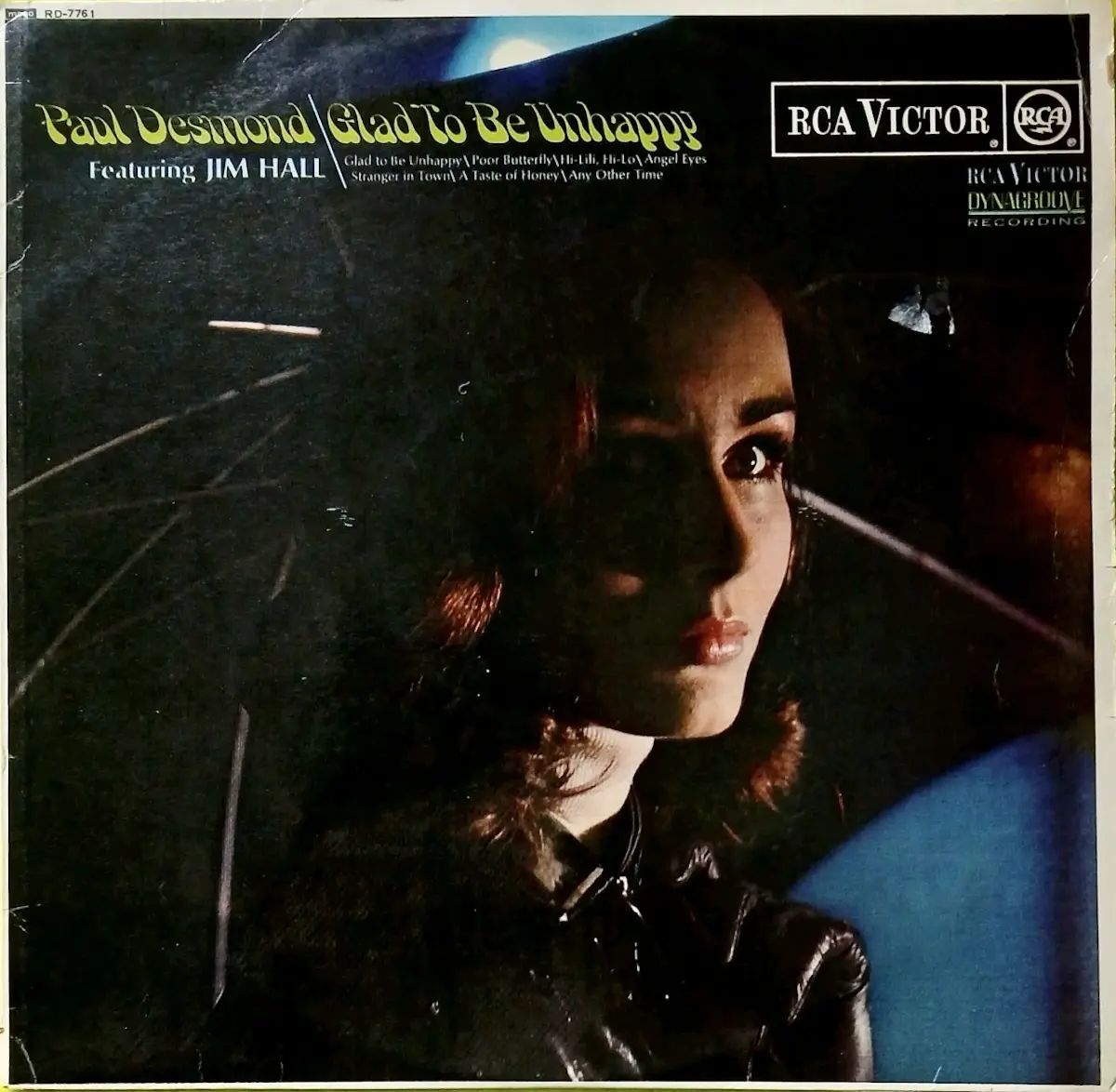
The mid-1960s represented a period of profound transition for the jazz genre, as the avant-garde movements of free jazz and the burgeoning influence of rock and roll began to reshape the musical landscape. Amidst this volatility, the collaboration between alto saxophonist Paul Desmond and guitarist Jim Hall emerged as a beacon of lyrical stability and refined aesthetic. In a review originally published in Jazz Journal in April 1966, critic Mark Gardner observed that while much of the contemporary jazz scene appeared to lack "good taste and sincerity," these virtues were found in abundance within the work of Desmond and Hall. This assessment came at a time when Desmond, famously a pillar of the Dave Brubeck Quartet, was exploring a more intimate, chamber-jazz style that would eventually define his solo legacy.
The partnership between Desmond and Hall was not merely a convenient professional arrangement but a profound musical meeting of minds. Desmond’s alto saxophone, often described as having the texture of a "dry martini," found its perfect harmonic foil in Hall’s understated, intellectually rigorous guitar playing. Their 1965 recording sessions, which culminated in the release of the album Glad To Be Unhappy on RCA Victor, serve as a definitive document of this synergy. The album, recorded at Webster Hall in New York City, showcased a quartet that prioritized counterpoint, space, and melodic integrity over the aggressive virtuosity that was becoming common in the post-bop era.
The Artistic Philosophy of Paul Desmond and Jim Hall
Paul Desmond’s approach to the alto saxophone was, by the mid-1960s, a fully realized aesthetic. Having achieved international fame through his work with Dave Brubeck—most notably as the composer of "Take Five"—Desmond faced occasional criticism from those who viewed his refusal to adopt the harsher, more experimental tones of the era as a sign of artistic stagnation. However, as Gardner noted in 1966, this consistency was not a lack of growth but rather the perfection of a personal mode of expression. Desmond’s tone was crystalline and devoid of the heavy vibrato favored by his contemporaries, allowing for a clarity of line that was essential for the intricate counterpoint he favored.
Jim Hall, similarly, was a musician dedicated to the craft of melodic development. Hall’s career had been marked by significant milestones, including a formative period with the Jimmy Giuffre Three and a pivotal stint with tenor saxophonist Sonny Rollins during the recording of the landmark album The Bridge in 1962. It was during his time with Rollins that Hall refined his ability to provide both harmonic support and a secondary melodic voice, a skill that made him the ideal partner for Desmond. The two musicians shared a temperament that was "relaxed and cool," avoiding "muscle" and "strain" in favor of a restful, yet intellectually engaging, sound.
Chronology of the Desmond-Hall Collaborations
The collaboration between Desmond and Hall was a recurring theme throughout the 1960s, spanning several albums recorded for RCA Victor. This period is often cited by jazz historians as Desmond’s most creatively fertile era outside of the Brubeck stable.
- 1959: The partnership began with the album First Place Again, featuring a rhythm section of Percy Heath and Connie Kay. This set the template for the "cool" aesthetic they would follow.
- 1961–1962: The duo recorded Desmond Blue, an ambitious project featuring strings, which further highlighted Desmond’s lyrical capabilities.
- 1963: The recording of Take Ten served as a spiritual successor to the Brubeck Quartet’s experiments with odd time signatures, but with a softer, guitar-led focus.
- 1964–1965: The sessions for Glad To Be Unhappy and Bossa Antigua took place. These sessions were characterized by a deep exploration of the Great American Songbook and the then-popular bossa nova rhythms.
- 1966: The release of Glad To Be Unhappy (RCA Victor RD 7761) received critical acclaim for its sophistication and lack of artifice.
The 1965 sessions at Webster Hall were particularly notable for their personnel. The quartet featured Connie Kay on drums, whose work with the Modern Jazz Quartet had made him a master of subtle, disciplined percussion. The bass duties were shared between Gene Wright, a longtime colleague of Desmond’s in the Brubeck Quartet, and Gene Cherico. This lineup ensured a rhythmic foundation that was firm yet unobtrusive, allowing the frontline of Desmond and Hall to engage in their signature "deceptively easy counterpoint."
Technical Analysis of the Glad To Be Unhappy Sessions
The repertoire selected for the Glad To Be Unhappy sessions reflected a penchant for melancholic yet beautiful ballads and mid-tempo standards. The title track, a Rodgers and Hart composition, serves as the emotional centerpiece of the album. Desmond’s delivery of the melody is hauntingly sparse, while Hall’s accompaniment provides a rich, shifting harmonic landscape that never crowds the soloist.
Other tracks, such as "Poor Butterfly" and "Angel Eyes," demonstrate the quartet’s ability to breathe new life into familiar material. In "A Taste of Honey," the group navigates the melody with a rhythmic lilt that avoids the cloying sentimentality often associated with the tune in a pop context. The track durations, ranging from three to over six minutes, indicate a focus on concise, meaningful improvisation rather than the extended, marathon soloing that was becoming prevalent in jazz clubs of the time.
According to discographical data from the period, the sessions were meticulously recorded:
- Recording Venue: Webster Hall, NYC.
- Engineering: The RCA Victor team utilized the high-fidelity standards of the time, capturing the nuances of Desmond’s breath control and the natural resonance of Hall’s hollow-body Gibson guitar.
- Personnel Consistency: The use of Connie Kay provided a stylistic link to the "Third Stream" and chamber jazz movements, emphasizing a "cool" temperament that contrasted with the "hot" jazz of the hard-bop schools.
Market Context and Critical Reception
In 1966, the jazz market was undergoing a bifurcation. On one side, the "New Thing" or free jazz movement was pushing boundaries, led by figures like Ornette Coleman and John Coltrane. On the other, soul-jazz and bossa nova were providing a more commercially viable path for the genre. Paul Desmond and Jim Hall occupied a unique middle ground. They were "musician’s musicians," respected for their technical prowess and deep understanding of theory, yet their music remained accessible to a broader audience due to its inherent beauty and melodicism.
Mark Gardner’s 1966 review reflected a sentiment common among critics who felt that jazz was losing its way. By praising the "good taste and sincerity" of Desmond and Hall, Gardner was making a subtle critique of the more aggressive and experimental trends of the mid-60s. He argued that Desmond’s refusal to change his style was not a failure of imagination but a commitment to a "perfected personal mode of expression." This perspective has been validated by history; the Desmond-Hall recordings are now regarded as timeless classics of the cool jazz genre, largely because they did not attempt to chase the ephemeral trends of their era.
Broader Impact and Implications for Modern Jazz
The influence of the Paul Desmond and Jim Hall collaboration extends far beyond the 1960s. Their work laid the groundwork for the "chamber jazz" movement that would gain traction in the 1970s and 80s, particularly through labels like ECM Records. The emphasis on space, the avoidance of cliché, and the conversational nature of their interplay became a blueprint for subsequent generations of jazz duos and quartets.
Jim Hall, in particular, would go on to become one of the most influential guitarists in jazz history, citing his work with Desmond as a crucial period in his development. Hall’s ability to "play the rests" and his focus on thematic development can be traced back to these sessions. For Desmond, these recordings proved that his musical identity was independent of Dave Brubeck. While he would remain with Brubeck until the quartet’s dissolution in 1967, his solo work with Hall established him as a singular voice in the pantheon of jazz greats.
The enduring popularity of Glad To Be Unhappy and its sister albums remains a testament to the power of lyrical sincerity. In an era of rapid social and musical upheaval, Desmond and Hall provided a sense of "restful sounds" that were "sweet" without being "cloying." As Gardner concluded in his original assessment, the work of this duo was "very agreeable," leaving audiences and critics alike consistently asking for "more please." Today, these recordings continue to serve as a masterclass in the art of the understated, proving that in the world of jazz, sometimes the most profound statements are made in a whisper rather than a shout.